- What Is a Flat Roof Installation?
- What Is a Shingle Roof Installation?
- Key Differences Between Flat Roof and Shingle Roof
- Cost Comparison: Flat Roof vs Shingle Roof Installation
- Lifespan and Durability
- Maintenance Requirements
- Energy Efficiency and Insulation
- Best Use Cases for Each Roof Type
- How the Installation Process Works
- Making the Right Roofing Choice

Choosing between a flat roof and a shingle roof can feel confusing at first. Many homeowners start by looking for affordable roof installation options, but price is only part of the story.
The way your roof is built affects how long it lasts, how much maintenance it needs, and how well it protects your home. A good roof needs to match your climate, budget, and lifestyle. Let’s look at both options so you can make the right choice for your home.
What Is a Flat Roof Installation?
A flat roof has a slight slope but looks level from the ground. It uses large waterproof sheets like rubber or TPO to create a smooth, sealed surface that keeps water out.
This style is common on modern homes and commercial buildings because of its clean look. Since everything is connected, proper sealing and drainage are crucial to prevent leaks.
What Is a Shingle Roof Installation?
A shingle roof uses many small pieces, usually asphalt shingles, placed in overlapping rows. Each shingle is nailed down and layered so water flows off easily. This is the most common type of roof for homes because it works well in most climates.
The design helps protect your home from rain, wind, and snow. One big advantage is flexibility. If one part gets damaged, you can fix that section without replacing the entire roof.
Key Differences Between Flat Roof and Shingle Roof
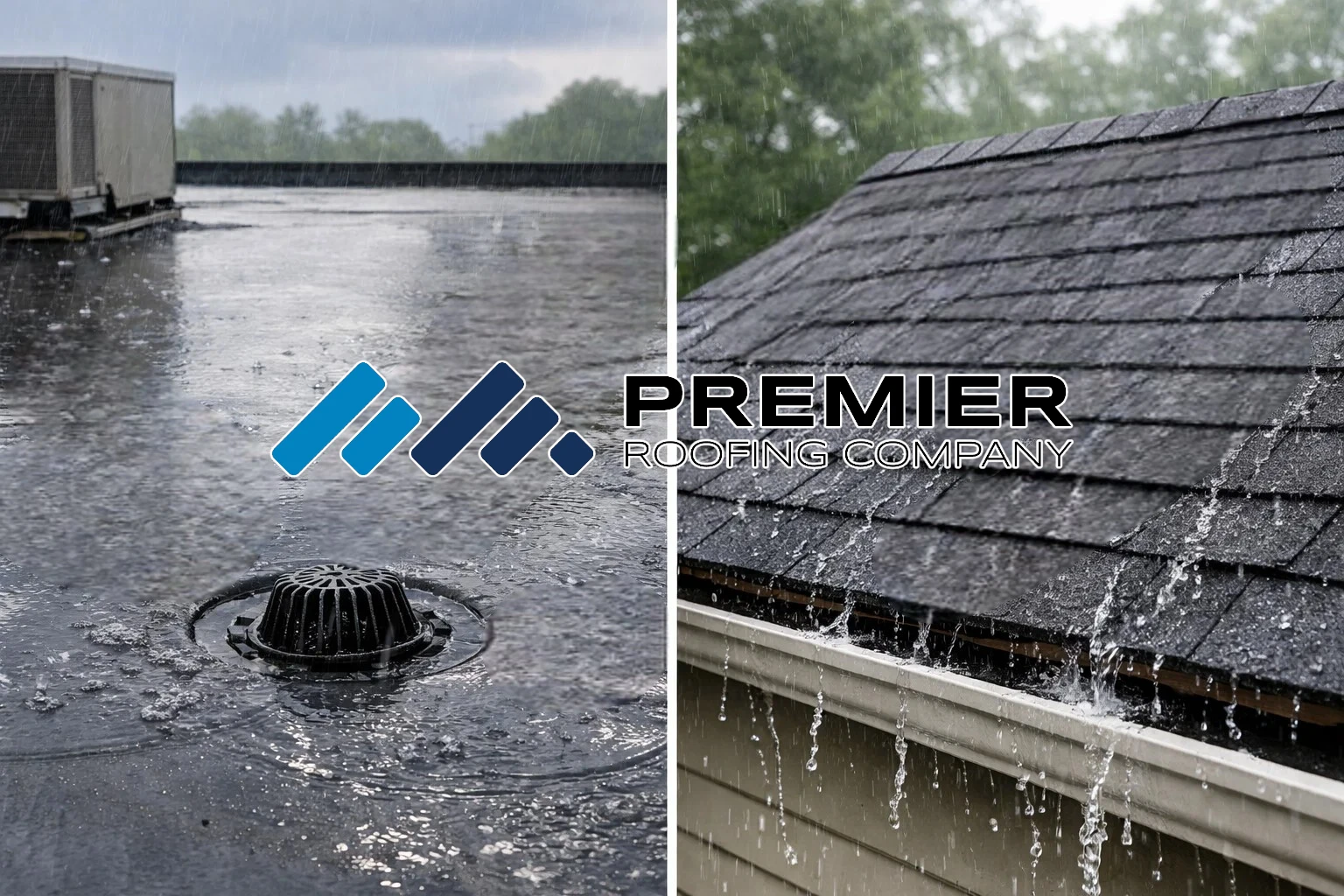
The biggest difference between these two options comes down to shape and how water moves. Flat roofs have a low slope, while shingle roofs are angled. A flat roof uses large sheets, while a shingle roof uses many smaller pieces layered together. Water drains slowly on flat roofs but quickly on sloped ones.
Because of this, a flat roof needs careful drainage planning, while a shingle roof naturally helps move water away from your home.
Cost Comparison: Flat Roof vs Shingle Roof Installation
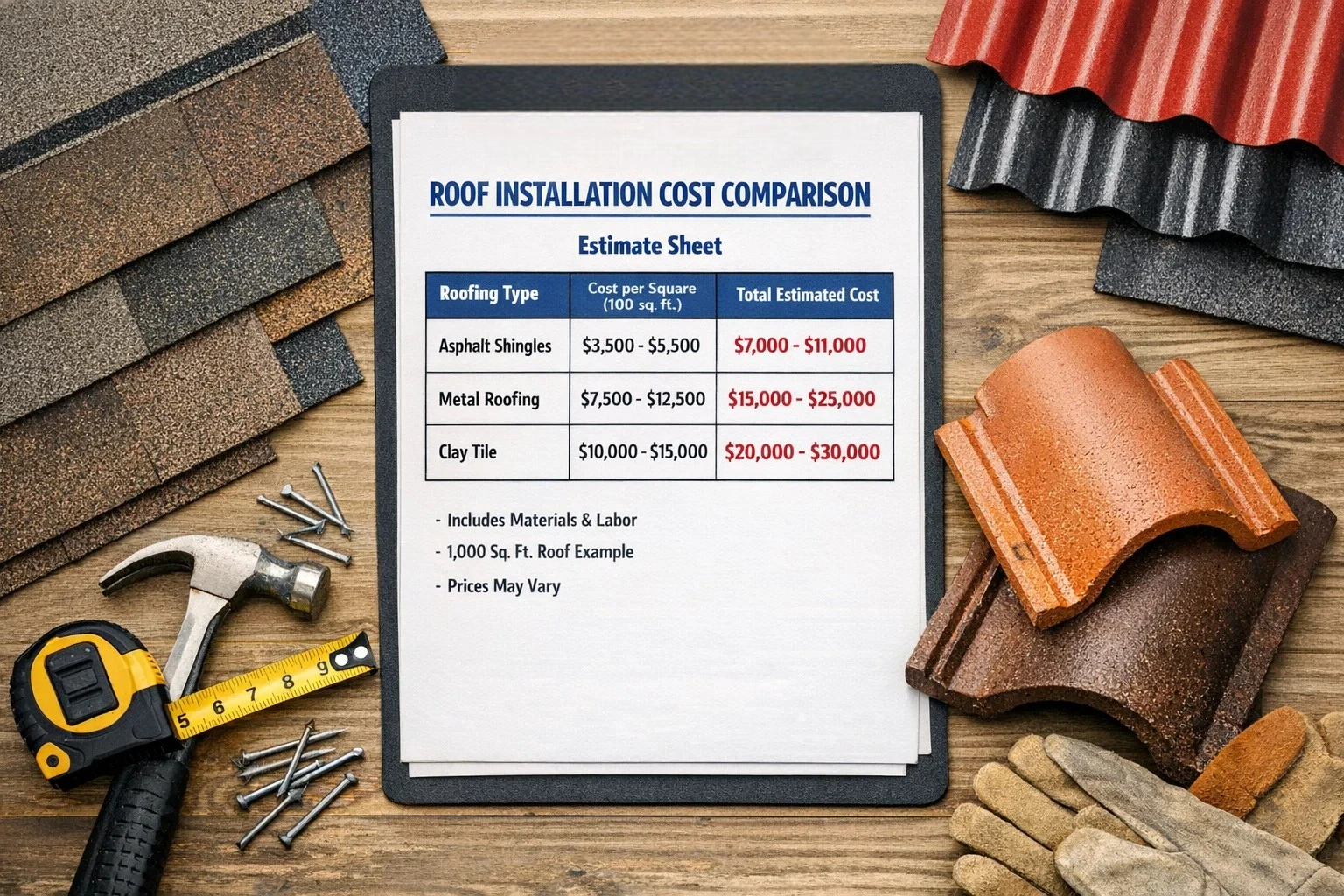
Cost is often the first thing people look at when planning a roof replacement. A flat roof can have a lower upfront cost because it uses fewer materials and takes less time to install. However, repairs can be more expensive if damage spreads.
A shingle roof can cost more upfront, but repairs are often easier and cheaper over time. When budgeting, it helps to keep extra features in mind—factoring in things like potential skylight repair cost or gutter maintenance will give you a better idea of your true long-term expenses
Lifespan and Durability
Lifespan matters when you are choosing a roof. A flat roof typically lasts between 15 and 30 years, depending on the material and maintenance. It is more exposed to sun and standing water, which can wear it down faster.
An asphalt shingle roof can last 20 to 50 years with proper care. Its sloped design helps it handle rain and snow better. Over time, this can make shingles a more durable option for many homeowners.
Maintenance Requirements
Every roof needs maintenance, but the level of effort can vary a lot. A flat roof requires regular checks for pooling water, cracks, and debris buildup. Even small issues can turn into leaks if ignored.
A shingle roof is easier to maintain because problems are easier to spot. Missing or damaged shingles are visible and can be fixed quickly. In simple terms, a flat roof needs more attention, while a shingle roof is more forgiving.
Energy Efficiency and Insulation
Energy use is another important factor when planning a roof project. A flat roof works well with reflective coatings that reduce heat from the sun. This can help lower cooling costs, especially in warmer areas.
A sloped roof can also support good attic ventilation when it is designed and vented properly. Both options can be energy efficient if installed correctly. The right roof can make your home more comfortable and help lower energy costs.
Best Use Cases for Each Roof Type
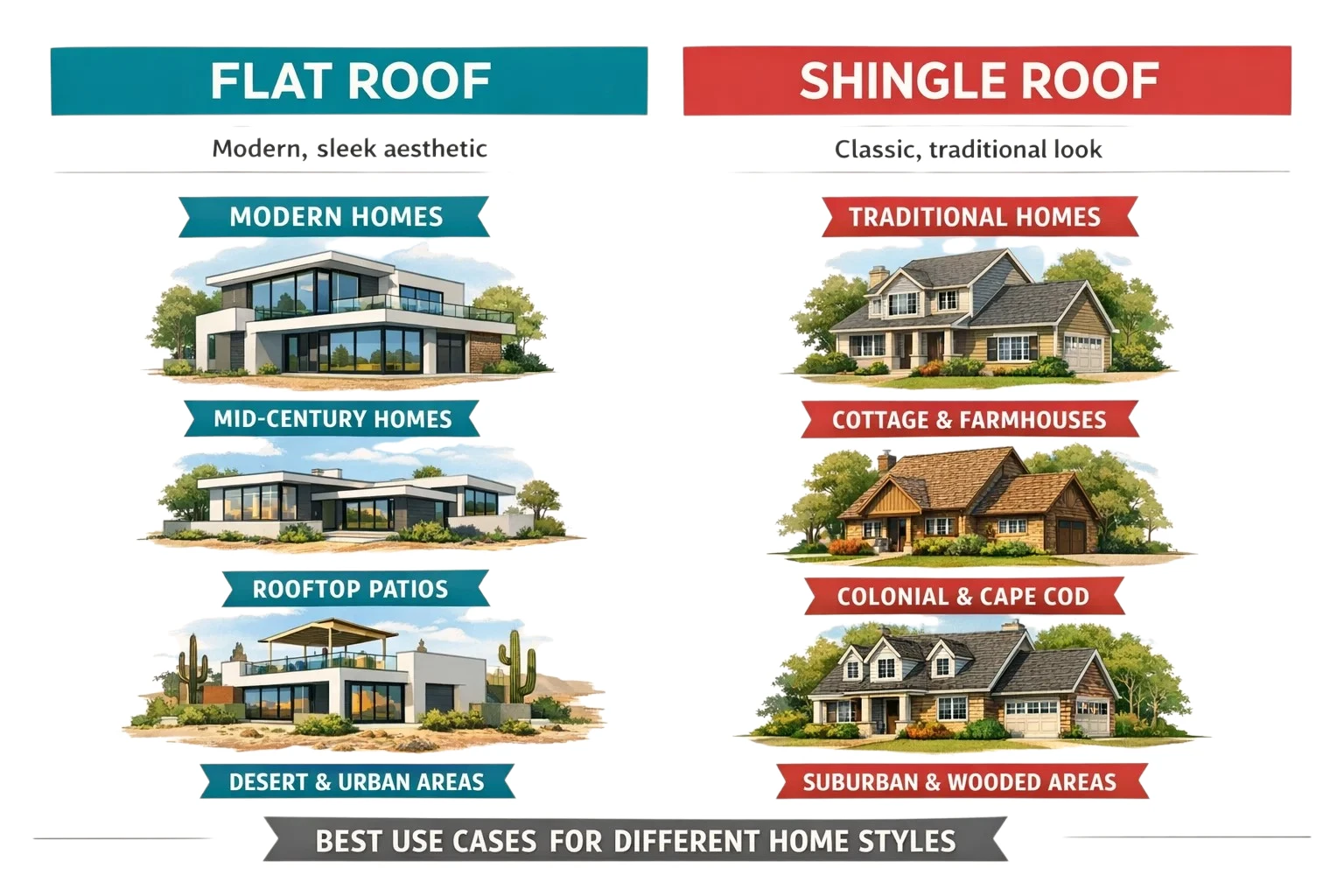
The right roof depends on how you plan to use your space. A flat roof is great for modern homes, rooftop patios, or buildings where you want usable outdoor space. It is also common for commercial properties.
A shingle roof is better for traditional homes and areas with heavy rain or snow. If you want something low-maintenance and reliable, shingles are often the safer bet for many homeowners.
How the Installation Process Works
Understanding the installation process helps you know what to expect. Installing a flat roof starts with preparing the surface, adding insulation, and sealing large waterproof sheets. Every seam must be tightly sealed.
Installing a shingle roof begins with underlayment, followed by rows of shingles installed from bottom to top. Flashing is added to protect edges and joints. Each step matters because poor workmanship can affect the entire roof system over time.
Making the Right Roofing Choice
Choosing between a flat roof and a shingle roof is about more than just looks or price. It is about how your home performs every day. A flat roof can give you a modern style and even extra space, but it requires regular care to stay in good shape. A shingle roof is more traditional, but it offers strong durability, easier repairs, and better protection in most weather conditions.
When making your choice, think long term. A cheaper option today might cost more later if repairs add up. Consider your climate, how long you plan to stay in your home, and how much maintenance you are willing to handle. The right roof helps protect your investment, keeps your home safe, and gives you peace of mind for years to come.