
Insulation is one of the best ways to keep your home comfortable and lower your energy bills. Two of the most common options are insulation batts and blown-in insulation. Both get the job done, but the right choice depends on your house, your budget, and what you want to achieve.
If you’re stuck between the two, here is a side-by-side comparison to help you decide.
What Are Insulation Batts?
Batts are pre-cut sections of insulation usually made from fiberglass, polyester, or mineral wool. They fit perfectly between wall studs, ceiling joists, and floor framing.
Key Features
- They come in fixed sizes to make installation easier.
- You can buy them in different R-values based on your climate.
- They are a go-to choice for new construction and major renovations.
What Is Blown-In Insulation?
Blown-in, or loose-fill insulation, consists of small particles blown into empty spaces using special equipment. The most common materials are cellulose, fiberglass, and mineral wool. Contractors mostly use it to fill attics, finished walls, and spots that are hard to reach.
How Installation Compares
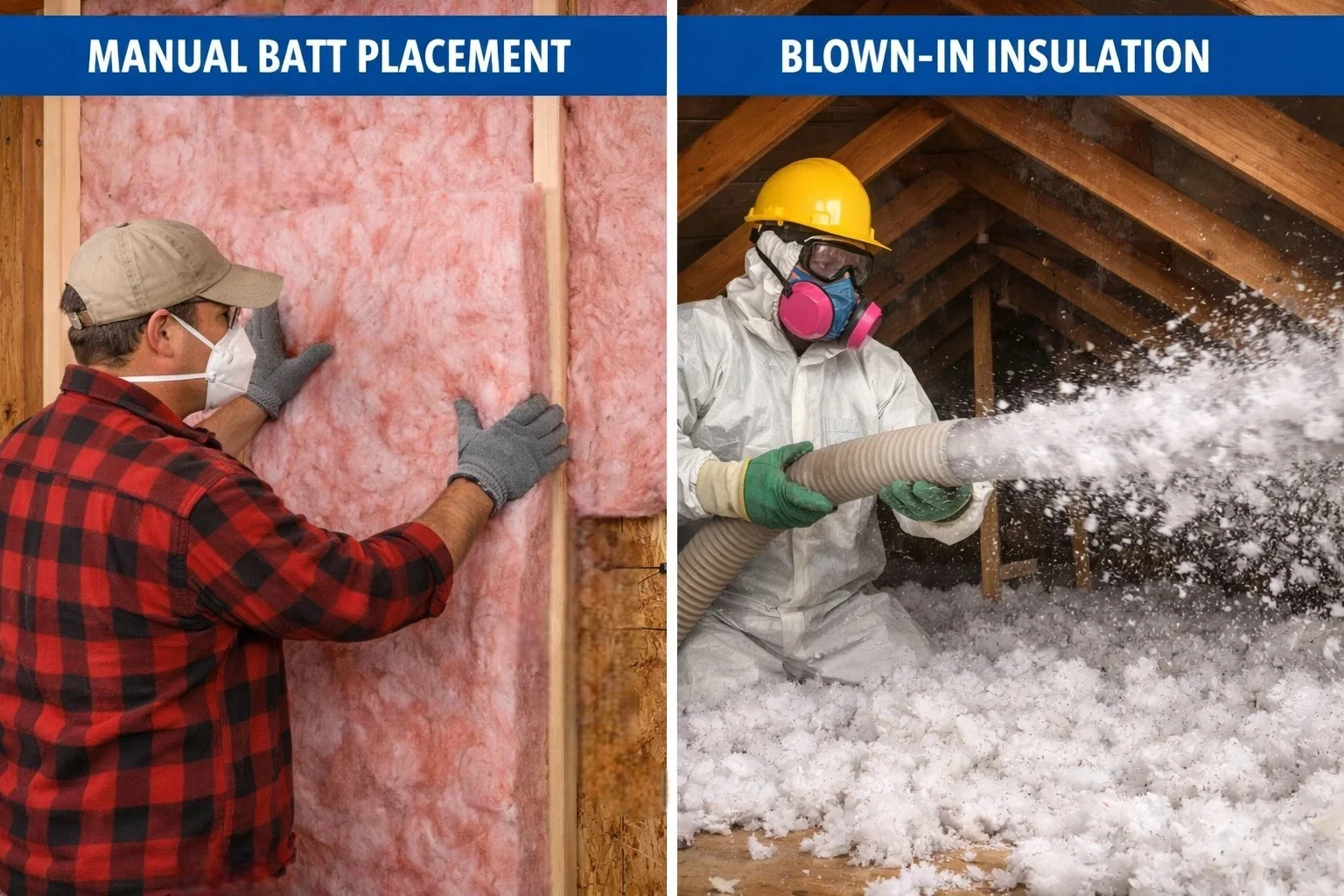
The biggest difference between these two options is the installation process.
Insulation Batts
- You or a contractor install them by hand.
- They need to be measured, cut, and fitted between your home’s framing.
- They work best in open spaces where the walls are not closed up yet.
Blown-In Insulation
- Requires a specialized blowing machine to install.
- Easily fills gaps, corners, and irregular spaces.
- Perfect for existing homes that already have finished walls.
Batts are usually a straightforward option if you are building a new house, while blown-in insulation is often a better fit for upgrading older homes.
Coverage and Sealing
Insulation only works well if it completely covers the area.
Insulation Batts
- Can leave gaps if they are not cut and fitted perfectly.
- They struggle to fit around pipes, wires, and tight spaces.
Blown-In Insulation
- The loose particles easily fill gaps and hidden voids.
- This creates a tighter seal and more consistent coverage overall.
Blown-in insulation definitely has the upper hand when you need to seal up hard-to-reach areas.
Energy Efficiency and R-Value

Both options do a great job keeping your home warm in the winter and cool in the summer if they are installed correctly.
Insulation Batts
- They offer a consistent R-value as long as they fit perfectly.
- Their actual efficiency drops heavily if they are stuffed or compressed too tightly.
Blown-In Insulation
- This option achieves a similar R-value per inch.
- Because it leaves fewer gaps, the overall energy efficiency is usually better.
In a real house, blown-in insulation tends to perform better in tight or weirdly shaped spaces, while batts do just fine in open spaces with standard framing.
Which Option Costs More?
Your budget will probably play a big part in your decision.
Insulation Batts
- Generally cheaper to buy upfront.
- The raw materials cost less than loose-fill options.
- They are very DIY-friendly, which can save you a lot of money on labor.
Blown-In Insulation
- You will usually pay more for installation due to the special equipment and professional labor.
- However, the faster installation time can offset the cost if you are doing a very large or complex area.
Where to Use Each Type
Matching the product to the space is the secret to getting the best results.
Best Places for Insulation Batts
- Brand new construction where walls are still open.
- Unfinished basements or garages.
- Exposed ceilings and floors.
Best Places for Blown-In Insulation
- Attic floors with a lot of crossbeams.
- Existing finished walls where you do not want to tear down the drywall.
- Tight crawlspaces and awkward corners.
Soundproofing Capabilities
Both materials will help block outside noise from getting into your house.
- Batts made from dense materials like mineral wool are fantastic for soundproofing walls between rooms.
- Blown-in insulation muffles sound too, but it is usually less dense and not quite as effective.
If keeping your house quiet is a top priority, batts usually win here.
How Long Do They Last?
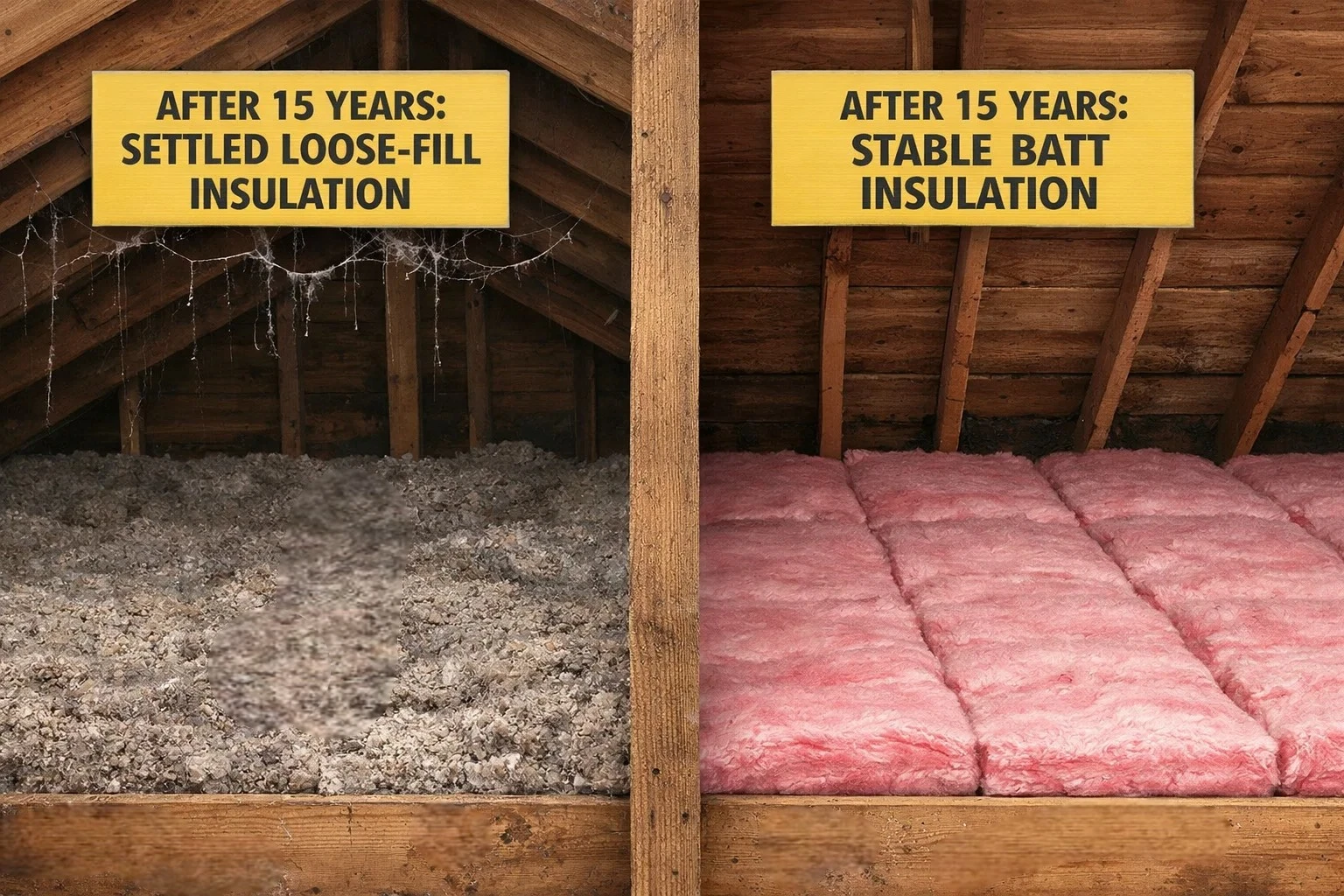
Both options will last for decades, but they age a little differently.
Insulation Batts
- They hold their shape over time as long as they stay dry.
- They will not settle or sink down the wall cavity.
Blown-In Insulation
- The loose pieces will likely settle and pack down after a few years.
- You might lose some R-value over time, but you can easily blow more on top later.
No matter what you choose, keeping moisture out is the best way to make your insulation last.
Making Your Final Choice
There is no single right answer here. The best choice completely depends on your current situation.
Choose Insulation Batts If…
- You are building an addition or taking walls down to the studs.
- You have easy access to the joists and framing.
- You want to do the project yourself to save money.
- You are specifically trying to soundproof a room.
Choose Blown-In Insulation If…
- You want to add insulation to a house that is already finished.
- Your attic has a lot of wires, pipes, or tight angles.
- You want to boost your attic insulation without pulling up the existing floorboards.
The Bottom Line
Both batts and loose-fill insulation are great options, but they serve different purposes. Batts make the most sense for structured, wide-open spaces. Blown-in insulation is the clear winner for filling weird gaps and retrofitting older houses.
Ultimately, your home’s layout and your budget will dictate which way you go. In a lot of cases, using a combination of both is actually the best way to get a comfortable, energy-efficient home.