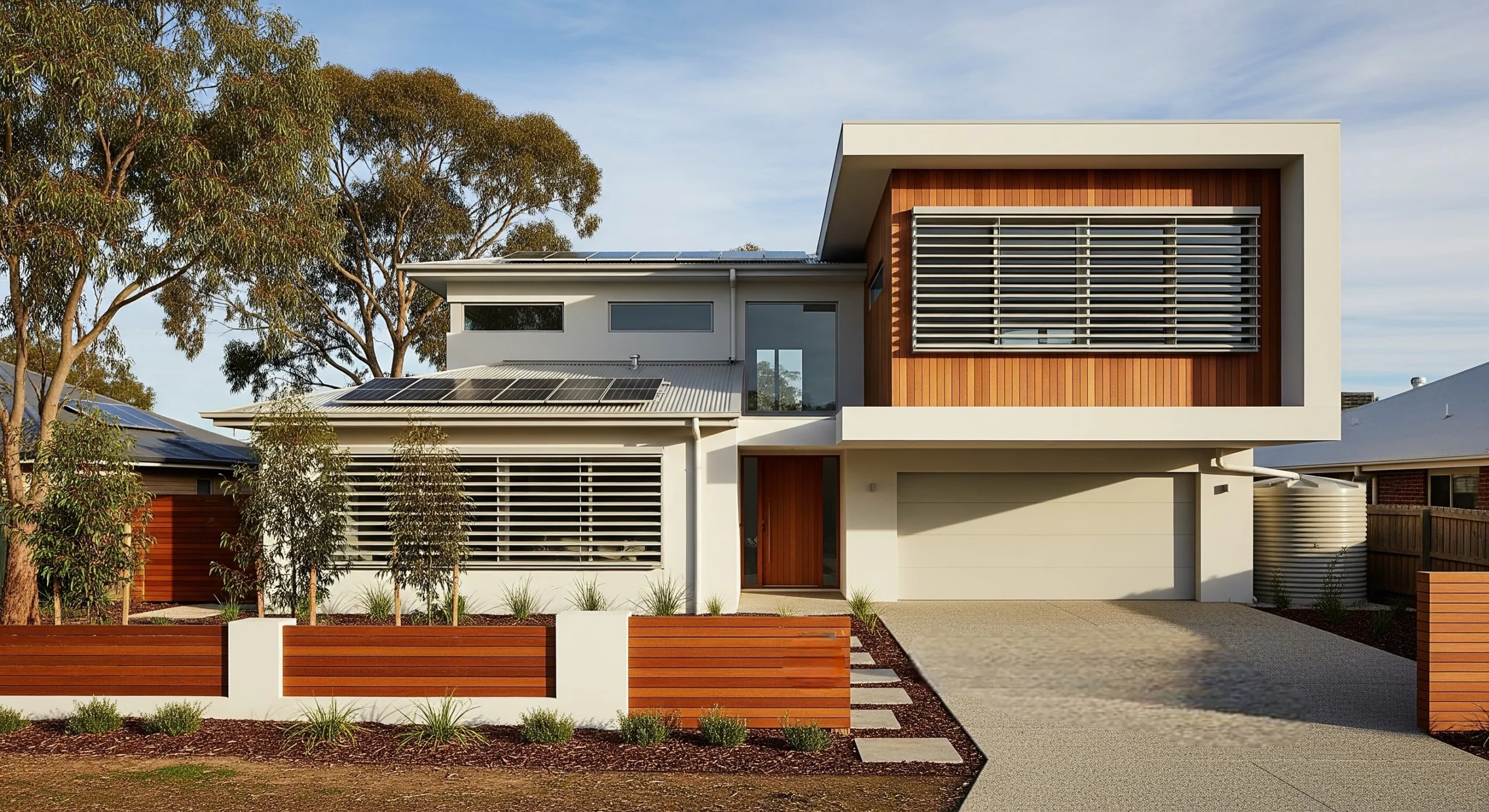

Your power bills drop fastest when you tackle heating, cooling, and hot water waste before splashing out on new gear or solar panels.
Follow this sequence: seal, insulate, electrify, then generate. When you cut your home’s energy load first, right-sized equipment and solar deliver better comfort and lower lifetime costs.
What Actually Moves the Bill in Australian Homes
For most Australian homes, heating, cooling, and hot water dominate the bill, so they deserve your attention first.
Space heating and cooling usually account for about 40 percent of household energy use, with hot water around 25 percent in a typical year.
Reverse-cycle air conditioners are heat pumps, which means they move heat instead of generating it. They typically run at 300 to 600 percent efficiency. One kilowatt in can deliver three to six kilowatts of heating or cooling.
The Zoned Energy Rating Label shows how units perform in hot, average, and cold climates so you can match a model to your location.
Where Lighting and Appliances Fit
Lighting usually accounts for 5 to 10 percent of household electricity. Swapping ten halogens to LEDs can save over $2,000 and roughly three tonnes of greenhouse gases over ten years, because LEDs use about 75 percent less energy and last five to ten times longer. Australia is phasing out inefficient lamps from October 2025, so plan your swap now.
Plan First: Audit and Sequence Your Work

A quick audit surfaces the major issues in your home before you spend a cent on upgrades.
Run your hand along skirtings, door sweeps, and window frames on a windy day to feel for leaks. Check the roof space for insulation depth and gaps around downlights or hatches.
Simple Decision Tree
- If rooms feel draughty or uneven, do sealing and insulation first.
- If your hot water is older, electric resistance or gas, consider a heat pump water heater next.
- If daytime electricity use is moderate to high, rooftop solar is typically your next move.
Roof and Site Check Before Solar
Look for cracked tiles, metal corrosion, or soft spots that signal roof repairs before you mount panels. Map nearby trees, chimneys, and antennas that may shade your roof across seasons. If you want a fast way to map shade, roof condition, or panel layout before a solar install, consider Avian’s drone surveying services to capture accurate roof geometry and spot defects that could delay installation.
Seal and Insulate for Reliable Savings
Stopping air leaks and boosting insulation delivers reliable, repeatable savings in every Australian climate.
Basic draught sealing can reduce heat loss by 15 to 25 percent and usually costs little. In Tasmania’s cool-temperate climate, aim for around R5.0 in ceilings, R2.5 in walls, and R2.0 under floors.
Practical Sealing Steps
- Install door sweeps and compression seals on external doors.
- Use caulk along skirtings, architraves, and service penetrations.
- Fit downlight covers rated for insulation contact.
Aim for continuous insulation coverage without gaps. Ceiling top-ups usually deliver the fastest comfort gains.
If you are unsure where leaks remain, use an incense stick near windows on a windy day. A blower-door test with an energy assessor uses a fan in an external doorway to measure leakage and pinpoint problem areas.
Heat Pump Heating and Cooling That Works

Reverse-cycle air conditioning, when sized and set up properly, is usually the cheapest way to heat and cool your home.
Compared with resistance electric or gas units, modern heat pumps use far less input energy for the same comfort. When you compare models, use the Zoned Energy Rating Label to see how each one performs in hot, average, and cold climates.
Tasmania Cold-Climate Setup
Place outdoor units out of prevailing southerly winds and plan clear condensate drainage so you avoid icy paths. Ask installers to allow for defrost cycles and correct refrigerant charge, and book a preseason check so you are not caught out by the first cold snap. In southern Tasmania, book a preseason tune-up or a right-sized reverse-cycle unit with heat pump service Hobart to ensure reliable performance on frosty mornings and lower running costs.
Hot Water That Stops Bleeding Cash
Switching from old electric or gas hot water to a heat pump unit can quietly cut a big slice of your energy use.
Heat pump water heaters typically use about 30 percent of the energy of a conventional electric system. Because hot water is around 25 percent of household energy, this upgrade delivers meaningful bill cuts.
Locate units away from bedrooms for noise comfort and provide a proper condensate drain. If you have rooftop solar, schedule daytime heating cycles to soak up excess generation.
Garage Comfort and Efficiency

Treat the garage as a buffer zone, so fumes, heat, and cold do not leak into living areas.
Air seal the door between the garage and the living spaces. Insulate internal garage walls or ceilings below habitable rooms. Bright, high-reflectance finishes improve visibility and can allow lower lighting wattage.
Materials and Finishes
Select coatings that cure fast, resist abrasion, and use light-coloured finishes to improve illuminance. Confirm slip resistance and prepare surfaces properly so the coating bonds well. For homeowners researching durable, fast-curing finishes that brighten the garage and resist hot-tyre pickup, see polyaspartic floor coating for a deeper dive on pros and cons versus epoxy.
Rooftop Solar First, Batteries When Numbers Stack Up
For most households, rooftop solar pays back quickly, while batteries only make sense when your tariffs and usage line up.
A typical 6.6 kW solar system in 2025 costs about $5,250 to $8,600 installed and produces roughly 24 to 28 kWh per day. Simple payback ranges from three to seven years depending on tariffs and how much of your solar you use on site.
From 2025, batteries receive 9.3 Small-scale Technology Certificates (STCs) per kWh of capacity, representing roughly 30 percent off typical installed costs.
Three Questions Before Adding a Battery
- Do you have high evening usage that solar alone does not cover?
- Do your tariffs make storage valuable, such as high peak rates or time-of-use pricing?
- Is your inverter ready for a battery, and would storage delay higher-return upgrades?
Conclusion
A clear sequence lets you stack upgrades so each one makes the next cheaper and more effective. Start with sealing and insulation, then choose right-sized reverse-cycle systems and a heat pump water heater. Add solar sized to your loads last. Use labels and price bands to filter quotes quickly and keep QA checklists handy so installs match the design.
FAQs
How Big Should My Solar Be?
For most homes planning a heat pump, 6 to 6.6 kW of solar is a solid baseline.
Will A Heat Pump Work In Frost?
Yes. Choose models with strong cold-zone ratings on the Zoned Energy Rating Label and ensure good defrost setup.
Do I Need Double Glazing Everywhere?
No. Prioritise living areas and bedrooms facing the harshest orientations, and use thermal curtains plus sealing elsewhere.
Are Home Batteries Worth It Now?
Batteries work best where evening usage and peak tariffs are high, and otherwise install solar first and add storage later if needed.