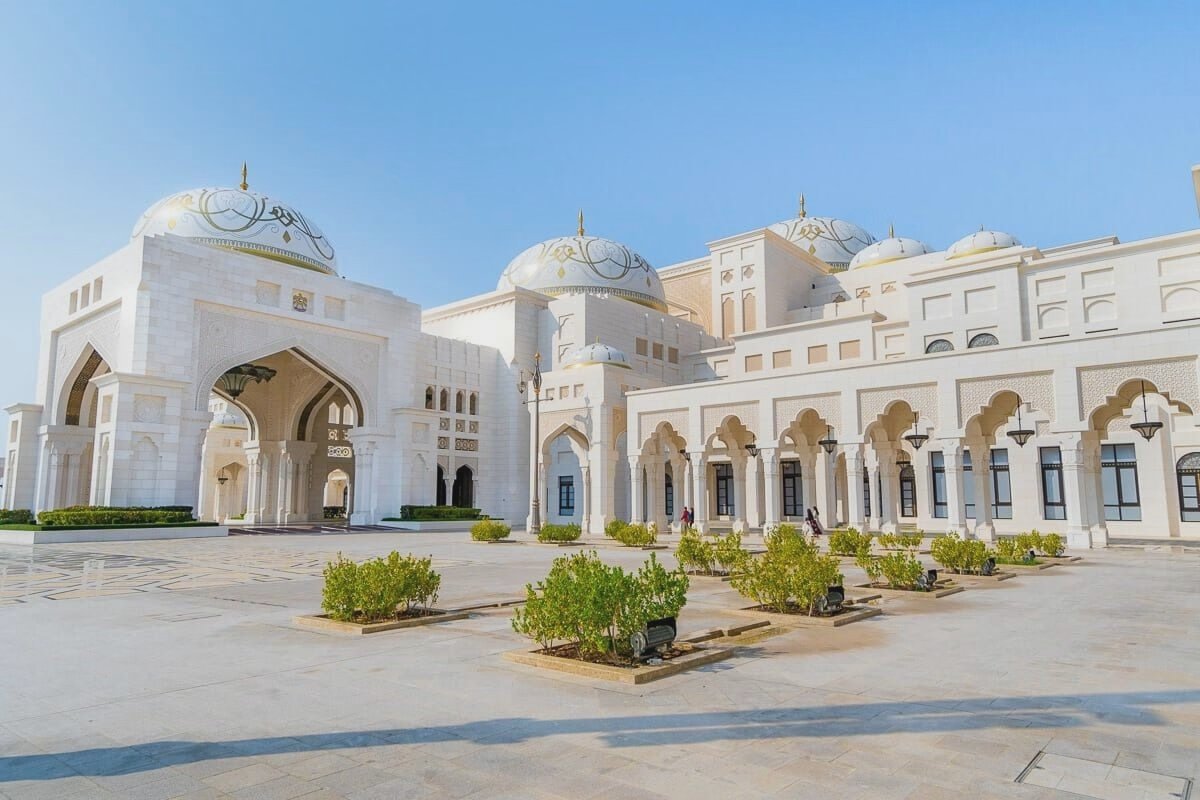
If the name Abu Dhabi makes you think of endless sand dunes and oil rigs, it’s time for an urgent software update. While city planners across the United States are struggling to retrofit aging, congested cities with crumbling roads, The capital of the United Arab Emirates is building the future from the ground up.
Western cities are losing the battle against century-old plumbing, endless bureaucratic red tape, strict zoning laws and aggressive NIMBYism that kills innovation before it even gets to the building phase. Abu Dhabi doesn’t face the same historical constraints.
The city has strategic investment and it is not just putting up shiny glass towers and slapping a luxury label on them to meet short-term demand. Rather, the emirate is rewriting the rule book on urban living, building an advanced technology utopia in real time. The developers here are writing the blueprint for tomorrow – and everyone from Silicon Valley tech founders to Wall Street heavyweights is feeling huge FOMO.
Moving Beyond the Tower Model
Dubai has long been recognized as a flashy city with fast growth and tall skyscrapers. Abu Dhabi is the sophisticated big sister. Here, developers are not looking for immediate shock value; they are playing a very calculated long game. They studied sprawling layouts of other world cities and made the decision to build smarter, valuing longevity and quality of life over sheer volume. A lot of focus on building right, not just building big. The city has been aggressively transforming itself from a legacy oil-based economy to a tech-forward, hyper-sustainable metropolis.
And the ambitious Economic Vision 2030 is leading the way. Real estate giants like Aldar Properties are engineering entire self-sustaining ecosystems rather than isolated apartment blocks.
The master-planning is obvious in the careful zoning of the city’s islands. The Formula 1 circuit and huge indoor theme parks are on Yas Island, the focus for high-octane entertainment. Other districts are dedicated to the quiet preservation of culture. And, this kind of city planning is compatible with the natural environment. Developers are working around the lush mangrove forests that line the coast, instead of paving over the unique topography.
You can begin the morning with a paddle through protected waters and end the day with an afternoon at a state-of-the-art convention center for a global tech summit. This is creating a new world standard for city building that is a delicate balance of cutting edge urbanism and protecting the environment.”
Sands to Smart Cities
The highest flex in real estate today is sustainability. Abu Dhabi is leading the charge as the Middle East, once known for its energy-guzzling mega-projects, has swung around to confront the global climate crisis.
Welcome to Masdar City. Calling it a neighborhood is an enormous understatement. This is a completely master-planned, low-carbon smart city that’s like you’ve walked decades into the future.
The urban design is actively battling the brutal desert heat. The streets are carefully oriented to capture the sea breeze. The buildings are constructed with high-tech terracotta walls and special facades to deflect the sunlight. This cools things down significantly, and reduces energy use by 50 percent—without cranking the air conditioning to “aggressive.”
You won’t see gas guzzling SUVs clogging up the roads here. Instead, it reduces energy use by 50 percent, keeping the pedestrian-friendly streets above traffic- and emissions-free.
The infrastructure is powered and cooled by the advanced solar infrastructure and modern Arabic wind towers. Masdar City is also a major green technology incubator, and home to the world’s first artificial intelligence university. Green living is not just a corporate buzzword here – it’s the gold standard of guilt free indulgence.
The Cultural Capital of Saadiyat Island
Abu Dhabi is also building with jaw-dropping aesthetics, proving that intellectual capital is as valuable as financial capital. To find out where the global elite are quietly stashing their money these days, look no further than Saadiyat Island.
Developers have turned a pristine natural island into one of the world’s highest concentrations of cultural institutions. The stunning Louvre Abu Dhabi is beautifully placed on the water by the Frank Gehry-designed Guggenheim, the Natural History Museum and the Zayed National Museum. In the distance stands the Abrahamic Family House, an architectural marvel of a mosque, a church, and a synagogue, a testament to the deep commitment to the world’s tolerance and unity.
The real estate surrounding these iconic landmarks is coveted and fiercely protected. Imagine waking up in a super-minimalist beachfront villa, strolling out to white sands where protected hawksbill sea turtles nest, and looking over to a world-class art museum as your literal next-door neighbor.
Beyond the museums, the wider cultural district is filled up with Michelin-starred food concepts, boutique hotels and highly curated retail spaces that celebrate artisanal craft over mass-market luxury brands. It is the ideal combination of old money taste and new money technology, proving how high-end development and ecological preservation can be one and the same.
The Rise of Branded Residences
One of the most visible trends transforming Abu Dhabi’s real estate landscape is the emergence of branded residences, properties associated with well-known hotel or lifestyle brands. These properties offer buyers something beyond square footage: consistent service standards, shared amenities, and an internationally recognised quality benchmark that helps with both resale and rentability.
Several property developers in Abu Dhabi have responded to this demand by partnering with hospitality brands to deliver residences that sit at the intersection of luxury living and hotel-grade service, a product category that barely existed in the emirate a decade ago.
The pitch to investors is straightforward: Branded residences tend to deliver better rental yields and higher resale values than comparable stand-alone units. For owner-occupiers, it is the lifestyle that is the draw, the concierge services, the maintained communal facilities and a consistency of experience that is hard to replicate in a standard residential building.
What Makes a Branded Residence Work?
Not every partnership between a developer and a hotel brand produces a successful product. The projects that work best tend to share a few characteristics: a location that genuinely fits the brand’s identity, a real integration of hotel-level services rather than cosmetic branding, and pricing that reflects added value without losing touch with the market. In Abu Dhabi, coastal and island locations have given many of these projects the setting needed to justify their positioning.
Infrastructure as the Foundation
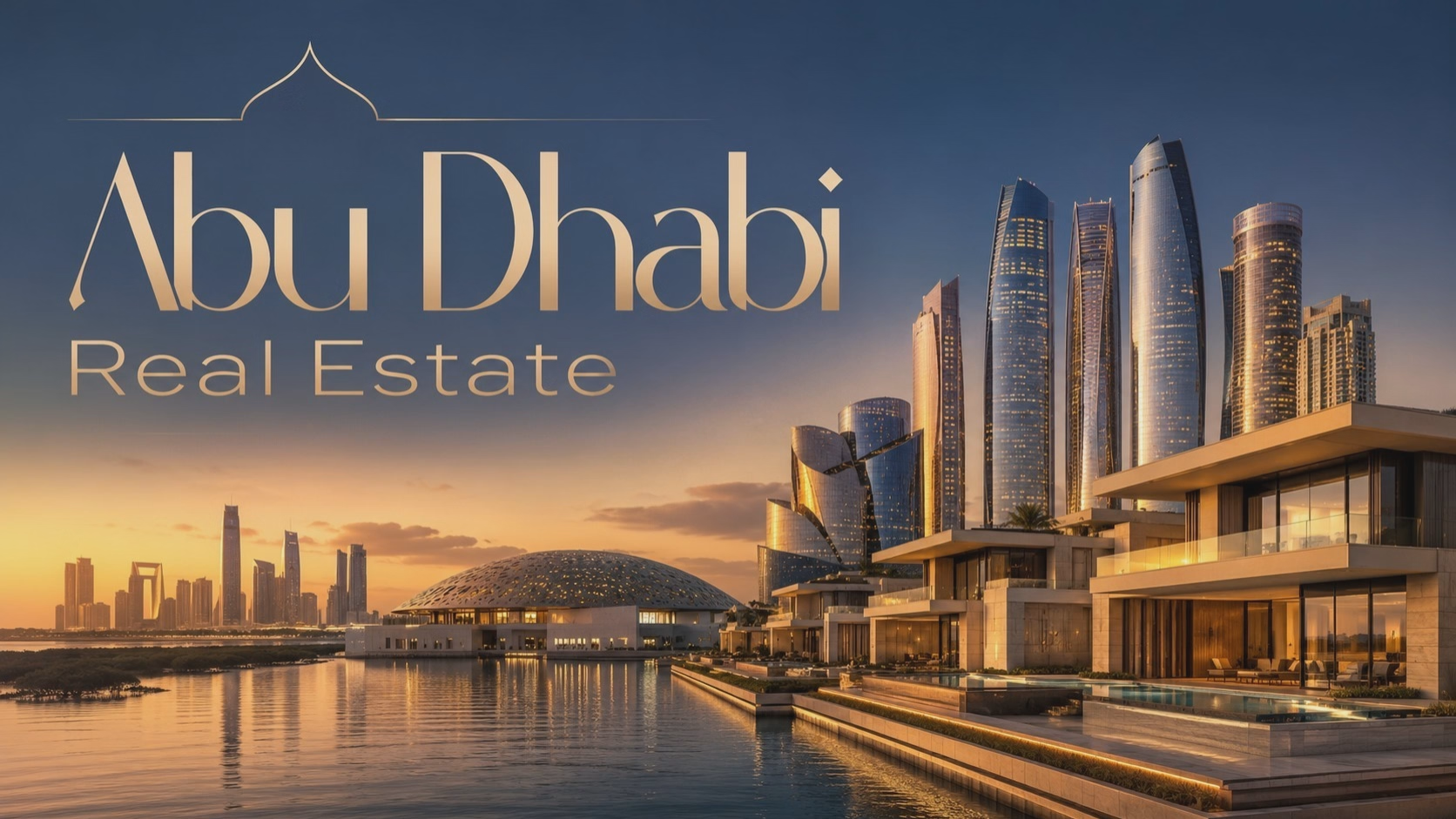
American luxury real estate is great, no doubt, but Abu Dhabi developers are operating in a whole other stratosphere. In New York, Los Angeles and Miami, “luxury amenities” typically means a shared rooftop pool, a 24-hour doorman and a basement gym with a few treadmills. In Abu Dhabi, the luxury baseline is an order of magnitude higher.
Properties are fully embracing the modern wellness and technology revolutions with common amenities. Imagine your AC kicking on, smart shades rising to reveal the sunset, your circadian lighting shifting to a soothing evening hue, and your espresso machine brewing as your car pulls into the secured driveway.
It doesn’t stop with the physical hardware. These properties offer a level of service comparable to five-star hospitality. Residents have concierge teams on demand to arrange anything from private chefs for exclusive dinner parties to last-minute private aviation. The ultimate luxuries for the ultra-wealthy are time, privacy, health and convenience, so developers are building frictionless lifestyles.
What This Means for Buyers and Investors
ROI and government incentives are too good to ignore.” Tech founders, billionaire family offices, hedge fund managers and crypto pioneers are flocking to Abu Dhabi in droves, thanks to a perfect storm of financial incentives:
- The Golden Visa Program: This provides investors with up to 10 years of renewable residency, meaning successful expats can put down roots without the bureaucratic red tape.
- No Personal Income Tax: Residents keep everything they earn, transforming the manner in which individuals amass personal wealth.
- No Capital Gains Tax: A huge and unprecedented boon to maximizing property flips and long term equity investments.
- Abu Dhabi Global Market (ADGM): An award winning international financial centre operating on a fully integrated English common law system. This provides total legal certainty and a transparent regulatory framework to western investors and huge hedge funds.
- Strategic Global Location: Central position between the East and West with seamless global connectivity for international business travelers who regularly hop between London, Singapore and New York.
Besides, the real estate market here is closely regulated by the government to avoid the wild boom-bust cycles that afflict other emerging markets. Off plan developments have to have escrow accounts so investor capital is very much protected and projects are delivered on schedule. While the US real estate market is struggling with high mortgage rates, crippling inventory shortages and looming economic uncertainty Abu Dhabi has become a booming, highly liquid safe haven for global capital.
A Market Still Being Written
Abu Dhabi is the ultimate evidence that real estate is no longer simply about providing you with a roof over your head or maximizing the square footage of a property. It is about pushing the limits of sustainability, culture and structural engineering to achieve an optimized way of living. The city planners looked over the great empty desert and saw a blank slate for the utopian future of human habitation.
The rest of the world is taking notes, but for now, Abu Dhabi is the one teaching the pro level. If you’re still putting all of your portfolio’s eggs in the aging old-guard cities of the West, it might be time to seriously diversify your holdings. The future is already constructed and it is there gleaming just beyond the desert.