- Getting Your Foot in the Door: An American Expat’s Guide to Tokyo’s Rental Market
- Budgeting for Your Move in Costs
- Timeline You Can Follow: 60 Days to Move in
- Documents Required and How Screening Works
- Where to Search and Book Viewings
- Fine Print and Lease Terms
- What to Expect on Move in Day
- Smart Tips to Stretch Your Rental Dollar
- The Move in Checklist You Need
If you are a Dallas or North Texas professional planning a move to Tokyo, expect the apartment search to work differently from what you are used to. Tokyo is a rail oriented city, so renters usually begin with train lines and stations rather than parking, highway access, or driving distance. Apartment sizes are also listed in square meters instead of square feet.
Upfront costs can be another surprise. Deposits, key money, agency fees, insurance, and guarantor fees may all be due before you receive the keys. The application process also tends to require more documentation than a typical U.S. rental.
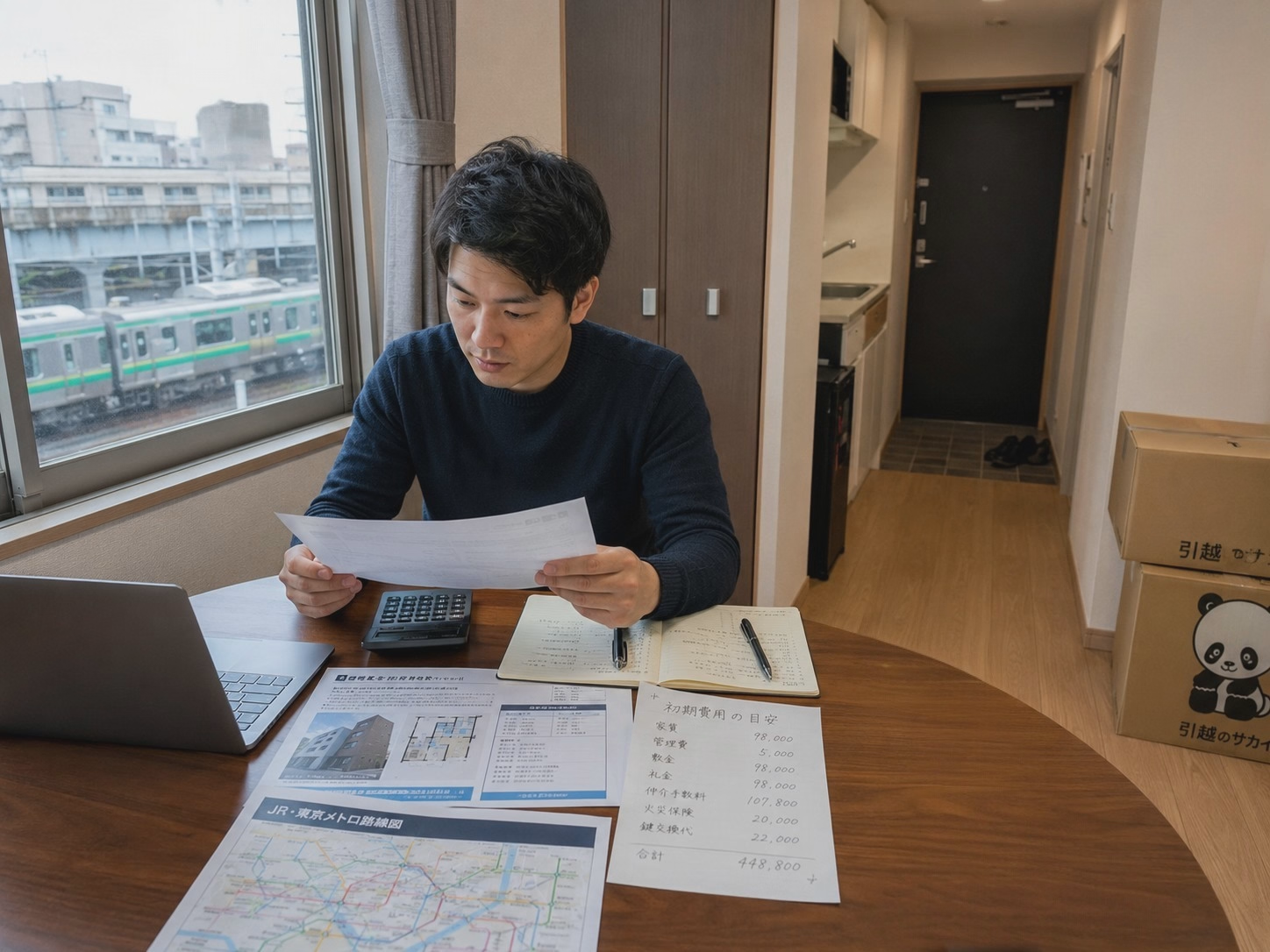
This guide walks you through the process from the start of your research to move in day, including common fees, application documents, lease terms, and local processes.
Getting Your Foot in the Door: An American Expat’s Guide to Tokyo’s Rental Market
Buildings in Tokyo are usually advertised as manshon or apaato. These are popular real estate terms, not legal designations.
A manshon is typically a larger apartment building, constructed with reinforced concrete, steel reinforced concrete or similar material. These buildings are often better insulated against noise and may include elevators, secure entrances and other communal amenities.
An apaato is usually a smaller, low rise building made from wood or lightweight steel. These units can be more affordable, although soundproofing, insulation, and building features vary considerably.
For professionals arriving from North Texas, the adjustment to a smaller home may take some planning. Pay close attention to the total area rather than relying only on photos or the number of rooms.
Tokyo listings use several standard floor plan abbreviations:
- 1R means one room, usually with the kitchen inside the main living space.
- 1K has one main room and a kitchen separated by a door or hallway.
- 1DK includes one separate room and a combined dining and kitchen area.
- 1LDK includes one separate room plus a combined living, dining, and kitchen area.
The number at the beginning refers to the number of separate rooms outside the kitchen, dining, and living area. Always check the listed square meters because apartments with the same floor plan label can differ substantially in size.
Room sizes may also be shown in jo, a measurement based on tatami mats. For easier comparisons across multiple listings, use the total area in square meters as your primary reference.
Walking time to the nearest station is another important detail. Under Japan’s real estate advertising rules, walking time is calculated at 80 meters per minute, with partial minutes rounded up. The calculation does not necessarily include time spent waiting at traffic lights, walking through a large station, reaching the platform, or taking an elevator from your unit. Treat the advertised time as a useful estimate, not a guaranteed door to train measurement.
Your commute should guide much of your search. Start with the train lines that serve your workplace, determine which transfers are practical, and then compare rent, apartment size, and station access within those areas.
Budgeting for Your Move in Costs
Rent is only one part of the amount you may need before moving in. Japanese rental contracts can include several initial charges, and each property handles them differently.
- Security deposit (shikikin 敷金): The amount of money the landlord collects from the tenant to cover any unpaid rent and costs to repair or restore anything covered by the lease. All remaining balances must be returned to the tenant upon the termination of the lease and the closing of all accounts.
- Key money (reikin 礼金): A nonrefundable payment made to the landlord when required by the listing. It is common in parts of the Kanto region, including Tokyo, but many properties do not charge it.
- Agency fee: A fee paid to the real estate agency that arranges the lease. Usually it’s about a month’s rent (plus consumption tax).
- Guarantor company fee: Some landlords require a suitable personal guarantor or a rental guarantee company. The company charges a start up fee and sometimes annual or monthly renewal fees. The price depends on the provider and the contract.
- Fire or damage insurance: Rental contracts often require insurance for risks such as fire or water damage caused by the tenant.
- Other charges: Depending on the property, you may see fees for changing the locks, professional cleaning, pest treatment, administrative work, or around the clock tenant support.
Japan’s Ministry of Land, Infrastructure, Transport and Tourism gives four to seven months’ rent as a general estimate for the total amount due when signing a lease. That figure can include advance rent, deposits, key money, agency fees, insurance, and guarantor charges. Always request a written cost breakdown before applying or transferring money.
Timeline You Can Follow: 60 Days to Move in
The pace of Tokyo rentals can feel fast once you start viewing. Building in lead time helps.
For a broader planning aid alongside this Tokyo timeline, keep a general moving checklist open as you assign dates for documents, viewings, payments, utilities, and day one photos.
60 to 45 Days Out
Shortlist wards and train lines by location of work and preferred mode of commuting. Specify monthly rent in JPY. Begin gathering documents.
30 to 21 Days Out
Contact one or more bilingual real estate agents. Tell us what you need, lines you like and your budget. Confirm that your document pack is complete.
14 to 7 Days Out
View apartments in person or by remote video tour. Desirable units move quickly. If a place fits, be prepared to submit your application with a full document packet the same day.
7 to 0 Days Out
Sign the lease, make the initial payment, set up utilities such as electricity, gas, water, and internet, and schedule a move-in inspection with the landlord or management company.
Documents Required and How Screening Works
Each landlord, management company, agency and guarantor provider have their own requirements for rental screening. Commonly requested documents include:
- Passport
- Residence card, if already issued
- Visa or residence status information
- Employment certificate or assignment letter
- Signed employment contract
- Recent salary statements or other proof of income
- Bank or savings information in some cases
- Japanese telephone number, when available
- Emergency contact information
- Details about anyone who will live with you
The official housing guide for foreign residents lists passports, residence cards, employment certificates, income records, tax documents, and evidence of savings among the materials that may be requested during screening.
Some contracts may require an inkan or hanko, a personal seal used in Japan, although many transactions accept a signature. Ask the agent which form of identification or authorization is required before the signing appointment.
A guarantor company may call you, your employer, or your emergency contact to verify information. Just be sure to tell those contacts well in advance and that all the details on your application are the same on every document.
Where to Search and Book Viewings
Most apartment searches in Tokyo start online. You can filter by station name, walking minutes, rent range, unit size in m², building age, and floor level.
Some portals also let you filter for listings with no key money or those that explicitly accept foreign tenants.
To compare asking rents, station proximity, and example unit sizes before you contact agents, browse apartments for rent in Tokyo on listing sites and treat what you find as examples rather than a complete market view. Verify fees, including key money and deposits, and foreigner eligibility on each property individually.
Working with a bilingual agent is another common approach, and many renters use both methods in parallel. No single platform covers the entire market, so cross checking is useful.
Fine Print and Lease Terms
According to the MLIT model tenancy contract guidelines, many residential leases in Japan are for a term of 2 years. When renewed some leases will charge a renewal fee. This is often one month’s rent or a fraction of it. This has to be put in the contract before you sign it.
Those are usually stated in the house rules, which generally include things like rules about early termination, quiet hours, pets, musical instruments, smoking and overnight guests. These can affect your eligibility, deposit amount and overall cost. The MLIT model contract provides for optional clauses to cover these situations.
Ask for all terms in both English and Japanese where possible, and confirm any restrictions in writing before signing.
At move out, you will encounter restoration to original condition expectations. MLIT’s guidelines about restoration (genjou kaifuku gaidorain 原状回復ガイドライン) define what is normal wear and tear and what is damage caused by the tenant. Depending on the contract and the condition of the unit, you may have certain deductions from your deposit so be sure to take photos of everything when you move in.
What to Expect on Move in Day
Once you receive the keys, several administrative and practical tasks need attention.
Utilities
Electricity may already be physically available, but you still need to establish an account with the correct provider. Water service can be started through the Tokyo Metropolitan Government’s water service procedures where applicable.
Gas service usually requires an appointment. For Tokyo Gas customers, the resident or an authorized representative must be present while a technician opens the meter, checks the appliances, and explains basic safety procedures.
Ask the agent or management company which providers serve the building. Internet installation may take longer than the other utilities, especially when physical work or building approval is required.
Ward or Municipal Registration
Mid to long term foreign residents must report their address to the local municipal office within 14 days of establishing their residence. Bring your residence card. A passport may be required when the residence card is being issued later or in other circumstances specified by immigration authorities.
Make sure you have the right documents, especially when you are registering family members, so check with your ward office before you go.
Garbage and Recycling
Garbage rules are local, so categories, bags, collection days and disposal locations can vary ward by ward. Waste placed out on the wrong day or sorted incorrectly may not be collected.
Many wards provide multilingual instructions. Shinjuku, for example, publishes foreign language information on separating recyclable materials and household garbage.
Check the current schedule for your exact address and ask the building manager where residents are expected to leave each type of waste.
Moving Rules
Some buildings may require you reserve an elevator or loading dock for your move. Others may only allow moves at certain times of day and require protective coverings for hallways.
Look into these processes when you’re booking a moving company or organising furniture deliveries.
Smart Tips to Stretch Your Rental Dollar
To lower your monthly rent or upfront costs, you can make a number of smart trade offs:
- Compare older buildings versus newer buildings in the same neighborhood.
- Look at a few stations beyond major business and entertainment districts.
- Search for properties that do not charge key money.
- Total Monthly Housing Cost (Not Just Rent) is:
- If you can, try to walk to the station using a longer route, if it’s safe and easy.
- Emphasise useful links on train lines, rather than demand one premium station.
- Look carefully at free rent offers to make sure the savings aren’t eaten up by higher fees or penalties for breaking the lease early.
- Be flexible on building age, floor level, and apartment orientation.
A cheaper apartment with a direct train may be more practical than a more expensive one with several transfers.
The Move in Checklist You Need
- Work out your maximum rent and total housing budget in yen
- Pick your target train lines and realistic commute times
- Gather your passport, residency card, employment history and income verification
- Get emergency contact and co-occupant information
- Contact one or more bilingual agents.
- Make sure that each property will fit your application situation.
- Ask for a full written quote of all initial and recurring fees.
- Is the lease a fixed term lease or a standard lease?
- Review renewal fees, early termination provisions and restoration provisions.
- Check on building rules about pets, guests, smoking, noise, garbage.
- Take pictures and write down the condition of the apartment when you get the keys
- Set up electricity, gas, water and internet service
- Register your address at the town hall within the relevant 14 day period.
- Keep copies of the lease, receipts, inspection records and any correspondence with the agent or landlord.