
- Understanding Regulatory Credentials and Registrations
- Delivery Track Record: A Sign of Reliability
- Financial Strength of the Developer
- Escrow and Buyer-Protection Mechanisms
- Sales & Purchase Agreement (SPA) Features
- Third-Party Partners and Quality Assurance
- Land Title and Approvals
- After-Sales and Service Charge Governance
- Reputation and Market Signals
- Recent Regulatory Changes and Investor Impact
- Securing Property Investments Through Diligence

Purchasing property in the United Arab Emirates requires careful due diligence to ensure a secure investment. Buyers must look beyond attractive marketing materials and examine the foundational reliability of the companies building these projects. A thorough understanding of UAE real estate developer credentials protects capital and provides peace of mind. Verifying a developer involves checking their licensing, financial stability, and historical performance.
This guide provides a comprehensive off-plan investor checklist to help buyers assess potential property investments. It covers essential steps to verify developer UAE credentials across key emirates like Dubai and Abu Dhabi. From understanding project escrow accounts to analyzing sales agreements, investors will learn exactly what to look for before signing a contract. By following these steps, purchasers can confidently navigate the market and identify trustworthy partners. The goal is to separate reliable builders from those with high-risk profiles.
Understanding Regulatory Credentials and Registrations

The first step in a Dubai developer check, or Abu Dhabi verification, involves confirming official licensing. Developers must hold a valid trade license and be registered with the respective emirate’s land authority. In Dubai, this means checking the Dubai Land Department and the Real Estate Regulatory Agency registries. In Abu Dhabi, the Department of Municipalities and Transport oversees these registrations. Buyers can easily access official mobile applications to confirm that a company is legally permitted to build and sell property.
Escrow and segregated account requirements form the backbone of property regulation in the country. Developers cannot simply collect buyer funds and use them for other business expenses. The law mandates that all payments for off-plan properties go directly into a project-specific escrow account. This ensures the money is only used for construction costs related to that specific development. Investors should always ask for official documentation proving the project is registered with the regulatory body and has an active escrow account.
Delivery Track Record: A Sign of Reliability
A strong developer delivery record serves as one of the most reliable indicators of future performance. Investors must analyze the ratio of completed projects compared to ongoing developments. Established real estate developers in UAE with a proven history of successful handovers present a significantly lower risk. Companies like Lead Development have demonstrated this reliability by delivering thousands of units across multiple high-end projects. Reviewing past completion dates helps buyers set realistic expectations for new off-plan purchases.
It is equally important to investigate any history of project delays or legal disputes. While minor delays can occur in major construction projects, a pattern of severely missed deadlines is a major warning sign. Buyers should search for public records of litigation or formal complaints lodged against the developer. Regulatory authorities sometimes publish dispute data or issue fines for non-compliance. A clean track record indicates strong project management and a commitment to customer satisfaction.
Financial Strength of the Developer
Financial transparency reveals the true capacity of a builder to complete a massive project. Investors should look for developers that publish audited financial statements or maintain open financial records. These documents show the cash reserves, outstanding debt, and overall financial health of the business. A developer with solid liquidity is far less likely to stall construction if market conditions fluctuate. Healthy balance sheets provide a buffer against unexpected increases in material costs or labor shortages.
Additional financial strength often comes from parent company affiliations and institutional support. Developers backed by large conglomerates or sovereign wealth funds offer an extra layer of security. Bank financing and credit ratings also provide valuable insight into how financial institutions view the company. If major banks are willing to fund the developer, it generally indicates a rigorous internal vetting process has already taken place. This external validation helps retail investors feel more confident in their purchasing decisions.
Escrow and Buyer-Protection Mechanisms
Project escrow accounts function as the primary safety net for off-plan property buyers. When an investor transfers a payment, the funds enter an escrow account that Dubai or Abu Dhabi regulators closely monitor. The developer can only access these funds after reaching specific, verified construction milestones. This system prevents builders from using money from a new project to fund an older, struggling development. The bank managing the account acts as a neutral third party to enforce these strict disbursement rules.
Buyers must ensure they receive proper documentation proving this escrow registration. A standard purchase should generate an official registration certificate, such as an Oqood document in Dubai. This paperwork legally ties the buyer’s payments to the specific property and the designated account. Investors should never transfer funds directly to a corporate bank account. Verifying the escrow details safeguards investor interests and guarantees legal recourse if the project faces unexpected hurdles.
Sales & Purchase Agreement (SPA) Features
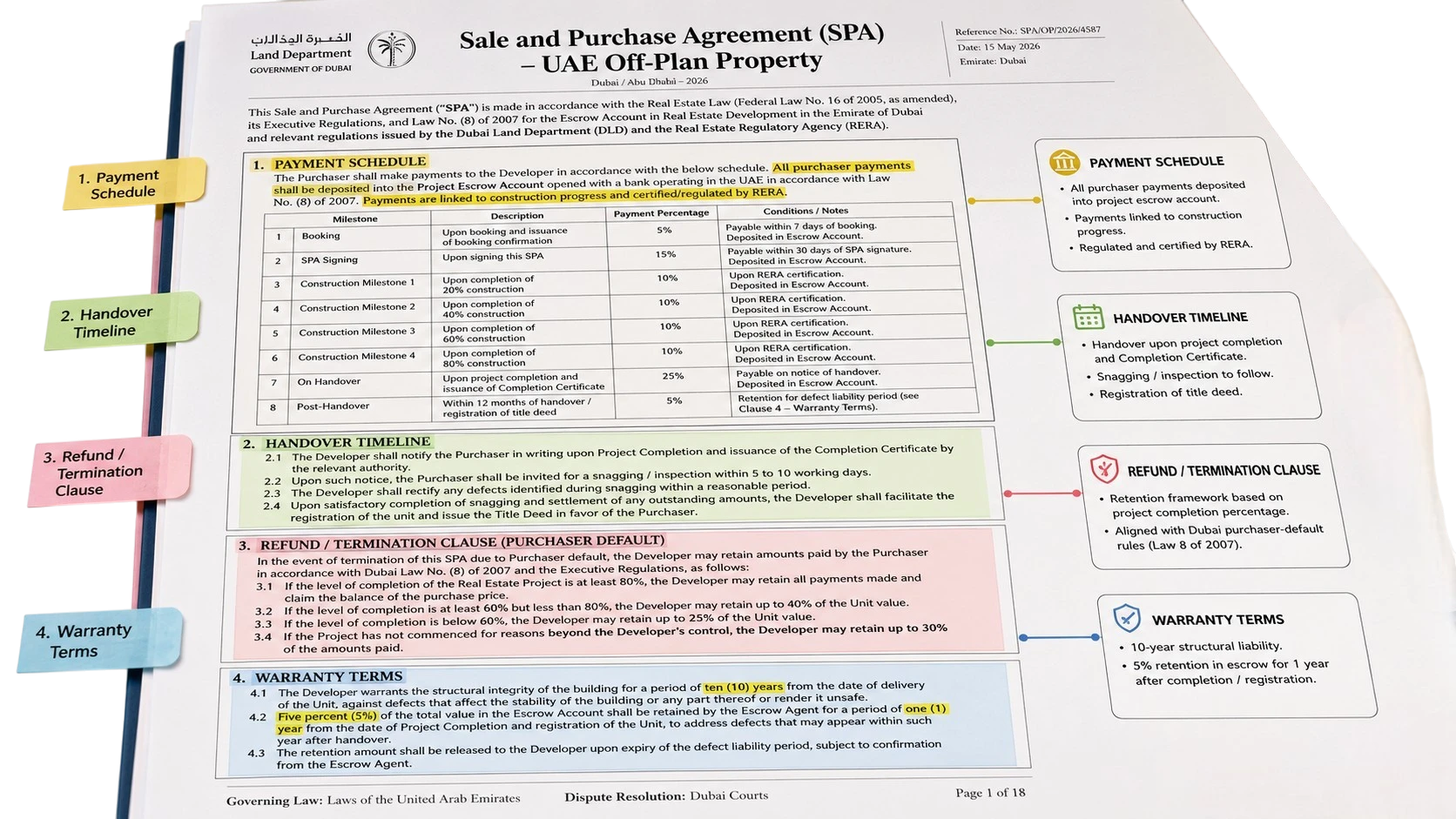
The Sales and Purchase Agreement dictates the legal relationship between the buyer and the developer. Understanding SPA clauses in the UAE is critical for recognizing the protections available to the purchaser. The document must clearly outline the payment schedule, the handover timeline, and the specific property details. Investors need to review the conditions under which they can request a refund or terminate the agreement. A balanced contract will protect both parties rather than heavily favoring the builder.
Key clauses to evaluate include delay penalties and warranty terms. If the developer fails to deliver the property on time, the agreement should specify the financial compensation owed to the buyer. The contract must also define force majeure events, which are unavoidable circumstances that excuse delays. Once the property is complete, the handover definition and the subsequent defect liability period become crucial. Standard warranties typically cover structural defects for ten years and minor defects for one year.
Third-Party Partners and Quality Assurance
The quality of a real estate project relies heavily on the third-party partners involved in its creation. Reputable contractors, architects, and engineering consultants indicate a high-quality development. Developers who consistently work with top-tier construction firms demonstrate a commitment to excellence. Buyers can research these partner companies to review their past projects and overall industry standing. A strong partnership network reduces the likelihood of structural issues or poor finishing work.
Indicators of capacity are just as important as indicators of quality. A contractor must have the workforce and equipment necessary to handle the specific scale of the development. If a developer hires a small, unknown contractor for a massive skyscraper, it could signal cost-cutting measures. Investors should ask for a list of the main contractors and consultants attached to the project. This transparency shows that the developer is confident in the team they have assembled.
Land Title and Approvals
Verifying land ownership is a fundamental step before committing to an off-plan property. The developer must provide proof of land title to show they have the legal right to build on the plot. Sometimes developers purchase land on payment plans, meaning they do not hold the full title immediately. Investors should ask for documentation from the land department confirming the ownership status. This prevents situations where a project is delayed because of land dispute issues.
Planning approvals and master developer permits must also be secured before construction begins. The local municipality must approve the architectural designs and ensure they meet city planning regulations. Once the project finishes, the municipality issues a completion certificate to verify that the building is safe for occupancy. Buyers should ask to see the initial building permits during the sales process. This confirms that the project is officially sanctioned and less likely to face regulatory roadblocks.
After-Sales and Service Charge Governance
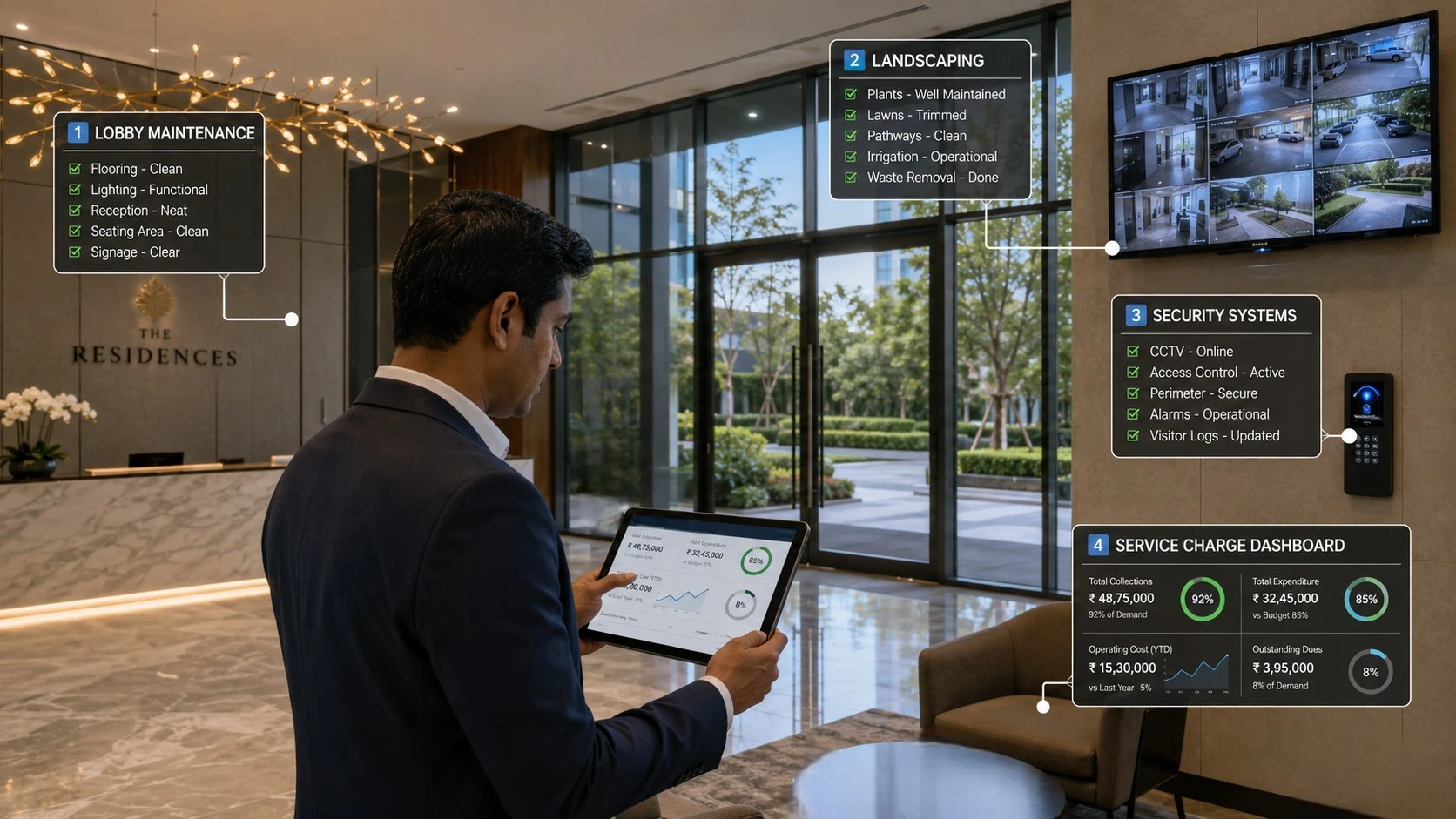
The financial obligations of property ownership continue long after the initial purchase. Investors must consider the service charge UAE regulations to understand the long-term costs of maintaining the asset. These charges cover the upkeep of common areas, security, landscaping, and building insurance. In Dubai, the Mollak system provides a transparent framework for how these fees are collected and utilized. Abu Dhabi has also updated its jointly owned property regulations to improve governance and protect homeowners.
Facility management companies typically handle the day-to-day operations of the building. Buyers should inquire about the anticipated service charge ranges before signing a contract. Comparing these estimates against similar properties in the area helps identify any inflated costs. A well-managed building preserves the value of the property and ensures a high quality of life for residents. Transparent service charge governance prevents unexpected financial burdens from cutting into rental yields.
Reputation and Market Signals
A developer’s reputation provides valuable context that official documents may not fully capture. Industry awards and memberships in professional associations reflect peer recognition and adherence to high standards. Consistent recognition for sustainability or architectural innovation indicates a forward-thinking company. Investors should also seek out broker feedback to gauge how the market views the developer. Experienced brokers know which companies consistently deliver on their promises and which ones struggle.
Resident reviews and social media sentiment offer unfiltered perspectives on the living experience. Buyers can visit completed projects to speak with current owners about their satisfaction levels. Online forums and community groups often highlight common post-handover issues or ongoing maintenance problems. While a few negative reviews are normal, a consistent pattern of complaints is a clear red flag. Gathering these market signals helps investors form a well-rounded opinion of the developer’s credibility.
Recent Regulatory Changes and Investor Impact
The regulatory landscape governing property development is constantly evolving to improve market security. Recent updates to escrow laws and licensing requirements have introduced stricter controls on developer activities. For example, Abu Dhabi recently mandated that developers must complete at least twenty percent of a project before accessing escrow funds. Similarly, authorities in Dubai have issued significant fines to companies violating financial regulations. These proactive measures highlight the government’s commitment to maintaining a safe investment environment.
New off-plan protection measures give buyers stronger legal standing if a project stalls. Regulations now outline clearer processes for project cancellation and the refunding of investor capital. Authorities conduct regular audits of escrow accounts to ensure compliance with the latest laws. These changes ultimately reduce the risk associated with buying unbuilt property. Investors who stay informed about these legal updates are better equipped to protect their financial interests.
Securing Property Investments Through Diligence
Understanding developer credentials is a mandatory step for anyone entering the property market. Buyers must verify trade licenses, scrutinize delivery records, and insist on escrow account confirmations. Careful review of the sales agreement and third-party partnerships further mitigates investment risk. Evaluating service charge governance and market reputation ensures the asset remains profitable long after handover. While the regulatory environment provides strong protections, individual diligence remains the best defense against financial loss.
Taking the time to perform these checks transforms a speculative purchase into a calculated investment. Buyers should utilize official government portals and consult with legal professionals to validate all documents. The most successful investors prioritize facts and verifiable data over glossy sales presentations. By maintaining a strict verification process, purchasers can build a secure and highly rewarding property portfolio. This disciplined approach guarantees peace of mind and long-term financial stability.