
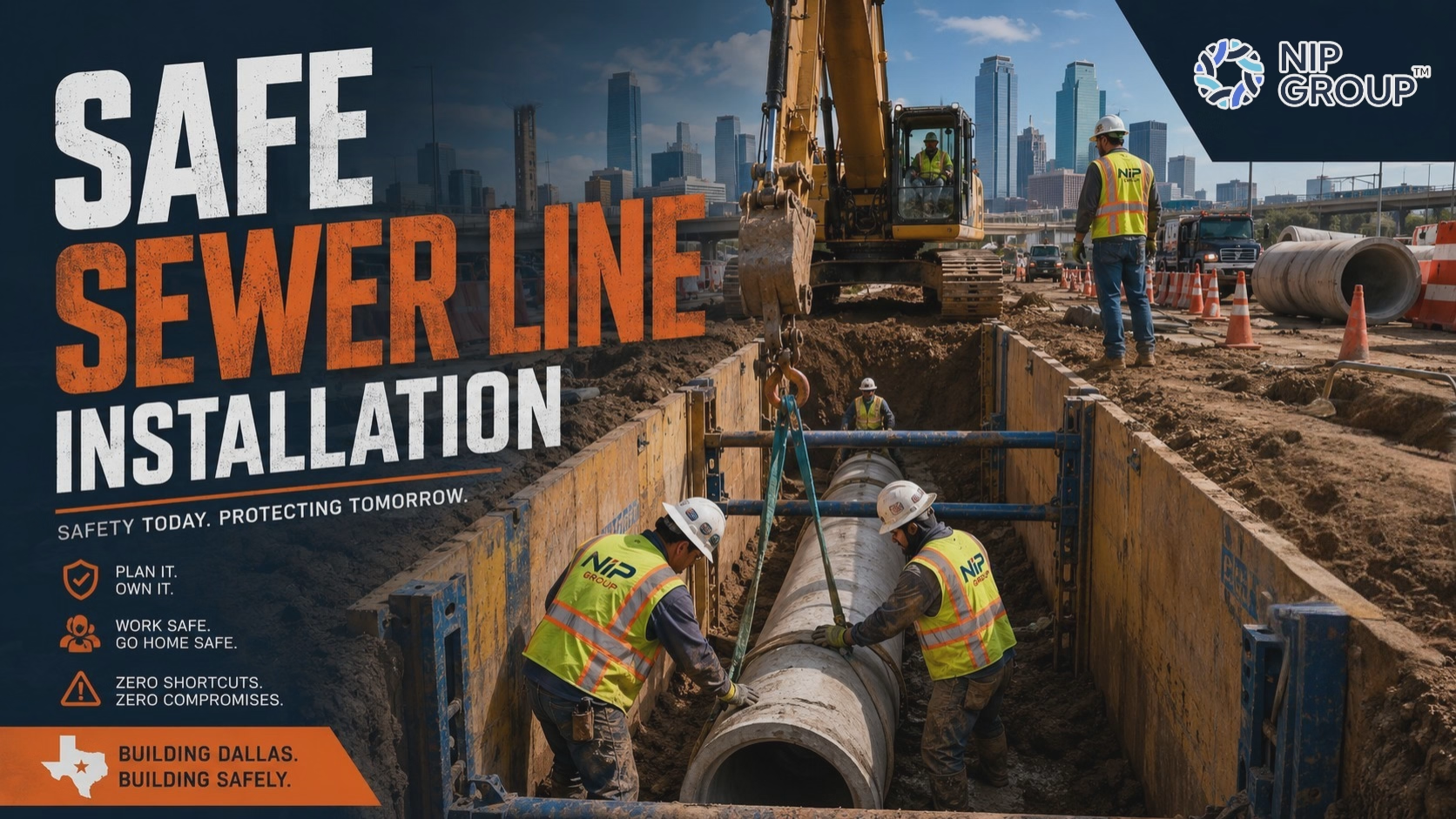
Sewer line installation is the most invisible, yet absolutely critical work in the construction industry. When a crew does the job right, that pipe is going to sit quietly underground for fifty years, and nobody will ever give it a second thought.
But when things go south? That’s when you get backed-up basements, contaminated soil, city inspectors breathing down your neck, and severe excavation failures that put your crew and the general public at risk.
The contractors who make a solid profit and manage to stay out of the courtroom know that this work isn’t just about digging a ditch and dropping some PVC into the mud. They treat sewer installation like the precision underground engineering it really is.
This guide breaks down exactly what goes into a professional sewer line installation, the day-to-day operations that keep your jobs running on schedule, the heavy-hitting risks that lead to the worst insurance claims, and the everyday best practices that keep your crew safe, the public out of harm’s way, and your business in the black.
What Does Sewer Line Installation Actually Involve?
At its core, pulling off a successful sewer line job means navigating a multi-phase underground construction process. You’re dealing with strict city codes, picky municipal inspectors, and hardcore safety standards. Every single step relies entirely on the one that came before it. If your crew cuts a corner early on, that mistake is going to rear its ugly head later, and it usually costs a small fortune to fix.
Here is a breakdown of the core phases of the work:
- Survey and Design: This is where you figure out your game plan. Because sewer lines rely entirely on gravity to do their job, establishing the exact grade, slope, and routing is priority number one. You need a highly precise pitch to keep things moving downstream.
- Utility Locating: Before a single bucket of dirt gets moved, you have to know what’s hiding underground. This means calling 811, getting utility locators out to paint the street, and manually potholing to find existing water, gas, and fiber optic lines so you don’t accidentally knock out the neighborhood’s internet or cause a gas leak.
- Excavation and Shoring: This is the heavy lifting. You’re digging the trench down to the required depth and immediately putting protective systems in place like trench boxes or hydraulic shoring. Cave-ins are no joke, and proper shoring is what keeps your crew going home to their families at the end of the shift.
- Bedding Preparation: You can’t just lay a pipe on jagged rocks and uneven dirt. You have to put down the right base material, usually crushed stone or sand and grade it perfectly so the pipe has a solid, uniform mattress to rest on.
- Pipe Laying and Jointing: This is where the actual plumbing happens. Crews install the pipe at the designated slope, making absolutely sure that every single joint is watertight and glued or gasketed correctly to prevent future root intrusion or leaks.
- Connection and Tie-ins: Once the main run is down, you have to tie it into the municipal main line in the street, the building’s foundation, and any lateral lines. This requires precise fittings like saddles or heavy-duty Fernco couplings.
- Inspection and Testing: You never bury a pipe before the city gives you the green light. At this stage, the line is pressure tested with air or water, a camera is run down the pipe to check for dips and the work is signed off by the municipal inspector.
- Backfill and Compaction: You can’t just push the dirt back into the hole all at once. You have to backfill in layers also known as lifts and use a jumping jack or plate compactor on each layer. If you rush this, the ground is going to settle later and ruin the pavement above it.
- Surface Restoration: The final touch. Whether it’s pouring new concrete, laying asphalt, or putting down fresh sod, the goal is to leave the site looking exactly like it did before you showed up or better.
The Golden Rule of Slope
If there’s one detail that separates the pros from the guys who get hit with constant callbacks, it’s the slope. A line with too little pitch simply won’t drain, leaving standing water. A line with too much pitch is just as bad; the liquids will outrun the solids, leaving the solids behind to create a severe clog. Hitting that “Goldilocks” pitch across the entire run and making sure it doesn’t shift while you’re backfilling is the true mark of a pro.
How Should Contractors Manage Operations?
Running a profitable sewer operation isn’t just about having good operators; it requires incredibly tight coordination. You’re juggling crews, heavy iron, inspectors, and the unpredictable nature of whatever is buried underground. The contractors who stay on schedule and avoid margin-killing surprises treat their operations like a well-oiled machine.
Here’s how the pros keep a job from going off the rails:
- Doing your homework first: Getting your blueprints, permits, utility marks, and materials totally locked in before you even think about moving dirt.
- Double-checking the lines: Always hit up 811 and verify the paint on the ground. Busting an existing pipe or cable is a rookie mistake that’ll cost you big time.
- Playing it safe in the ditch: Using trench boxes, shoring, or sloping anytime you’re digging deep enough to get OSHA’s attention. Never mess around with cave-ins.
- Dealing with the swamp: Having a solid plan to pump out groundwater before it floods your trench and wrecks your bedding.
- Timing the city inspectors: Getting the city out to sign off at exactly the right times so your crew isn’t just standing around bleeding the clock.
- Taking care of your iron: Keeping the track hoes, jumping jacks, and trash pumps running smoothly. Broken gear equals dead time.
- Getting it all in writing: Logging the depths, pitches, materials, and inspector green-lights for every single pipe run.
Specialty programs that provide utility contractor insurance cover the specific exposures of underground line work, which standard contractor policies often miss. Water, sewer, and gas line construction operations carry significant property and bodily injury exposure, and one specialized program covering these operations together fits the work far better than a generic policy assembled from pieces.
The contractors who treat operations as a system, rather than a series of independent tasks, consistently finish faster and cleaner. Each phase handed off properly to the next is what keeps a sewer project from becoming a sequence of expensive restarts.
Here are the operational practices that keep projects moving forward:
- Thorough Pre-Construction Planning: Don’t just show up on Monday morning hoping for the best. You need to verify the design, secure all your permits, double-check your utility marks, and make sure your pipe and fittings are actually at the supply house before you mobilize your crew.
- Verified Utility Locating: It’s not enough to just call 811. You need to physically verify those marks. Hitting an existing utility is one of the most common, expensive, and embarrassing screw-ups in the business. Trust the paint, but verify with a shovel or a hydro-vac.
- Rock-Solid Trench Safety Systems: If a trench is deep enough to require protection under OSHA standards (usually 5 feet or deeper), you use shoring, sloping, or a trench box. No exceptions, no excuses.
- Dewatering Plans: Mother Nature doesn’t care about your schedule. Groundwater can flood your trench, turn your bedding into soup, and completely derail a project. Have your trash pumps and hoses ready to go before you hit water.
- Inspection Coordination: Time is money. If you don’t schedule your municipal inspections at exactly the right time, your crew is going to be sitting around on their coolers getting paid to do nothing while you wait for the city inspector to show up.
- Equipment Maintenance: An excavator with a blown hydraulic hose or a broken plate compactor stops the whole show. Staying on top of preventative maintenance keeps your iron digging and prevents costly downtime.
- Documentation Discipline: Keep a paper trail. Record your depths, track your slopes, take photos of the materials you used, and save the inspector’s sign-off for every single segment of the job. If someone points a finger at you six months down the line, your documentation is what saves your business.
Because standard contractor insurance policies often drop the ball on underground work, you need specialty coverage. Operations that involve water, sewer, and gas lines bring serious property damage and bodily injury risks to the table. Using a specialized utility contractor insurance program covers the actual exposures you face in the dirt, rather than trying to piece together a generic policy that leaves you hanging.
What Risks Drive the Most Serious Claims?
Let’s be real, sewer line installation carries a risk profile that very few other trades have to deal with. When you mix deep trenches, buried high voltage lines, raw sewage, and public roads, a single bad day can lead to a business ending lawsuit.
Here are the heavy hitters that drive the most serious claims in the industry:
- Trench Cave-ins: This is the nightmare scenario. A cubic yard of dirt weighs about 3,000 pounds roughly the size of a sedan. Excavation collapse is still one of the deadliest hazards in the construction world. An unprotected trench can easily be fatal.
- Underground Utility Strikes: Ripping through a gas line, snapping a water main, or tearing up a fiber optic bundle will ruin your month. It causes service blackouts, creates extensive property damage, and leads to major six-figure claims before your crew even breaks for lunch.
- Sewage Contamination: If you cause a spill, a backup into a home, or hook up a line incorrectly, you’re dealing with raw sewage. That means biohazard cleanup, contaminated soil, ruined drywall, and the EPA breathing down your neck.
- Property Damage: Swinging an excavator bucket into a parked car, cracking a homeowner’s driveway, or destroying expensive landscaping during excavation and backfill are easy ways to drain your profits.
- Settling and Backfill Failures: If your crew gets lazy and doesn’t compact the dirt properly, the ground will inevitably sink. Six months later, the road or driveway above the trench caves in, and you’re on the hook to tear it out and repave it.
- Public Safety Exposure: Leaving an open trench overnight near a sidewalk or an intersection is a massive liability. If a kid on a bike or a distracted driver falls in, you are going to court.
- Worker Injuries: Aside from cave-ins, crews face confined space hazards, heavy equipment accidents, pinched fingers, and exposure to nasty biological contaminants.
Generic insurance policies routinely exclude the exact things that make this trade dangerous. The biggest risks in this line of work aren’t “what-ifs” ; they happen every week across the country, which is exactly why you need an insurance program built for the underground world.
What Best Practices Protect Crews and the Business?
Keeping your doors open and your people safe requires two things: hard-nosed operational discipline and an insurance program that actually covers your back. If you ignore either one, you’re basically playing Russian roulette with your company’s future.
Here are the best practices that the top-tier contractors use to lock down their operations:
- OSHA-Compliant Trench Safety on Every Job: Treat every trench like it wants to cave in. Use proper protective systems on anything 5 feet or deeper, and make sure a “competent person” inspects the hole every single morning before anyone jumps in.
- Documented Utility Locates: Don’t just look at the paint on the grass. Keep the official utility locate tickets in your truck’s project folder so you can prove you made the call.
- Pre-Work Site Documentation: Before you unload the excavator, walk the site with your smartphone and take a video. Document every existing crack in the driveway, every broken sprinkler head, and every dead bush. This stops homeowners from blaming you for damage that was already there.
- Confined Space Protocols: If you are tying into a deep manhole, that is a confined space. Make sure your crew has the right gas sniffers, harnesses, and training to go down there safely.
- Dewatering and Contamination Controls: Have a solid plan for pumping out groundwater, and know exactly how you’re going to handle raw sewage if an existing line backs up during the tie-in.
- Inspection and Testing Records: Keep a hard copy of every pressure test result, save the flash drive from the camera inspection, and file away the municipal sign-off.
- Crew Training and Certification: Your company is only as good as the crew in the ditch. Invest in ongoing safety training, get your foremen officially designated as OSHA competent persons, and make sure anyone running heavy equipment actually knows what they’re doing.
- Specialized Utility Contractor Insurance: Don’t settle for a generic policy. Get coverage specifically built for underground line work that covers the exact property, contamination, and bodily injury risks that standard policies drop.
At the end of the day, doing things by the book always costs less than doing it wrong. A single trench collapse, a major gas line strike, or a sewage flood can permanently shut down a contractor who thought safety protocols were just “suggestions.” The companies that stick around for the long haul build these protective habits into every single job, whether it’s a quick residential fix or a massive municipal overhaul.
NIP Group offers a specialized insurance package specifically for utility contractors through their UtilityPro program. It bundles your general liability, workers’ compensation, commercial auto, equipment coverage, and completed operations into one tight package. Better yet, they use A+ rated carriers. In plain English, an “A+ rating” means the insurance company actually has the financial horsepower and cash reserves to pay out your claims quickly and fairly when things hit the fan.
FAQs
1. What is the typical depth for a sewer line installation?
It really depends on where you live. A standard sewer line is usually buried anywhere from 18 inches to 6 feet deep. However, you have to factor in the local frost line (you want the pipe below the freezing point), the depth of the city’s main connection point, and the natural slope of the property.
Getting into those deeper ranges means you absolutely must use OSHA-approved trench protection, which naturally bumps up both your timeline and your project costs.
2. What’s the most common cause of sewer line installation failure?
Nine times out of ten, a failed sewer line comes down to human error during the bedding and backfill stages. The most common screw-ups include:
- Blowing the pitch, leaving a pipe that is too flat to drain or too steep to carry solids.
- Rushing the backfill process without compacting it, causing the dirt to settle and crack the pipe later.
- Leaks caused by sloppy gluing or gasket-sealing of the joints.
- Not putting in a good bed of gravel or sand, so that the pipe sags or deflects under the weight of the dirt.
- Leaving loose joints that eventually allow tree roots to break in and clog the line.
3. Do utility contractors really need specialized insurance for sewer work?
Absolutely. If you try to run an underground utility business on a standard general contractor’s policy, you are asking for trouble. The specific hazards of this job: trench cave-ins, hitting gas lines, public safety hazards, and environmental contamination from raw sewage are usually excluded from basic policies.
Specialty programs are custom-built to cover the actual, real-world risks of laying water, sewer, and gas lines so you aren’t left holding the bag.
4. What kind of permits are required for a sewer line installation?
You can’t just start digging; you are generally going to need a handful of permits to keep the city happy. This usually includes a standard plumbing or building permit, a specific “tap” or connection permit from the local water authority to tie into the main, and a right-of-way or street excavation permit if your machines are going to be blocking traffic or digging up the asphalt.
If you’re working near wetlands, you might even need environmental permits. Every town has its own rules, so always call the local building department to get your paperwork squared away before you even submit a bid.