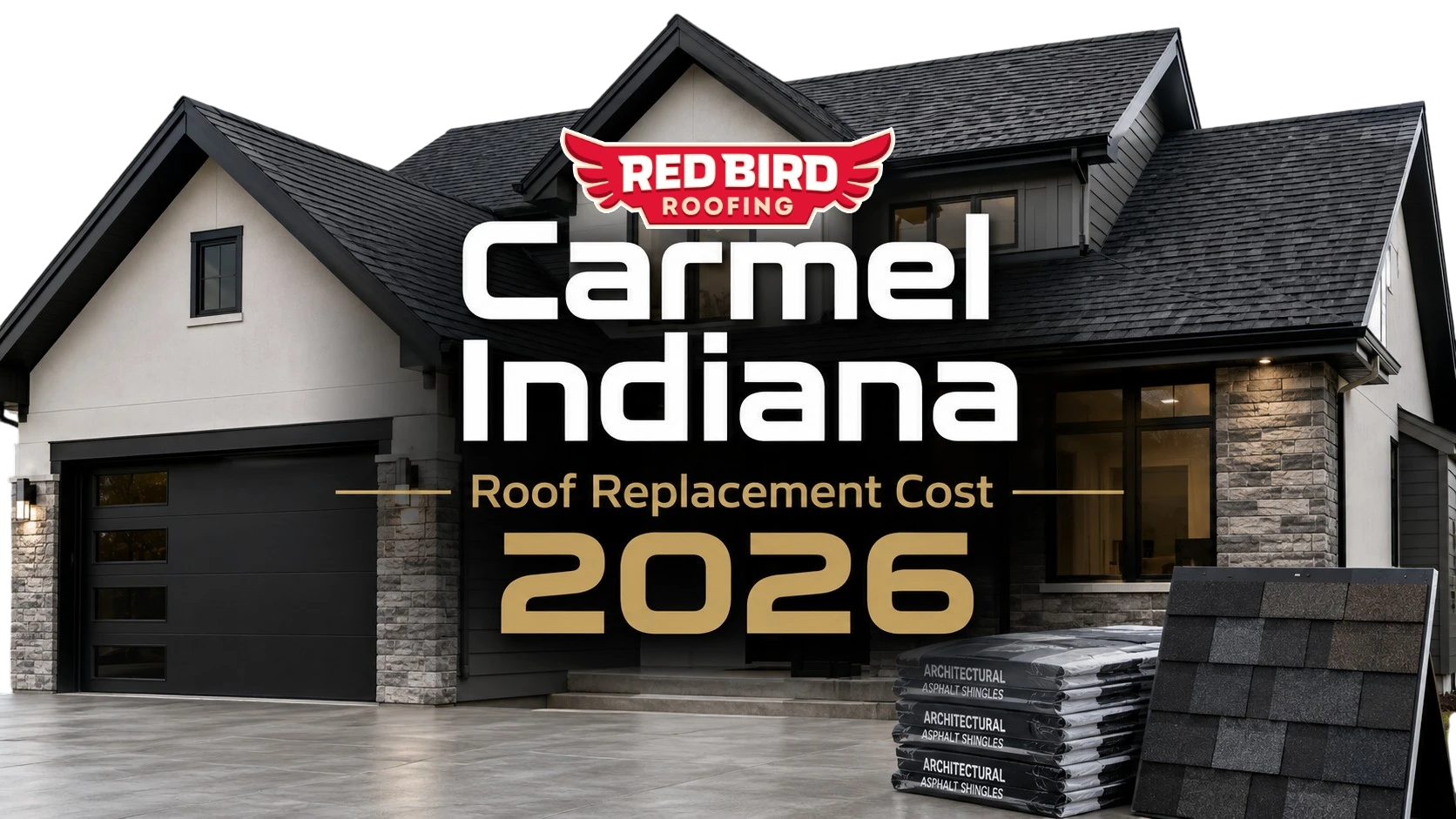
Replacing a roof is a major investment. A strong roof protects your home from Indiana’s unpredictable weather, improves energy efficiency, and boosts your property’s curb appeal. As material and labor costs continue to shift, many Carmel homeowners are asking the same question in 2026: what should a new roof actually cost?
The answer depends on several factors, including the size of your house, your material choice, local labor rates, and the condition of your current roof. Knowing what drives these costs helps you plan your budget and avoid surprise fees during the project.
Average Roof Replacement Costs in Carmel for 2026
In 2026, a standard residential roofing project in the Carmel and greater Indianapolis area typically ranges between $9,500 to $14,000 for a typical 2,000-square-foot home. A smaller home using standard asphalt shingles lands on the lower end, while larger estates or premium materials quickly push the price higher.
Here is a general breakdown by roofing material:
- Asphalt shingles: $9,500 – $14,000 installed
- Metal roofing: $15,000 – $30,000 installed
- Tile roofing: $20,000 – $40,000 installed
- Slate roofing: $25,000 – $50,000+ installed
- Wood shake roofing: $14,000 – $25,000 installed
These estimates fluctuate based on your roofline’s complexity, regional labor rates, and current supply chain availability.
Roof Size and Complexity Drive the Price
The larger the roof, the more materials and labor it takes to finish the job. Roofing contractors calculate pricing by the “square,” which equals 100 square feet.
For example:
- A 1,500-square-foot roof costs significantly less than a 3,500-square-foot roof simply because it takes fewer shingles and labor hours.
- A steep pitch or a custom design with multiple valleys, dormers, and chimneys drives up labor costs because the job takes longer and requires extra safety precautions.
Even two houses in the same Carmel neighborhood with identical square footage might see different quotes depending on how their roofs are built.
How Material Choices Impact Your Budget
The materials you choose play a huge role in your final bill. While asphalt shingles are still the most popular and budget-friendly choice in Indiana, many homeowners are upgrading to durable materials that last longer and lower their energy bills.
Asphalt Shingles
These are the most affordable and widely used roofing materials. They hold up well to Midwest weather and come in a massive variety of colors and styles to match any home.
Metal Roofing
Metal costs more upfront but often outlasts traditional shingles by decades. It sheds snow easily in the winter, stands up to severe storms, and can noticeably improve your home’s energy efficiency.
Tile and Slate
Tile and slate are premium upgrades known for their incredible lifespan and high-end look. However, they are heavy. Your home might need extra structural support before installation, which adds to the total cost.
Labor Costs Are Still Rising
Labor makes up a massive chunk of roofing costs in 2026. Skilled roofers are in high demand across Central Indiana, which can keep labor pricing elevated, especially during peak roofing season..
Professional installation matters. Poor workmanship leads to leaks, structural rot, and a shorter lifespan for your roof. Paying for an experienced, licensed contractor upfront usually saves you money on emergency repairs later.
Expect higher labor fees if your project involves:
- Steep roof slopes
- Two or three-story homes
- Hard-to-reach roof access
- Replacing damaged wood underneath
- Tearing off multiple layers of old shingles
Hidden Costs You Should Plan For
Many people only look at the price of the shingles, but several other factors impact the final invoice.
Roof Deck Repairs
If your contractor tears off the old roof and finds water damage or rotting wood, they have to replace that decking before laying down new materials.
Local Permit Fees
The City of Carmel may require a permit for major roofing work. The exact fee depends on local regulations and the size of your project.
Ventilation Upgrades
Good attic airflow keeps your home efficient and prevents moisture buildup. Your roofer might suggest adding better vents during the install.
Gutters and Flashing
Contractors often replace rusted flashing and damaged gutters at the same time to make sure the entire system handles heavy rain properly.
Will Insurance Pay for Your New Roof?
Sometimes, your homeowners insurance steps in to cover the bill. Policies generally cover sudden damage from hail, high winds, or a fallen tree.
However, insurance won’t pay for a roof that is just old and wearing out. Check your policy details and make sure to document any storm damage immediately if you plan to file a claim.
Why Quality Matters
Going with the cheapest bid is rarely a smart move. Cheap materials and rushed labor often lead to recurring leaks and early replacement.
A professionally installed roof replacement boosts your property value, lowers your utility bills, and keeps your home secure through decades of Indiana weather.
Roofing prices in 2026 reflect higher material costs and strong demand for skilled labor. The best way to move forward is to schedule a professional inspection, get everything in writing, and pick materials that fit your long-term goals. A solid roof isn’t just an expense—it’s a critical investment in your home.