- Get Your Financing in Order First
- Look Beyond The Staging When Touring The Property
- Evaluate The Location And Neighborhood Livability
- Run The Real Estate Comps To Verify The Price
- Plan Your Home Inspections Before You Sign
- Review The Fine Print On Your Contract Terms
- Understand How New Construction Offers Differ
- Factor In Current Housing Market Conditions
- Ask The Right Questions Before Committing
- Avoid These Costly Homebuying Mistakes
- Why Real Preparation Makes Your Offer Unbeatable
- The Bottom Line
Before putting in an offer on a home, most buyers feel excited, but there’s usually some pressure too, especially when the house feels like the right one. That’s when it helps to take a step back and review the details.
If you’re looking at a new home for sale in Windsor VA, a simple checklist can help you make a decision based on facts, not just emotion.
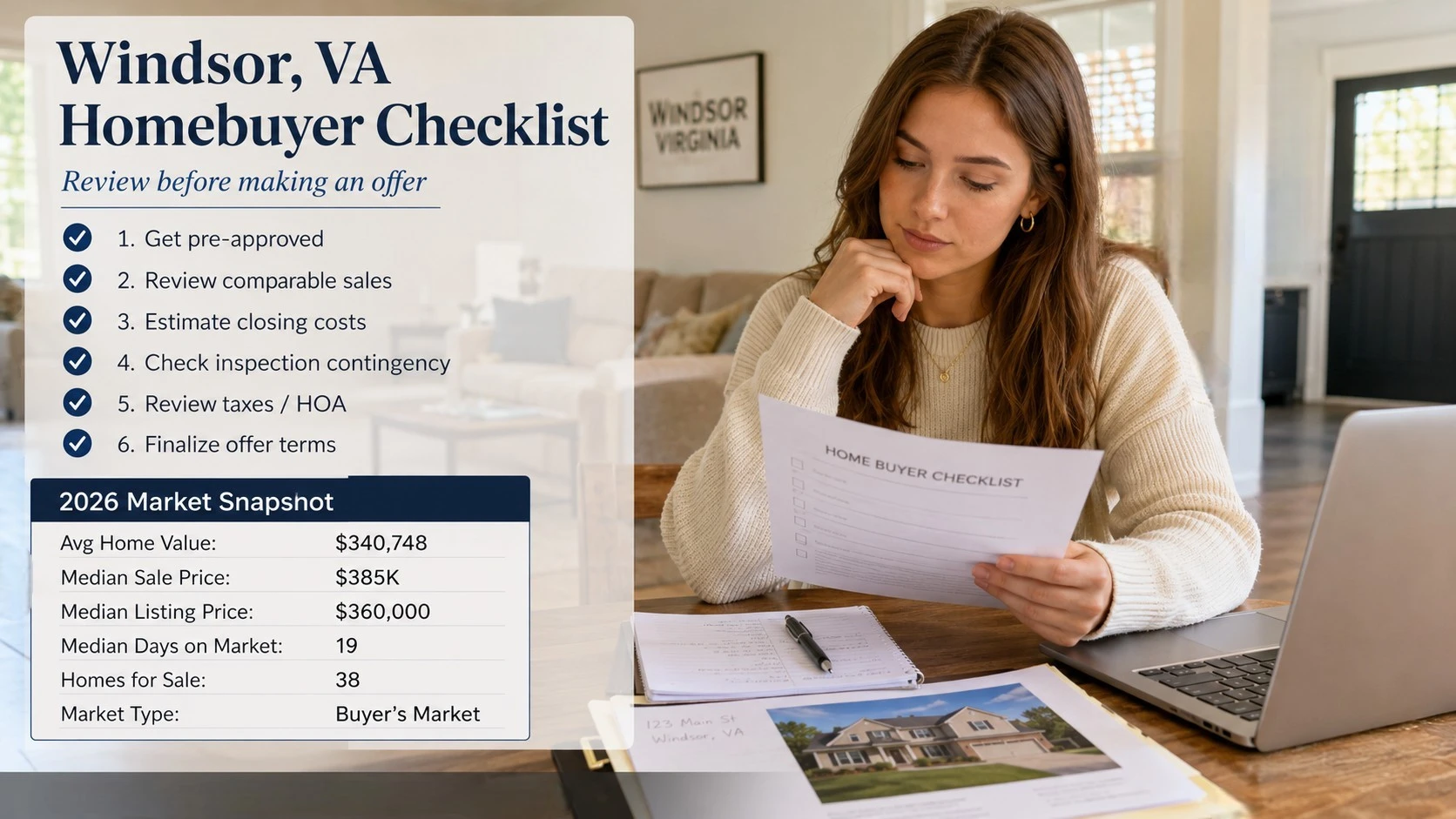
Get Your Financing in Order First
You need to lock in your mortgage pre-approval, map out your full monthly budget, and account for every hidden ownership cost before you even think about drafting an offer. Pre-approval is the foundation because it tells you exactly what you can realistically afford while showing sellers you are a serious buyer.
Beyond that baseline, you have to look at the entire financial picture, including local property taxes, homeowners insurance, monthly utilities, and future maintenance. A home may fit the purchase budget but still stretch your everyday budget too thin. Getting clear on the numbers now can help prevent buyer’s remorse later.
Look Beyond The Staging When Touring The Property
Before moving forward, look closely at the home’s condition, layout, structure, and any visible maintenance concerns. A showing is not just about whether the home feels right. You also want to see how it’s going to work with your day to day life.
Pay attention to the floor plan, storage space, natural light, and general condition. Little details like uneven floors, an aging HVAC system, or minor water stains tend to signal much larger and more expensive problems. Even if you are touring brand-new builds, you must verify exactly what features come standard and what counts as a pricey upgrade.
Evaluate The Location And Neighborhood Livability
You have to consider the location in terms of how easy it is to commute to work, how much commercial development is around, the general vibe of the neighborhood, and how long you expect to live there.
A home can be beautifully updated and perfectly designed, but if the location makes your daily routine miserable, you will eventually hate living there.
Make sure you evaluate these key area factors:
- Actual commute times during morning and evening rush hour
- Proximity to grocery stores, hospitals, and essential services
- Local traffic patterns and typical street noise levels
- Any planned commercial or residential development in the area
For anyone looking at homes for sale in Windsor Virginia, the location often becomes a key advantage. The area offers larger lots and a much quieter rural environment while still keeping you close enough to the bigger cities for work and entertainment.
Run The Real Estate Comps To Verify The Price
Looking at similar sales tells you if the home is priced right based on real market data. Price alone never tells the whole story.
Recent sales of similar nearby homes show what buyers are actually paying, not just what a seller hopes to get. This step helps prevent you from wildly overpaying and gives your real estate agent hard data to use during negotiations.
Plan Your Home Inspections Before You Sign
You need to know exactly what property inspections you want to schedule and how they will shape your contract before you ever write the offer. Inspections typically happen after an offer is accepted, but planning for them early matters.
Most standard real estate contracts should include timelines for:
- A comprehensive general home inspection
- Specific structural or foundation checks if you notice cracking
- Dedicated inspections for the roof, HVAC, and aging plumbing systems
Knowing exactly what you want to test helps you safely structure your offer with the right inspection contingencies.
Review The Fine Print On Your Contract Terms
It is time to know your key contract terms, especially your protective contingencies, strict timeline dates, upfront deposit requirements and specific closing conditions. An offer is more than a purchase price. It’s a legally binding contract.
Pay close attention to these deal-making terms:
- The financing contingency that will protect your deposit if your loan falls through
- An inspection contingency that allows you to renegotiate or walk away if there are serious issues
- A realistic closing timeline that works for both you and the seller
- Your earnest money deposit amount
How you structure these particular elements has a huge impact on how strong and competitive your offer looks to a motivated seller.
Understand How New Construction Offers Differ
New construction offers often involve heavy, builder-friendly contracts, strict base pricing, and far less room for negotiation than a standard existing home sale.
The process is completely different from buying a standard resale property. Pricing is typically set in stone, though builders frequently offer closing cost incentives or design center upgrades to win your business.
Always verify what standard finishes are included, read the fine print on the builder warranty, and get a realistic estimated completion date. Knowing this ahead of time will help you avoid any surprise costs once you are under contract.
Factor In Current Housing Market Conditions
Always evaluate the local housing market, current mortgage interest rates, and your direct buyer competition before you decide how aggressive your offer needs to be. Real estate markets are constantly shifting. In highly competitive seller’s markets, you might have to submit a premium offer and drop a few contingencies just to get noticed.
In slower markets, you naturally have a lot more leverage to negotiate the price down and ask for seller concessions. Staying aware of current market trends helps you position your offer to actually win.
Ask The Right Questions Before Committing
Have your real estate agent ask the listing agent directly about the property history, past insurance claims, and any red flags that could make the house hard to live in.
Always ask these questions before signing:
- Exactly how old are the major mechanical systems and the roof
- Are there any known structural issues or unpermitted repairs
- Do the appliances, window treatments, and smart home devices convey with the sale
- Are there any strict Homeowners Association rules or hidden community fees
Getting hard answers completely removes the guesswork and lets you move forward with absolute confidence.
Avoid These Costly Homebuying Mistakes
Never rush the process, skip your standard due diligence, or buy a house based entirely on your emotions. The pressure to act quickly in a hot market almost always leads to buyers ignoring massive red flags.
Watch out for these common deal-killers:
- Skipping the home inspection just to win a bidding war
- Stretching your monthly budget well past your comfort zone
- Ignoring a bad location just because the house looks pretty
- Skimming over the legal contract terms instead of reading them carefully
A structured checklist helps prevent these expensive missteps from ruining your purchase.
Why Real Preparation Makes Your Offer Unbeatable
A well-prepared buyer is more likely to submit a stronger, more competitive offer.
Preparation is obvious on paper. Sellers and listing agents immediately recognize when a buyer actually has their financing and due diligence in order. It reduces annoying counter-offers, speeds up the entire transaction, and drastically increases your chances of getting the keys.
Real buying confidence comes from total clarity, not taking a wild guess on a major investment.
The Bottom Line
Making an offer is arguably the most critical step in your entire homebuying journey. It is exactly where casual window shopping turns into a binding legal commitment.
Buyers who take the time to secure their financing, thoroughly evaluate the property, study local market comps, and understand their contract terms always experience fewer nasty surprises before closing day. Whether you are buying an older resale property or walking into a new construction model home in Windsor, Virginia, the real estate fundamentals never change.
A clear checklist does not slow you down. It helps protect your purchase. And in real estate, that upfront preparation is usually what makes all the difference between securing your dream home and losing it to someone else.