- Why Do Insurance Companies Care About An Older Roof?
- An Old Roof Can Complicate Insurance Before Closing
- What If The Insurer Wants Roof Work Before Closing?
- The Home Inspection is Not Deep Enough
- Check The Attic While You Are At It
- Should Sellers Deal With Roof Problems Before Listing?
- Keep The Roofing Paperwork
- Negotiate The Roof With Insurance In Mind
- Don’t Let Your Roof Stifle the Sale
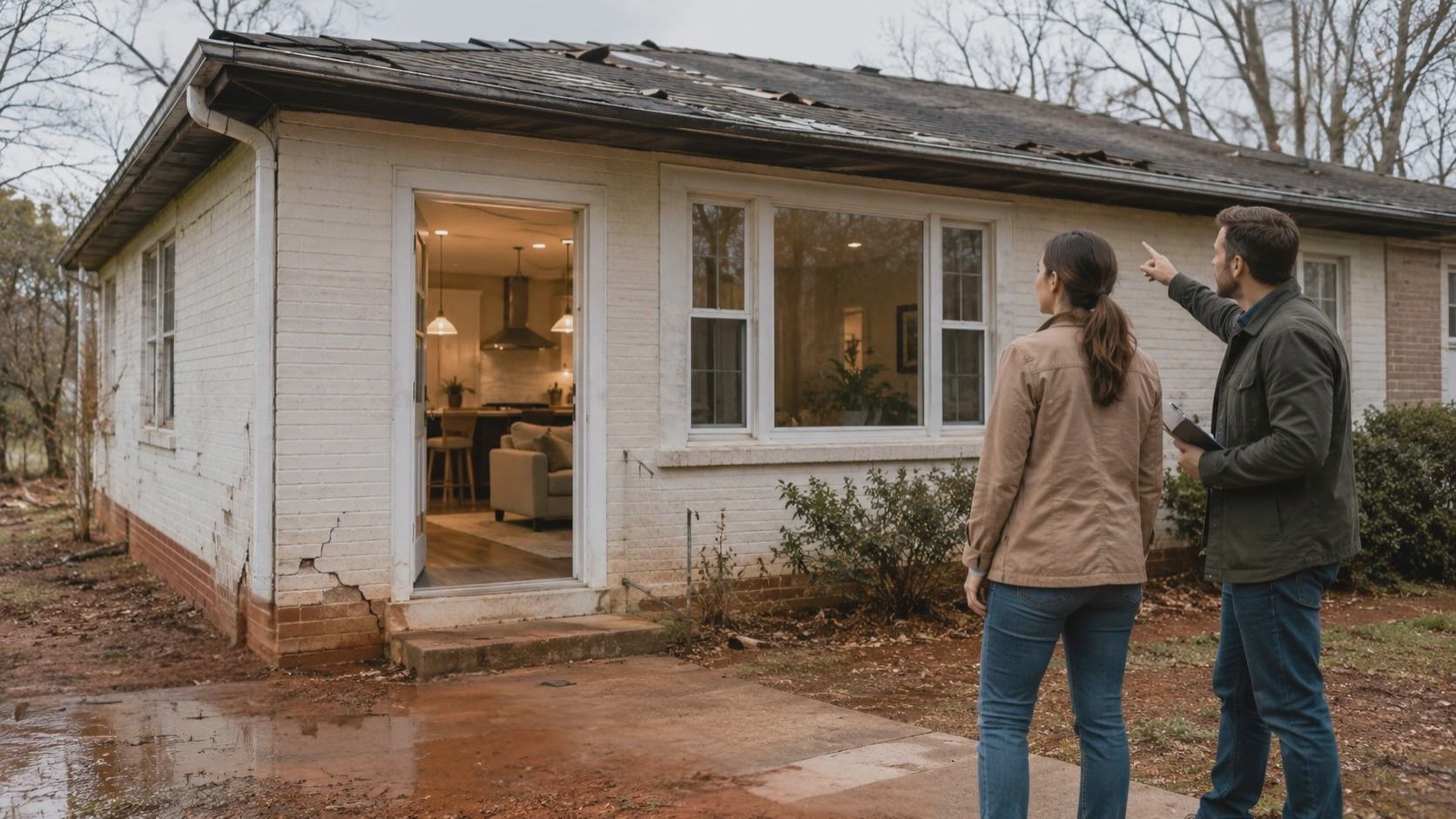
Yes. An older roof can make a home harder to insure, and that can become a problem when a buyer is already well into the purchase process. Insurance companies may look at the roof’s age, condition, material, repair history, and remaining service life before agreeing to cover the property.
For buyers, that means the roof deserves attention before closing week. For sellers, dealing with obvious roof problems before listing can make the home easier to insure, easier to negotiate, and ultimately easier to sell.
Why Do Insurance Companies Care About An Older Roof?
The concern is fairly straightforward. As a roof gets older, the likelihood of wind damage, leaks, failed flashing, missing shingles, and water intrusion tends to increase. One small roofing problem can eventually cause damage to insulation, drywall, ceilings, flooring, and belongings inside the house.
The Insurance Information Institute notes that roofs over 20 years old often receive more scrutiny from insurers. Some companies may ask for an inspection before writing a new policy. Others may decline the property or offer more limited coverage.
Twenty years is not a magic expiration date, though. Condition matters. A properly installed and maintained roof may still have useful service life, while a younger roof with storm damage or installation problems may need substantial work.
Age Is Not the End-All Be-All
An insurer may look for curling or missing shingles, deterioration around flashing, staining, moss growth, prior repairs, or signs of leakage.
Roofing material matters too. Asphalt shingles, metal, slate, and other systems have different expected service lives. Documentation showing when the roof was installed or repaired can be helpful when an underwriter is trying to establish its condition.
An Old Roof Can Complicate Insurance Before Closing
For a financed home purchase, homeowners insurance usually needs to be arranged before the lender releases the money to close. Finding out at the last minute that the preferred insurer will not accept the roof can create a headache no one needs.
You May Have Trouble Getting A Policy
Suppose the inspection report identifies a 22-year-old asphalt roof with worn shingles and several patched areas. A buyer may love the house and be comfortable budgeting for replacement in a few years, but the insurance company does not necessarily have to share that comfort level.
The carrier could request an inspection, ask for repairs, require replacement, or decline the risk.
The sensible move is to start shopping for insurance once a concern about roof age or condition becomes apparent. Waiting until a few days before settlement leaves much less room to deal with a problem.
The Policy May Cover The Roof Differently
Note that an insurer may cover an older roof at actual cash value rather than replacement cost. Actual cash value accounts for depreciation. Replacement-cost coverage generally pays based on the cost of replacing covered damaged property without subtracting depreciation, subject to the deductible and terms of the policy.
A buyer should ask specifically how the roof will be covered rather than simply asking whether the house is insurable.
What If The Insurer Wants Roof Work Before Closing?
An insurer might ask for a roofing inspection, documentation of prior work, specific repairs, or complete replacement before offering the coverage the buyer needs. From there, the buyer and seller have some decisions to make.
The seller could complete the repair. The parties might renegotiate the price. A credit may be possible in some circumstances. Closing could be delayed while work is completed, or the buyer could investigate another insurer.
A credit alone does not necessarily solve the problem. Giving the buyer $15,000 toward a future roof is not particularly helpful if the buyer cannot obtain the insurance required to close on the mortgage.
The Home Inspection is Not Deep Enough
A home inspector can identify visible roof problems and may estimate age or remaining service life. That information is useful, but the inspection and the insurance company are answering different questions.
Find Out How Old The Roof Really Is
Ask for whatever documentation is available. An invoice from the roof replacement is much more useful than “the previous owner said it was done around 2012.”
Permits, warranties, contractor records, material information, photographs, and receipts from significant repairs can all help establish the roof’s history.
Consider A Roofing Inspection
If the general inspection raises concerns, having a roofer look at the system can provide more detail about what needs attention.
Maybe the roof has years of service left but needs flashing repaired. Perhaps one slope took storm damage while the rest remains sound. Or the shingles may simply be near the end of their useful life.
That information gives the buyer something concrete to use during both the insurance conversation and purchase negotiations.
Check The Attic While You Are At It
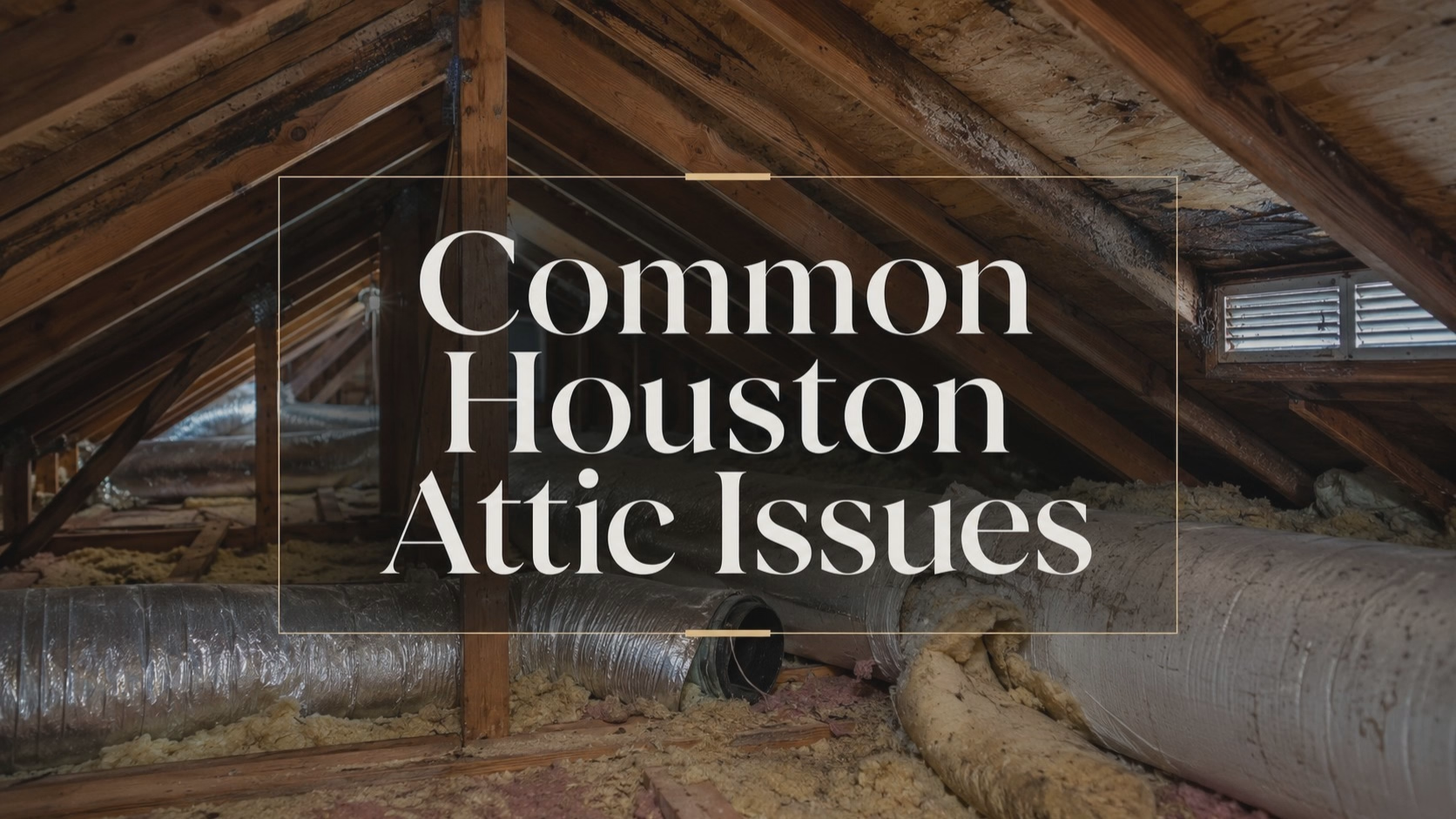
If water has been getting into the attic, insulation may be wet, compressed, stained, or starting to break down. In such cases, the damaged insulation may need to come out before the attic is dried and reinsulated.
Rodents are another thing worth checking for, especially in older homes. Mice and squirrels can get in through damaged soffits, roof edges, vents, or other small openings, then nest in the insulation and leave behind droppings, urine, nesting material, and damaged insulation. In that case, an insulation contractor may need to remove contaminated insulation, cleaning the affected area, closing off entry points, and replacing the insulation afterward.
None of this automatically means the deal is bad, but it does change the repair budget. If the roof inspection raises questions about leaks, gaps, or animal activity, take a look at the attic before negotiations are finished.
Should Sellers Deal With Roof Problems Before Listing?
Repairs Can Remove A Buyer Objection
If the roof still has useful life, repairing known problems before listing may make sense. Damaged flashing, missing shingles, small leaks, and isolated deterioration are easier to discuss when there is an invoice showing that a qualified contractor already corrected them.
Visible roof problems tend to create bigger questions. Buyers do not just see a few bad shingles; they start wondering about water damage, replacement cost, insurance, and what else may have been deferred.
Replacement May Make The Property Easier To Sell
A roof that is clearly near the end of its life presents a different decision. Replacing it before listing may remove a major expense from the buyer’s immediate budget and make the insurance conversation considerably easier.
There can be resale value as well. The 2025 Cost vs. Value Report estimated an asphalt-shingle roof replacement at $31,871 nationally, with $21,501 in resale value, or about 68% of the project cost recouped.
That does not mean a $30,000 roof automatically adds $20,000 to every home. Market, property value, location, material choice, and the condition of the old roof all matter. But the seller also gains something that is harder to put into a percentage: one fewer major objection standing between the house and a clean closing.
Keep The Roofing Paperwork
Whether you repair the roof or replace it, keep the paperwork! Installation invoices, contractor information, warranties, material specifications, permits where required, photographs, and repair receipts can make life easier later.
There is a big difference between telling a buyer, “The roof is pretty new,” and handing over documentation showing exactly when it was installed and what materials were used. That information can also be useful when the buyer contacts an insurance company.
Negotiate The Roof With Insurance In Mind
Buyers and sellers have several ways to handle an aging roof. The seller can repair or replace it. The purchase price can be renegotiated. The buyer might accept a credit and do the work later.
Before settling on any of those options, find out what the buyer’s insurer and lender will accept. Roof condition, repair cost, insurance requirements, financing, purchase price, and closing date all overlap. Treating the roof only as an inspection negotiation can miss the bigger issue.
Don’t Let Your Roof Stifle the Sale
Buyers should find out the roof’s age early, review its condition carefully, and talk with their insurance agent before the transaction reaches its final days. If there are questions, a roofing inspection can provide better information for the decision.
Sellers have even more control over timing. Repairing known damage or replacing a worn-out roof before listing can reduce buyer concerns, make insurance easier to obtain, and present the home as better maintained.
The roof does not have to be brand new to sell a house. Everyone involved should simply know what they are dealing with before they arrive at the closing table.