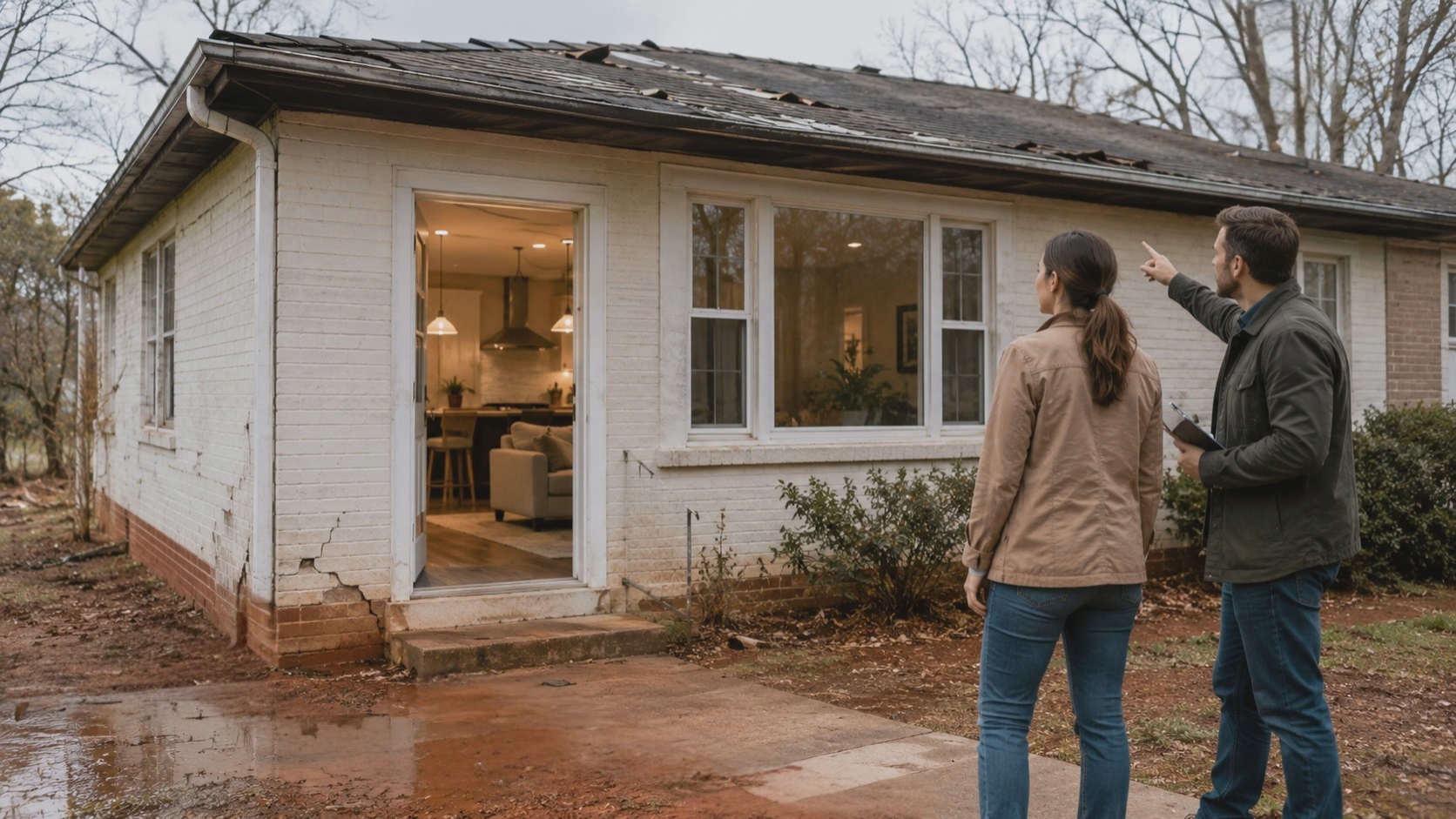
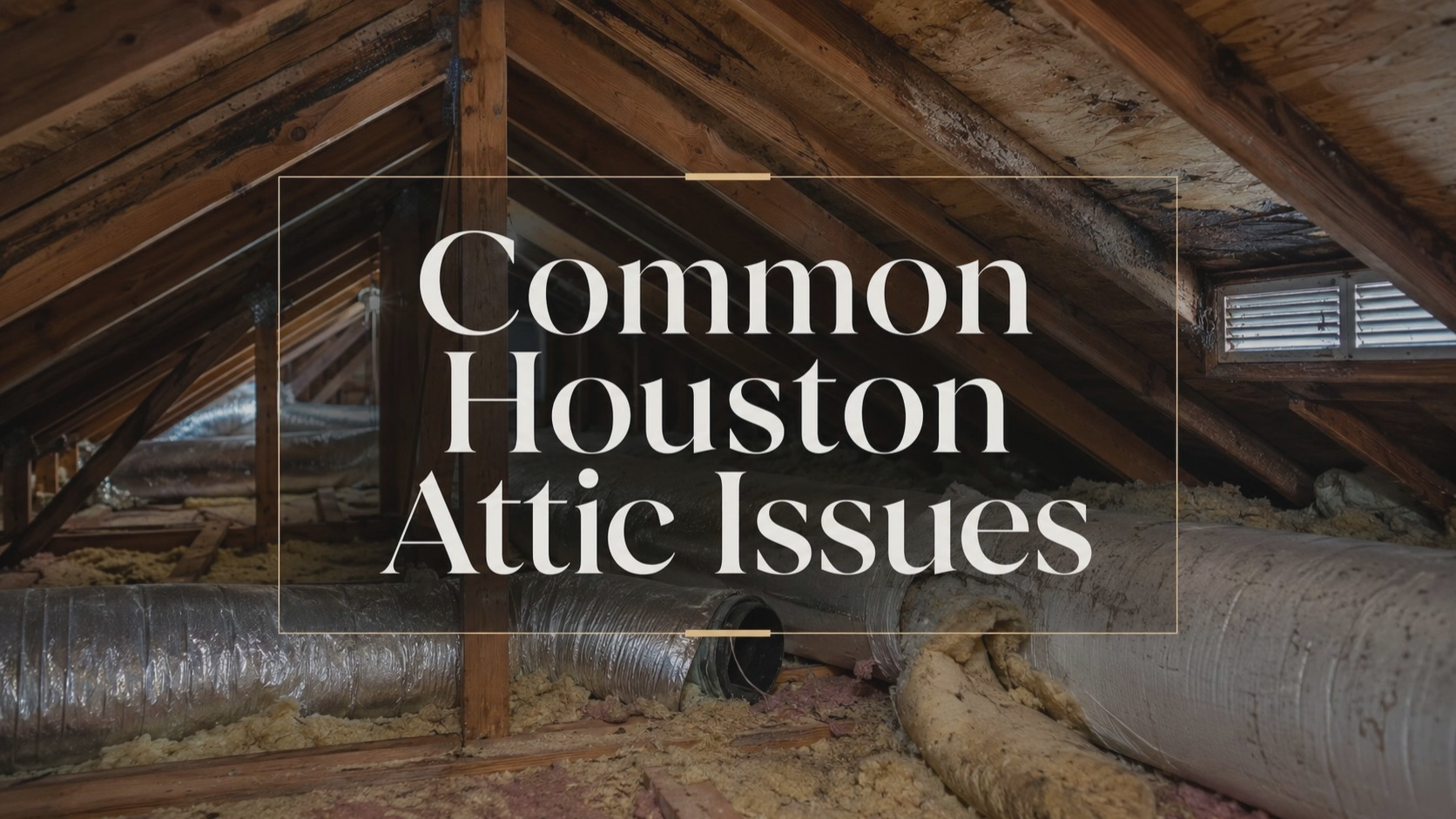
Houston attics take a beating. The combination of brutal summer heat, near-constant humidity, and hurricane-season mels it first.
Most attic problems are fixable. Here are five common attic issues in Houston and how to actually fix them.
Moisture Buildup and Mold Growth
Moisture is where most attic damage starts in Houston, trusted attic cleaning specialists in Houston are often the first call homeowners make after discovering black staining on rafters or a musty smell that won’t go away.
Houston’s average relative humidity often sits around the mid-70% range for much of the year. That moisture doesn’t stay outside. It can enter attic spaces through gaps in soffits, around HVAC penetrations, and through poorly sealed attic hatches. Once inside, warm, humid air can create conditions where mold grows on wood framing, insulation, and sheathing, especially since attic temperatures can reach extreme levels in the summer.
The signs aren’t always obvious at first. You might notice a faint musty odor near ceiling vents or dark streaks along the roof decking that you can only see with a flashlight. Left alone, moisture problems can spread quickly. EPA guidance recommends drying wet or damp materials within 24 to 48 hours to help prevent mold growth. A professional remediation team uses proper containment, HEPA vacuums, and appropriate cleaning and treatment products to remove the colony and treat the wood, rather than just painting over the problem.
Inadequate or Damaged Insulation
Attic insulation in Houston actually does something counterintuitive. It keeps the heat out rather than keeping it in. Most of the year, your insulation’s job is blocking radiant heat from a hot attic space from pushing down into your living areas. And when insulation gets compressed, wet, or chewed through by pests, you feel it quickly on your electricity bill.
ENERGY STAR guidance for Houston’s climate zone commonly points to R-38 to R-49 attic insulation, depending on existing insulation levels and the condition of the attic. Yet some older homes may still have far less than today’s recommended levels. Blown fiberglass or cellulose can also settle over time, reducing its effective performance.
Water damage compounds things fast. Wet insulation can lose much of its thermal performance and become a feeding ground for mold. If your insulation looks matted, discolored, or smells stale, replacement is typically more cost-effective than trying to dry and restore it.
Poor Attic Ventilation
Poor attic ventilation is one of the most overlooked issues, yet it increases your energy costs and accelerates structural wear across every season.
A properly ventilated attic generally needs one square foot of net free ventilation area per 150 square feet of attic floor space, based on International Residential Code standards, with a 1/300 exception allowed in certain balanced ventilation setups. Many Houston homes fall short of that, especially homes where ridge vents or soffit vents got partially blocked during re-roofing, or where homeowners added insulation without maintaining intake vents at the soffits.
The consequences are direct. In summer, a stagnant attic holds heat longer into the evening hours, meaning your AC runs harder to compensate. In the rare Houston winter, that same trapped humidity can condense on cold sheathing and create the moisture conditions described above. Balanced ventilation with intake at the soffits and exhaust at the ridge helps move air continuously and keeps both heat and moisture from stagnating.
You can do a rough check yourself. On a hot afternoon, place your hand near the attic hatch. If the air coming through feels like it has been sitting in an oven for hours with little movement, the ventilation may not be working properly.
Pest Infestations and Nesting Debris
Squirrels, raccoons, and roof rats all treat Houston attics as prime real estate. They’re not just a noise problem. Rats and other pests can shred insulation, leave nesting debris behind, and soak wood framing and insulation batts with urine in ways that are genuinely hard to fix.
The entry points are usually small. Roof rats can squeeze through very small gaps, including openings around the size of a quarter. They enter through gaps at roofline junctions, deteriorated soffit panels, and around HVAC pipe penetrations. Squirrels usually prefer gaps near fascia boards and gable vents.
Beyond the insulation damage, pests leave behind urine, feces, and nesting materials that carry bacteria and allergens. Those particles can move into your living space through air gaps and return-air pathways in the HVAC system. A proper cleanup means removing contaminated insulation, treating the subfloor and framing with an antimicrobial agent, and sealing every entry point before new insulation goes in. Skip the sealing step, and you’ll face the same problem again.
Ductwork Leaks and HVAC Performance
Your air ducts run through the attic, and in Houston’s climate, that location creates a specific problem. Leaky ducts can pull unconditioned attic air directly into your home’s air stream.
ENERGY STAR estimates that duct leakage in typical homes can waste 20 to 30% of the air moving through the duct system. Attic-located ductwork in hot and humid climates can perform especially poorly when leaks, loose joints, or damaged insulation are present. Even a gap at a duct joint near a return plenum can pull hot, dusty attic air into the system and distribute it throughout the house.
The fix involves more than sealing visible gaps with standard duct tape, since standard tape can degrade quickly in attic heat. Mastic sealant or metal-backed tape rated for HVAC use holds up better through the temperature swings Houston attics see. After sealing, an HVAC tech can run a duct blaster test to confirm the leakage rate before and after repairs. If the ducts are more than 15 years old and show visible deterioration, full replacement is often more practical.
Protecting Your Houston Home
These common attic issues share a clear pattern. Humidity triggers most of them, heat accelerates them, and neglect turns a small problem into a large repair bill. Start with a professional attic inspection and address the findings systematically. Doing so will protect both your home’s structure and the air your family breathes every day.