
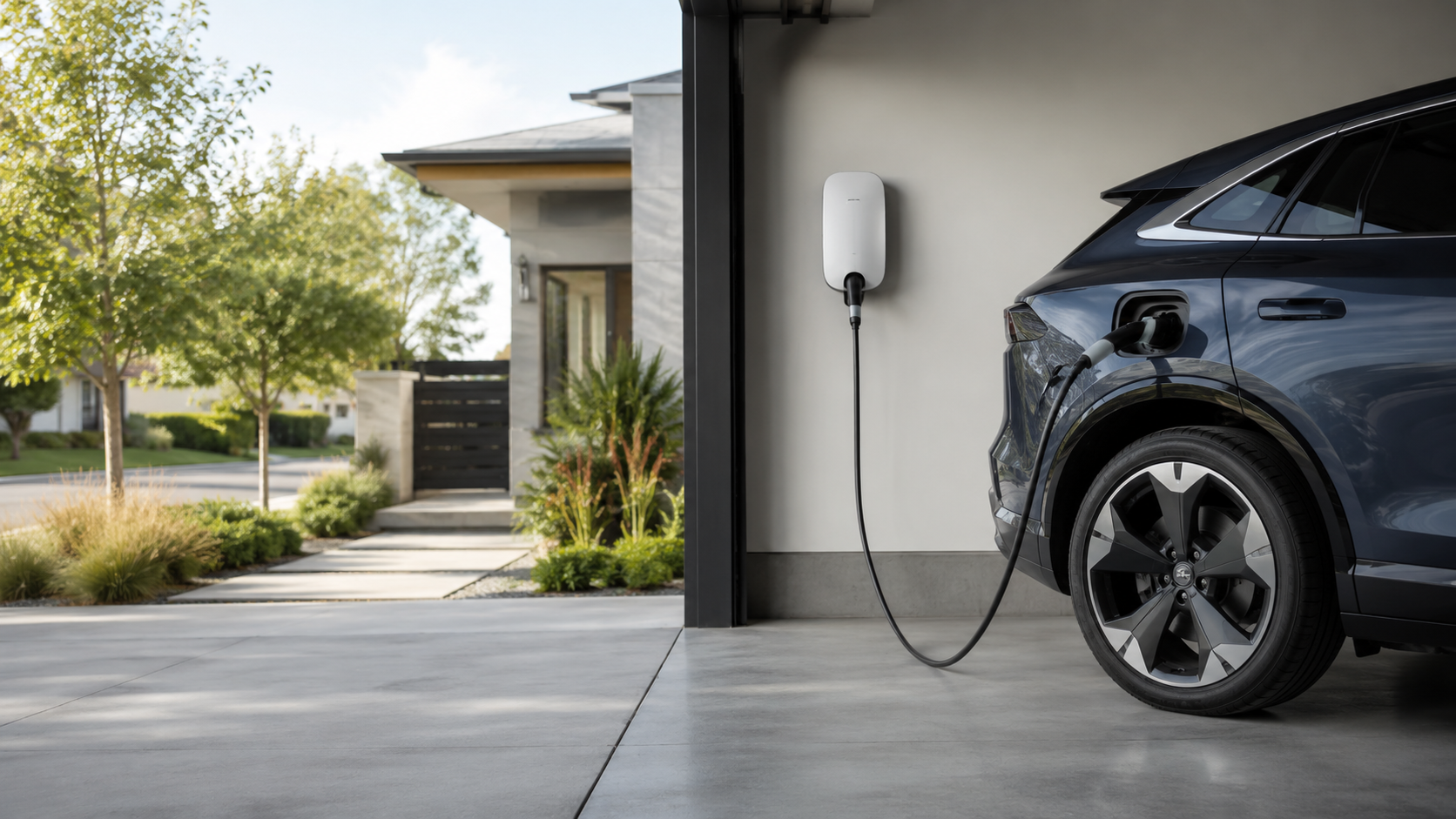
Homes with electric vehicle chargers included in their property listings have a 1.5% higher sale price on average compared to similar homes without them, recent data from Zillow reveals. That’s something Dallas homeowners can take advantage of as electric vehicles (EVs) are becoming increasingly common on Texas roads and buyer demand is growing as a result. In fact, the number of EVs registered in Texas reached 456,667 by the end of 2025, which is more than triple the number recorded in 2022. More buyers either already own an EV or at least plan to and that means homes with EV charging capability are becoming more attractive on the market. To make your home EV ready, you need to check that you have the right electrical panel, install a Level 2 charger, and pick the right spot for it.
Check your electrical panel
You first have to check that your home’s electrical panel has a big enough capacity to work with an EV charger. Most homes these days have a 200-amp panel, but some older ones may still have a 100-amp panel or even less. A 200-amp panel is best because an EV charger uses between 40-50 amps to run. A 100-amp panel may not be able to power the charger along with the rest of the electricity you use in your home. This is especially relevant in Texas where air conditioning usually runs all summer and so your panel is already under more pressure than homes in cooler states.
You can check your main breaker to find the panel’s amperage. This will be found in your home’s main electrical service panel box which is usually in your garage, basement or hallway. But if in doubt, get a licensed electrician to look at your panel and tell you whether an upgrade is needed. Keep in mind too that an updated panel is a green flag for buyers. Newer panels have safety features that reduce fire hazards often associated with overloaded or outdated panels.
Install a Level 2 charger
You can then install a Level 2 charger once your panel’s ready. Level 2 chargers run on 240V and typically add 10-30 miles of range per hour. So you can plug it in in the evening and have a full battery by the next morning. This is in comparison to a Level 1 charger with a standard 120V outlet that adds only 3-5 miles of range per hour. Many Level 2 chargers also come in smart versions. These can connect to your home wifi and let you control and schedule charging from your phone.
A residential Level 2 EV charger costs anywhere from $600-$1,400 to install, research from the University of Texas reveals. Some electricity providers also offer rebates that can bring that figure down, so check with yours before you go ahead with the installation. Keep in mind that the cost of a EV charger installation can be offset over time as charging at home may reduce how much you spend overall. Charging at home is generally cheaper than using public stations.
Choose the right location for your charger
The unit should be installed on the wall closest to your vehicle’s charge port, with a cable length between 18-25 feet, so it works with different vehicles and parking positions. This is useful for buyers who may drive a different EV than you. Also think about whether both bays can realistically reach the charger if you have a two-car garage. A setup that only works for one car may underwhelm buyers with two EVs. So you may need to use a longer cable that works with two cars or even install a second charger on a shared circuit if you have the budget for it. Also mount the unit around 50 inches from the floor. This makes it easy to plug in and still keeps the cable off the ground. Finish off your setup with some simple hooks or clips mounted to the wall. This is to keep the charging cable tidy when not in use, so it’s not left loose on the floor.
Installing an EV charger can help Dallas homeowners increase their home’s appeal to buyers. Get the panel, charger and location right, and your EV setup will reduce your charging costs and make your home easier to sell.