When buyers evaluate a Houston neighborhood, they typically check school ratings, walkability scores, flood plain status, and crime data. Very few check traffic crash statistics. That gap matters more than most buyers realize. The data to fill it is publicly available, specific, and directly relevant to the financial and physical risk profile of the property they are considering.
Texas roads kill more people than any other state in the country. The Texas Department of Transportation recorded 4,302 traffic fatalities in 2023. Harris County produced 301 traffic deaths in 2024. In Dallas County, the numbers tell a similar story. The density of serious crashes is not uniform across the state.
It concentrates along specific corridors, near certain interchange types, and in neighborhoods with particular street design characteristics that buyers can identify before committing to a purchase. Since buying a home is a long-term commitment, it is important to understand where serious car accidents occur and how local crash patterns may affect long-term safety.
How Crash Density Affects a Houston Neighborhood’s Risk Profile
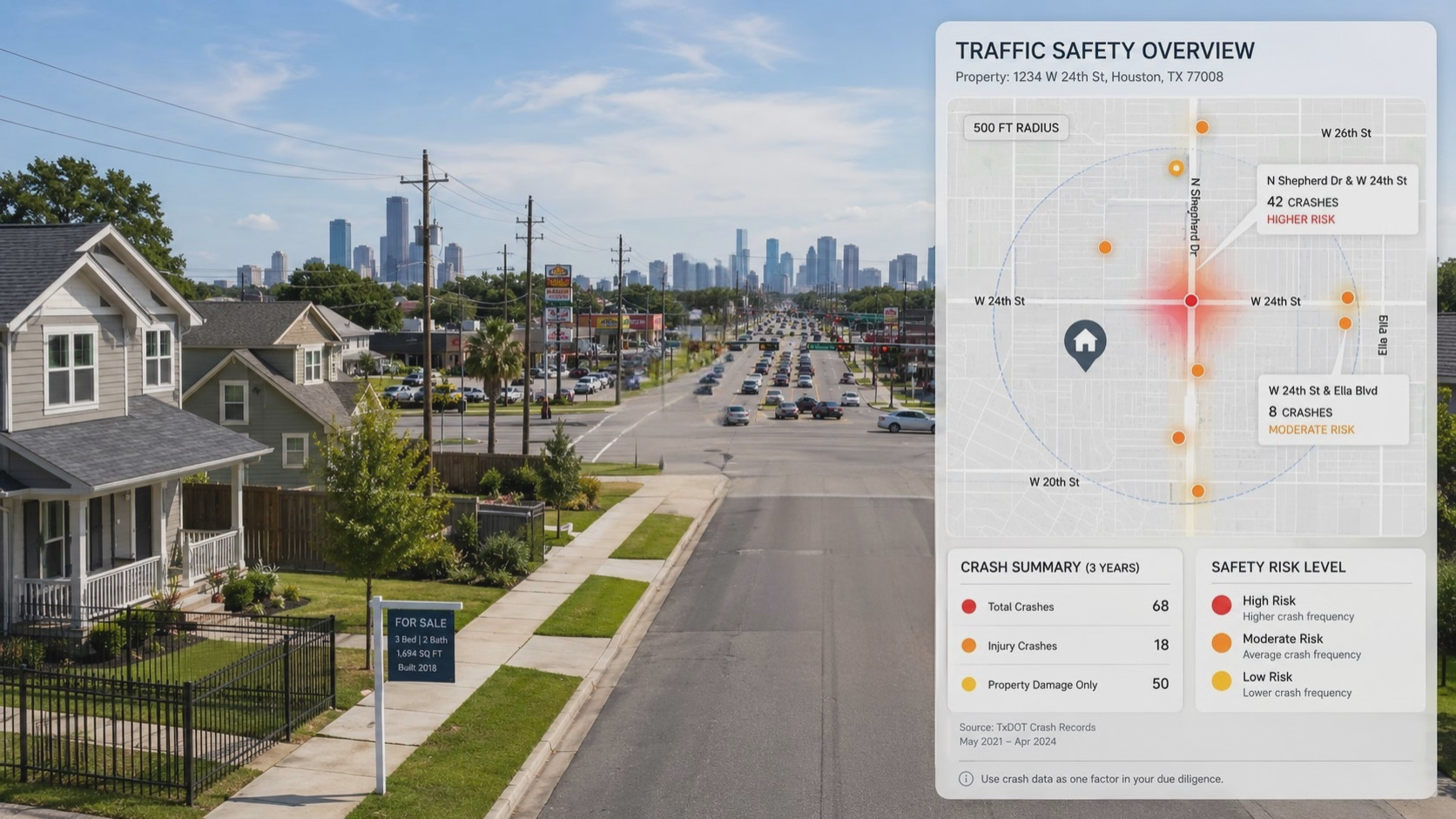
TxDOT’s Crash Records Information System maintains publicly accessible crash data for roads across Texas. This means a buyer can review crash frequency around the specific streets and intersections near a Houston property they are evaluating and compare it against the broader market. High-crash corridors near a property affect two distinct financial exposures.
The first is insurance. Personal auto insurance premiums are calculated in part using geographic risk factors, claims history, and local crash frequency. A property in a higher-risk driving area can contribute to higher auto insurance costs for drivers in the household, a recurring expense that does not appear in the purchase price analysis but accumulates over years of ownership.
The second is personal safety. A neighborhood with elevated pedestrian crash frequency, school zone crash incidents, or a dangerous intersection pattern creates ongoing physical risk for residents and children. This risk is measurable. It appears in TxDOT crash data, Houston’s High Injury Network, and federal fatal crash data, all of which can add context before a buyer signs a contract.
When a serious collision leads to a legal claim, the outcome depends on the available evidence, the applicable law, and the experience of the legal team handling the case. Firms that regularly litigate motor vehicle collisions are often better equipped to investigate liability, preserve evidence, and assess long-term damages.
In Houston, Texas car accident attorney representation at Sutliff & Stout focuses on helping injury victims in complex vehicle accident cases. The firm has recovered more than $1 billion for clients and is known for pursuing full compensation through settlement negotiations and trial when necessary.
The broader point is that crash risk is not evenly distributed across Houston or Texas. Public crash data makes those differences measurable, allowing home buyers to evaluate another factor that can influence the long-term financial risk associated with where they choose to live.
Interstate and Highway Proximity Is a Two-Sided Variable
In Houston real estate, proximity to major highways is typically marketed as an advantage. Quick access to Interstate 10, Interstate 45, Interstate 69, Loop 610, or Beltway 8 is standard positive language in listing descriptions. The crash data tells a more nuanced story.
Properties within half a mile of a high-speed interchange can face elevated crash exposure near their addresses, particularly on feeder roads and service lanes that handle the overflow of interstate traffic at lower speed differentials and higher conflict rates than the highway itself. The ramp areas and frontage roads of major Houston interchanges are often among the most complicated driving environments in the city.
This does not make highway-adjacent properties bad investments. It does make the traffic analysis a meaningful part of the neighborhood evaluation rather than a consideration that is skipped in favor of commute time.
What Crash History Reveals About Long-Term Houston Neighborhood Character
Neighborhood crash frequency correlates with characteristics that are also relevant to long-term property value trends. Street design that produces high crash rates at intersections, pedestrian conflict zones near commercial corridors, and high-speed arterial roads without adequate separation from residential streets all reflect infrastructure decisions that are slow to change, and that affect quality of life in ways buyers do not always anticipate.
In Houston, corridors such as Westheimer Road, Bissonnet Street, major freeway feeder roads, and other high-injury street segments show how traffic safety concerns can overlap with everyday residential decisions. For buyers relocating from another Texas market, Houston crash data provides a practical comparison framework for understanding how local road design may affect safety, convenience, and long-term livability.
How to Add Crash Statistics to a Houston Property Search
The steps are simple. Query the TxDOT Crash Records Information System at cris.dot.state.tx.us for crash frequency by street segment in the area under consideration. Review the data for the specific streets adjacent to the property and the nearest major intersections. Look for pedestrian crash incidents, especially if you have children or elderly family members who will be walking or cycling near the home.
Compare the results against Houston’s broader crash patterns and the city’s High Injury Network. A neighborhood with crash frequency at two or three times the city average on its primary access roads carries a meaningful and quantifiable safety differential that belongs in the same conversation as school ratings and flood risk.
The Houston real estate market moves fast. Properties go under contract quickly, and contingency periods are short. Adding a ten-minute crash data review to the due diligence checklist before an offer is submitted is a small investment that produces information no inspection report includes.