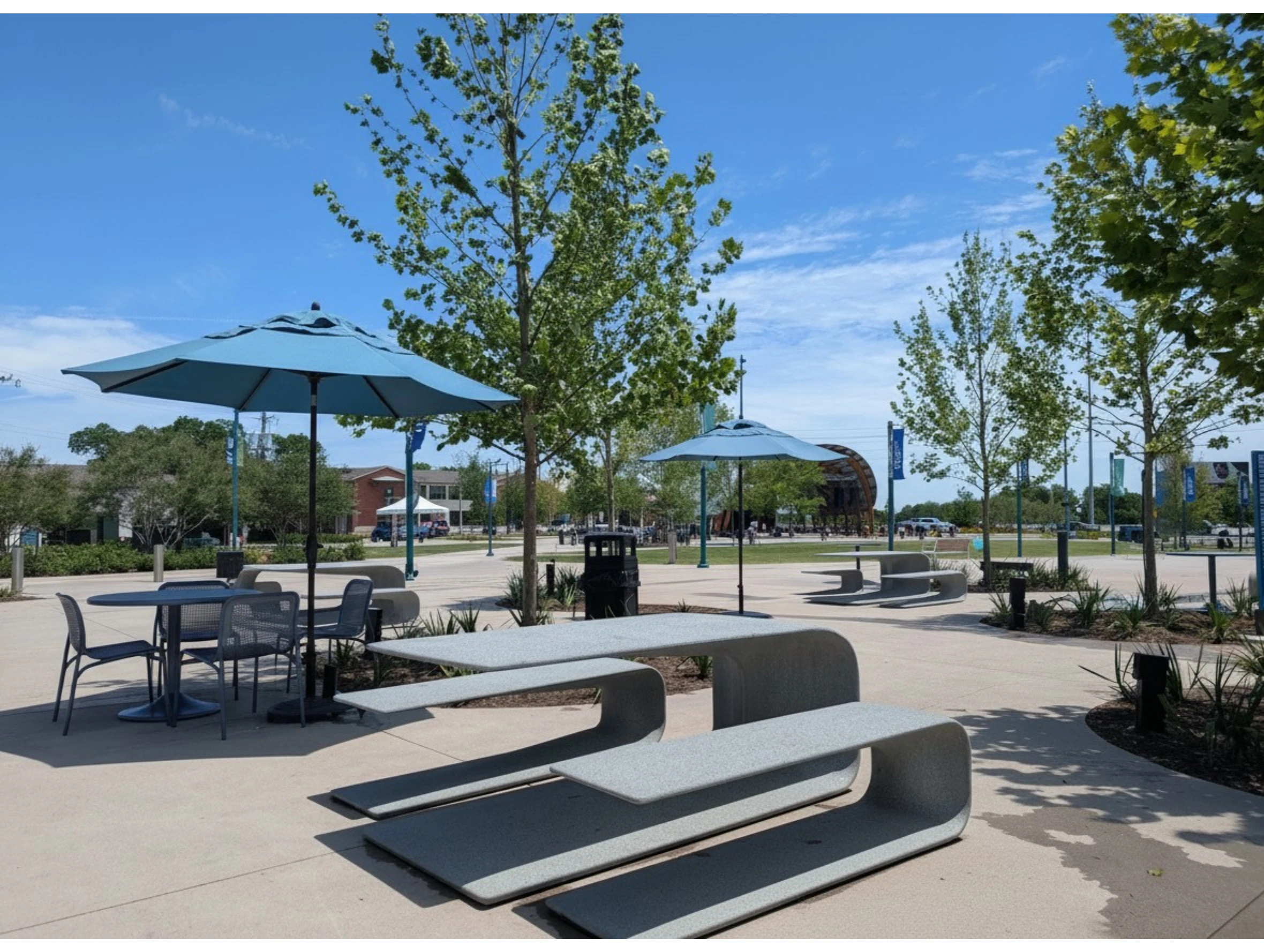
DALLAS — Halperin Park represents the city’s promise to the community to transform the space above I-35E into open space for Southern Dallas and Oak Cliff residents. Designed with input from the community, the park includes expansive lawns, a performance space, shaded gathering areas, play areas, water features, and views of downtown Dallas. However, to get there, many visitors arriving on foot still have to cross a busy road.
City officials have framed Halperin Park as more than a new public space. Dallas Mayor Eric Johnson said the park “bridges long-divided communities,” while City Manager Kimberly Bizor Tolbert called it a future landmark and community asset for southern Dallas.
This new deck park spans Interstate 35E near the Dallas Zoo. It aims to reconnect historic Oak Cliff, a community divided by highway construction in the 1950s. The park opened to the public in May 2026 after years of planning, fundraising, and public-private partnership.
Lou Ann Sims, a Tenth Street resident, said the park “brings people together.” Another resident, Kenneth Thomas, said he was glad he had lived long enough to see the east and west sides of the neighborhood reconnected.
The problem is not inside the park. It is just outside it.
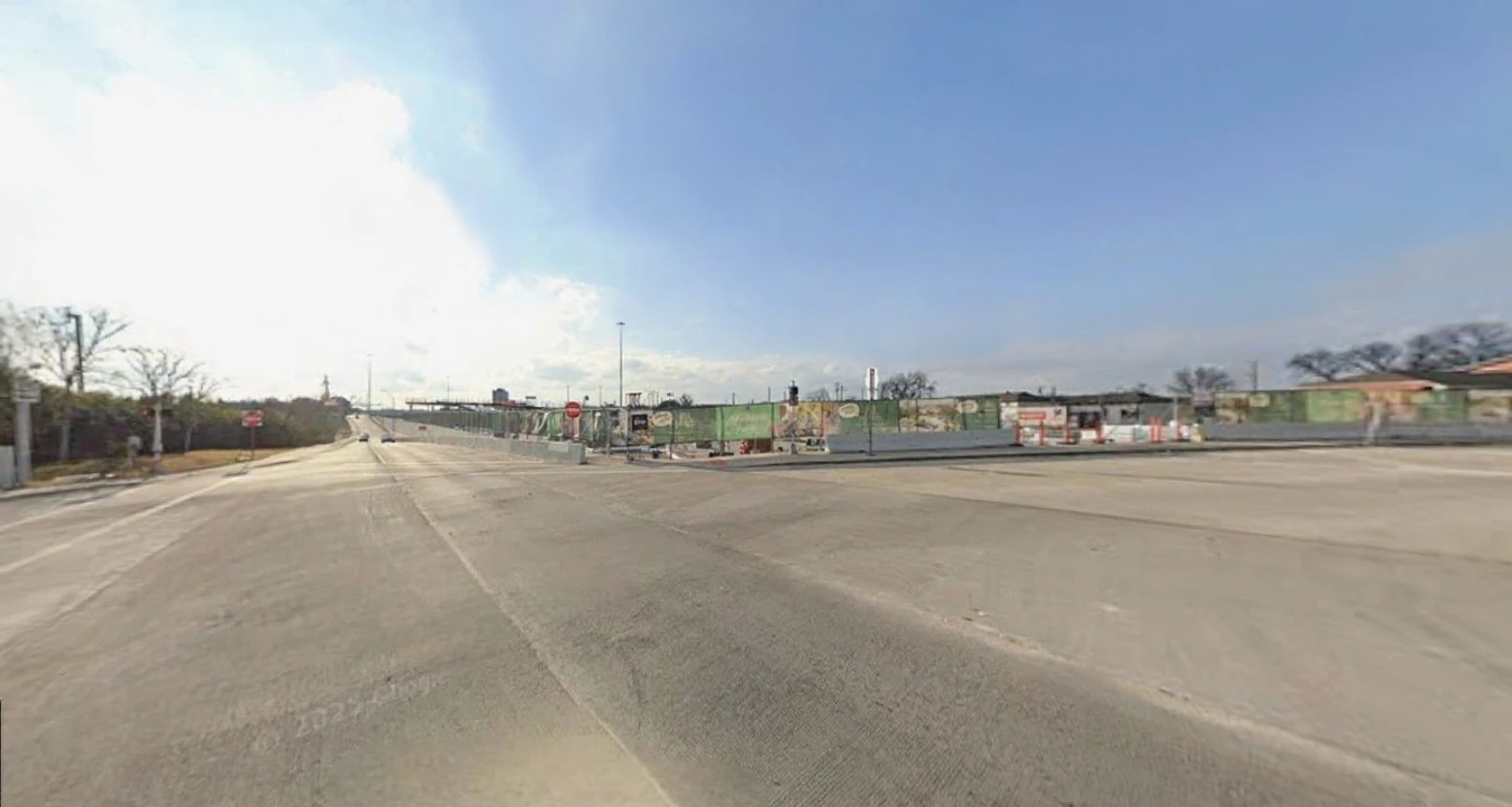
At the park’s northern end, near South Ewing Avenue, there are painted crosswalks and traffic signals. But many visitors cross farther south, near the park entrance at Lancaster Road, where there is no crosswalk or traffic light. That is where the danger is: when the light at Ewing turns green, vehicles coming off I-35E speed past the park, putting pedestrians at risk.
The city is working with the Dallas Zoo and the Southern Gateway Public Green Foundation on longer-term pedestrian-safety and access improvements near South Lancaster Road and 12th Street. The Dallas City Council also approved up to $8 million to help complete the first phase of the plaza at Halperin Park.
However, as of this writing, the problem remains unresolved. Local residents hope the city will address the pedestrian-safety issue at Halperin Park. The concern is especially clear when Halperin is compared with Klyde Warren Park, Dallas’ first deck park. Klyde Warren sits in the middle of downtown, where pedestrians move through a more established street grid with traffic lights and marked crossings. Halperin Park, by contrast, spans I-35E and sits beside a busy freeway service road, making access more difficult for people arriving on foot.
A park meant to bring people together has to begin before the gate. Dallas does not need to wait for a tragedy to treat Halperin’s access problem as urgent.