- Start Your Apartment Search Early
- Build a Budget That Goes Beyond Rent
- Compare Nashville Areas by Daily Routine
- Tour the Apartment Before You Apply
- Read the Lease Before You Sign
- Prepare Your Application Documents
- Confirm Utilities Before Move-In
- Make a Moving Checklist
- Inspect the Apartment Before You Unpack
- Get to Know the Area After Move-In
- Consider Using an Apartment Locator
- Avoid Common First-Time Renter Mistakes
- Your Nashville Move Starts With a Smart Plan
- Frequently Asked Questions
Looking for your first apartment in Nashville sounds simple until you actually start doing it. One listing says “available now.” Another has extra fees that were not obvious online. A third looks perfect in photos, but the commute tells a different story.
That is why it helps to slow down, compare your options, and understand the leasing process before you sign anything.
Whether you are moving to Nashville from another state, leaving student housing, or getting your own place for the first time, this guide walks you through the main steps: budgeting, touring, applying, setting up utilities, moving in, and avoiding the mistakes first-time renters often make.
Start Your Apartment Search Early
Do not wait until the week before you need to move. Apartment availability can shift quickly depending on the property, season, floor plan, and move-in date.
Starting early gives you more time to:
- Compare pricing and lease terms
- Research apartment amenities
- Schedule property tours
- Prepare application documents
- Coordinate moving logistics
- Ask about fees before applying
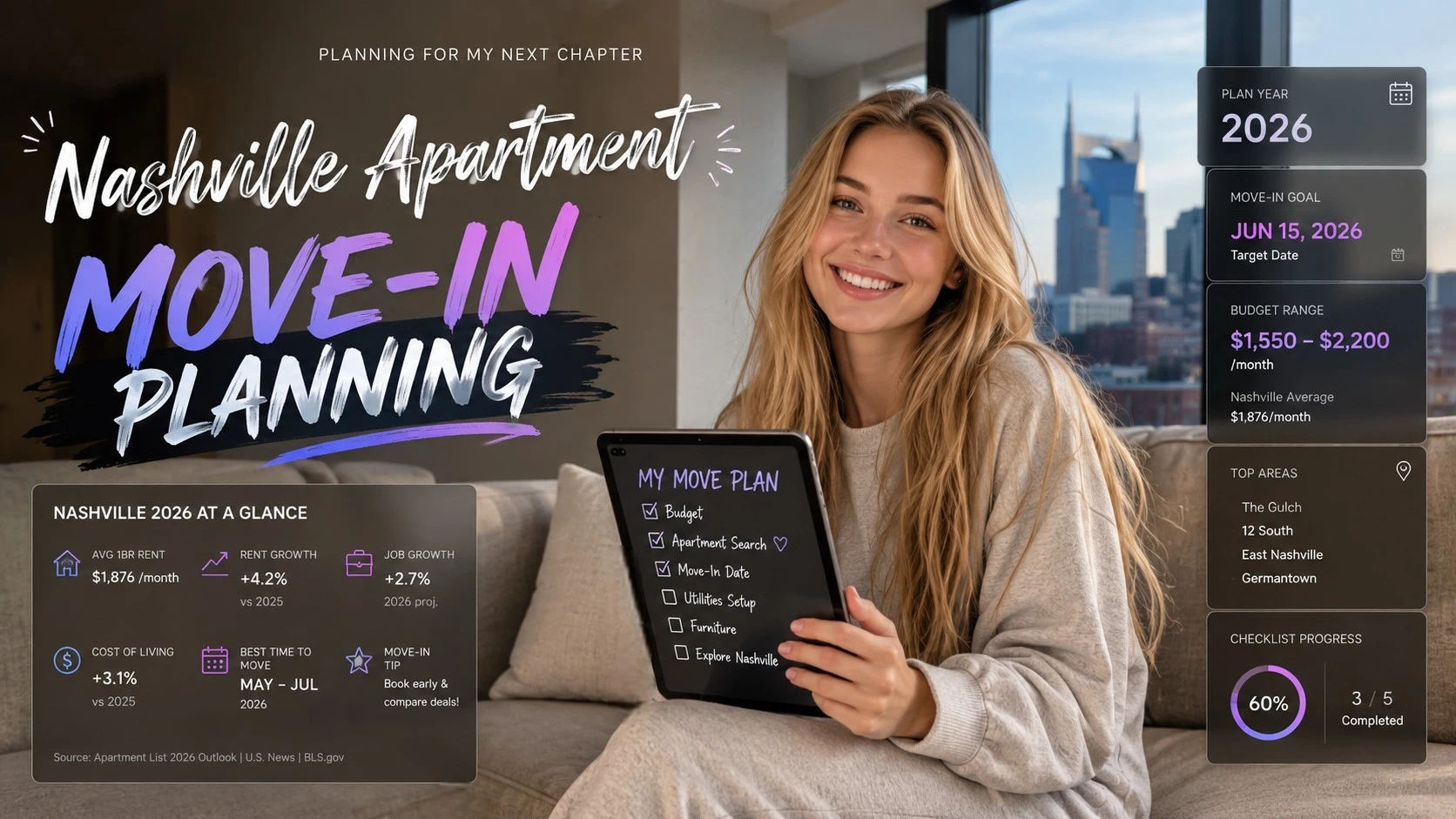
In many cases, starting your search about 30 to 60 days before your intended move-in date gives you a better shot at finding a place that fits your budget and timeline. It also gives you room to compare options instead of rushing into the first unit that works.
Build a Budget That Goes Beyond Rent
Monthly rent is only one part of the cost. Before you apply, look at the full picture so you know what the apartment will actually cost to move into and live in month to month.
Common apartment-related expenses may include:
- Security deposits
- Application fees
- Administrative or move-in fees
- Utility deposits or setup charges
- Internet service
- Parking fees
- Renter’s insurance
- Moving costs
- Pet fees, pet deposits, or monthly pet rent
A unit that looks affordable at first glance may feel different once parking, internet, insurance, and utility charges are added. Ask the leasing office for a complete breakdown of required fees, optional fees, and recurring monthly charges before you submit an application.
Compare Nashville Areas by Daily Routine
Nashville is not one-size-fits-all. Different areas offer different commute patterns, apartment styles, parking situations, and access to restaurants, parks, grocery stores, and entertainment.
When comparing locations, focus on practical details such as:
- Distance to work or school
- Access to major roads and public transportation
- Grocery stores and everyday errands nearby
- Walkability
- Parks, greenways, or outdoor space
- Parking availability
- Noise levels
- Apartment density and building style
- Expected commute times
Exploring different areas can help renters identify locations that match their daily routines and housing preferences.
Renters searching for available Nashville apartments can also compare neighborhoods based on commute times, amenities, and housing availability before narrowing down their options.
Tour the Apartment Before You Apply
Photos are useful, but they do not show everything. Whenever possible, tour the actual unit you would be renting, not just a model apartment.
During the tour, pay attention to:
- Natural light
- Storage space
- Water pressure
- Appliance condition
- Flooring and wall condition
- Noise from neighbors, traffic, or nearby businesses
- Parking access
- Laundry facilities
- Mail and package areas
- Hallways, elevators, and shared spaces
Ask direct questions while you are there. How are maintenance requests handled? Is guest parking available? How are packages delivered? Which utilities are billed separately? Is pest control included? Are there any required monthly fees not shown in the advertised rent?
If you are moving from outside Tennessee and cannot tour in person, ask for a live video tour of the actual unit. A recorded walkthrough is helpful, but a live tour lets you ask questions in real time.
Read the Lease Before You Sign
A lease is a legal contract, so do not skim it. Take time to read the full agreement and ask questions before signing.
Review details such as:
- Monthly rent
- Lease start and end dates
- Security deposit terms
- Renewal procedures
- Late fees and grace periods
- Maintenance responsibilities
- Pet rules and fees
- Parking rules
- Guest policies
- Utility responsibilities
- Early termination terms
- Move-out notice requirements
If something sounds unclear, ask the leasing office to explain it in writing. Keep copies of your signed lease, payment receipts, move-in condition form, and any emails about fees, repairs, concessions, or lease terms.
Prepare Your Application Documents
Apartments can move quickly when the price, location, and move-in date line up. Having your documents ready can make the application process smoother.
Commonly requested items may include:
- Government-issued photo ID
- Proof of income
- Recent pay stubs
- Employment verification
- Rental history
- Bank statements
- References if requested
Many properties also run credit and background checks as part of the application process. Requirements vary by property, so ask what is needed before you apply.
Confirm Utilities Before Move-In
Before move-in day, confirm which utilities need to be in your name and which ones are handled by the property.
Depending on the building, you may need to set up or confirm:
- Electricity
- Water or sewer billing
- Internet service
- Gas service
- Trash or recycling charges
Some apartment communities bill certain utilities directly to residents. Others include specific services in rent or bill them through a third-party system. Ask the leasing office for a clear utility breakdown before move-in so you are not surprised by a separate monthly charge later.
Make a Moving Checklist
Moving day gets messy fast. A simple checklist can keep small tasks from turning into big problems.
Your checklist may include:
- Changing your mailing address
- Scheduling movers or renting a truck
- Reserving elevators, loading docks, or freight access if required
- Packing essentials separately
- Confirming utility activation dates
- Measuring furniture, doors, and hallways
- Buying basic cleaning supplies
- Setting up renter’s insurance if required
- Confirming move-in parking instructions
- Updating vehicle registration if you are moving from out of state
Try to keep your first-night essentials in one easy-to-find bag or box. Include things like chargers, toiletries, towels, basic tools, medications, snacks, bedding, and a change of clothes.
Inspect the Apartment Before You Unpack
Before you start unpacking, walk through the apartment and document its condition. Many apartment communities provide a move-in condition form for this exact reason.
Check areas such as:
- Walls and floors
- Doors and locks
- Windows and screens
- Appliances
- Cabinets and countertops
- Plumbing fixtures
- Lighting fixtures
- Smoke detectors
- Heating and cooling systems
- Bathroom and kitchen surfaces
Take photos and videos of anything damaged, stained, cracked, loose, or missing. That includes scuffed floors, dents in appliances, chipped counters, torn screens, and marks on the walls. Submit the condition form on time and keep a copy for your records.
This step can make a big difference when you move out and want your security deposit handled fairly.
Get to Know the Area After Move-In
Once you are settled, take time to learn what is nearby. It will make your new apartment feel more like home and help you handle everyday errands faster.
Look for:
- Grocery stores
- Pharmacies
- Coffee shops
- Fitness centers
- Parks or greenways
- Public transportation stops
- Medical offices
- Banks or ATMs
- Gas stations
- Pet care providers if needed
Even a short walk or drive around the area can help you understand traffic patterns, parking, nearby services, and the general feel of the neighborhood.
Consider Using an Apartment Locator
Searching for an apartment can take a lot of time, especially if you are new to Nashville or trying to compare several areas at once. A local apartment locator may be able to help narrow down the search.
An apartment locator can help with:
- Finding available units
- Comparing locations
- Scheduling tours
- Reviewing amenities
- Checking current pricing
- Understanding application requirements
- Identifying specials at participating properties
In many cases, apartment locating services are available at no direct cost to renters because participating apartment communities pay a referral commission after a lease is signed. Before working with any locator, ask how the service is compensated and confirm that you understand which properties they work with.
Avoid Common First-Time Renter Mistakes
Your first apartment is a learning experience, but a little preparation can help you avoid the most common issues.
Try not to:
- Wait too long to start searching
- Focus only on monthly rent
- Ignore parking or utility costs
- Skip the lease details
- Apply before understanding all fees
- Underestimate commute times
- Forget renter’s insurance
- Assume utilities are included
- Move in without documenting the unit’s condition
The goal is not to find a perfect apartment. The goal is to find a place that fits your budget, your routine, and your lease terms without unwanted surprises.
Your Nashville Move Starts With a Smart Plan
Moving into your first Nashville apartment should feel exciting, not overwhelming. When you start early, know your budget, compare areas carefully, read the lease, and document the unit at move-in, you put yourself in a much better position from day one.
Always verify pricing, availability, fees, specials, lease terms, utility responsibilities, and property details directly with the apartment community or property manager. Rental rates and leasing conditions can change frequently.
This guide is for informational purposes only. Renters should independently verify apartment availability, pricing, fees, lease terms, utility responsibilities, and property details before making housing decisions.
Frequently Asked Questions
How far in advance should I start looking for an apartment in Nashville?
Many renters start looking about 30 to 60 days before their intended move-in date. This gives you time to compare options, schedule tours, prepare documents, and review lease terms without rushing.
What documents are usually required for a Nashville apartment application?
Apartment communities commonly ask for a government-issued photo ID, proof of income, recent pay stubs, employment verification, rental history, and sometimes bank statements or references. Exact requirements vary by property.
Are utilities included in apartment rent?
It depends on the apartment community. Some properties include or bill back services such as water, trash, sewer, or pest control. Others require residents to set up certain utilities directly with providers. Always ask for a full utility breakdown before signing.
What should I look for during an apartment tour?
Look beyond the photos. Check natural light, storage space, appliance condition, water pressure, parking access, noise levels, package areas, laundry access, and the condition of shared spaces.
What costs should I plan for besides monthly rent?
Additional costs may include a security deposit, application fee, administrative fee, renter’s insurance, parking fee, utility setup charges, internet service, pet-related fees, and moving expenses.
Disclaimer: Housing availability, rental rates, fees, specials, and leasing policies are subject to change and are determined by individual property owners and management companies. Nashville Apartment Locators is a licensed real estate brokerage providing apartment locating services in compliance with applicable federal, state, and local fair housing laws. In many cases, participating properties pay a referral commission after a lease is signed, so services are often available at no direct cost to renters.
This article is for informational purposes only and does not constitute legal, financial, or real estate advice. Renters should independently verify apartment availability, pricing, fees, lease terms, utility responsibilities, and property details before making housing decisions.