
It’s already difficult enough to price a distressed property. Add a changing market, shifting interest rates, and buyer interest that changes every single month, and it becomes easy to see why many sellers in Milwaukee price their homes wrong. They base the price on the neighbor’s sale from eighteen months ago, add a little optimism, and then wonder why the property doesn’t move.
Distressed properties don’t follow move-in ready pricing rules. The buyer pool is smaller, financing is tighter, and in a market with plenty of inventory, even small defects get magnified. Price the house incorrectly, and it just sits. Price drops become visible to everyone, and the final sale price often ends up much lower than where realistic pricing would have put it from the start.
Getting this right matters more in Wisconsin than in many other markets because of the diverse housing stock. A distressed bungalow in Bay View, a fire-damaged duplex in Riverwest, and a hoarder home in West Allis each need a different pricing strategy, even if all of them are technically considered distressed.
Start With What the Property Is Today
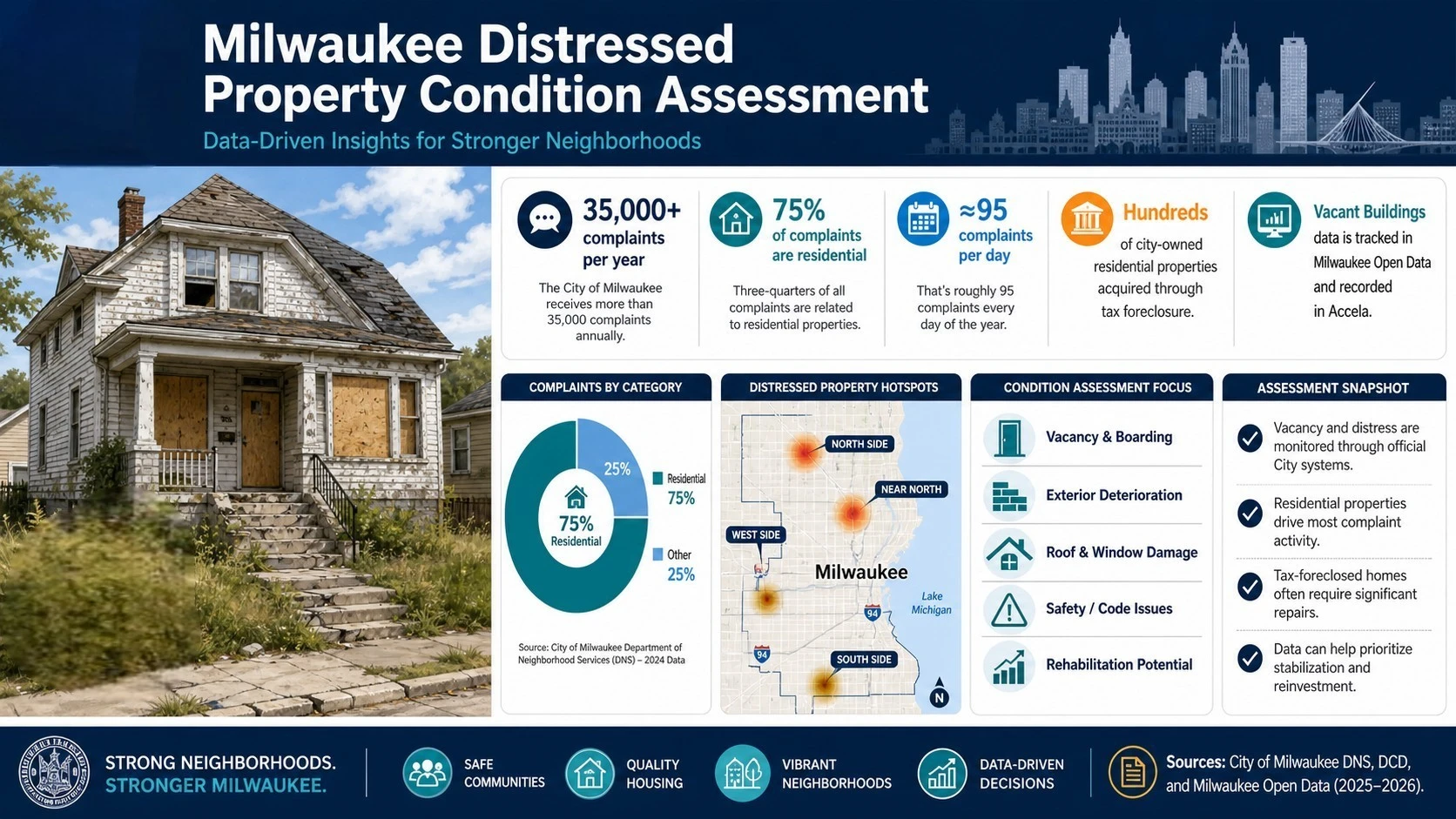
One of the biggest pricing mistakes is treating a distressed property like a regular house and simply applying a quick discount. Sellers go on Zillow, find the average sale price in the neighborhood, subtract 15 percent, and assume that is the right price. That almost never works.
Distressed properties should be priced against other distressed sales, not fully renovated homes. For example, if your property needs a new roof, updated mechanicals, and cosmetic work, your real competition is other unrenovated homes, bank-owned listings, estate sales, and investor specials. It is not the flipped three-bedroom two blocks away that sold for $385,000 last month.
Look for recent sales of homes in similar condition within a half-mile radius. Pay attention to what investors actually paid, not the original list prices. In Milwaukee, investor purchase prices are often 30 to 45 percent below renovated comps once repair costs, holding time, and investor profit are included. That is where your pricing should realistically land.
Factor in Real Repair Costs, Not Optimistic Estimates
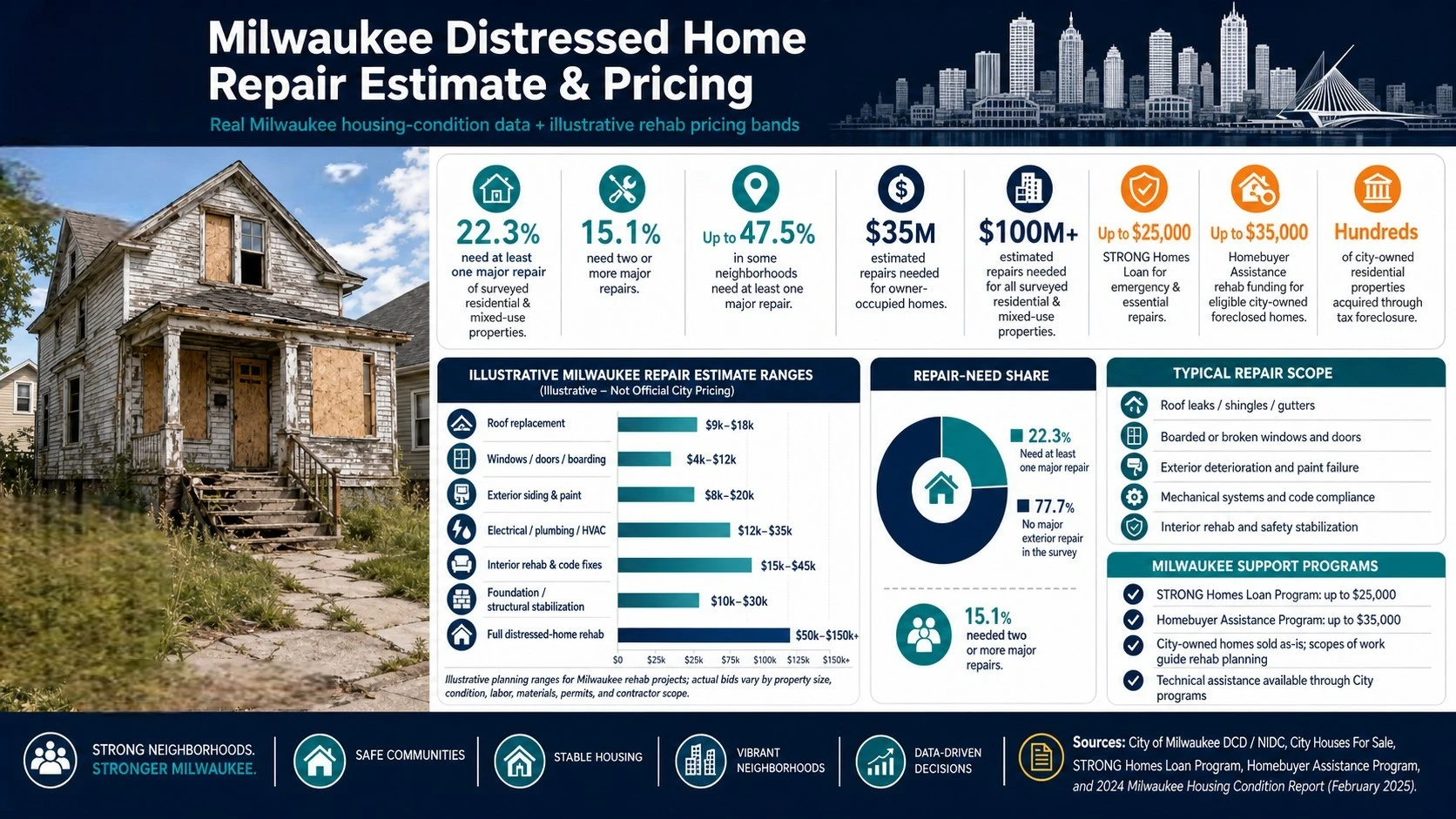
Sellers almost always underestimate repair costs. A roof in Milwaukee is no longer $6,000. Depending on the size and complexity, it can run anywhere from $12,000 to $18,000. A full mechanical update, including a furnace, water heater, and new electrical panel, can cost $15,000 to $25,000 before you even get to the drywall. Kitchen and bathroom renovations, even basic ones, can add tens of thousands of dollars.
To price a distressed property correctly, you have to subtract the full, realistic cost of getting it ready to sell. Then you also have to account for the buyer’s margin. Investors do not take on major rehab work for free. An investor looking at a $60,000 renovation needs room to make money from the project, not just cover the cost of repairs.
This is where many sellers let emotion take over and end up losing money. Maybe the house belonged to their parents. Maybe they lived there for thirty years. Maybe they remember what it cost to remodel the kitchen in 2006. None of that matters to the market. The market looks at condition, not history.
Read the Current Market, Not Last Year’s Market
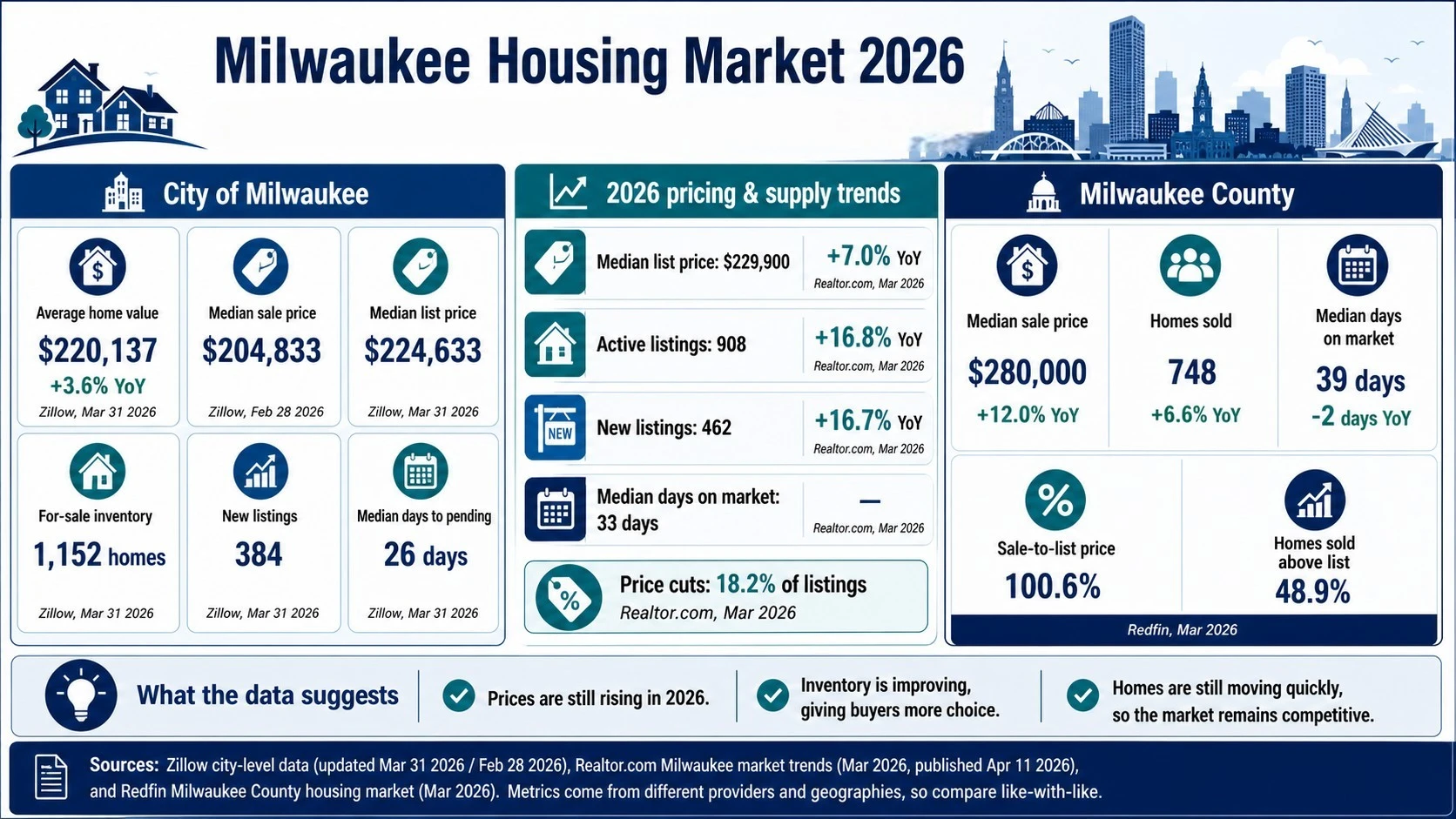
Markets change fast, and distressed properties are usually affected first. When interest rates rise, fewer buyers are willing to finance a project home because rehab loans and construction financing become more expensive along with traditional mortgages. When inventory increases, buyers have more choices and become less willing to overlook problems. When investor activity slows, the price floor for distressed homes drops.
Do not base your price on the market from when you first thought about selling. Focus on what is happening right now. Look at days on market for similar properties. If distressed homes in your neighborhood are sitting for 60 to 90 days even after price reductions, buyers are hesitant. If they are selling in under 30 days, demand is still strong.
Also watch Milwaukee-specific signals. City reassessment cycles, tax levy changes, and neighborhood-level investor activity can all affect the price floor. Tax-delinquent homes, probate homes, and homes with condemnation orders follow their own pricing logic, and that logic rarely lines up with general market trends.
When a Traditional Listing Doesn’t Make Sense
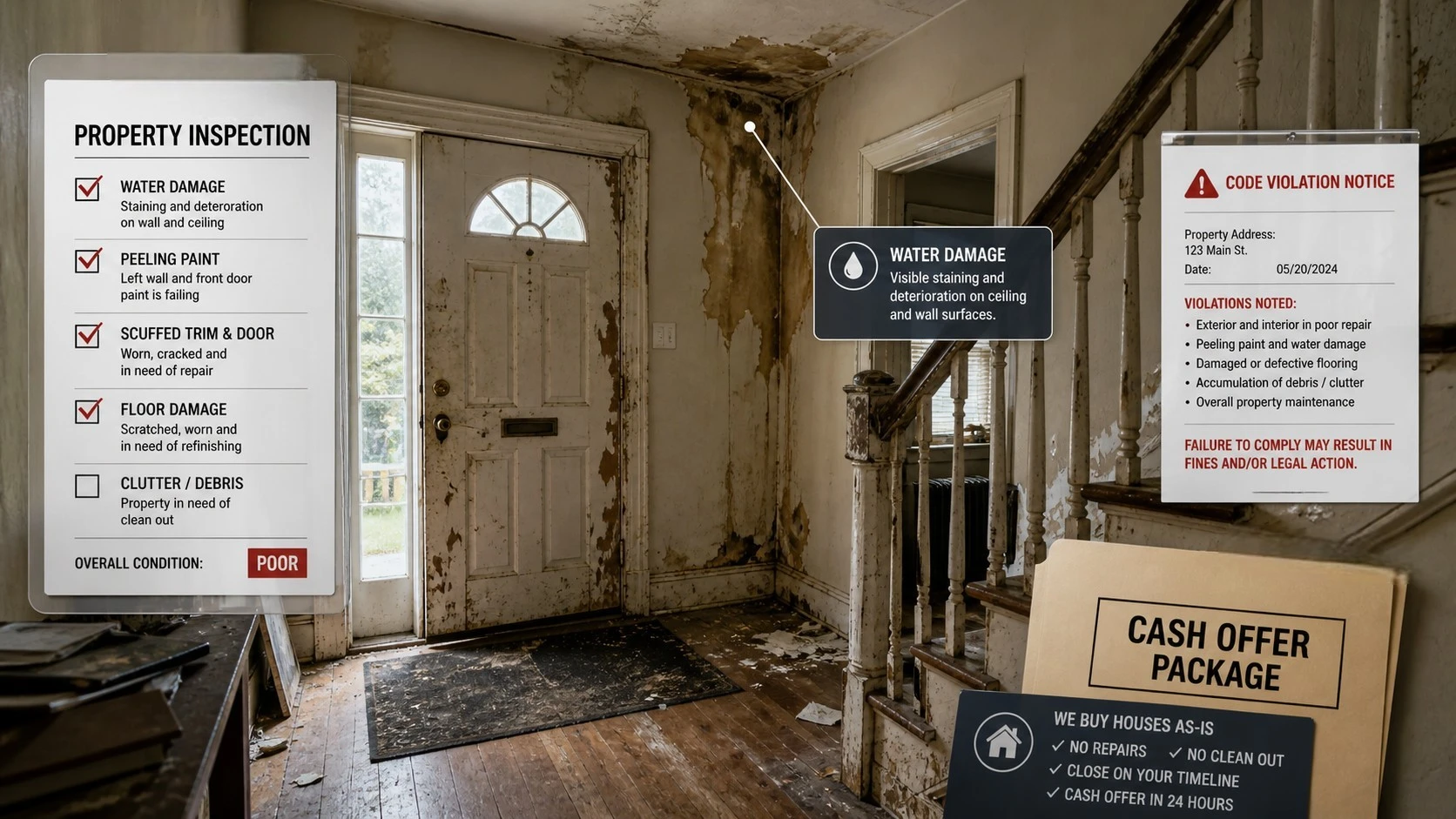
Sometimes, even an accurately priced distressed property will not perform well on the open market. If the property has major issues like code violations, ongoing water intrusion, hoarding, fire damage, or foundation problems, a traditional listing can turn into a frustrating process. You end up with a house that is not ready, inspections it cannot pass, and financing hurdles most buyers cannot get past.
In those cases, your realistic buyer pool is usually limited to cash investors anyway. Going directly to them can sometimes leave you with more money than listing publicly. You avoid the cycle of listing, delisting, and cutting the price, which can hurt the property’s perceived value. Carrying costs stop adding up, and the sale can close in weeks instead of months.
Many homeowners in Milwaukee who face this situation end up working with a Milwaukee-based company that buys distressed properties directly. This approach removes much of the pricing uncertainty because the offer is based on the property’s current condition and current market data. It is not the right fit for every distressed property, but when the cost of getting a house market-ready would eat up most of the upside, it can produce a better net result than the traditional route.
The Bottom Line
Pricing a distressed property correctly means setting a price based on its real competition. That means comparing it to other distressed properties, subtracting realistic repair costs, accounting for the buyer’s margin, and paying attention to today’s market instead of last year’s trends. Sellers who approach this realistically are more likely to close. Sellers who anchor their price to renovated comps, underestimate repairs, or ignore market changes usually end up chasing the market down through multiple price cuts.
The hardest part is not the math. It is accepting the reality of the property. A distressed home is worth what a distressed-property buyer can pay, not what a perfect comparable home sold for. Once Milwaukee sellers understand that, pricing becomes much more straightforward.