Buying or selling real estate is often treated as a financial decision first. People look at price, timing, market conditions, and financing. These things matter, but they’re not the whole picture. Real estate transactions also affect ownership rights, family interests, and long-term control over assets.
For Calgary homeowners, families, and real estate investors, estate planning helps you look beyond the transaction and prepare for what happens before, during, and after a property changes hands.
Here are five reasons to prioritize estate planning before making your next move in Calgary, Alberta.
1. Property Decisions Should Match Your Broader Legal Plan

A home, rental unit, or commercial property doesn’t exist apart from the rest of your estate. It becomes part of what you own and what others may one day inherit or manage. Speaking with Estate Lawyers Calgary before a purchase or sale can help make sure the transaction supports your long-term goals under Alberta law.
A real estate move may affect your will, enduring power of attorney, personal directive, ownership structure, tax planning, and broader beneficiary strategy. If those pieces aren’t aligned, one transaction can create serious confusion down the road.
For example, buying a second property, selling a longtime family home, or transferring ownership to a spouse or child may seem simple at first. But each decision can affect how your estate is managed later, who has authority to act, and whether your family clearly understands your intentions.
2. Avoid Probate Delays That Can Derail a Sale
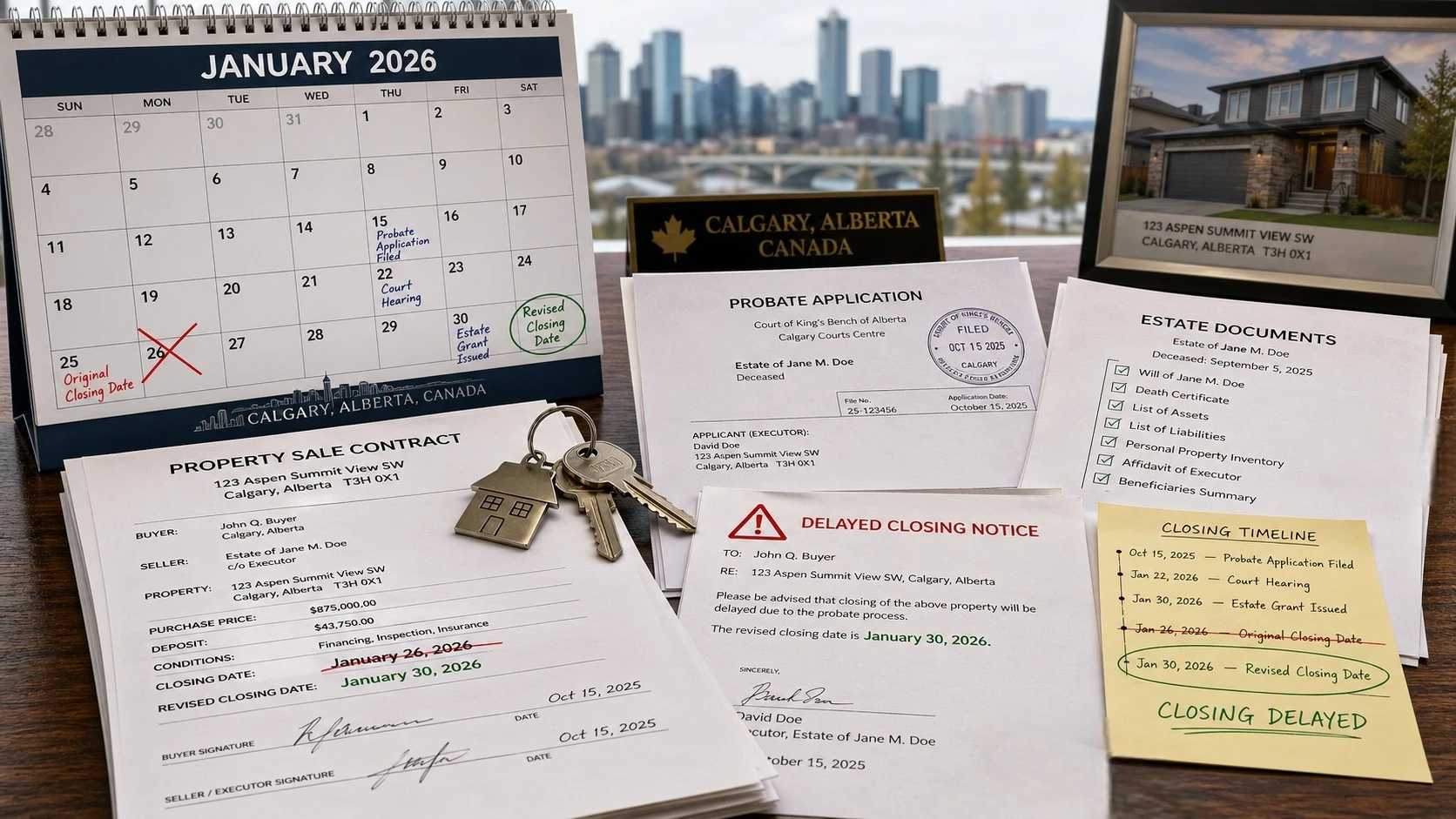
Probate can tie up a property at the worst possible time. If a Calgary property owner dies during a sale, the transaction may be delayed until the personal representative receives proper authority, such as a grant of probate where required. Buyers can back out, lenders can withdraw approvals, and even a simple refinance can become impossible.
Updating your will, naming backup executors, and keeping your executor’s contact information current can reduce the chance that a time-sensitive deal gets stuck in probate court. It is also important to make sure the person named in your estate plan understands what property you own and where key documents are kept.
3. Selling Real Estate Can Shift the Balance of Your Estate

A sale does more than turn a physical asset into cash. It can shift the value of an estate and change how assets are distributed later. For example, one property may have been intended for one child, while other assets were meant to balance things fairly. Once the property is sold, that original plan may no longer work.
The same issue can come up when someone sells a longtime family home. Selling a principal residence, rental property, or commercial property can also affect tax planning in Canada. A principal residence may qualify for Canada’s principal residence exemption, while rental, investment, mixed-use, or commercial properties may create capital gains issues. This is another reason to review both estate planning and tax planning before selling.
Estate planning helps you update your intentions before a sale creates tension, confusion, or unequal outcomes. It gives you a chance to decide whether sale proceeds should be divided, reinvested, gifted, held in trust, or used for another purpose.
4. Your Ownership Structure Affects What Happens Later
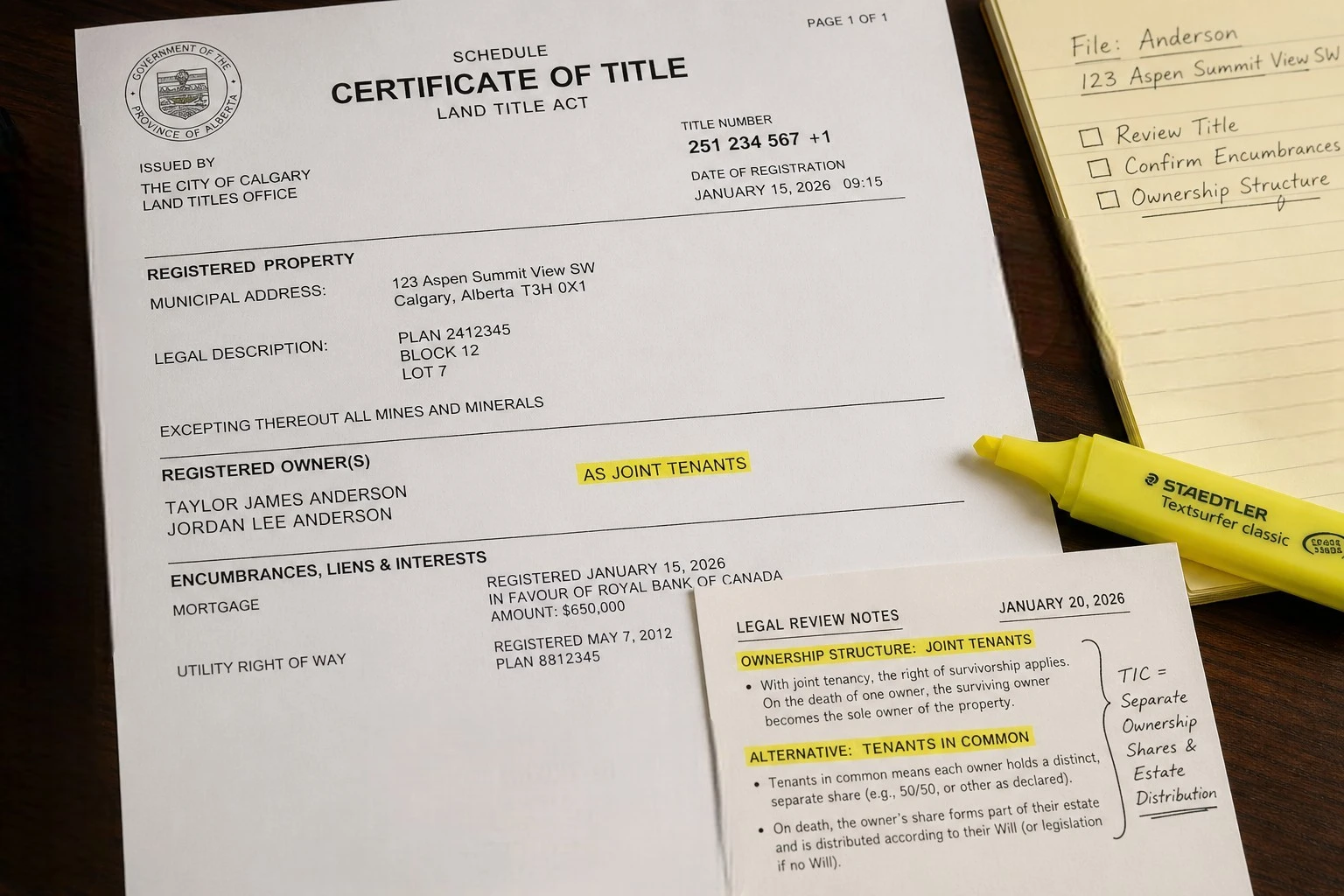
Many buyers focus on getting approved and closing the deal. Far fewer stop to ask how the title should be held. You need to consider whether the property should be owned in your own name, jointly, through a trust, or under another legal structure. That decision can affect inheritance, creditor exposure, tax planning, and future control.
For example, property owned as joint tenants may pass differently than property owned as tenants-in-common. In Alberta, joint tenancy generally includes a right of survivorship, while a tenant-in-common’s share may form part of that person’s estate. These differences matter when planning who should receive the property, who should control it, and whether the property may need to pass through the estate.
The right structure depends on your goals and family situation. Estate planning helps answer that question early, before the paperwork becomes harder to unwind.
5. Estate Planning Helps Prevent Family Disputes

Real estate often has emotional value. A family home can hold memories tied to parents, childhood, and major life events. Property can quickly become a source of conflict when instructions are unclear.
One heir may want to keep it, another may want to sell it, and someone else may have lived there or paid for repairs. Without a written plan, these issues can easily get personal. Estate planning creates clear written instructions for whether the property should be sold, transferred, rented, or divided. This clarity helps families avoid disputes.
The Bottom Line
A property transaction in Calgary can shape far more than a bank balance. It can affect inheritance, control, family relationships, and future legal decisions. This is why estate planning shouldn’t be left until after the deal closes.
When you plan early, you make property decisions with more clarity and fewer risks. A transaction may solve an immediate need, but a solid estate plan can help protect your assets for the future.
For married homeowners in Calgary and across Alberta, dower rights can also affect a real estate transaction. If a family home is registered in one spouse’s name only, the non-owner spouse may still need to provide consent before the property can be sold, mortgaged, leased, or transferred.
This is an important issue under Alberta’s Dower Act. A sale may look straightforward on paper, but if the proper consent is missing, the transaction can face delays or legal complications.
That is why estate planning and real estate planning should work together. Married couples should review not only who is on title, but also how the property fits into the family’s broader estate plan. This can help avoid surprises during a sale, refinance, transfer, or estate administration process.