- Understanding Real Estate Project Planning With CPM Software
- The Benefits of Using CPM for Real Estate Project Management
- How to Use CPM Software for Project Scheduling
- 1. Creating Your Project
- 2. Adding and Linking Tasks
- 3. Finding the Critical Path
- 4. Monitoring Progress and Updating Schedules
- The Bottom Line
Project planning with CPM software helps you map out every task, set time frames, and see how each step connects so you can control your schedule with confidence. Project planning with CPM software means you list all project tasks, assign durations, link task dependencies, and identify the longest path that determines your project end date. As a result, you know which tasks have no room for delay and which ones allow some flexibility.
This lets you know which activities cannot slip and which ones have more flexibility. This is important for real estate projects since permit applications, inspections, subcontractor schedules and material deliveries can all affect the final timeline.
You can use this technique to create a clear plan, spot potential roadblocks before they delay you and keep your team focused on the work that directly affects the finish date. The software will compute task order and timeline impacts so you can make decisions based on actual schedule logic instead of guesswork.
To keep a real estate project on track, you need a structured plan showing how each activity connects. In this article, you’ll learn how CPM software works and how to use it step by step so you stay in charge from start to finish.
Understanding Real Estate Project Planning With CPM Software
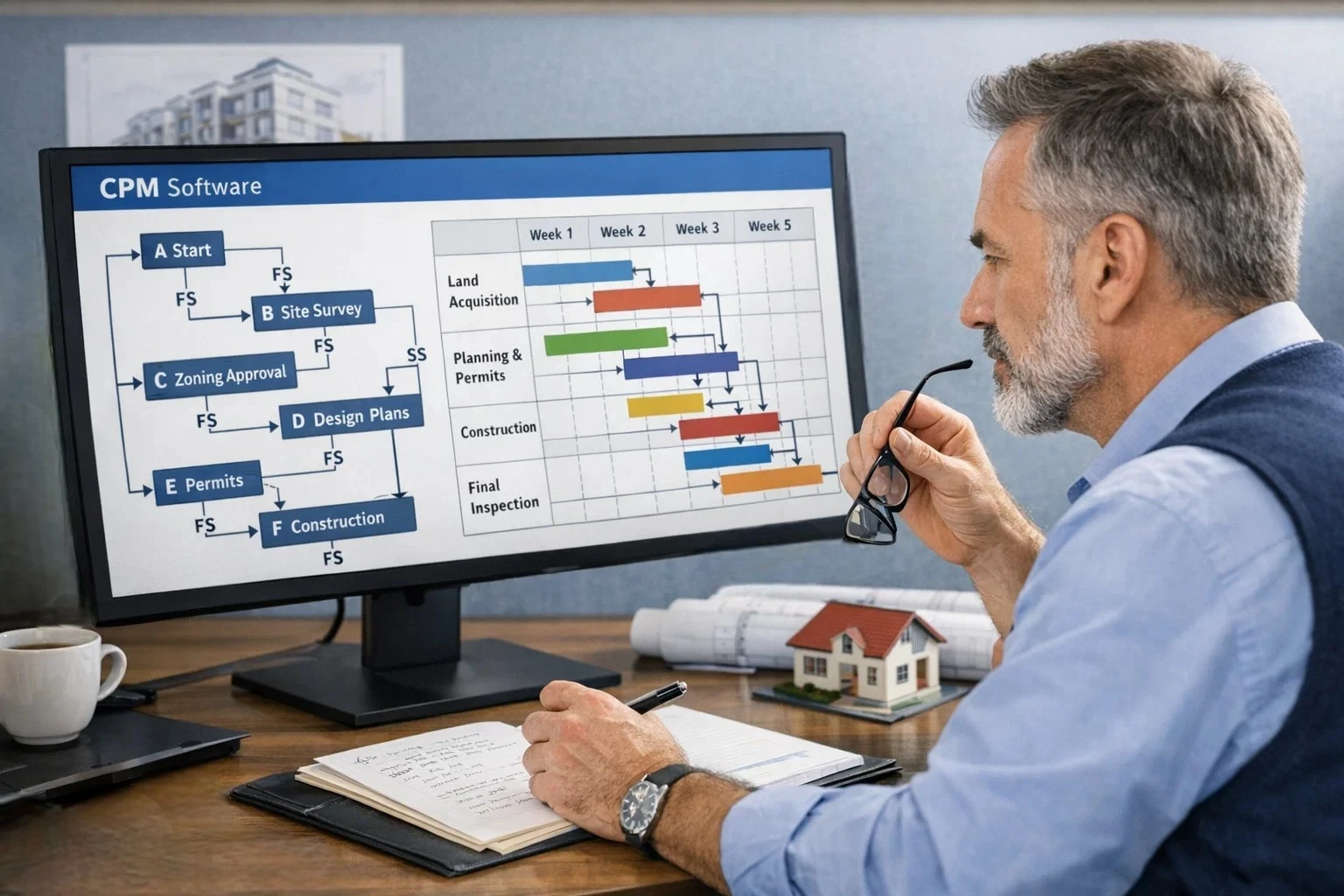
Project planning provides the framework for getting projects done on schedule and on budget. CPM software adds structure by mapping task sequence, durations and dependencies so you can see what drives your finish date.
What Is Project Planning?
Project planning tells you what you need to do, who will do it and how long each activity should take. You divide the project into individual activities, assign start and finish dates and link tasks that depend on one another.
You also allocate resources, set milestones and set deadlines. For real estate projects, this could include site preparation, permits, foundation work, framing, inspections, interior finishes and final handover. This creates a schedule that guides both daily decisions and long-term goals.
A good plan shows the order of tasks and which delays affect the final delivery date. This way, you focus on the right tasks at the right time and reduce wasted effort.
What Is CPM Software?
CPM stands for Critical Path Method. It is a scheduling approach used to determine the shortest time required to complete a project. The software calculates the path of the activities that have a direct impact on the project finish date based on task durations and dependencies.
You rely on project planning with CPM software to map each task in a network, calculate early and late start dates, and identify float, which shows how much delay a task can absorb without impact to the final deadline. Therefore, you gain a clear view of which tasks demand close control.
This is useful because you’re working with multiple contractors, inspectors, vendors and project phases that all need to stay in sync. Modern CPM programs also update the schedule when you change a duration or a sequence. This automatic recalculation lets you test different scenarios and adjust your approach before problems get out of hand.
The Benefits of Using CPM for Real Estate Project Management
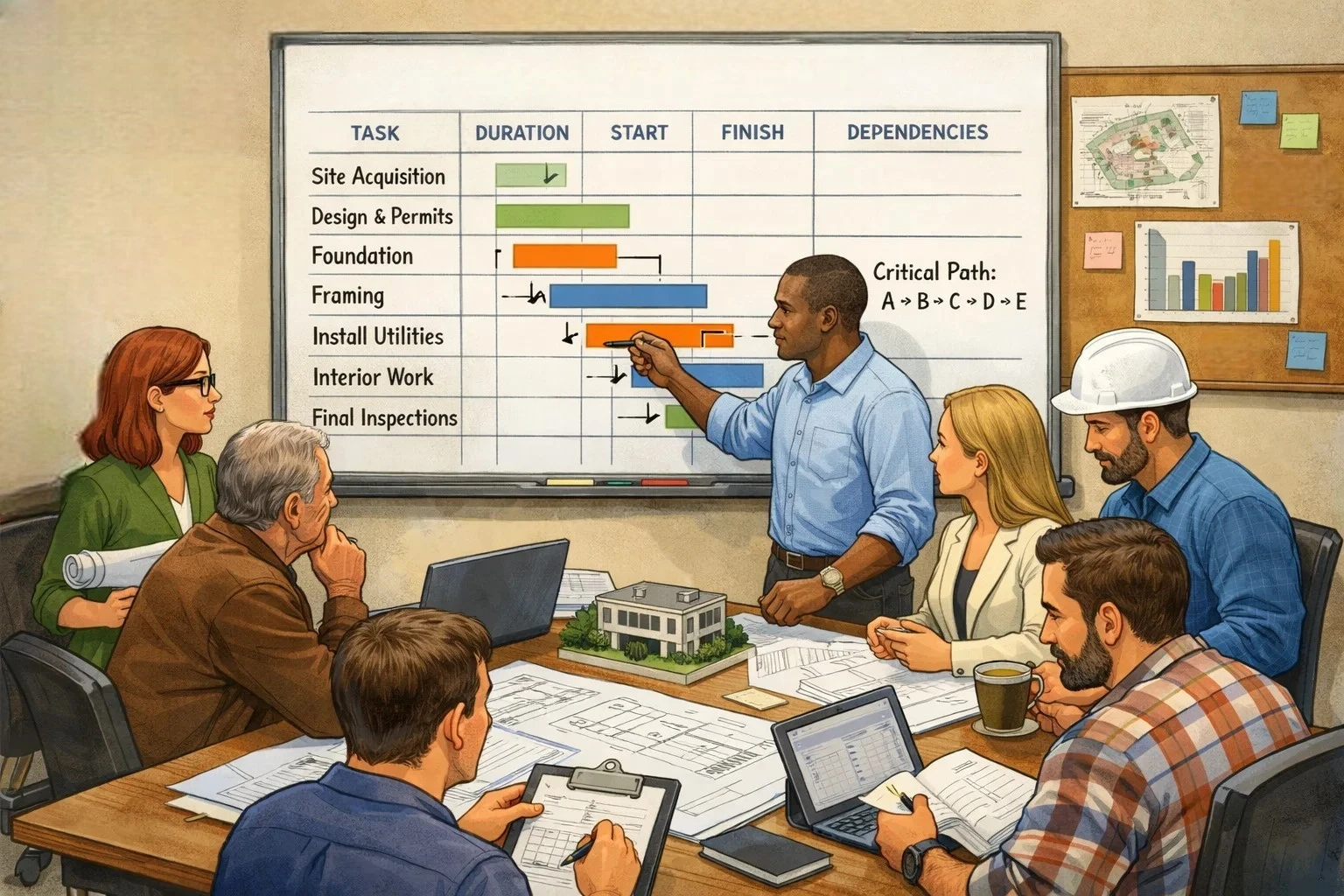
CPM shows you which tasks are driving your timeline so you can focus your attention and resources where they matter most. This reduces surprises and helps you control development, construction or renovation schedules.
You also get better coordination because the schedule shows how one team’s work affects another. This means you can reduce downtime between contractors, avoid trade conflicts and stay on schedule with inspections and approvals.
CPM also helps you make better decisions. If there is a delay, you can analyze the network, reallocate resources or change the order of tasks to protect the finish date. This is helpful because delays can affect occupancy dates, property delivery, leasing plans and overall project costs.
How to Use CPM Software for Project Scheduling
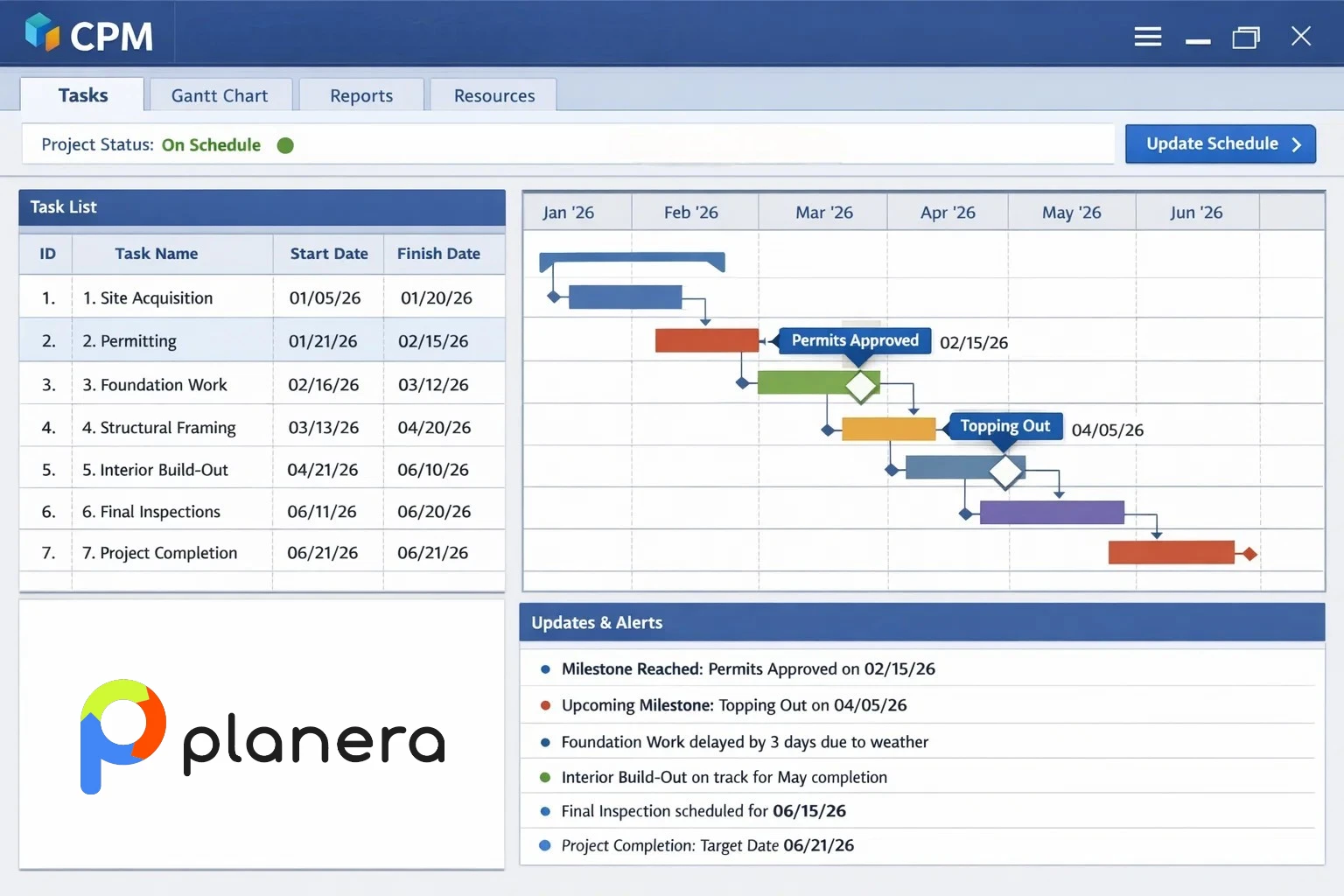
Once you have a defined job sequence and time frames, you can use CPM software to plan your real estate project from start to finish. The method involves setup, linking tasks, analyzing the critical path and controlling the schedule so you can keep the project on track.
1. Creating Your Project
You begin by creating a new project file and entering basic information such as the project name, start date and target finish date. These dates will drive the schedule for all downstream tasks, so it helps to confirm them with key stakeholders before moving forward.
Then you set up the project calendar. The software uses this data to calculate job durations, so you specify workdays, holidays and daily work hours. If you have a project team working 8 hours a day for 5 days a week, you enter those settings so the schedule shows actual working time.
Next, you add high-level phases or milestones. In a real estate project, these phases could include planning, permitting, site work, structural work, systems installation, inspections and final turnover. These phases help you organize tasks and create a clear framework before you move into detailed activities.
2. Adding and Linking Tasks
You break down the project into smaller parts and enter each task into the system, with a clear name and duration. Each task should be a specific piece of work, such as pouring the foundation, installing wiring, scheduling an inspection or completing the final walkthrough.
Then you set up task dependencies. Most CPM software lets you link tasks using the most common dependency types.
- Finish to start. Task B starts when Task A finishes.
- Start to start. Task B starts after Task A starts.
- Finish to finish. Task B finishes after Task A finishes.
You determine the right relationships based on how the work actually flows. For example, permits need to be approved before site work can begin, foundation work needs to be completed before framing can start and preliminary inspections need to be passed before interior finishing can move forward. This way, the software creates a logical network that mirrors the real project constraints.
3. Finding the Critical Path
Once you enter and link all activities, the software generates the longest chain of dependent tasks that determines the total project duration. This sequence is the critical path, and any delay in these activities will delay the whole project.
You look at the tasks that have zero float, meaning they have no extra time without affecting the finish date. Other tasks have float. This gives you some flexibility, and it lets you shift resources if necessary.
If the finish date is not where you want it to be, you can adjust task durations, add resources or change dependencies wherever possible. For example, you might do some work in parallel instead of in sequence. This lets you use the critical path view to make informed schedule decisions, not just assumptions.
This matters for construction projects because delays on key tasks can push back inspections, occupancy, closings and listing timelines.
4. Monitoring Progress and Updating Schedules
You regularly enter actual start dates, completion percentages and actual finish dates to update progress on tasks. The software then recalculates the schedule using real data rather than the previous estimates.
A delay in a critical path task causes the system to show the new overall finish date. You can then take action, whether that means reallocating people, rescheduling subcontractors or compressing later tasks that still have float.
You also compare the current schedule to the baseline you saved before the project started. This comparison shows where delays are happening and how far the project has moved from the original plan. That helps you respond faster to common issues such as permit delays, material shortages, rescheduled inspections or change orders.
This gives you greater control over time, costs and expectations throughout the life of the project.
The Bottom Line
Using CPM software for project planning helps real estate teams organize the sequence of activities, identify the longest chain of dependent tasks and build more reliable project timelines. This way, you can understand which activities control the finish date, assign resources more effectively and adjust plans before delays grow.
Regularly updating your schedule keeps you informed as changes happen, allowing you to make quick, data-driven decisions. With CPM software, you get a clearer view of schedule risk when managing development, construction or remodeling work and can keep inspections, contractors and delivery timelines aligned.