- How Each Fence Material Performs in the Pacific Northwest Climate
- Upfront Costs: Vinyl vs. Wood in Washington State
- Long-Term Costs: Where the Real Differences Emerge
- Aesthetic Considerations: What Local Homeowners Actually Prefer
- Where vinyl wins on aesthetics:
- Local Permitting and Code Requirements
- Resale Value: Does Material Affect Your Home’s Sale Price?
- Side-by-Side Summary: Vinyl vs. Wood for PNW Homeowners
- Which Fence Is Right for Your Property?
If you’re comparing vinyl and wood fence in the Pacific Northwest, here’s the direct answer: vinyl fencing lasts longer and costs less to maintain in Washington State’s wet climate, but wood fencing costs less upfront and offers a natural aesthetic that many homeowners prefer.
The right choice depends on your budget, how long you plan to stay in the home, and how much ongoing upkeep you’re willing to handle.
Washington State’s climate is the deciding factor most fence guides ignore. Whether you’re in rain-soaked Seattle, the freeze-thaw cycles of Spokane, or the mild but damp winters of Tacoma, your fence faces conditions that accelerate wood rot, mold, and structural failure far faster than in drier states.
This guide breaks down both materials by cost, longevity, maintenance, and local code considerations so you can make a choice that actually holds up over time.
How Each Fence Material Performs in the Pacific Northwest Climate
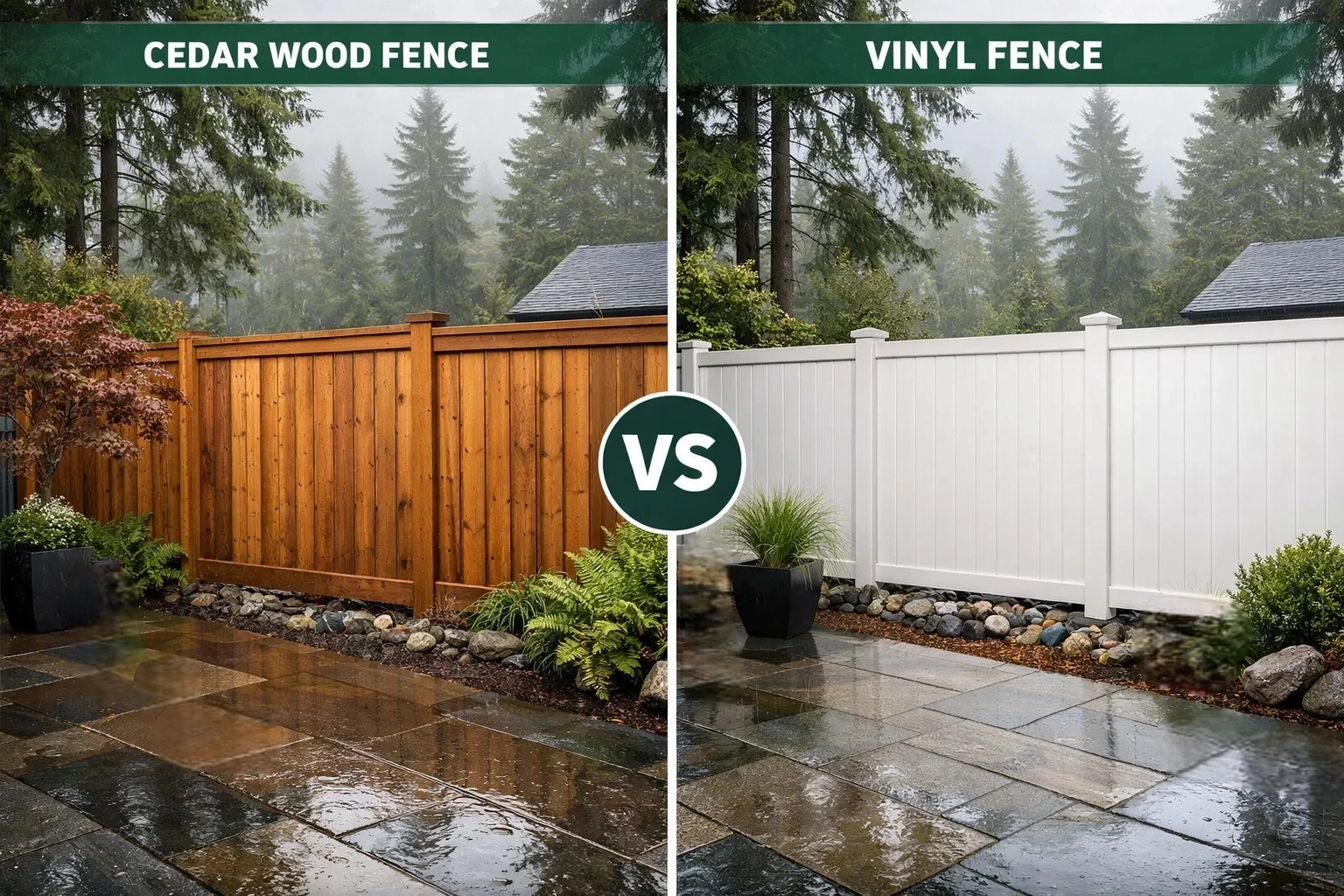
The Pacific Northwest averages 37 to 38 inches of rainfall annually in Seattle alone, with many western WA communities seeing even higher totals.
Wood fencing, even pressure-treated cedar or Douglas fir, absorbs moisture, expands and contracts with seasonal temperature swings, and becomes vulnerable to fungal decay within 5 to 10 years without consistent maintenance.
Vinyl fencing, by contrast, is non-porous. It doesn’t absorb rainwater, won’t rot, and resists the mold and mildew that are persistent problems in humid PNW environments.
In Spokane, where winters bring hard freezes, vinyl’s flexibility makes it more resistant to cracking than some wood species that can split when temperatures drop sharply.
Key Climate Performance Factors
- Moisture resistance: Vinyl is excellent, while wood is poor without annual sealing.
- Mold and mildew resistance: Vinyl is excellent, while wood is fair to poor.
- Freeze-thaw stability: Vinyl is good, while wood is fair depending on the species.
- UV fading: Vinyl is moderate, while wood is significant without stain or paint.
- Wind load: Both perform similarly when properly installed with pressure-treated posts.
Upfront Costs: Vinyl vs. Wood in Washington State
Material costs fluctuate, but current Washington State market conditions generally break down as follows. Always verify with local suppliers for the most up-to-date pricing.
| Fence Type | Material Cost (per linear foot) | Installation Cost (per linear foot) | Total Installed Estimate |
|---|---|---|---|
| Pressure-Treated Wood | $8–$15 | $10–$20 | $18–$35/LF |
| Cedar Wood | $12–$20 | $10–$20 | $22–$40/LF |
| Vinyl (standard) | $15–$25 | $12–$22 | $27–$47/LF |
| Vinyl (premium) | $22–$35 | $12–$22 | $34–$57/LF |
These figures represent typical installed costs in the Seattle-Tacoma metro area. Rural WA and Spokane pricing may differ by 10 to 20 percent. Always get itemized quotes from licensed contractors.
For a standard 150-linear-foot backyard fence, which is common in suburban King County or Pierce County lots, expect to pay:
- Cedar wood fence: $3,300 to $6,000 installed
- Standard vinyl fence: $4,050 to $7,050 installed
Wood wins on upfront cost, but that’s only part of the calculation.
Long-Term Costs: Where the Real Differences Emerge
This is where the vinyl vs. wood fence conversation in the Pacific Northwest gets interesting. Wood fencing requires real ongoing investment to maintain its structural integrity and appearance in WA’s wet climate.
Typical wood fence maintenance costs in Washington State:
- Annual cleaning and inspection: $0 to $200 depending on whether you hire a pro.
- Staining or sealing every two to three years: $300 to $800 for a 150-LF fence.
- Board replacement due to rot or warping: $50 to $150 per section, typically needed within 8 to 12 years.
- Full fence replacement: Every 15 to 20 years in PNW conditions.
Vinyl fence maintenance costs:
- Annual rinse-down: $0 to $100.
- Panel or post replacement: Rarely needed within 25 to 30 years.
- Typical manufacturer warranty: 20 years to lifetime, depending on the brand.
Over a 20-year period, a cedar wood fence in western Washington can cost $2,000 to $5,000 in cumulative maintenance on top of the original installation.
A vinyl fence over the same period may require minimal additional spending beyond occasional cleaning. If you’re working with a contractor experienced in vinyl and wood fence installation Washington State, they can give you a side-by-side cost projection based on your specific lot size and local material pricing.
Aesthetic Considerations: What Local Homeowners Actually Prefer
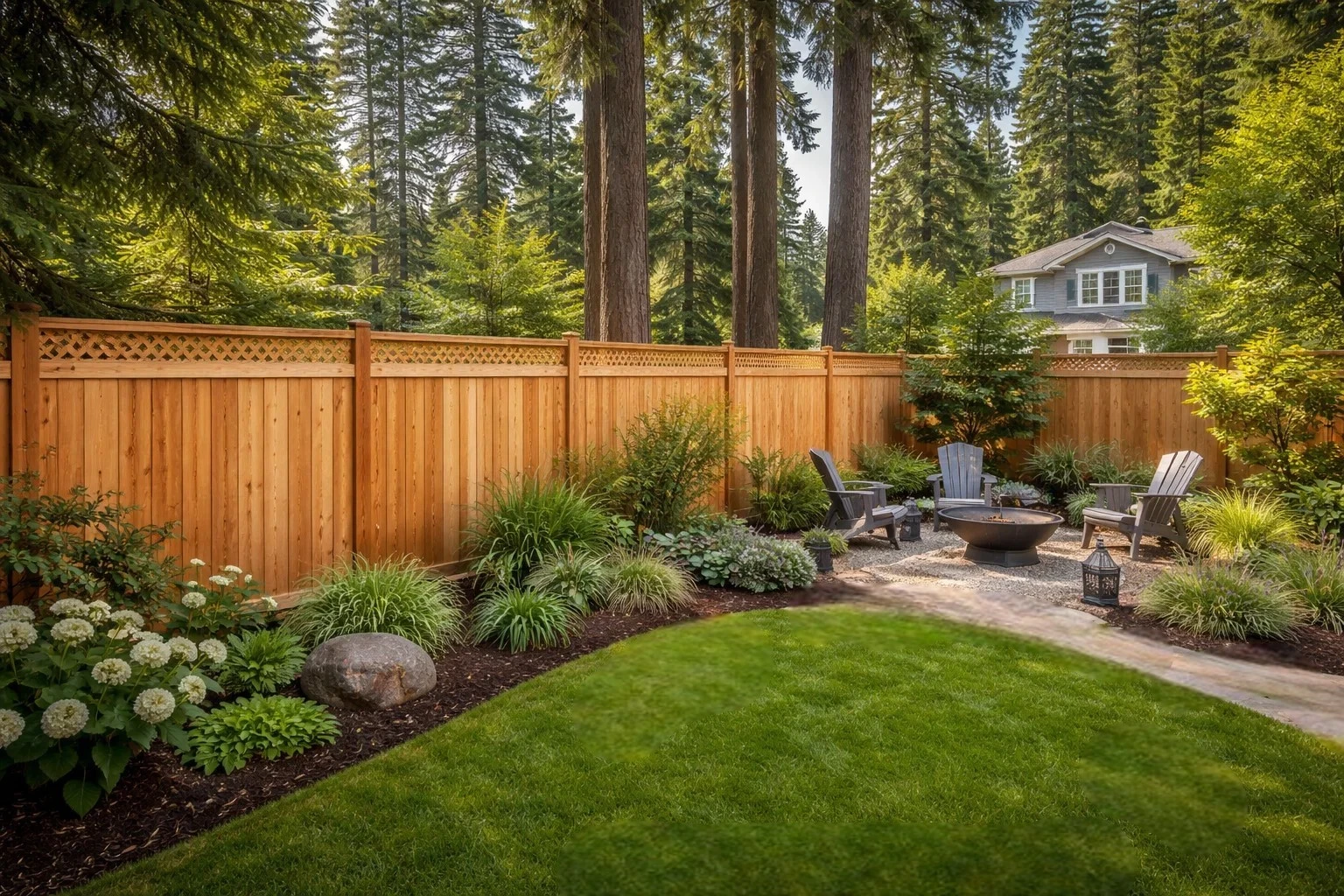
Walk through neighborhoods in Bellevue, Olympia, or Spokane Valley and you’ll notice cedar fencing still dominates residential streets. There’s a reason for this. Wood fencing has a warmth and natural variation that vinyl simply cannot replicate.
Cedar in particular weathers to a silver-gray tone that many Pacific Northwest homeowners love. It blends with the region’s natural surroundings in a way that white vinyl picket fencing does not.
If you’re in a neighborhood with a strong architectural aesthetic or active HOA design guidelines, wood may be your only practical option.
Where vinyl wins on aesthetics:
- Privacy panels that are taller, uniform, and gap-free.
- Color consistency over time without fading, graying, or algae stains.
- Modern or contemporary home exteriors.
- Low-maintenance situations like rental properties or side yards.
Where wood wins on aesthetics:
- Traditional craftsman, farmhouse, or cottage-style homes.
- Neighborhoods where natural materials are the norm.
- Situations requiring custom heights, angles, or decorative cuts.
- Homeowners who want the flexibility to stain their fence any color later on.
Local Permitting and Code Requirements
Both wood and vinyl fencing are subject to Washington State building codes and local municipal permit requirements. Most WA cities require a fence permit for structures over six feet in height.
In Seattle, fences over six feet in front yards require a land use permit in addition to a standard building permit.
General fence permitting guidelines:
- Fences under six feet: Typically no permit required in most local jurisdictions.
- Fences six feet or taller: Permit usually required, and setback rules apply.
- Corner lots: Special visibility triangle restrictions apply in most cities.
- HOA approval: Usually required before you can apply for a permit in suburban developments.
Vinyl and wood fences both meet structural requirements when installed correctly with pressure-treated posts set to the proper depth, which is typically one-third of the post height plus six inches. The material choice itself doesn’t affect permit eligibility. Instead, the city looks at the height, placement, and post installation method.
For homeowners in Seattle, Tacoma, or Spokane navigating local permit requirements, working with a licensed fencing contractor Seattle saves time and ensures your installation meets current code without costly corrections.
Resale Value: Does Material Affect Your Home’s Sale Price?
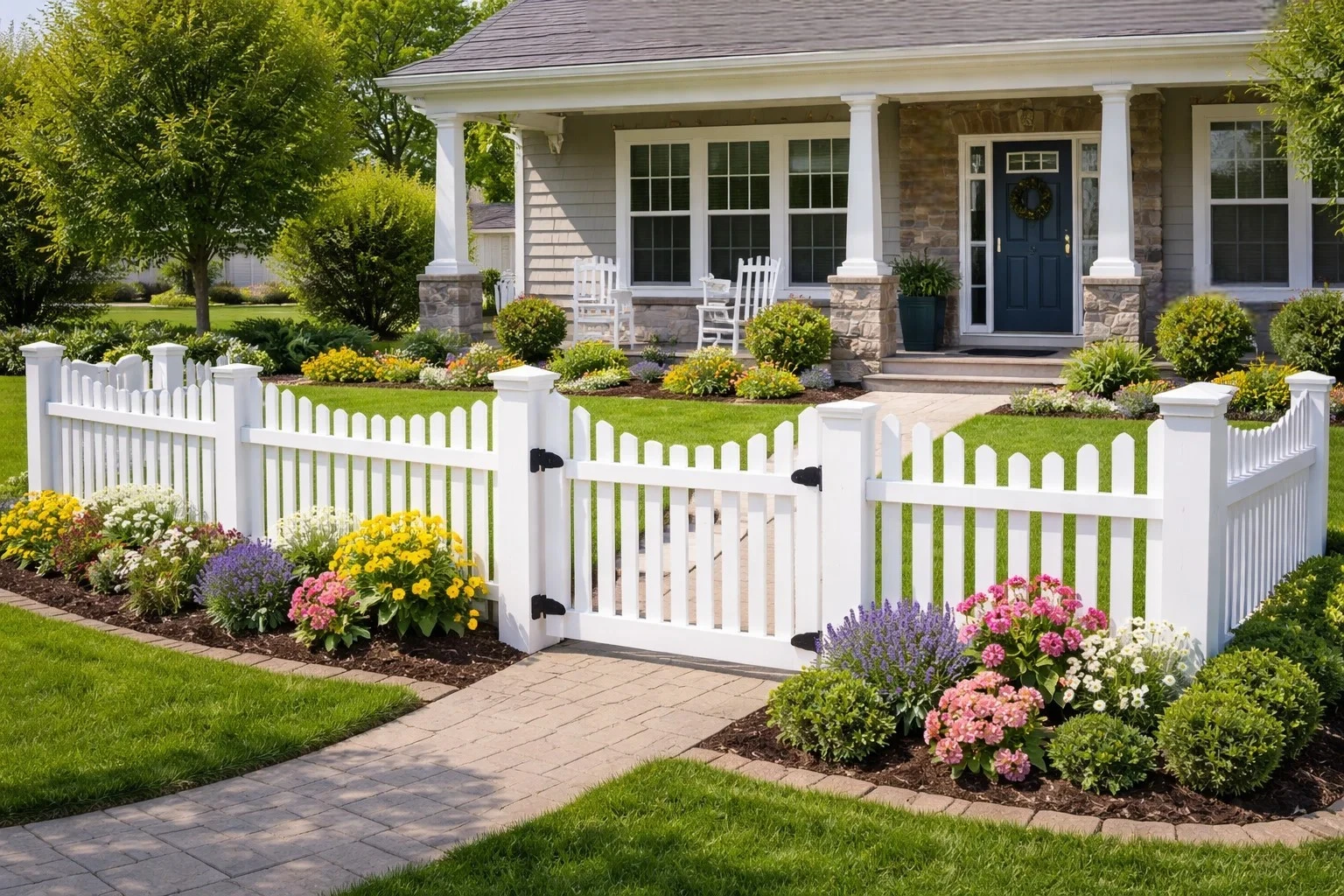
Both fence types add value in different ways. Washington State buyers, particularly in competitive markets like King County, Snohomish County, and Pierce County, expect functional, well-maintained fencing as a baseline. Here’s how material choice tends to affect perceived value.
- Wood fencing in good condition feels natural, established, and well-maintained. It appeals broadly to buyers across price points.
- Vinyl fencing in good condition looks low-maintenance and modern. It appeals especially to buyers who don’t want the upkeep of wood.
- Deteriorating wood fencing actively reduces the sale price and will likely be flagged in a home inspection.
- Damaged vinyl, like cracked panels or sun-yellowed sections, signals neglect, although this is far less common.
For most Pacific Northwest sellers, a maintained cedar fence is a slight positive. A maintained vinyl fence is a neutral-to-positive. A neglected fence of either material is a liability.
Side-by-Side Summary: Vinyl vs. Wood for PNW Homeowners
| Factor | Vinyl | Wood (Cedar) |
|---|---|---|
| Upfront cost | Higher | Lower |
| 20-year total cost | Lower | Higher |
| Maintenance required | Minimal | Significant |
| Lifespan in PNW climate | 25–30+ years | 15–20 years |
| Moisture resistance | Excellent | Poor without sealing |
| Aesthetic flexibility | Moderate | High |
| Environmental impact | Lower (recyclable) | Moderate (renewable) |
| HOA compatibility | Varies | Generally accepted |
| Permit requirements | Same as wood | Same as vinyl |
Which Fence Is Right for Your Property?
Choose vinyl if:
- You plan to stay in the home for more than ten years and want to minimize maintenance.
- Your property is in western WA where rainfall is heaviest.
- You have a rental property or want a hands-off fencing solution.
- You’re fencing a large perimeter where long-term savings matter most.
Choose wood if:
- Your budget is tight right now and you can commit to maintenance.
- Your neighborhood aesthetic, HOA, or architectural style calls for wood.
- You want the ability to customize color, height, or detailing over time.
- You prefer a natural material with a lower initial environmental footprint.
Either choice, made with full awareness of your climate, budget, and timeline, is a valid investment. The worst outcome is choosing wood strictly for the lower upfront cost and skipping maintenance. In the Pacific Northwest, that leads to rot, structural failure, and a complete fence replacement within ten years.