Attic ventilation is often overlooked during home improvements, but it is an essential part of maintaining a comfortable and energy-efficient house in Edmonton’s unique climate. Adequate ventilation helps control temperature during our summer heatwaves and manages humidity during freezing winters, preventing serious damage to your roof and framing.
Homeowners might not know that enhancing airflow in their attic directly affects indoor comfort and can significantly reduce the workload on your HVAC system.
According to the National Building Code of Canada, homes should follow the “1/300 rule,” requiring one square foot of ventilation for every 300 square feet of enclosed attic space.
This practical upgrade offers long-term benefits to the overall health of your home.
Temperature Regulation
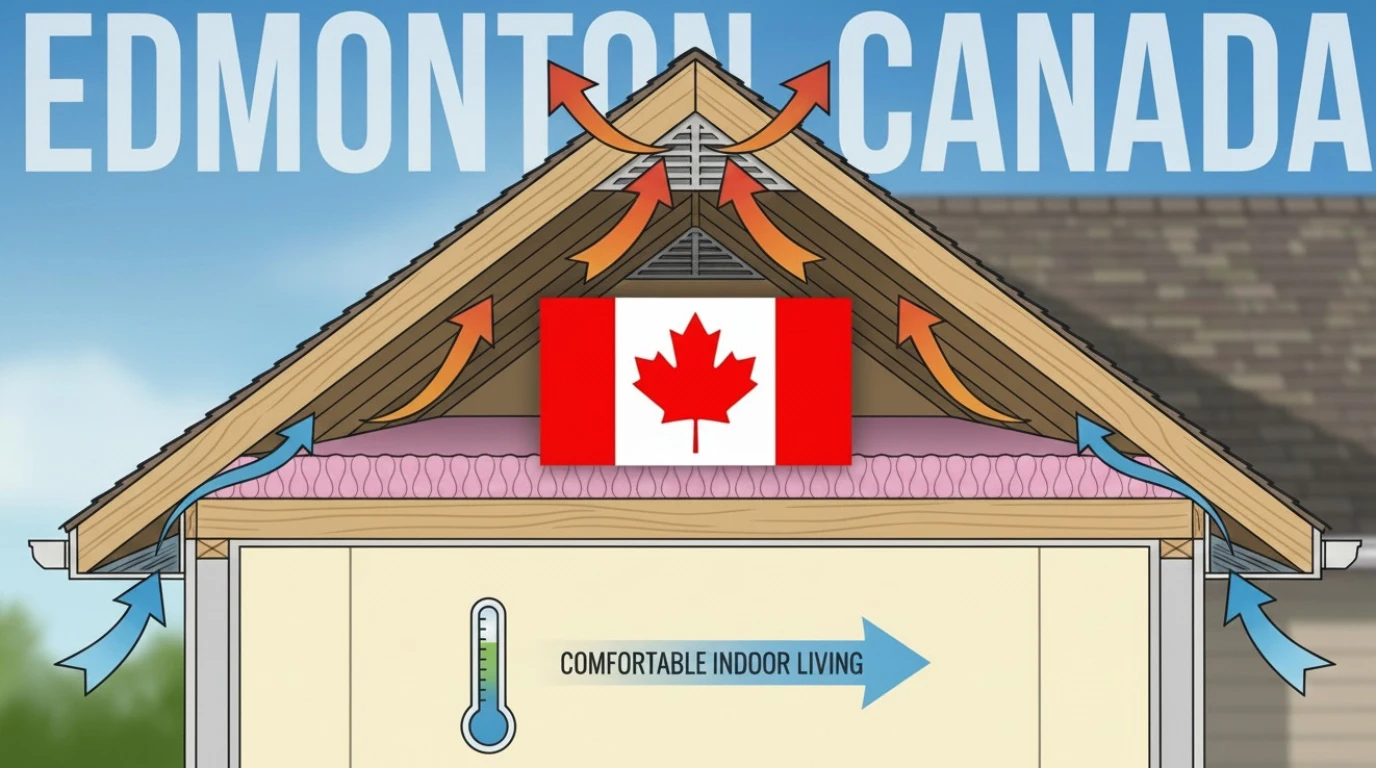
To control the indoor temperature, proper ventilation of the attic is necessary. On hot summer days, attics are a few degrees hotter than the external air. This surplus heat may be emitted to the home below and make rooms uncomfortable and force cooling systems to work harder. Ventilation allows heat to be removed effectively lowering indoor temperatures, therefore, reducing the workload of air conditioning in Edmonton.
Keeping the attic cooler also helps avoid uneven temperatures throughout the house. Upper-level bedrooms are notoriously hard to cool because heat naturally rises, and a poorly vented attic acts like a giant radiator pressing down on those rooms.
Good ventilation draws fresh air in through the soffits and expels hot air out through the roof vents. This natural cycle enhances daily comfort and makes your energy consumption much more efficient during an Edmonton summer.
Moisture Control and “Attic Rain” Prevention
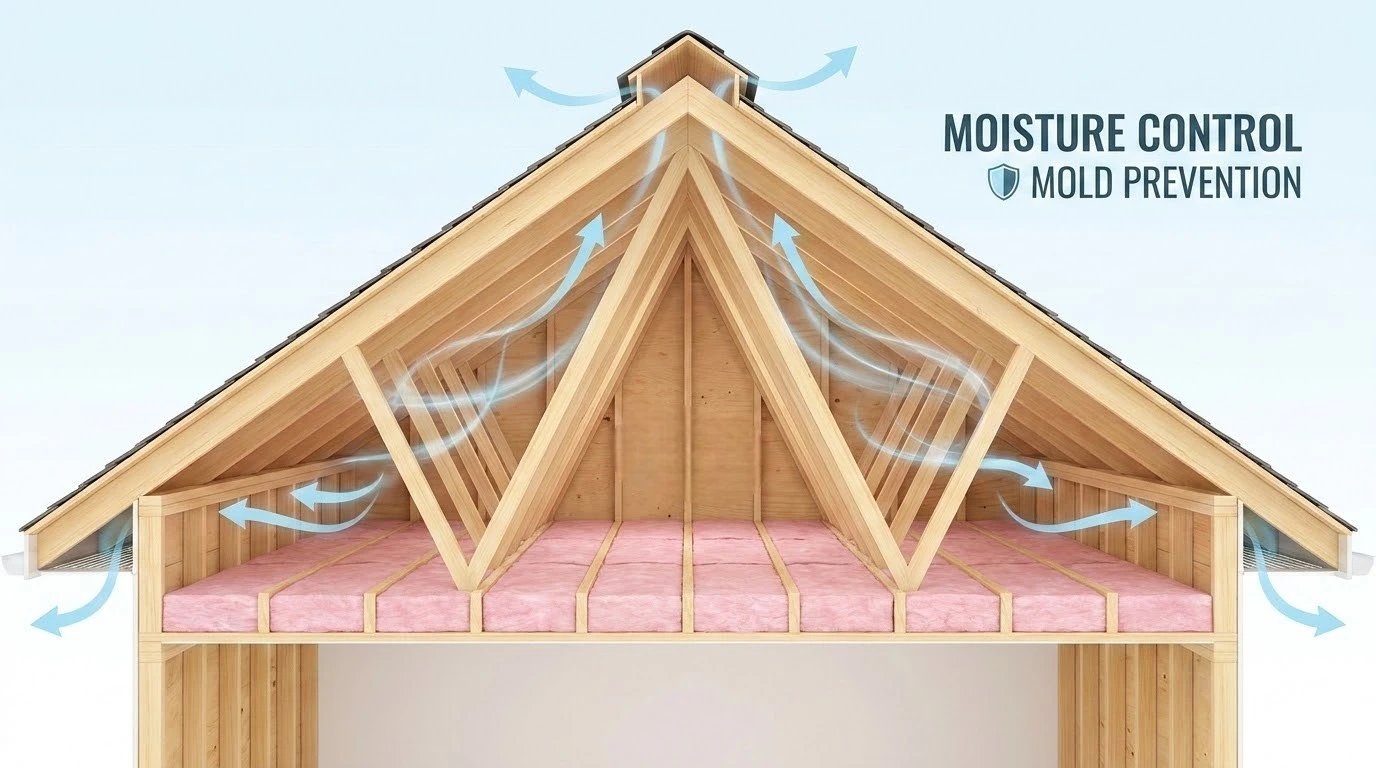
In Edmonton, attic ventilation is arguably even more important for winter moisture regulation. Everyday activities like cooking and showering generate warm, moist air that rises into the attic. During deep Alberta freezes, this trapped moisture condenses and freezes into thick frost on the cold underside of the roof deck. When the weather warms up or a Chinook rolls in, this frost melts rapidly, causing a destructive local phenomenon known as “attic rain.”
Proper airflow clears out this excess moisture before it causes problems, protecting your insulation, wood framing, and roofing materials.
This moisture buildup can eventually impact your indoor air quality as well. Poor ventilation fosters mold and mildew growth in the attic, and those spores can easily make their way into your living space. Homeowners can create a healthier environment simply by ensuring their soffit and exhaust vents are unblocked.
Routine roof inspections and proper venting can save you from discovering massive condensation issues down the road, far beyond a simple plumbing leak.
Energy Efficiency
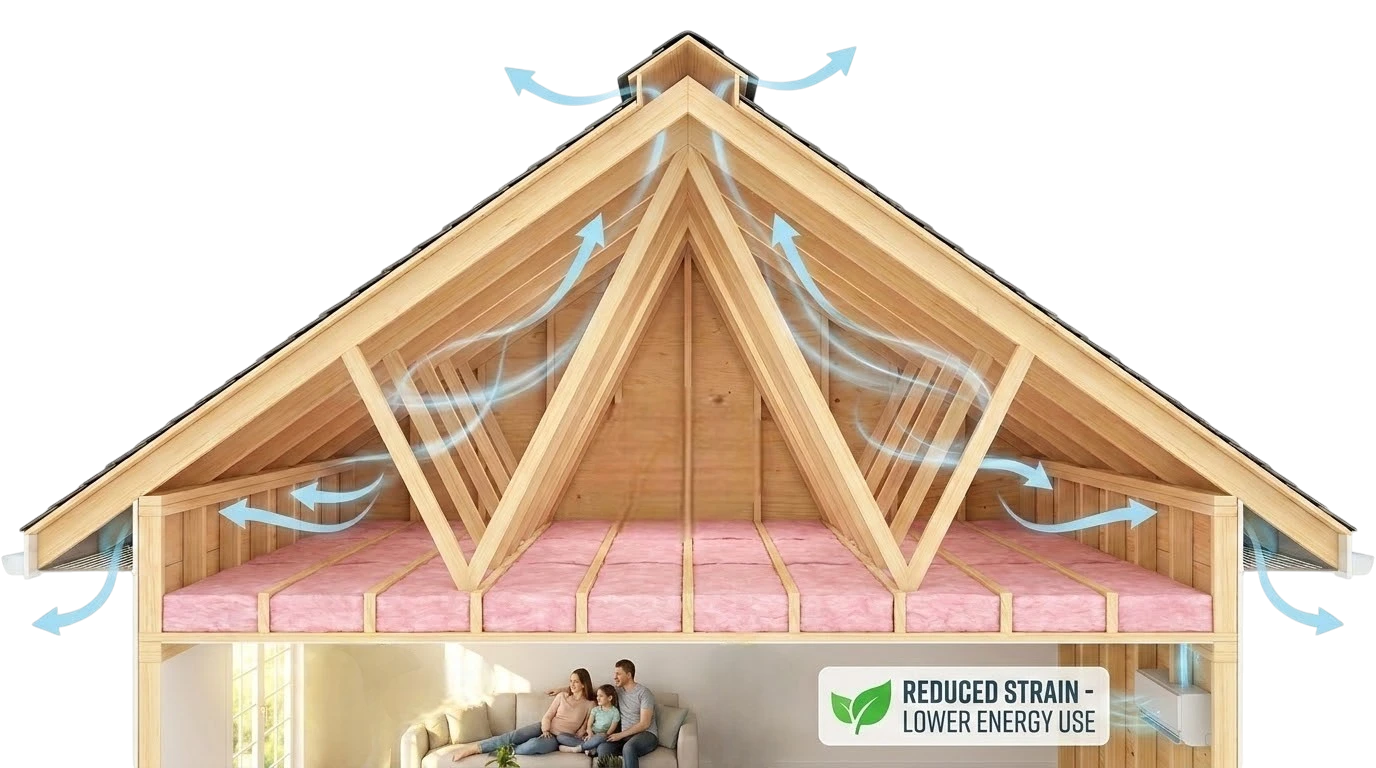
Attic ventilation directly enhances energy efficiency by decreasing the demand on your HVAC unit year-round. Homes with trapped attic heat typically run warmer in the summer, causing the air conditioner to cycle on more frequently and stay on longer.
By allowing the house to cool naturally through continuous airflow, you reduce your monthly energy bills and extend the lifespan of your cooling equipment. Data from Natural Resources Canada (NRCan) suggests that sealing air leaks and adding proper insulation, paired with adequate ventilation, can save homeowners significantly on their annual heating and cooling costs.
This approach works hand-in-hand with other energy-efficient measures, like upgrading your attic insulation to meet Alberta’s recommended R-50 to R-60 standards to keep the harsh winter cold out and the conditioned air in.
Roof and Structural Protection
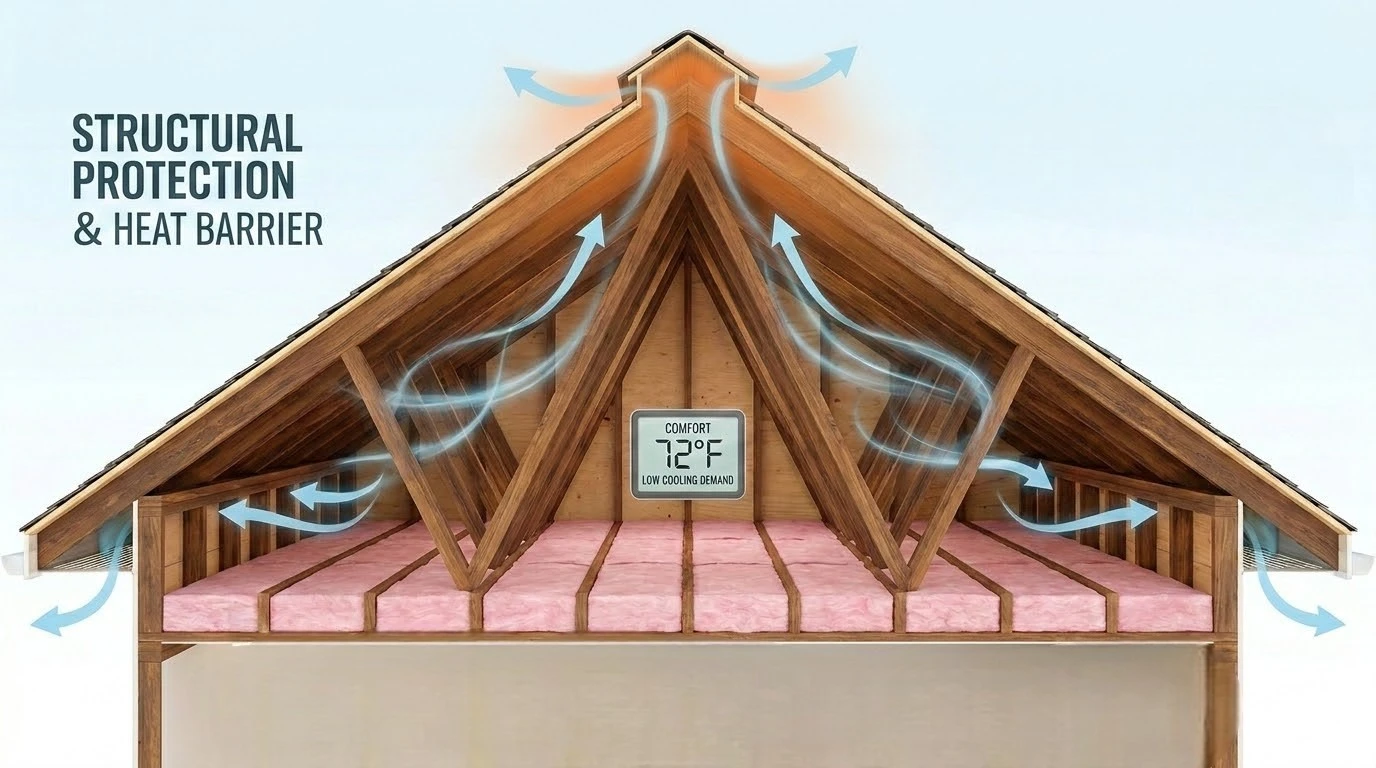
Proper attic ventilation is critical for safeguarding the roof and the structural integrity of the house. Extreme heat literally bakes your roof from the inside out, which can cause asphalt shingles to blister and curl prematurely.
In colder months, a lack of airflow creates the perfect conditions for destructive ice dams. If the attic is too warm, snow melts on the roof, runs down to the colder eaves, and refreezes. This solid ice buildup forces water under your shingles, leading to severe roof leaks. Homeowners can minimize this damage by keeping the attic climate closer to the freezing outside temperature.
A balanced system of intake and exhaust vents eliminates these stressors, maximizing the lifespan of your roof and saving you from premature replacement costs.
Adding or upgrading attic ventilation is a straightforward but highly effective way to enhance your daily comfort and protect your property. It regulates summer temperatures, controls winter moisture, lowers energy bills, and preserves your roof.
Far from being a luxury, proper airflow is a fundamental requirement for a code-compliant and well-maintained Edmonton home. Taking the time to evaluate your vents today will provide long-term benefits and save you from major structural repairs down the road.