It’s hard to leave the Bay Area. But whether you’re chasing a lower cost of living, a new job, family ties, or simply a change of pace, many residents continue to move out of the region. A long-distance move requires a very different kind of planning than a local one.
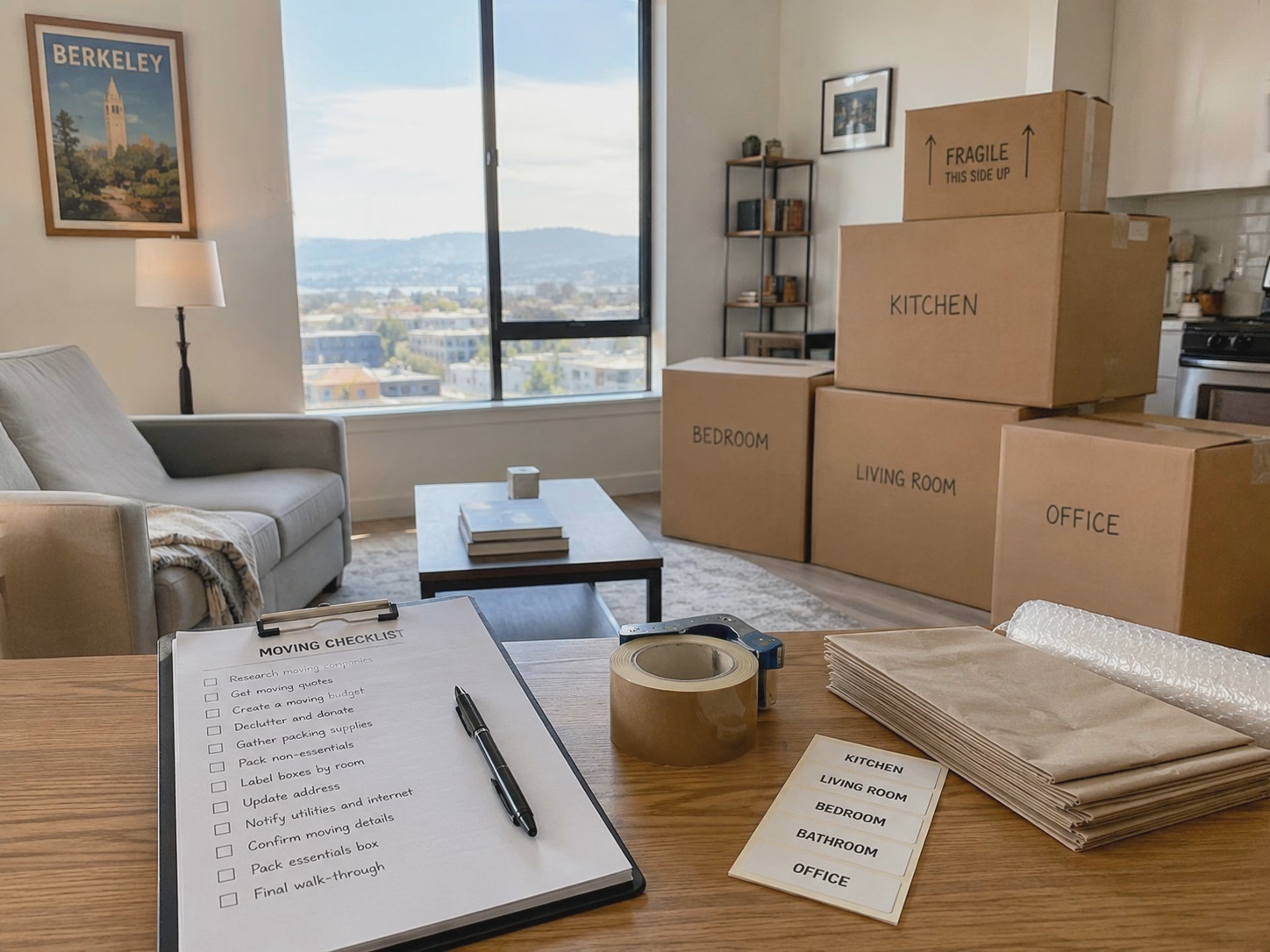
If you’re preparing to leave Berkeley, Oakland, or anywhere in the East Bay, this guide covers the practical steps that make the difference between a smooth move and a stressful mess. Long-distance moves have more moving parts, longer timelines, and higher stakes if something goes wrong. Starting with a solid plan puts you in a much better position from day one.
Understand what makes long-distance moves different
A local move between Rockridge and Temescal is largely a matter of scheduling. A long-distance move is a logistical, legal, and financial undertaking. The differences matter.
For starters, interstate moves are regulated differently than in-state ones. Moving companies that operate across state lines need to be registered with the Federal Motor Carrier Safety Administration (FMCSA) and have a USDOT number. That’s a baseline requirement you should check before signing anything. On top of licensing, long-distance movers will usually offer binding or non-binding estimates.
It’s important to understand the difference here: a binding estimate guarantees you do not have to pay more than the estimated amount at delivery, unless additional items, services, or unforeseen circumstances require a revised estimate, whereas a non-binding one can change based on the actual weight of your items, services provided, and the mover’s published tariff.
Under a non-binding estimate, the mover generally cannot require more than 110 percent of the estimate at delivery. Knowing this could save you from a massive bill on the delivery day.
Timing is also more complicated. If you move locally, your stuff is there the same day, but long-distance shipments can take several days to arrive within a delivery window. Planning your travel and temporary arrangements around that window is something many first-time long-distance movers underestimate.
Start planning earlier than you think
The most common mistake in long-distance moves is underestimating the lead time. For a move out of the Bay Area, six to eight weeks of planning is a reasonable minimum. If you’re moving during peak season (May through August), closer to three months is more realistic.
Here’s why the timeline matters in the East Bay specifically: demand for reputable long-distance movers in the Bay Area is high year-round, and the best companies fill up fast. A mover with strong reviews and proper licensing isn’t going to be available on two weeks’ notice in July.
Use your planning window for:
- Getting at least three in-home or virtual estimates from licensed interstate movers
- Sorting and decluttering before anyone comes to assess your belongings (less stuff = lower cost)
- Researching your destination city, including neighborhoods, utility setups, and school enrollment deadlines
- Coordinating your lease end or home sale with your move-out date
- Arranging temporary housing or storage if there’s a gap between leaving and arriving
The more of this you resolve early, the smoother moving day becomes.
Declutter before you get a quote, not after
One of the best financial moves you can make before a long-distance relocation is decluttering your home. Unlike local moves where cost is usually driven by hours, interstate moves are typically priced by shipment weight, distance, and services. Everything you don’t take is money you don’t spend. Besides, the furniture that looked perfect in your small apartment might not fit your new place anyway.
Go room by room with an honest eye. Furniture you’ve been meaning to replace, duplicate kitchen items, and books you won’t reread all add weight and cost to a long haul. Facebook Marketplace, local Buy Nothing groups, and East Bay donation centers can help you get rid of these items quickly.
This step also makes packing faster, unpacking easier, and settling into a new space feel cleaner. It feels great to arrive at your new home without bringing the accumulated clutter of the last five years with you.
Choosing a mover you can trust with a cross-country move
Vetting a long-distance mover deserves more diligence than a local move. The stakes are higher. Your belongings will be out of sight for days and sometimes transported by multiple carriers under a broker arrangement if you aren’t careful.
Some things to check before you commit:
- USDOT number: Can be searched on the FMCSA website to verify the company is registered for interstate moves.
- Written binding estimate: Gives you a guaranteed delivery-day amount for the listed items and services, unless the shipment or required services change.
- No large cash deposits up front: This is a huge red flag in the long-distance moving industry.
- Real reviews on Google, Yelp or the FMCSA complaint database: Look for patterns, not just star ratings.
- Clear delivery window: Make sure you understand the range of dates your shipment could arrive.
The Berkeley movers you choose should be willing to answer all of these questions directly and without hesitation. Any evasiveness is a signal to keep looking.
What to do with things you can’t or don’t want to move
Long-distance moves often force you to deal with items that don’t fit neatly into “take it” or “donate it.” This includes oversized furniture, a second vehicle, seasonal items, and things you’ll need eventually but not immediately. Storage is the practical answer for most of it.
If you’re in a gap period because you sold your home before your new one is ready, or you’re moving to temporary housing while you figure out the area, a Bay Area storage facility can hold your belongings safely while you get settled.
Look for a facility that offers both moving and storage under one roof. It simplifies coordination and eliminates the risk of losing or damaging items when transferring them between companies.
The logistics of moving day
A few things specific to leaving the East Bay are worth knowing before the truck pulls up:
- Access and parking permits: Berkeley and Oakland streets can be tight, and large moving trucks sometimes require permits for parking, blocking curb space, blocking a sidewalk, or blocking a traffic lane. Check with your city early enough to meet the 72-hour sign-posting rules; two weeks out is safer if you may need lane obstruction or traffic-control approval. It’s a simple step that prevents a complicated morning.
- Elevator reservations: If you’re in an apartment or condo building, reserve the freight elevator in advance. Most buildings require it and limit the window available.
- Inventory everything: For a local move, a rough count is usually fine. For a long-distance move, a detailed written inventory with photos protects you in the event of a damage or loss claim. A reputable mover will provide their own inventory, but having your own independent record is good practice.
- Plan your own travel separately: Don’t assume the delivery window will align perfectly with your drive or flight. Build in a buffer on both ends. Arriving at your destination before your belongings do is far less stressful than the reverse.
Leaving the Bay Area is a big decision, and getting the move right is how you set yourself up well for whatever comes next. The planning, the vetting, and the decluttering all pay off on the other side.
Start early, ask the right questions, and work with a moving team that has real experience handling the specific demands of an interstate relocation from this part of California.