
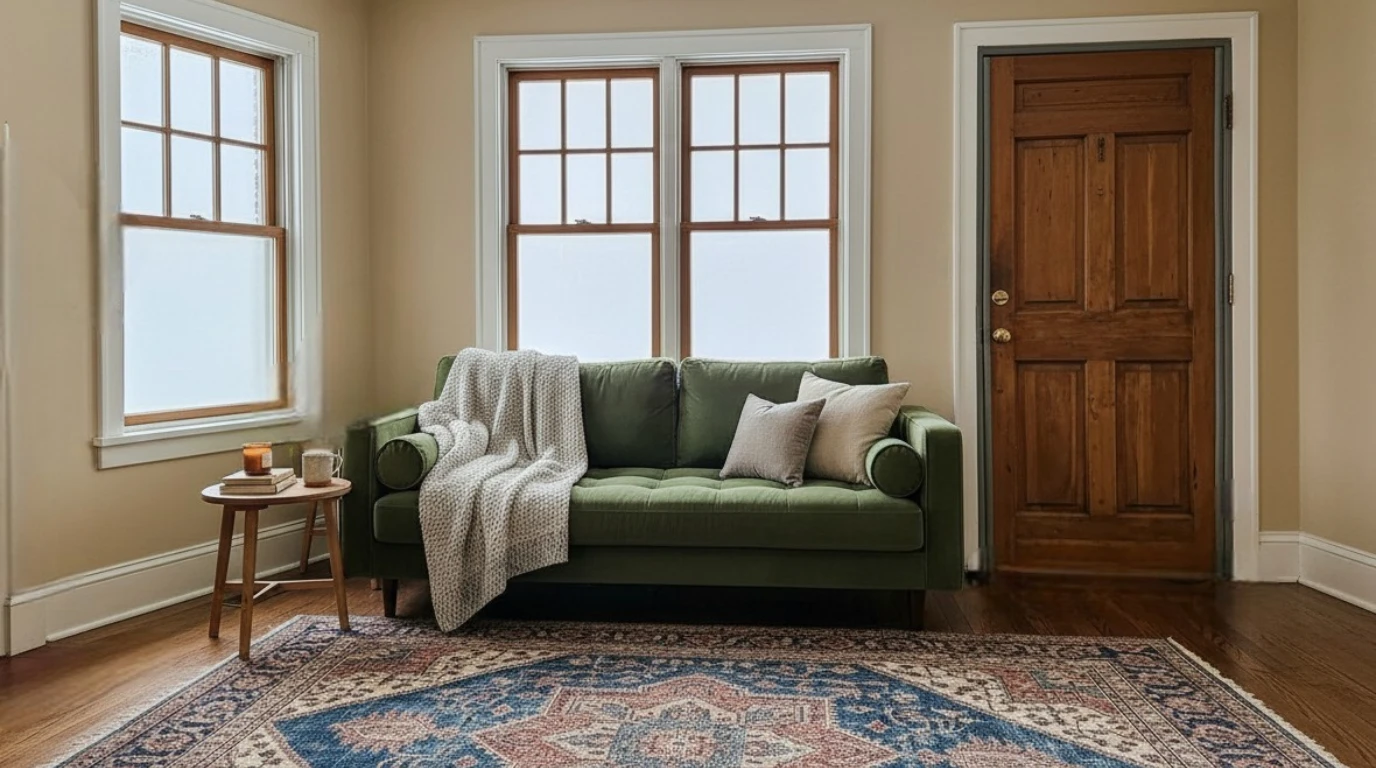
Most families who move into a newer DFW build end up with one room they don’t have a plan for. The Census Bureau’s Characteristics of New Housing found that 42 percent of the single-family homes completed nationwide in 2024 had four or more bedrooms, on a median footprint of 2,146 square feet. In practice, that extra room fills with moving boxes, a treadmill, and a guest bed nobody sleeps in.
Handing it to a teenager is a better use of the square footage. It also changes how the household runs in ways that furniture catalogs don’t cover. A teenager with a room upstairs spends far more hours out of sight than one doing homework at the kitchen island. The decisions you make during the conversion, especially where the desk, the outlets, and the door end up, quietly determine how much of your kid’s life stays visible to you.
Pick the Room Before You Pick the Paint
In Dallas, which room you choose matters more than what color you put on the walls. Bonus rooms over garages and upstairs flex spaces are the usual candidates, and they’re also the rooms most likely to run ten degrees warmer than the rest of the house from June through September. A thermostat rarely fixes that. Air delivery is usually the culprit, and the ductwork layout and zoning questions Texas buyers ask apply just as much to a room you’re converting as to a house you’re touring. ENERGY STAR estimates that duct systems can lose as much as 20 percent of the air moving through them to leaks, holes, and poor connections.
Before you commit, set a thermometer in the room on a 100 degree August afternoon and leave it for two hours. Check whether the space has its own return vent or only a supply. If you find a single supply at the end of a long attic run, budget for a duct fix or a mini split before you budget for a bed frame. Teenagers won’t sit in a room that’s uncomfortable, and you’ll have spent real money to move them right back to the family room couch.
Put the Desk Where the Screen Faces the Door
Teenagers run most of their social lives through a screen now. Pew Research Center’s 2025 teen survey puts daily internet use at 97 percent among 13 to 17 year olds, with roughly four in ten saying they’re online almost constantly. Whatever room you hand over becomes the main venue for all of it.
You can’t supervise a closed door, and you shouldn’t try. What you can do is build a room where a screen isn’t hidden by default. Point the desk toward the doorway rather than the wall. Keep the door swing clear so it opens fully instead of catching on a dresser. Put two seats in the room instead of one, so a friend or a parent has somewhere to land without the visit feeling like an intervention.
None of that counts as surveillance. Kitchen islands sit in the middle of open floor plans for the same reason. Rooms shape how often people walk through them, and a room that’s easy to enter is a room you’ll actually enter.
Where the Chargers Go Matters More Than What They Charge
This is the detail most conversions miss, and it’s the cheapest one to get right while the walls are still open.
A JAMA Pediatrics meta-analysis covering 125,198 school age children found that bedtime use of media devices in the sleep environment more than doubled the odds of inadequate sleep. The finding that matters most for room design is the second one. Kids who only had access to a device overnight, without using it, were still significantly more likely to sleep badly and to be excessively sleepy the next day. Presence alone tracked with worse outcomes.
So put the charging point across the room from the bed, or better, in the hallway just outside the door. Ask the electrician to add an outlet with a shelf above it while you’re already paying for the service call. Wiring that during the conversion costs almost nothing. Renegotiating it two years later, after the nightstand has already become the charging station, costs a great deal more.
A Door That Closes Changes What You Can Read
Privacy is the whole point of a teen retreat, and privacy is developmentally appropriate. It also strips out the incidental oversight you get when devices live in shared space. That trade is worth making, as long as you know what you’re trading.
Access is the easier problem to solve. Legibility is the harder one. A parent standing in the doorway looking straight at a phone often still can’t tell what’s being said, because teen messaging runs on a compressed visual shorthand. Food icons carry most of the weight, and the double meanings behind everyday food emojis are specific, widely understood among kids, and close to invisible to adults who read them literally. Grooming behavior works that gap on purpose, opening with friendly, harmless icons to build rapport before it escalates.
Learning the vocabulary takes about twenty minutes and changes what you see. Pair it with a household rule that survives the move upstairs. The door can close, but the room stays part of the house. Parents knock and come in. You look at devices sometimes, and everyone knows that going in rather than finding out during an argument.
Don’t Build It for One Kid
Your teenager will be gone in four years. The room won’t.
Buyers pay close attention to flexible floor plans and long-term value, and a room built for one narrow purpose works against both. Keep the conversion reversible. Use freestanding furniture instead of built-ins. Put a neutral color on the walls under whatever poster wall they want. Choose standard outlets over a permanently mounted gaming rig. Skip the mural.
The upgrades worth making permanent are the ones any future owner wants anyway. Better insulation, a working return vent, more outlets, and blackout window treatments all read as improvements on a listing sheet. A ceiling painted like a galaxy reads as a repaint cost.
What a Good Conversion Actually Buys You
Done right, a spare room conversion pays twice. Your teenager gets somewhere to be a person, and your house gets a room that appraises as a bedroom instead of storage. The parts worth real thought are the boring ones. The air that reaches the room. The location of the outlets. The habits you set on the first day.
If you’re touring homes around DFW this season, walk the upstairs flex spaces with all of this in mind and ask the listing agent about zoning and vent placement before you ask about closet size. For more on what actually holds value in North Texas homes, subscribe to DALTX.