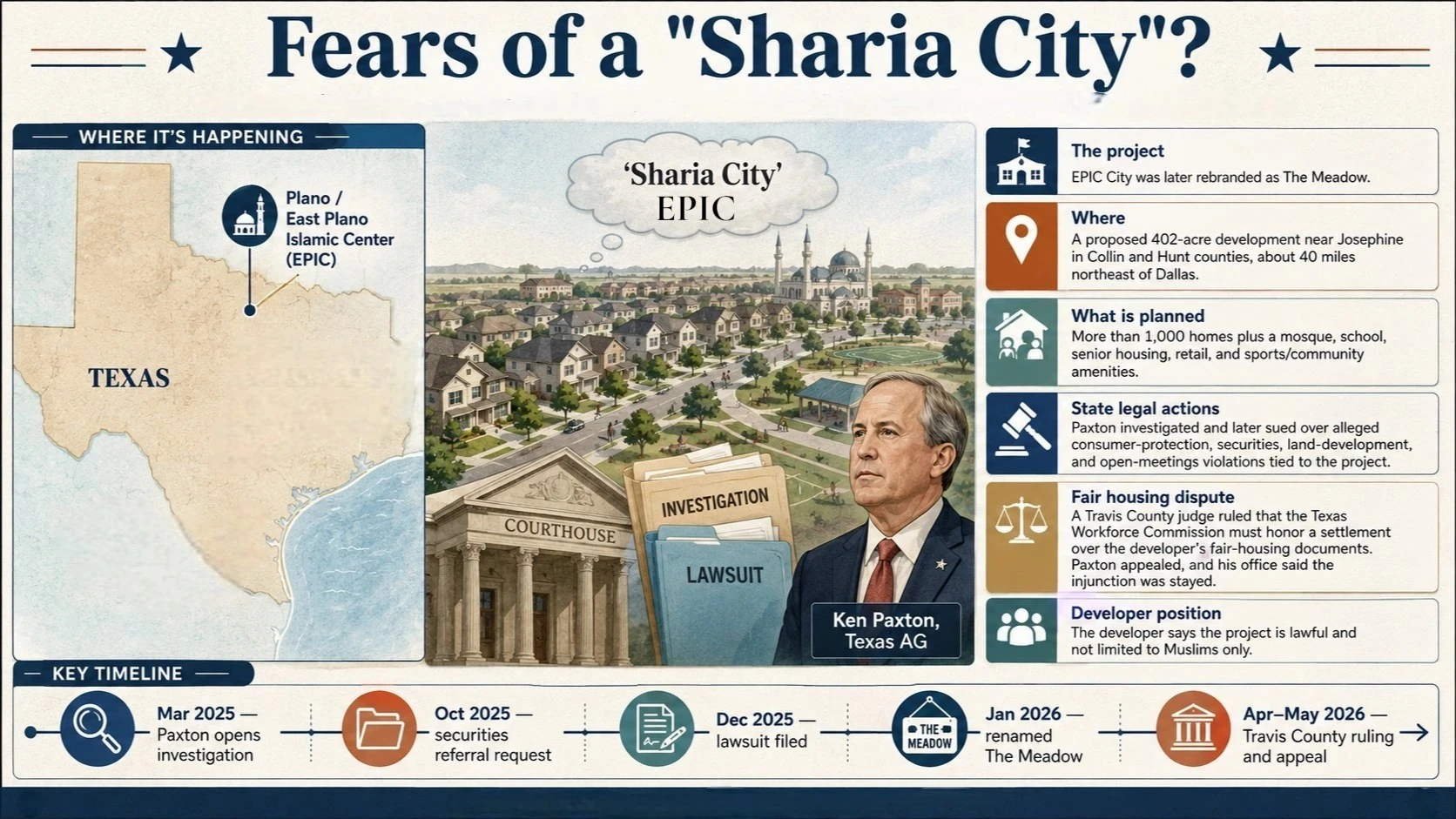
A planned 402-acre community near Dallas tied to the East Plano Islamic Center is back in legal limbo after Texas Attorney General Ken Paxton appealed a Travis County judge’s order that would have forced the Texas Workforce Commission to act on the developer’s fair housing documents. The appeal to the Fifteenth Court of Appeals paused the temporary injunction, blocking what had been an early courtroom win for Community Capital Partners, the developer behind The Meadow, formerly known as EPIC City.
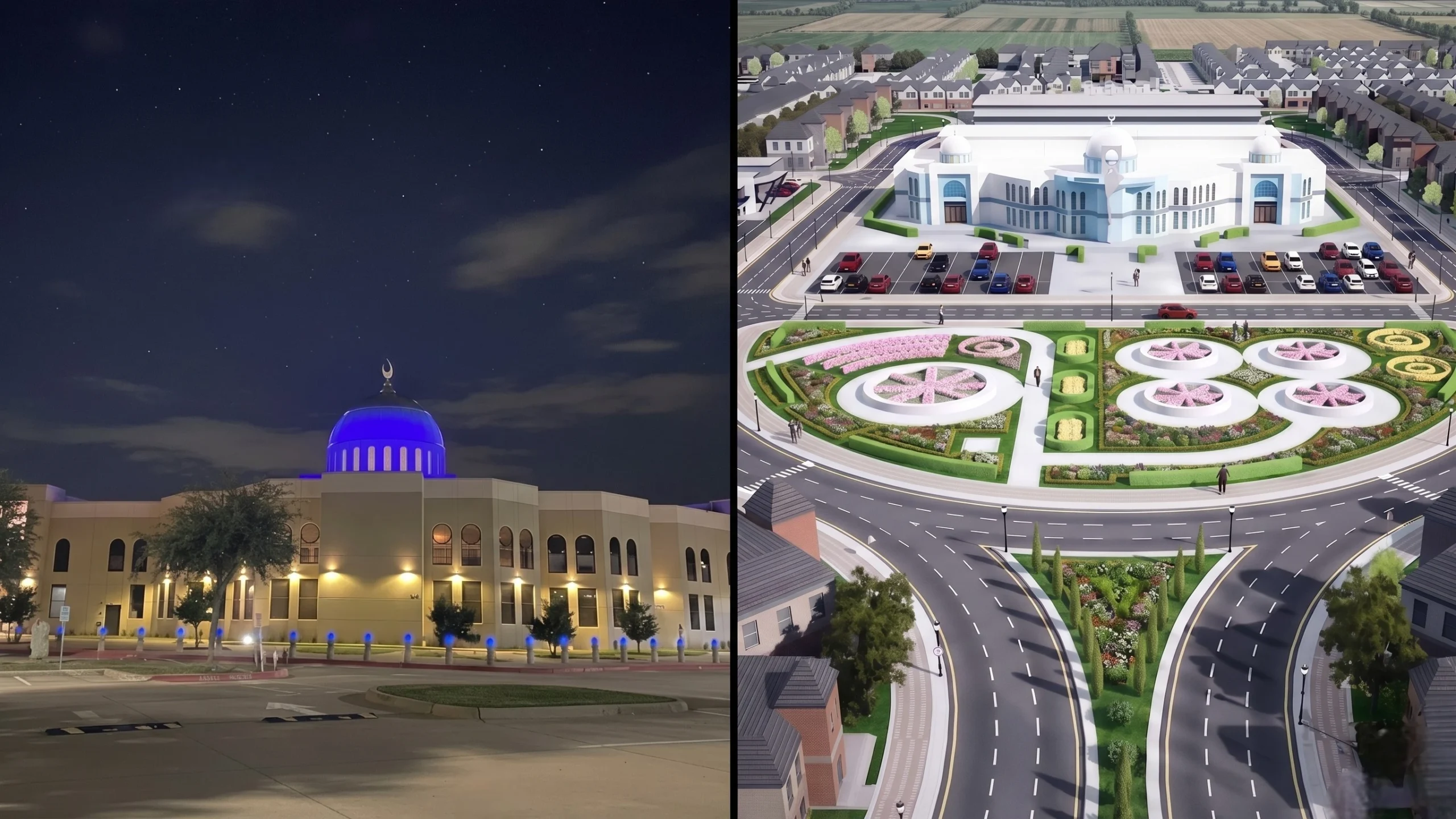
The Meadow is planned for unincorporated land in Collin and Hunt counties near Josephine, about 40 miles northeast of Dallas, with more than 1,000 single- and multifamily homes, a mosque, a K-12 faith-based school, senior housing, commercial space, sports facilities and a community college. To Texas officials, the project raises fair housing red flags. To the developers, the state’s campaign looks like a coordinated effort to punish a Muslim-associated project before it is built.
The legal hook is the Fair Housing Act and its Texas counterpart, which bar discrimination in selling, renting or advertising housing based on religion, national origin and other protected traits. State officials have argued that early marketing suggested a Muslim-only community. The developers have denied that, saying the project will be open and compliant with state and federal law.
Judge Laurie Eiserloh’s April 28 order did not clear The Meadow of discrimination claims. It found that the developers had shown a probable right to relief and ordered TWC to act within 14 days on submitted marketing materials, policies and related documents, either by approving them or issuing written, objective reasons for rejecting them. The order was narrow: it required process, not a final ruling on whether discriminatory housing practices occurred.
At the center of the dispute is a September 2025 conciliation agreement between TWC and Community Capital Partners. That agreement required fair housing training, revised marketing materials, written policies barring religious and national-origin discrimination, and submission of those materials to TWC for review and approval. The developers sued after saying the agency took their documents but failed to review or respond to them.
Paxton’s office framed the court order as an attempt to force TWC to “unlawfully approve” fair housing documents while a federal HUD investigation remains active. HUD launched that investigation in February, saying it was examining allegations of religious and national-origin discrimination tied to The Meadow’s marketing, financing structure and sales process. The developers got a different result from the Justice Department in June 2025, when DOJ closed a civil rights investigation without filing charges after Community Capital Partners affirmed that all would be welcome in any future development.
The project is also boxed in by land-use and utility fights. In March, Paxton secured a temporary injunction against Double R Municipal Utility District No. 2A, which had been tied to water and wastewater service for the development. Hunt County also disapproved a preliminary plat application for The Meadow on March 24, citing engineering, wastewater, water-service and administrative deficiencies, while stating that its decision was not based on religion, national origin, intended residents or unrelated litigation.
The policy question now is bigger than The Meadow. Texas has every right to enforce fair housing, securities, utility and platting laws. But those tools become legally and politically combustible when wrapped in rhetoric about “Sharia cities” and religious suspicion. The principle is simple. Prove actual violations, apply the same rules to everyone, and don’t let public safety or civil rights become a selective veto over who gets to build a neighborhood.