
- Why Meaningful Interaction Matters More Than Ever
- Will Algorithms Prioritize Emotion Over Facts in 2026
- AI Moderation and Debate Control
- Short Form Content is Driving Opinion Shifts
- Can Micro Communities Influence Large Political Narratives
- Authenticity Metrics and Public Trust
- The Strategic Outlook
- Data Disclosure and Transparency
- How Interactive Features Are Reshaping Civic Participation
- Anticipatory Analytics and Predicting Trends
Online platforms are no longer just for networking. They are active spaces where people share their opinions and ideas change in a matter of seconds. Heading into 2026 online politics look completely different thanks to changing user habits, new algorithms, and the rise of artificial intelligence. The influence and credibility that used to come from traditional media now come directly from social engagement.

How people interact shapes what they see and how they react on both a local and global scale. Understanding these trends is a must for anyone following politics online today.
Why Meaningful Interaction Matters More Than Ever
Marketing metrics that likes with automatic delivery are also dictating the manner in which political content is displayed in feeds this year. Platforms care way more about how fast people interact, how many comments a post gets, and how long people stay engaged instead of just counting views. Because of this political conversations spread based on how quickly users jump in rather than how many times a post is shared right off the bat.
Campaign strategists and creators are now looking for ways to spark real conversations. The goal is no longer just broadcasting a message. It is about starting conversations that algorithms actually want to push. This shift totally changes how online debates start and stay relevant.
FAQ: How do engagement metrics affect political visibility? Algorithms push content that gets people talking right away.
Will Algorithms Prioritize Emotion Over Facts in 2026
- Algorithms reward emotional reactions over balanced explanations.
- Fast replies push strong opinions above deep policy talks.
- Tracking tools spot content that makes people excited or angry right away.
- Content driven by quick reactions can easily bury thoughtful comments.
- Data models favor posts that keep users watching and participating for longer periods.
- Going viral often depends more on the mood of the audience than on actual facts.
FAQ: Are emotional posts more visible than factual ones? Yes because emotional reactions trigger faster sharing signals.
AI Moderation and Debate Control
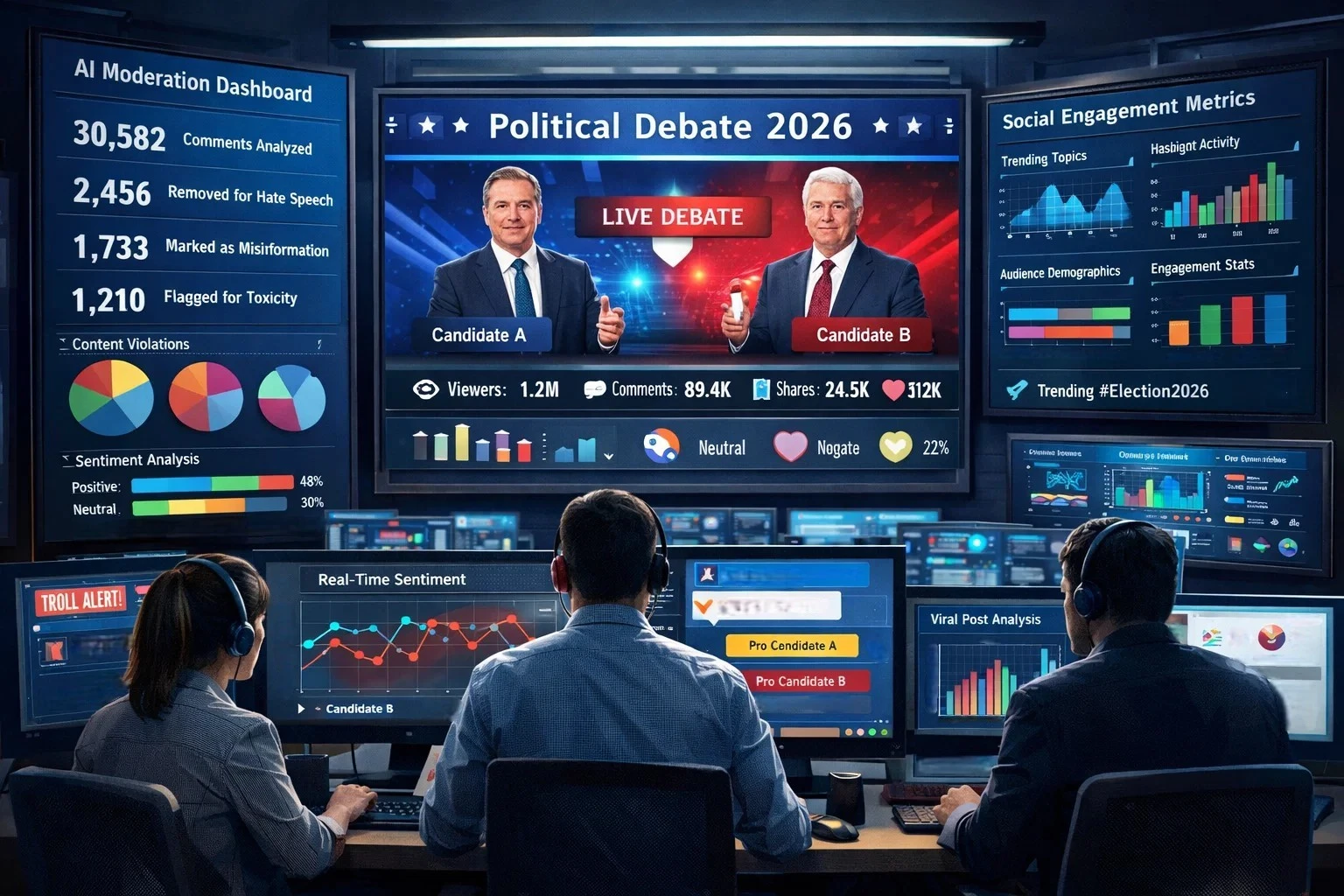
Artificial intelligence is changing how we handle public and private conversations. Automated systems scan language patterns to spot violations and adjust who sees the content right away. By 2026 these systems will understand context better and know the difference between harmful speech and a healthy debate.
This directly impacts political discussions because accurate moderation builds trust. People participate more when they feel a digital space is fair. On the flip side if people sense bias they will just leave for another platform. Balancing safety and free speech will stay at the center of online political strategies.
Short Form Content is Driving Opinion Shifts
- Short videos turn complex issues into simple stories.
- Fast storytelling grabs attention in just a few seconds.
- Visuals shape opinions much faster than long explanations.
- Short clips travel fast and often lose their original context along the way.
- Quick comments push people to react immediately instead of thinking things through.
- Influencers guide how audiences understand major policies.
FAQ: Why is short content so influential in politics? It spreads quickly and shapes opinions long before anyone does deeper research.
Can Micro Communities Influence Large Political Narratives
Small online groups are gaining a lot more influence over mainstream political talks. Focused groups built on shared beliefs create heavy engagement that algorithms see as highly relevant. These smaller groups amplify specific viewpoints that eventually spill over into public conversations.
This year micro networks will play a bigger role in shaping trending topics because their concentrated participation looks authentic. Political groups watch these spaces closely to catch early signs of what the public thinks. As these groups get more organized their combined voice can shift national trends in just hours.
FAQ: Do small communities really shape wider debates? Yes because high engagement can turn a niche viewpoint into a massive trending topic.
Authenticity Metrics and Public Trust
- Being transparent with the audience builds credibility in political spaces.
- Verified identities make people feel more confident during public discussions.
- Consistent communication builds long term loyalty within a community.
- Instant feedback holds people accountable for what they say online.
- Authenticity scores based on data help block out automated bot accounts.
- Trust indicators help guide users toward reliable information sources.
FAQ: Why does authenticity matter online? Trust encourages people to participate and supports real conversations.
The Strategic Outlook
In 2026 digital spaces will run on advanced interaction metrics that decide whose voices rise above the noise. Future political talks will rely on organized participation and balanced moderation to stay credible. Viral content will always rely on an emotional hook but long term impact requires actual meaningful participation.
Groups that encourage real conversations will shape the narrative much better than a one way broadcast. Strategic planning has to focus on ethical growth by mixing targeted content with genuine audience interaction to stay relevant. People who adapt to these changes will end up leading digital political discussions.
Data Disclosure and Transparency
Clear data practices are becoming the foundation of healthy political talks online. As engagement systems get more complex users want to know exactly how posts are ranked and why certain topics trend. Platforms are starting to launch analytics dashboards that show reach and audience behavior. When people understand how visibility works they take more responsibility for what they share.
Political communicators gain credibility when they clearly show their data sources and evidence. By 2026 transparency will not just be an option. It will be the main difference between a trusted voice and a manipulative campaign.
FAQ: What is so important about transparency in political conversation? Clear data builds credibility and encourages responsible engagement.
How Interactive Features Are Reshaping Civic Participation
New interactive tools are completely changing how people participate in public talks. Audiences can now contribute instantly through poll stickers or live comment threads and community notes. These features close the gap between creators and their audience to turn content into a two way conversation.
Modern politics is a complex discussion where real time feedback literally shapes the story. As platforms perfect these tools in 2026 political strategy will become much more organized and driven by data. Interactive formats will push people to actively participate rather than just mindlessly scroll.
FAQ: How can interactive tools affect debate? They turn the audience into active participants who help shape the direction of the conversation.
Anticipatory Analytics and Predicting Trends
Advanced predictive systems are being built to spot popular topics long before they actually trend. Digital strategists can now predict shifts in public interest by looking at engagement speed and audience mood. With this understanding political communicators can be proactive instead of just reacting to the news. By 2026 predictive analytics will be essential for timing campaigns and framing messages.
While this tech is highly efficient it has to be applied ethically to avoid manipulation. When used responsibly forecasting tools can create healthier conversations and help share timely information across digital spaces.