Pathway lighting falls into a gray area when it comes to rental property upgrades. It isn’t as flashy as a kitchen remodel and it costs more than a simple paint job. Still, it has the potential to quietly transform how prospective tenants view a property the moment they drive up.
For landlords deciding whether to install it, the decision goes beyond just making things look nice. You have to factor in real costs, ongoing maintenance, safety, liability issues, and whether your particular property benefits from it. For example, a townhouse in a dense urban block has different requirements than a suburban single-family rental or a small multifamily building with shared walkways.
Here is a breakdown of what pathway lighting really does for your property, how much it costs to keep it running, and when it actually makes financial sense rather than being a mere cosmetic upgrade.
The Case for Installing Pathway Lighting

One of the most frequent causes of slip-and-fall accidents at rental properties is poorly lit walkways, especially in the rain, snow, or on uneven pavement. If a tenant gets injured because they were walking on a dark path at night and they file a lawsuit, the landlord may end up paying more than the cost of ten years of pathway lighting.
The other important reason is security. Lighting your outdoor walking paths and the main access points to your rental units is highly effective at lowering the risk of crime. Most burglars steer clear of well-lit properties, and a good motion-sensor light at a side door can scare off a burglar more effectively than a security sticker in the window. Tenants also feel much safer when they come home after dark, and this often encourages them to renew their lease.
The last benefit is curb appeal, and while it may be less tangible, it is still important. Before scheduling a showing, many prospective renters drive by the neighborhood at night. A house with proper pathway lighting looks well-maintained, whereas an unlit one can look neglected. In competitive rental markets, this initial impression can justify a slightly higher rent, and that extra income often pays for the lights within the first year.
The Real Costs and Maintenance
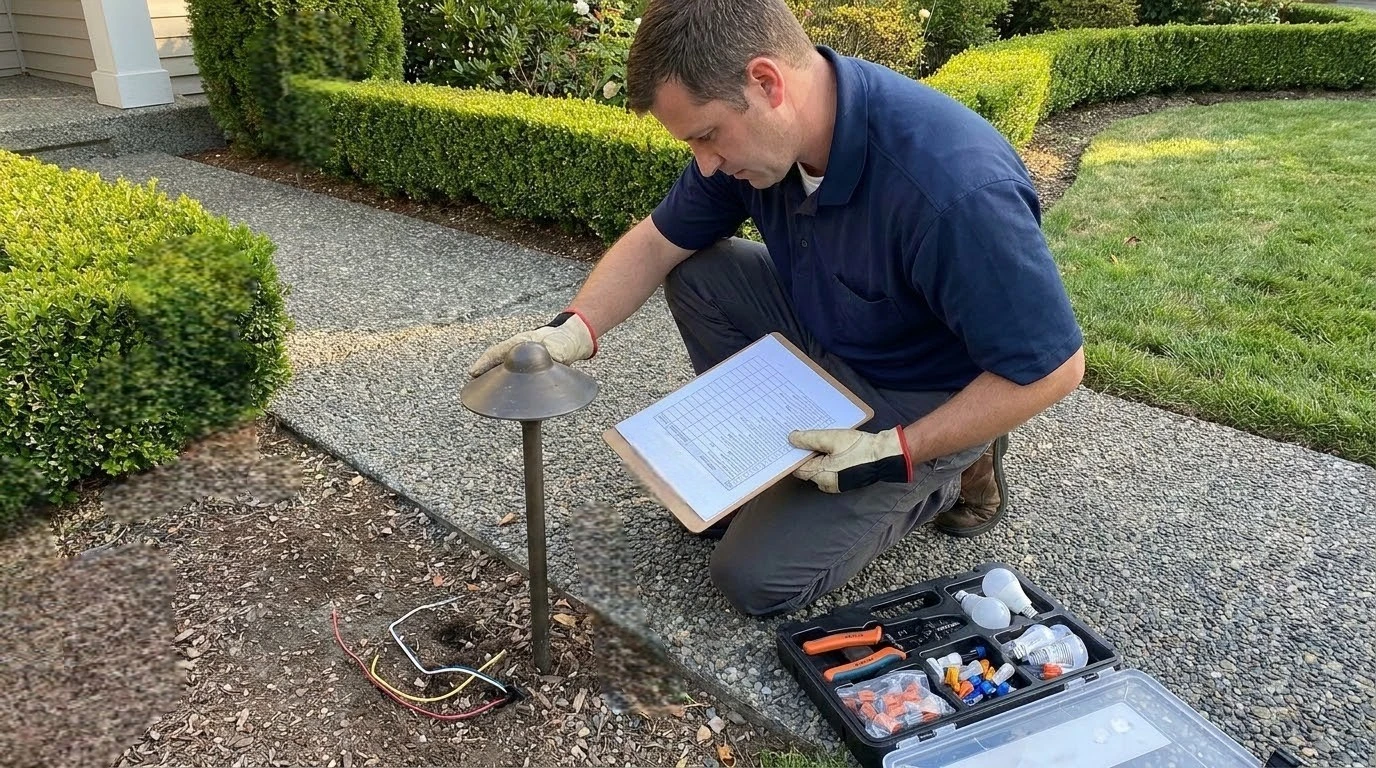
Basic solar path lights cost between $15 and $40 per unit. They are very easy to install, but they tend to break down much faster than most people expect. This is especially true in shaded areas, in cold climates, or after the batteries start to degrade after a couple of years.
Low-voltage wired systems typically run between $300 and $1,500 in materials for a standard single-family property, plus labor if you hire a professional. Line-voltage systems that require licensed electrical work can easily exceed $3,000 on larger properties, and any permit requirements or code inspections can push that number higher.
Maintenance is one aspect that landlords often underestimate. Light bulbs burn out. Fixtures rust in humid or salty climates. Lawn crews knock stakes out of the ground. Tenants damage fixtures with bikes, cars, or children’s toys, and landscapers accidentally cut the wiring. You should plan for an annual upkeep cost of roughly 5 to 10 percent of the original installation price.
Choosing Between Solar, Low-Voltage, and Line-Voltage Systems
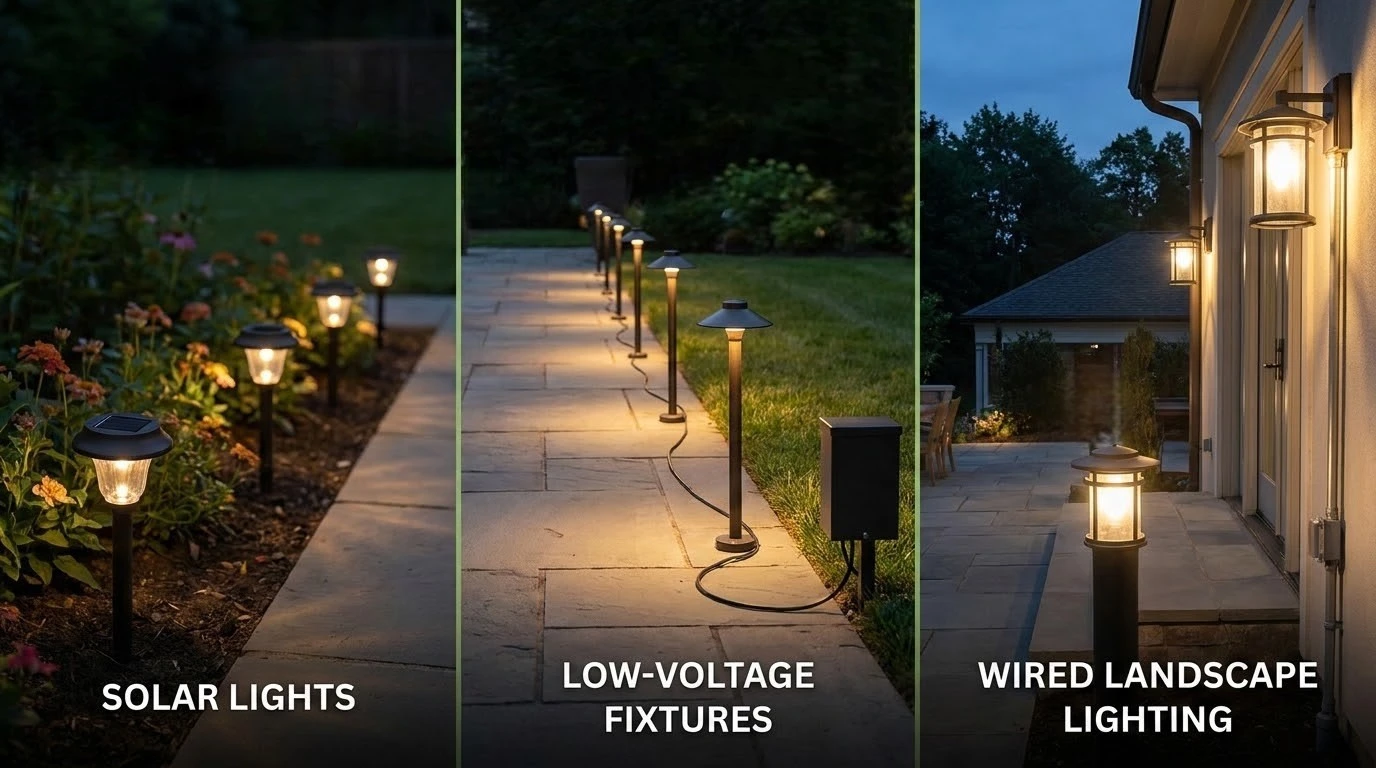
Solar-powered lighting is the cheapest and simplest solution since there is no wiring and no electricity bill. It delivers acceptable results in sunny climates where the fixtures get direct sunlight most of the day.
Brightness is generally lower, winter performance is inconsistent, and batteries need to be replaced every two to three years. Solar lighting is perfect for secondary walkways, garden paths, or properties where convenience is more important than long-term performance.
Low-voltage lighting systems, which are usually 12V, are ideal for typical single-family and small multifamily rentals. They provide steady, strong light and can last more than ten years with minimal maintenance. A hands-on landlord or a reasonably priced contractor can handle the installation. The transformer plugs into a standard outdoor outlet, and the cables can be laid along the ground under a layer of mulch without digging deep trenches.
Line-voltage 120V systems are overkill for most single-family rentals but make sense on larger portfolios or multifamily properties with extensive pathways. They require licensed electricians, permits, and pricier fixtures, but they are also the most durable and powerful option.
For larger rental portfolios, multifamily complexes, or commercial-residential hybrid properties, coordinating installation and ongoing service through a commercial property services firm like Touchstone Commercial tends to make more sense than managing electricians, landscapers, and fixture suppliers as separate vendors. The project management overhead alone can eat up the savings of going piecemeal.
LEDs have become the default bulb type across all three categories for good reason. They offer lower energy use, a longer lifespan, less heat, and better light quality than the halogen and incandescent options that dominated a decade ago.
Design Mistakes That Undercut the Investment
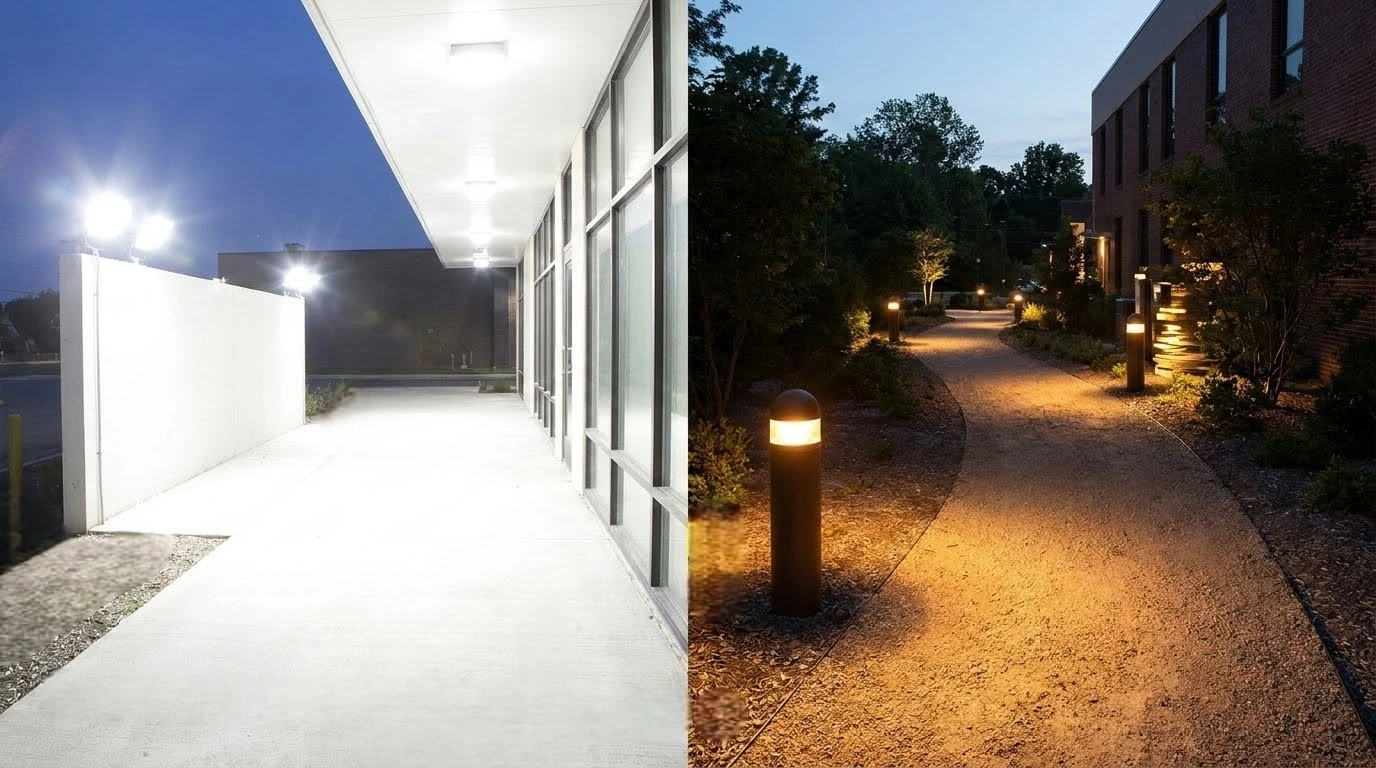
One common mistake is over-lighting. It occurs when landlords put too many light fixtures too close together, making the whole area look like an airport runway. This creates a harsh and unfriendly environment that you want to avoid in a residential property. For the best effect, spread the fixtures eight to ten feet apart and keep the light moderate rather than cramming in twice the number of fixtures at the same wattage.
Many people ignore how much color temperature makes a difference. Cool 4000K to 5000K lights give a sterile and institutional feel that is suitable for parking lots but not for residential pathways. Warm 2700K to 3000K lights are more pleasing and blend naturally with the warm indoor lighting most people have. This single decision is often what distinguishes rental properties that feel like homes from those that feel like motels.
The difference between good and bad results also comes down to fixture quality. Cheap plastic fixtures tend to fade, crack, and look bad enough that they need to be replaced within a year or two. Fixtures made of cast aluminum, copper, or quality composite materials will last a decade or more without needing constant replacement.
The initial price difference is usually only $10 to $30 per fixture, and it is well worth it for a rental you intend to keep long-term.
When It Makes Sense and When It Doesn’t
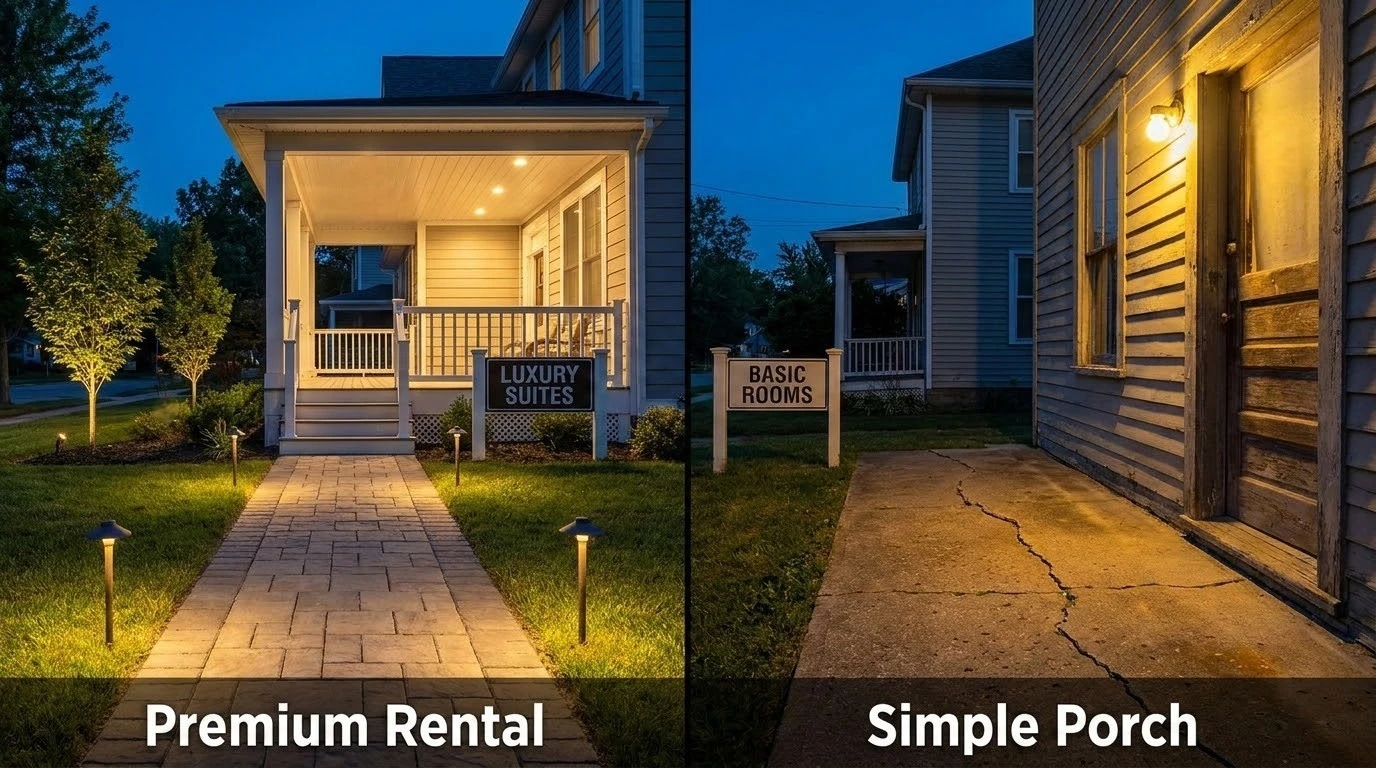
Pathway lighting is typically a good investment for homes where tenants frequently come home late at night, where the paths have uneven surfaces, where the rental is competing in the mid-to-upper-end market, or where security concerns are significant. These properties see obvious benefits in safety, higher rental value, and tenant retention.
On the other hand, path lighting is not always worth it for budget rentals where tenants are primarily focused on the lowest possible price. It also makes less sense for properties with parking right next to the entrance, or for properties in areas where frequent vandalism turns outdoor fixtures into a constant replacement expense. In these cases, a motion-sensor porch light or a single well-positioned fixture at the door provides most of the benefits for a very low cost.
Another factor is climate. Homes in areas with heavy snow, salt, or coastal exposure require lighting fixtures rated for those specific conditions, otherwise they will rust and fail after just a couple of seasons. Landlords often get stuck replacing the same fixtures year after year and end up believing that pathway lighting simply does not work, entirely because they missed this crucial detail.
The Bottom Line
Pathway lighting is not always a major upgrade, but it is a consistent value-add for the right properties. The math generally works out in your favor within the first year or two through a higher rental rate, lower liability risk, and better tenant retention, assuming you choose the right system and keep your installation costs reasonable.
Think of it like any other rental property investment. Scale the project to fit the property, budget realistically for maintenance, and do not install it just to show off your personal taste. Install it because it solves a genuine problem for your tenants, and the financial returns will take care of themselves.