

Every struggling real estate agent has a scapegoat. Interest rates are high. Inventory is low. Buyers are hesitant. Competition is fierce. Pick any year, and there’s always a convincing excuse for why growth feels impossible. Most of the time, that excuse sounds reasonable enough that nobody questions the reasoning.
But the truth is that careers stall in strong markets just as often as they do in weak ones. The housing market is actually a surprisingly bad predictor of your personal success.
The problem usually isn’t the market. The real issue lies in your expertise. More specifically, the roadblock is the gap between the skills you think you have and the skills that actually move your career forward.
This might sound surprising in an industry that treats experience as the ultimate teacher. Real estate definitely rewards hands-on knowledge. No classroom can fully prepare you for a tense negotiation, a sudden title issue, or a deal that falls apart hours before closing.
But experience has a major limit. Past deals only teach you what already happened. Looking backward doesn’t explain why situations unfolded the way they did, and that history does very little to prepare you for what comes next.
This difference matters more than most agents realize, becoming especially obvious when you move past your early years and the next level of success feels stuck.
This is why a growing number of agents, brokers, investors, and property professionals choose to study for an online bachelor’s degree. They don’t enroll just to add another credential to their business cards. They take this step because they hit a wall. Working harder stops paying off. The skills that got you through your first few years aren’t the same skills you need to grow further.
What actually changes your career trajectory is a deeper understanding of the systems behind the transactions. You need to know the legal structures behind the deals and the rules that shape the industry.
A common myth is that real estate success is all about sales skills. But some of the most expensive mistakes in real estate have nothing to do with selling.
The mistakes that cost clients money, ruin reputations, and end careers are usually legal misunderstandings, contract errors, and missed compliance rules. These problems rarely give you a warning. They show up at the worst possible time, right in the middle of a transaction, when there is no time left to learn what you should already know.
Why Real Estate Professionals Face Unexpected Legal Problems
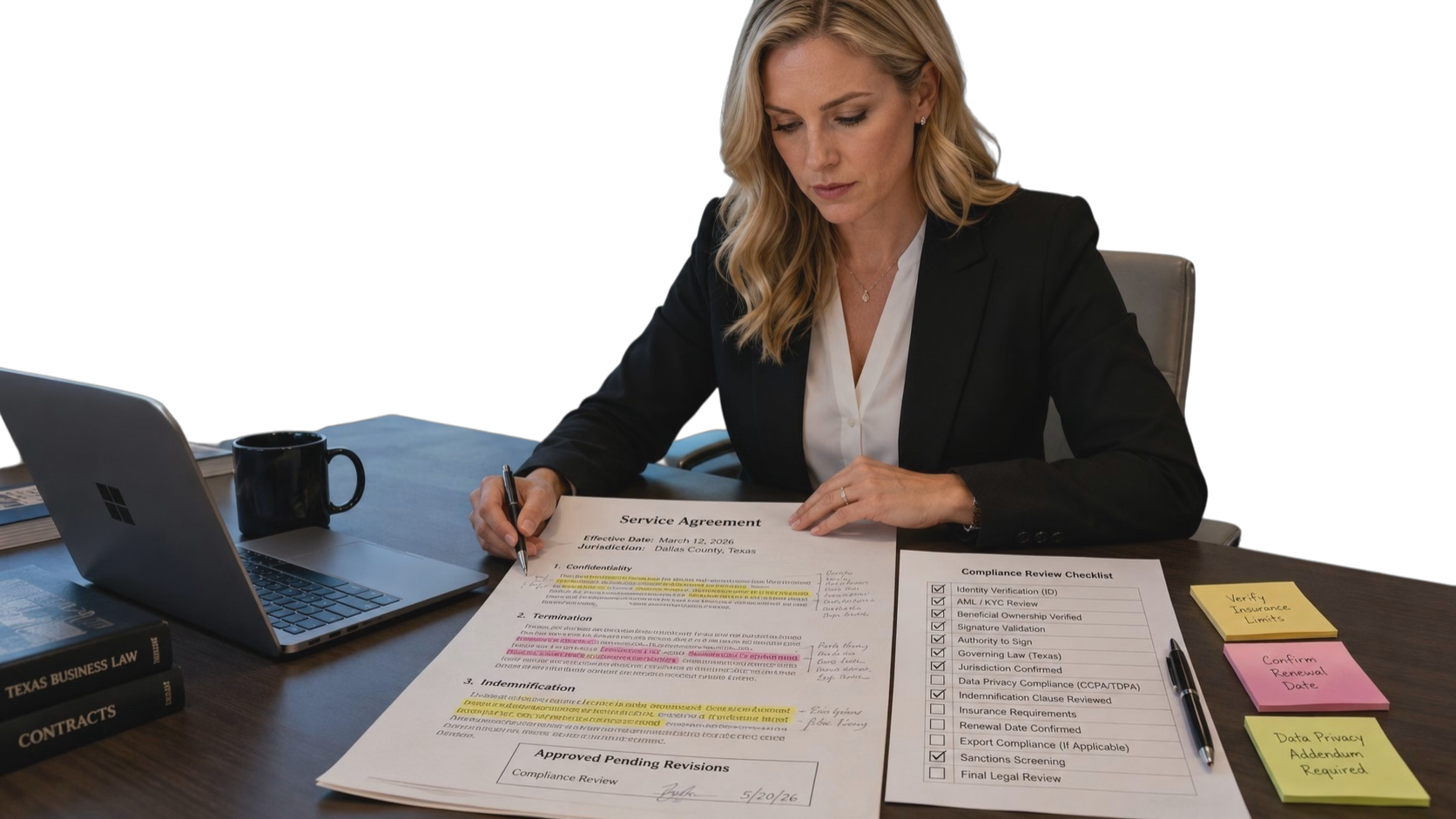
Modern real estate is tied to legal rules that go way beyond simply buying and selling property. Every transaction happens inside a legal framework that dictates what you can and can’t do. That framework has become much more complicated over the last decade.
How Legal Issues Sneak Up on Agents
- In residential sales, a simple home sale can suddenly raise questions about environmental disclosures.
- During commercial lease discussions, a negotiation can fall apart over city zoning rules that changed two years ago.
- For investment deals, a transaction can stall over a title defect that a more legally informed agent would have caught early on.
Most agents pick up legal knowledge on the job. That works fine until a crisis hits. The problem with learning as you go is that you only learn after a problem happens. A new rule comes out, a dispute starts, or a contract confuses everyone, and you learn your lesson the hard way.
Structured coursework is different. It gives you a solid foundation for understanding how real estate law, business, and property rights actually work together. This knowledge is valuable long before an issue ever reaches a courtroom. An agent who understands contracts and regulations can spot a problem before anyone else even notices the red flags.
There’s also a major shift in client expectations. This change gets less attention than housing prices or interest rates, but the impact is just as important. Today, buyers and sellers have access to more information than ever before. Property records, market data, neighborhood stats, and legal resources are all just a click away.
Your value as a real estate agent no longer comes from just holding the information. Your value comes from interpreting those details correctly. You need to know what the data leaves out and what questions to ask before your client even thinks of them. That takes a much broader knowledge base than most agents build in their first few years.
This is exactly why online education makes so much sense for agents. Online degrees are popular among working professionals because you don’t have to pause your career to get one. A class on contract law takes on a whole new meaning when you’re managing an active real estate deal at the same time.
A course on regulations means a lot more when you’re dealing with real clients and strict deadlines. What you learn in class immediately applies to your actual job, making the whole experience highly practical.
Preparing for Tomorrow’s Market
There’s one more reason careers hit a plateau. Many agents build their entire business around solving today’s problems. But the most successful careers are built by preparing for tomorrow’s problems. Real estate is constantly changing. Technology is reshaping how deals work. Rules evolve, and client expectations shift.
Agents who rely only on past experience usually end up just reacting to changes instead of staying ahead of them. Over a 10- or 20-year career, that gap gets wider, even if the shift is hard to notice at first.
A degree focused on real estate law is incredibly useful here. Legal systems shape every single part of a property’s lifecycle. Development, buying, leasing, management, and selling all happen inside legal boundaries.
Knowing those boundaries gives you clarity while everyone else is guessing. This doesn’t mean you need to become a lawyer. The point is much more practical. A strong grasp of legal concepts improves your decision-making across the board. That legal knowledge helps you assess risks better and improves how you talk to attorneys, lenders, investors, and clients. This deeper insight makes complicated deals easier to understand, and ultimately builds the expert perspective that modern clients expect.
When business slows down, blaming outside forces is a natural response. The market is tough. Competition is high. Conditions are bad. Sometimes, those excuses are entirely valid. But sometimes the real roadblock is harder to see. The underlying issue doesn’t show up on a chart like a rising interest rate or a bad quarter.
The agents who keep growing in any market are the ones willing to ask a better question. Instead of asking, “What is happening in the market?” they ask, “What am I missing about how this market actually works?”
That shift in mindset changes more than just one transaction. This new approach changes how your entire career grows over the next decade. The expanded perspective turns your expertise into an asset that only goes up in value.