
Many people buy their first rental property expecting a smooth ride to passive income. They run a quick calculation, see a few hundred bucks left over after the mortgage, and assume they’ve struck gold. The reality usually hits them around month three, right after the water heater bursts or a tenant stops paying.
Building a portfolio that actually survives market swings takes more than basic arithmetic. You need a solid grip on the financial fundamentals that help determine who stays in business and who sells at a loss.
1. Stop Trusting the Gross Rent

A lot of first-time investors calculate profit by taking the monthly rent and subtracting the loan payment. That kind of math can leave you short on cash fast. Real cash flow analysis includes invisible expenses people tend to miss, like property management fees, vacancy allowances, routine maintenance, and capital expenditures.
Many experienced landlords use the 50% rule as a quick test. This rule assumes that half of your gross income will go toward operating expenses before you even pay the mortgage. While it is just an estimate, it forces you to acknowledge that a fried condenser coil in mid-July or a sudden roof leak can wipe out a year of thin margins.
Seasoned buyers allocate a strict percentage of gross income for future repairs before they even close on the house. Running your numbers with a healthy buffer for these costs protects your downside and keeps the property functioning as an asset instead of becoming a major financial headache.
2. Squeeze the Tax Code

Taxes can become one of your biggest expenses, yet beginners treat them as an afterthought when April rolls around. One of the most useful tools available to property owners is cost segregation.
Instead of slowly depreciating residential rental property or nonresidential real property over 40 years, you can hire a qualified professional like an engineer to identify components that qualify for shorter recovery periods. This includes things like fixtures, flooring, lighting, or land improvements that can be reclassified into 5-year or 15-year buckets.
Under current IRS guidance, eligible property acquired after Jan. 19, 2025, qualifies for permanent 100% bonus depreciation. This means some shorter-life assets may be fully deductible in year one if they meet the rules. On the right property, that can create a much larger first-year deduction than standard depreciation alone. If you’re getting started with this strategy, make sure the study is done correctly and reviewed by a qualified tax professional..
3. Build a Strong Cash Reserve
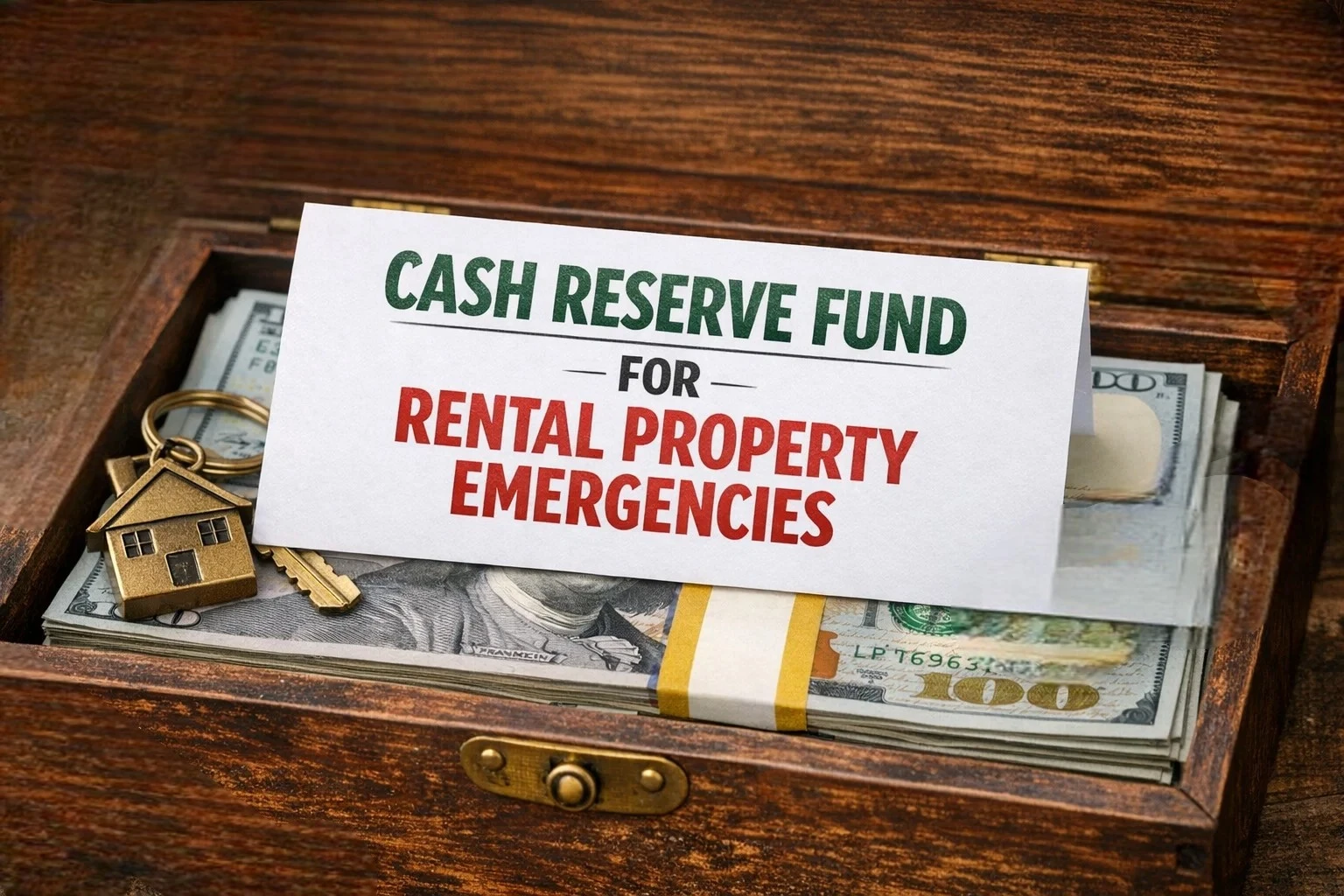
Real estate is not very liquid. You cannot sell off the master bedroom to cover an unexpected tax bill or a sudden vacancy. That is why a solid cash reserve is essential.
Aim to park at least three to six months of operating expenses in a liquid account for every single property you own. For a standard single-family rental, that usually means keeping $3,000 to $5,000 sitting in a high-yield savings account where you can access it instantly.
This cash acts as a shock absorber during economic downturns, localized market slumps, or extended eviction processes. Investors who operate without a safety net often find themselves forced to liquidate assets at a steep discount during hard times just to keep the lights on.
4. Use Leverage Carefully

Debt is one of the main reasons real estate can be so profitable because it allows you to control larger assets with a fraction of the total purchase price. But too much leverage is one of the fastest ways to lose money.
Experienced investors pay close attention to the Debt Service Coverage Ratio to ensure the property’s net operating income comfortably handles the loan obligations, even if rents dip. Most commercial lenders want to see a DSCR of at least 1.20 to 1.25, meaning the property generates 20% to 25% more income than the cost of the debt.
Lock in long-term, fixed-rate debt whenever possible to hedge against inflation and interest rate spikes. Later on, strategically refinancing properties once you build sufficient equity can free up capital to fund your next acquisition without selling the property. Leverage is a powerful tool for building wealth, but it can hurt you fast if you misuse it.
Surviving in this industry means playing the long game. Accurately projecting cash flow, using smart tax strategies, keeping healthy reserves, and managing debt responsibly form a foundation that can help you weather different market cycles.