
- Why curtains usually get chosen last, and why that is a mistake
- What actually needs deciding before fabric enters the conversation
- The research case for planning around where daylight actually falls
- Linen that filters light without closing a room off
- Curtains as a lighting decision, not just a finishing one
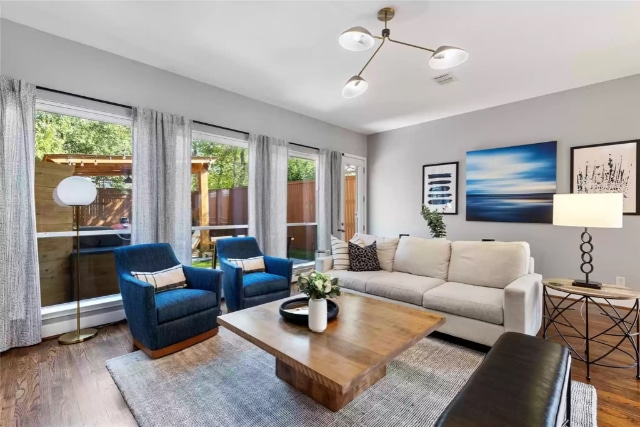
Curtains have an odd position in most room planning, treated as one of the very last decisions made rather than one of the first, chosen almost as an afterthought once the furniture, the paint, and the rug are already settled. That sequencing rarely serves the room well, since window treatments do more structural work in a space than their late arrival in the planning process would suggest, controlling how much daylight actually reaches the furniture that was already chosen, and how comfortable it is to sit anywhere near the window itself. Planning curtains earlier, rather than as a finishing touch, tends to produce a room that functions considerably better than one built around furniture first and light second.
Part of the reason this sequencing persists is that curtains genuinely do look like a decorative layer, fabric hung over an already finished wall, which makes it natural to treat them as decoration rather than infrastructure. That impression is not entirely wrong, curtains are decorative, but they are also doing quiet, continuous work every single day that the room is in use, work that most other decorative choices simply do not perform. Recognizing that dual role earlier in the process is what actually changes how well the finished room functions.
Why curtains usually get chosen last, and why that is a mistake
The instinct to leave window treatments for last is understandable, since curtains feel like a finishing detail compared to a sofa or a rug, something to layer on once the bigger decisions are settled. The problem is that curtains do not simply decorate a window, they actively regulate how much of the room’s natural light reaches every other decision already made, the color a wall reads as, how warm or cold a fabric feels, whether a reading chair near the window is actually pleasant to sit in during the day. Treating that regulation as an afterthought means every earlier decision was made under lighting conditions the room may not actually have once the curtains go up, which is exactly the kind of mismatch better sequencing avoids.
What actually needs deciding before fabric enters the conversation
A short list of questions, worked through before browsing fabric, keeps the eventual choice anchored to how the room is actually meant to function.
- Which direction the window faces, and how much direct sun it gets
- Whether the space near the window is meant for daily use or mostly passed through
- How much privacy the room genuinely needs at different times of day
- Whether the goal is softening bright light or simply adding texture to the window
Answering these first turns curtain shopping into a much narrower, more confident decision rather than a late stage guess.
The research case for planning around where daylight actually falls
There is good reason to treat this sequencing seriously rather than as a matter of taste alone. A recent systematic review of research on indoor daylight, published in a peer reviewed environmental psychology journal, found consistent evidence that direct sunlight, so long as it does not create visual discomfort, produced the strongest restorative effects among the daylight conditions studied, with the benefit growing the closer a person actually sat to that light. This is a genuinely useful detail for planning a room around a window, since it suggests the goal is not simply letting daylight into a space in general, it is making sure whatever seating or activity area a household actually wants to use sits close enough to genuinely benefit from that light, with curtains fine-tuning the balance between brightness and comfort rather than blocking the effect outright.
The review also noted that visual discomfort was the key limiting factor, meaning the restorative benefit of direct sunlight only holds up as long as the light itself remains comfortable to be near rather than harsh or glaring. This is precisely the function a well chosen curtain fabric performs, taking sunlight that might otherwise be uncomfortably bright at certain times of day and softening it just enough to keep the space both usable and still meaningfully lit. A room planned with this balance in mind from the outset avoids the common outcome of curtains added later either blocking too much of the benefit or doing too little to manage the discomfort in the first place.
Linen that filters light without closing a room off
Linen curtains by Norsemaison are suited to exactly this kind of planning, since the fabric softens direct sunlight into a diffused, comfortable glow rather than blocking it out entirely, which keeps a nearby seating area within reach of the restorative daylight the research above describes. A heavier, fully blackout fabric solves privacy and glare completely but removes the daylight benefit along with it, while sheer, unlined fabric lets in more light than many rooms can comfortably use. Linen tends to sit in the useful middle, letting enough daylight through to keep a window seat genuinely pleasant while still softening the sharpest edge of direct sun, which is precisely the balance a room planned around daylight from the start is trying to strike.
This middle ground is worth choosing deliberately rather than by default, since the temptation when planning a room is often to reach for whichever fabric looks best in a photograph rather than the one that actually performs this specific balancing act well. A fabric with natural texture and enough weight to diffuse light evenly does more of this quiet, functional work than a flatter or thinner alternative, even when the two look fairly similar hanging in a showroom.
Curtains as a lighting decision, not just a finishing one
Treating window treatments as a lighting decision rather than a decorative afterthought changes how a room actually gets planned, starting with where the light falls and how close a household wants to sit to it, rather than starting with furniture and hoping the fabric works out later. A room planned in that order tends to make better use of a window than one where curtains were the very last thing anyone thought about.
The next time a room comes together, it is worth asking where the window’s light actually falls before the furniture arrangement is finalized, rather than after. That single change in order, deciding how the light should be managed before deciding where everything else goes, tends to produce a room that feels considered rather than simply decorated.