- Why Crews Cannot Just Let a Tree Fall
- Advanced Rigging and Controlled Lowering Techniques
- Using Cranes for Difficult Removals
- Calculating Lift Capacity
- Static Versus Dynamic Loading
- Protecting Underground Utility Lines
- Stabilizing Weak Wood Before Cutting
- Navigating Tight Spaces With Speedlining
- Post-Removal Cleanup and Processing
- Spotting Fungal Decay Before Starting
- Frequently Asked Questions About High-Risk Tree Removals
An 80-foot oak does not need to fall far to cause serious damage. A large trunk or limb can tear into a roof, crush a deck, damage hardscaping, or put stress on nearby foundation walls. Removing that kind of hazard in a tight New Haven yard takes more than a chainsaw and a ladder. Modern tree removal is closer to controlled dismantling than traditional logging.
Before any cuts are made, a professional crew evaluates the tree, nearby structures, utility lines, terrain, access points, and usable drop zones. When a dead or compromised canopy has to come down limb by limb, arborists estimate wood weight, rope angles, anchor points, and rigging loads. That level of planning matters in dense neighborhoods where homes, fences, garages, sidewalks, and landscaping may all sit inside the work zone.
Why Crews Cannot Just Let a Tree Fall
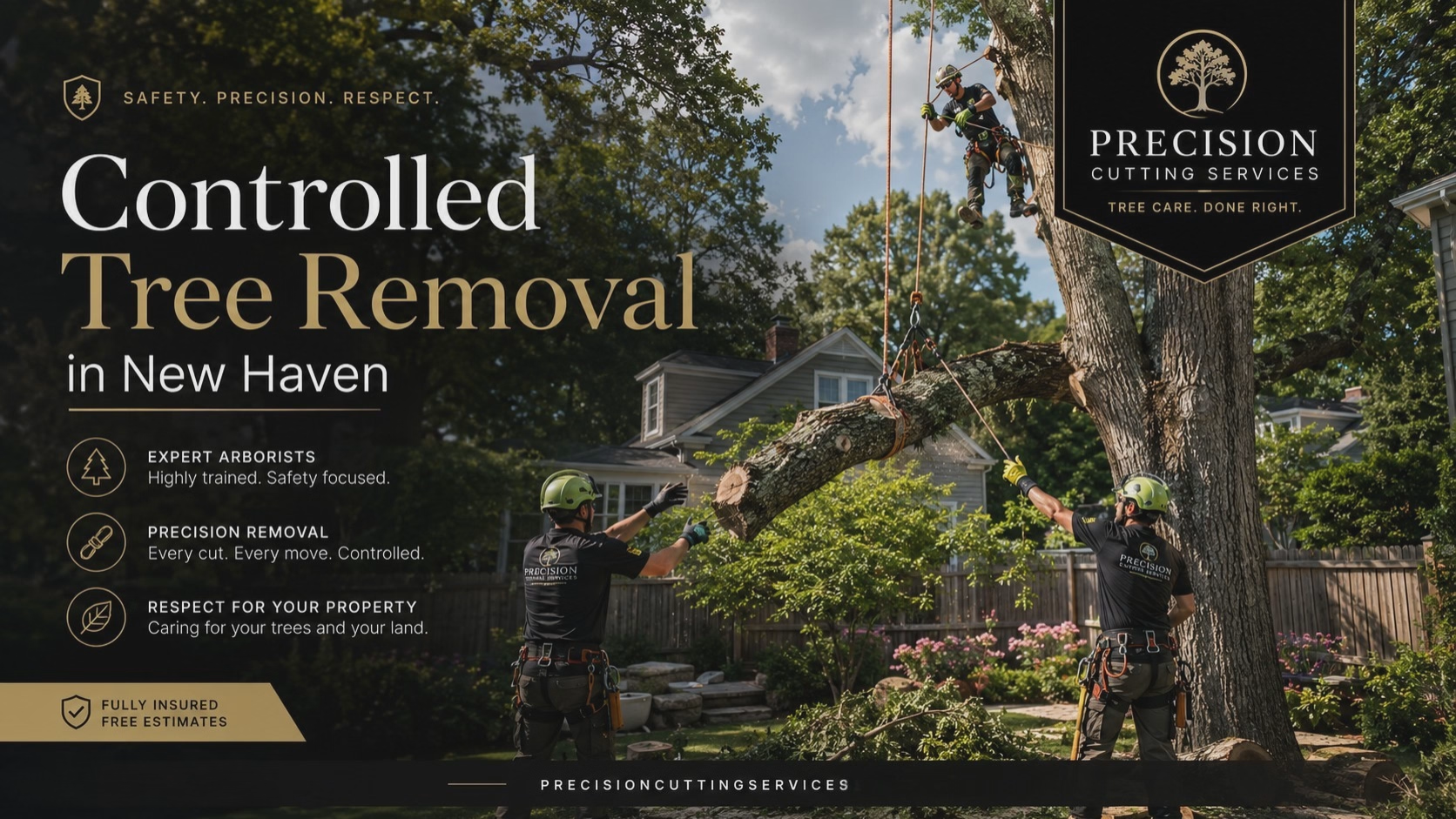
Many property owners picture an arborist cutting a notch at the base of the trunk and controlling where the tree lands. That may work in open space, but dropping large sections of wood in a residential backyard can create serious risk.
In high-risk removals, crews often secure heavy overhead sections before they are cut free. Instead of allowing limbs to fall uncontrolled, arborists use ropes, pulleys, lowering devices, and friction systems to guide each piece safely to the ground.
It is the difference between lowering a heavy object with control and letting it crash down. Free-falling wood can damage roofs, fences, patios, lawns, and nearby trees. It can also compact soil, especially when heavy pieces or equipment repeatedly impact the same area.
Advanced Rigging and Controlled Lowering Techniques
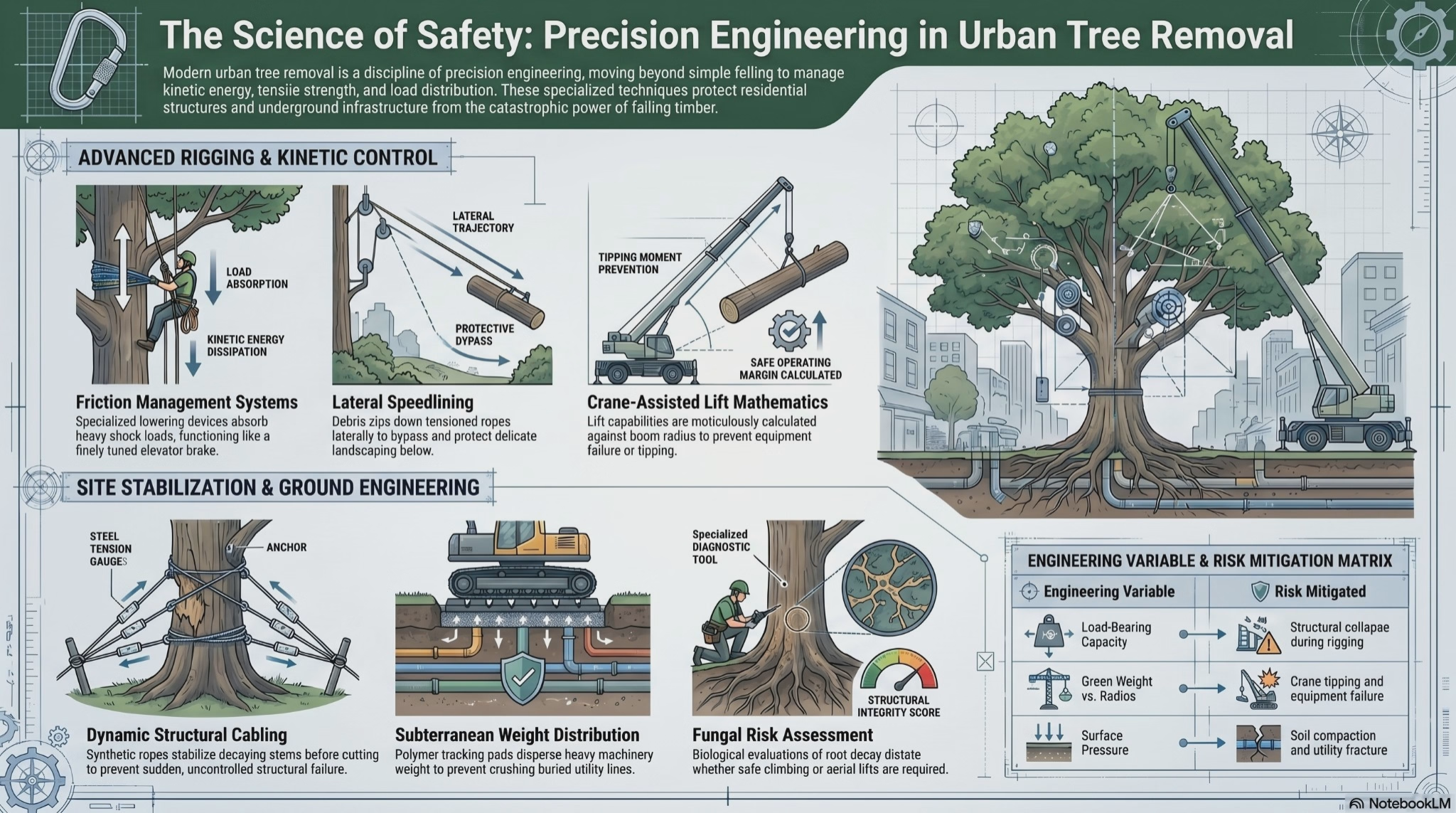
Gravity is one of the biggest challenges when removing mature hardwoods over a roof, driveway, or tight backyard. To manage that risk, arborists may attach lowering devices to the trunk or another secure anchor point. A trained ground worker controls rope speed while the climber or lift operator cuts sections from the canopy.
An expert tree removal company like Precision Cutting Services in New Haven ensures limbs never reach terminal velocity. They utilize snatch blocks integrated directly with advanced slings to distribute the dynamic force of falling wood safely.
This method does not make the work risk-free, but it gives the crew far more control than simply cutting and hoping a branch lands where expected.
Using Cranes for Difficult Removals
Sometimes a tree is too unstable, too large, or too close to nearby structures for standard climbing and rigging. In those situations, a crane may be the safest and most efficient option.
A crane allows crews to lift sections vertically and move them away from the home, garage, fence, or utility line before lowering them to a processing area. This is especially useful when the trunk is severely decayed, storm-damaged, leaning, or surrounded by obstacles.
Calculating Lift Capacity
Crane work depends on careful wood-weight estimates and load-chart calculations. The farther the crane boom reaches outward, the less weight it can safely lift. That is why crews must consider the size of each cut, the boom angle, the operating radius, and the condition of the wood before a section is detached.
A slight miscalculation can create dangerous overload conditions, so experienced operators and arborists coordinate every cut before the saw starts.
Static Versus Dynamic Loading
Crane-assisted tree removal depends on controlled lifting, not shock loading. If a heavy cut piece drops suddenly and jerks the crane line, the sudden force can overload equipment and create serious safety hazards.
Skilled crews avoid that by tensioning the lifting line before the cut is completed. Once the section is free, the crane lifts it smoothly away from the tree and surrounding structures.
Protecting Underground Utility Lines
Heavy machinery can also threaten what sits below the lawn. Water lines, irrigation systems, septic components, and shallow utilities may be vulnerable to repeated equipment traffic or concentrated pressure.
To reduce that risk, crews often use ground protection mats, plywood, or temporary access routes. These materials spread equipment weight over a broader surface area, helping prevent deep ruts, turf damage, and soil compaction.
Protecting what lies beneath the soil takes just as much planning as managing the canopy above.
Stabilizing Weak Wood Before Cutting
Some trees need temporary stabilization before removal begins. Trees with codominant stems, split trunks, included bark, cracks, or hidden decay can behave unpredictably once cutting starts.
Before dismantling these trees, arborists inspect the main unions, trunk, root collar, and visible defects. If needed, they may use temporary support lines, adjust the rigging plan, or switch to a bucket truck or crane to keep workers off compromised wood.
That will keep the tree stable long enough to remove it safely.
Navigating Tight Spaces With Speedlining
Dense neighborhoods and historic districts often leave very little room for error. When landscaping, fencing, patios, or outbuildings sit directly under the canopy, crews may use a technique called speedlining.
With speedlining, cut branches travel along a tensioned rope to a designated landing zone. Instead of dropping straight down, the material moves laterally across the yard. This can help protect flower beds, walkways, fences, and other features beneath the tree.
When used correctly, speedlining keeps debris suspended and controlled until it reaches a safer processing area.
Post-Removal Cleanup and Processing
Getting the tree down is only part of the job. Once the wood is safely on the ground, crews still need to process limbs, logs, brush, and sawdust without blocking driveways or disrupting the street longer than necessary.
Commercial wood chippers can turn large piles of brush into mulch quickly. Larger logs may be cut into manageable sections and hauled away, stacked for firewood, or handled according to the homeowner’s preference.
A professional crew should leave the work area clean, accessible, and safer than it was before the removal began. Organizations often coordinate closely with municipal waste facilities to handle the resulting heavy biomass responsibly.
Spotting Fungal Decay Before Starting
A tree’s visible condition can completely change the removal plan. Fungal growth, cavities, cracks, deadwood, root collar decay, and mushrooms near the base may indicate internal structural weakness.
An arborist will look for these warning signs before deciding whether the tree can be climbed, rigged, lifted by crane, or accessed from a bucket truck. Significant decay does not automatically mean one specific method must be used, but it does mean the crew needs to adjust the plan around the tree’s actual condition.
Even something as simple as mushrooms near the base of an oak can be enough to trigger a closer inspection before work begins.
Frequently Asked Questions About High-Risk Tree Removals
What determines if a tree requires crane assistance?
A crane may be needed when the tree is too unstable to climb, too close to structures, too large for standard rigging, or located in an area with no reliable drop zone. Crane assistance lets crews lift sections vertically instead of relying on the tree’s remaining structure to support the work.
How do professionals protect hardscaping during removal?
Crews may use plywood, ground protection mats, rigging systems, controlled lowering, and designated landing zones to protect patios, walkways, driveways, and landscaping. The exact method depends on the layout of the property and the size of the material being removed.
Why is soil compaction dangerous for remaining plants?
Compacted soil loses pore space, which makes it harder for water, oxygen, and nutrients to move through the ground. Tree roots need that space to breathe and absorb moisture. Heavy equipment can damage roots and soil structure if the work area is not protected properly.
Can arborists work safely near active power lines?
Only properly trained and qualified workers should perform tree work near energized power lines. In many cases, the tree company must coordinate with the utility provider to de-energize, cover, or otherwise manage the lines before work begins. Homeowners should never attempt tree work near power lines on their own.