
Most homeowners deal with plumbing problems at some point. One day everything is fine. Next, there’s water under the sink. Or perhaps the toilet just keeps running all night. These problems are fairly common for homeowners in Mesquite, TX.
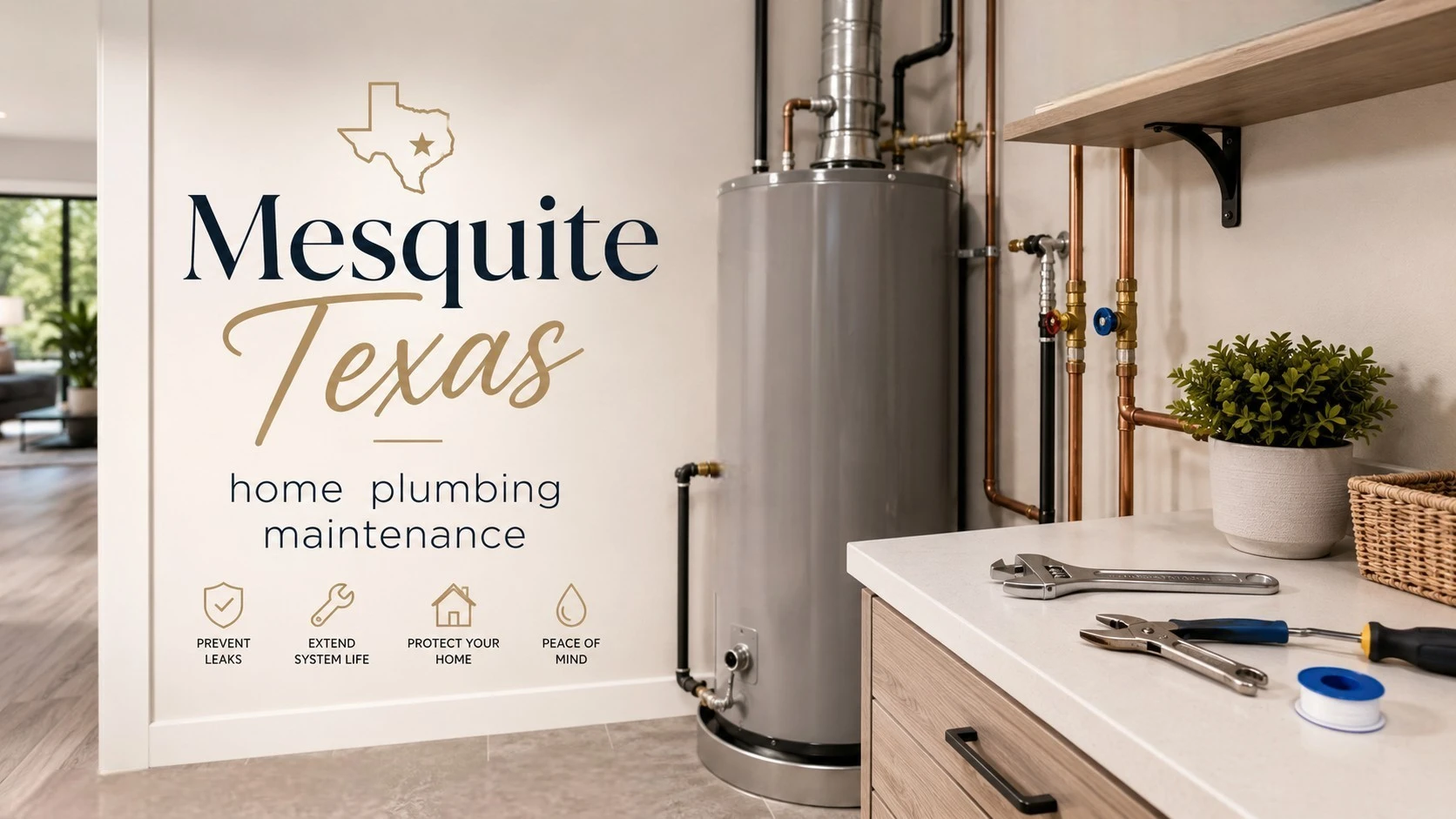
Thankfully, there are ways to prevent many plumbing problems before they get expensive. Avoiding the problem will save you a lot of cash. You can do this by knowing when your plumbing system is in good shape and checking a few simple things regularly. There is no need for expertise. With a few basic habits, your plumbing can stay in better condition throughout the year.
Know Where Your Shut-Off Valves Are
This is something all homeowners should know. Know your shut-off valves before an emergency happens. If your pipes break, you won’t have the time to search the whole house.
Where to look:
- Main shutoff valve — close to the water meter or where the water line goes into your house
- Shut off valve — behind or beside the base of each toilet
- Under-sink valves — under each bathroom and under each kitchen sink
- Water heater valve — at the top of the water heater unit
Turn off all the valves and turn them back on every six months. This helps to prevent them from becoming stuck. A stuck valve is of no use when disaster strikes. Make sure that every adult at home knows the location of the main valve.
Check for Leaks Every Month
Leaks can be big problems even when they start small. They use water, raise your water bill, and may damage cabinets, floors, or walls. Regularly look under sinks. Check for wetness, stains, or mold. Also look around the base of your toilets. Run your hand around exposed pipes. Anything that feels moist could indicate that there is a slow leak somewhere.
You should also check your water meter. Close all the water access points in the house. Wait and monitor the meter. If the numbers change while no water is being used, there is probably a hidden leak.
Do not wait. Contact a plumber immediately. You don’t want to deal with major water damage later, so it is best to catch leaks early.
Take Care of Your Drains
One of the most frequent plumbing issues is clogged drains. They can also be easily prevented. Never pour grease down the kitchen sink. The grease can cool, harden, and build up inside the pipes. Eventually it completely prevents water from flowing.
Install a strainer in the kitchen and bathroom. It prevents food, hair, and soap residue from getting into the pipes. Clean the strainer frequently. Once a month, run hot water down each drain.
Let’s also get to know what your drain-waste-vent, or DWV Plumbing Services system consists of. A DWV system removes wastewater from your house, preventing sewer gases from entering the home. Check for the main DWV system if all the drains do not flow simultaneously. This is no DIY solution. Have a trained plumber take a look at it.
Do Not Ignore Your Toilet
In the whole house, toilets can use a lot of water. Hundreds of gallons of water may be wasted if there’s a toilet leak. Frequently inspect toilets for problems.
This is a test you can do at home. The flapper is a rubber seal within the tank. As it gets old, it will not seal fully. Every time this occurs, the water seeps into the bowl from the tank. This may not be heard.
The way to check it is:
- Add a few drops of food coloring to the tank.
- Do not flush for a minimum of 10 minutes.
- If color appears in the bowl, the toilet is leaking. Flush afterward to avoid staining.
Flappers are inexpensive and easily replaceable. They can be purchased at most home improvement stores.
Never flush the improper materials, either. Keep this list in mind:
- No wipes, even those marked “flushable”
- No cotton balls or pads
- No paper towels
- No dental floss
- No medications unless the label specifically says they should be flushed
Flush toilet paper only. All others are trash. When the wrong items find their way into the pipes, they can create a blockage, often far down the line, and can cause a very expensive repair.
Take Care of Your Water Heater
Your water heater constantly works to keep providing hot water. It should get attention at least once a year. Over time, solid particles can settle at the bottom of the tank. These sediments will make the heater work harder and consume more energy. Remove that build-up by flushing the tank once a year.
Also check the temperature as well. It should be adjusted to 120°F. A higher setting can increase the risk of scalding and may speed up mineral buildup and corrosion. Don’t forget to check the pressure relief valve either. If it leaks, looks corroded, or does not work properly, have it checked or replaced.
Many traditional tank water heaters have an estimated lifespan of around 8–12 years. If one reaches its age limits, it is better to plan its replacement before it breaks.
Watch Out for Low Water Pressure
Low water pressure is an irritation. It also may be a red flag sign. This could indicate that there is a leak somewhere in the system. This may also point to mineral deposits within the pipes.
Look at the aerators on the faucets first. These are the tiny screens on the end of each faucet. Take them out and clean out debris. This will often be the only thing required to fix the pressure problem immediately. If the pressure is low all over the house, contact a plumber. The problem may be more serious than a clogged aerator.
Simple Habits Make a Big Difference
There’s no need for any special skills to keep your plumbing in working order. It is only a matter of consistency. Check things on a regular basis. Solve minor issues and prevent major ones. Understand when a job requires a professional and don’t be afraid to call.
People in Mesquite, who follow these basic tips can save money on plumbing repairs over time. It will take only a few minutes today, but it can save a lot of money tomorrow. Take one step at a time and make it part of your regular home routine.