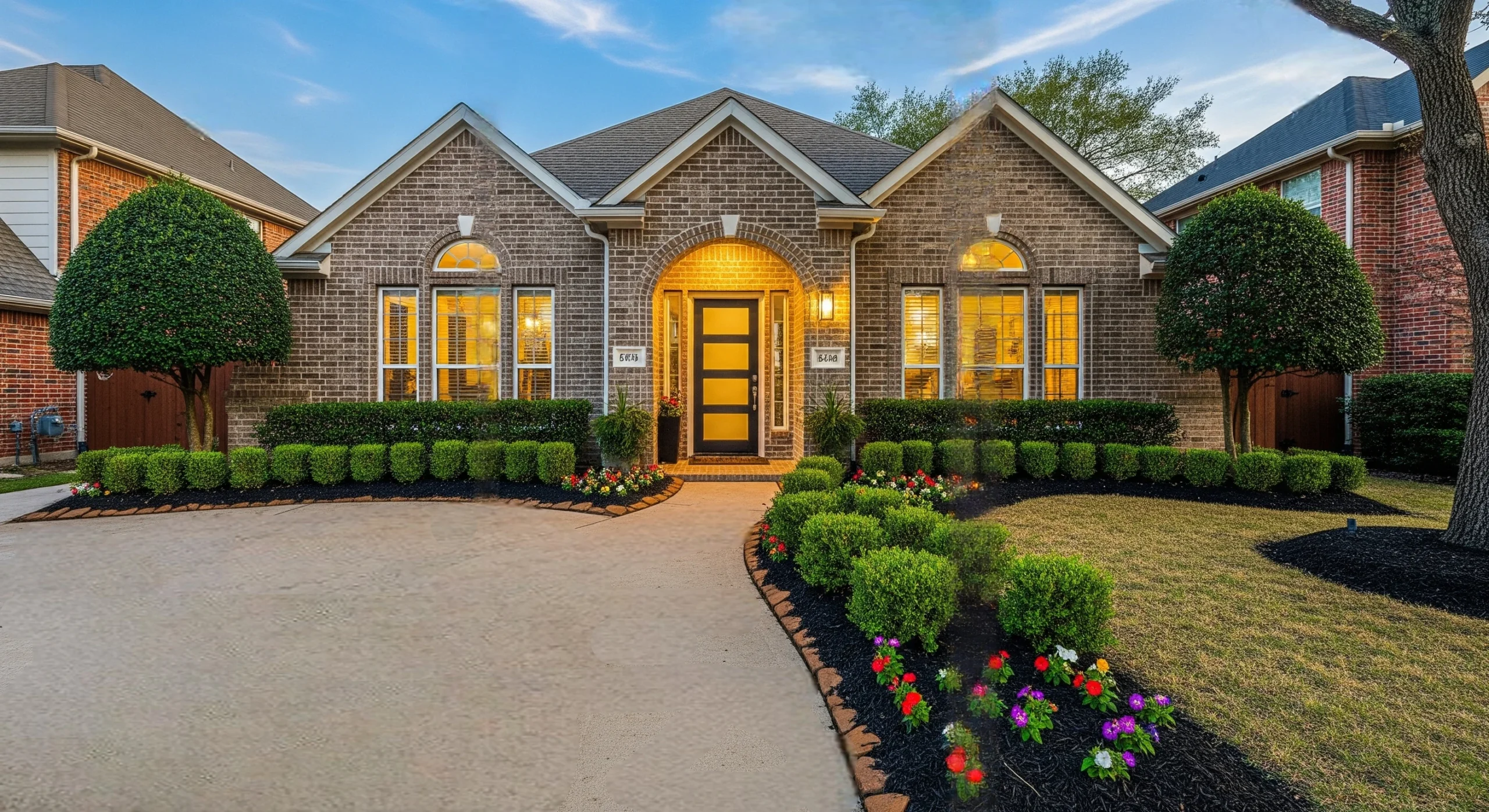
When it comes to Texas real estate, Dallas and Austin usually get most of the attention. If a major sale makes headlines, it’s probably happening in one of those two metros. But the latest LoopNet report on 2026’s top multifamily markets suggests it may be time to broaden that focus.
While national headlines often spotlight Washington, D.C., and Las Vegas, Texas investors should pay close attention to the affordability rankings. Out of the 50 largest U.S. cities, two Texas markets stand out as lower-cost entry points.
Top Entry Points: El Paso and San Antonio
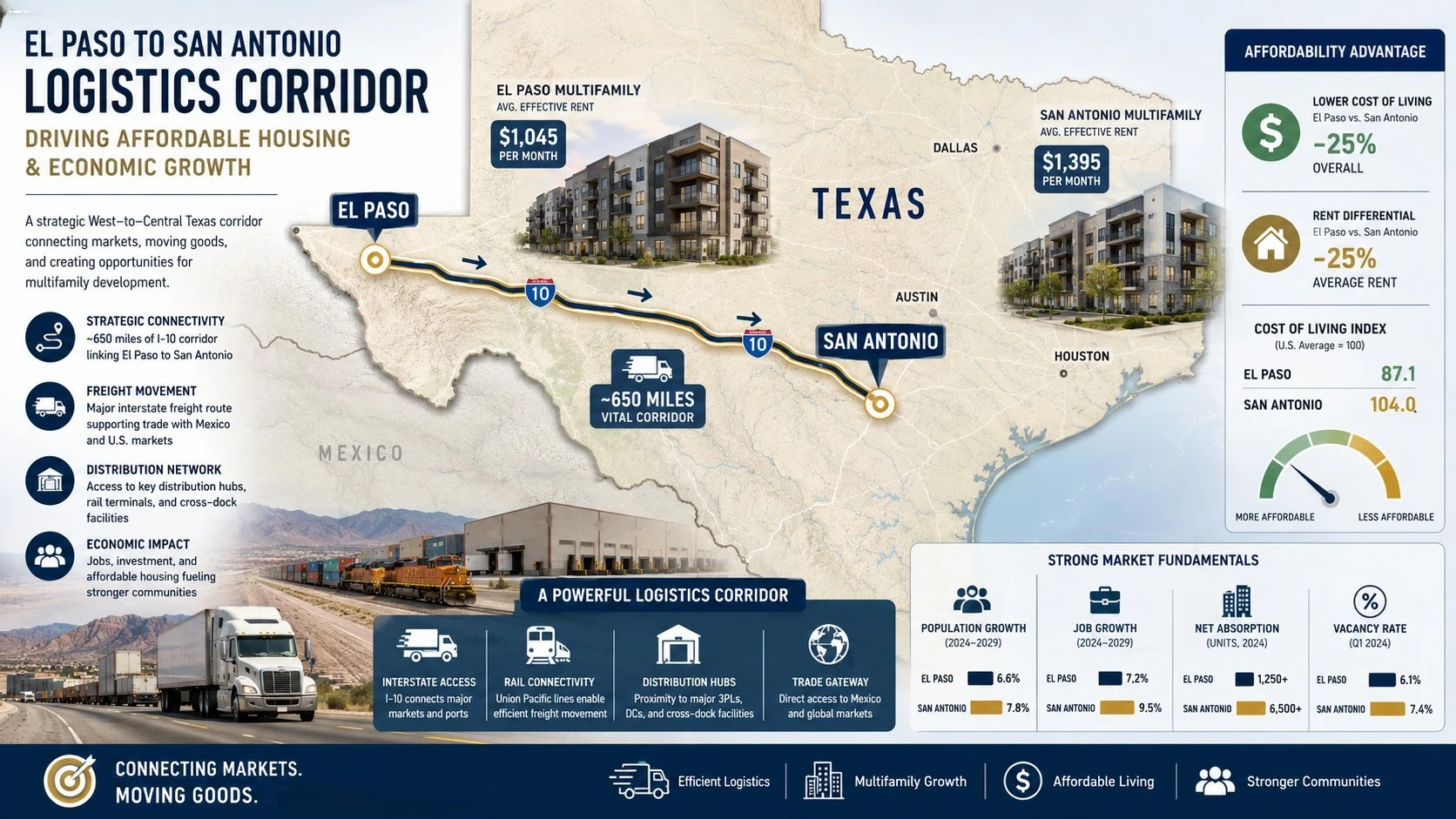
LoopNet’s study weighed cap rates, property taxes, inventory, and lifestyle factors to compare investment potential. While yield-chasers may still look to Detroit for double-digit cap rates, investors looking for steady Texas markets and lower operating costs should keep El Paso and San Antonio on the radar.
El Paso claimed the top national spot for affordability, with an average multifamily listing price of $631,250. This is not just a low-price land play. It is also tied to cross-border trade, logistics, and the broader nearshoring story. While uncertainty around trade policy remains a factor, El Paso is still well positioned to serve the workforce connected to the border’s logistics and industrial corridors.
For a North Texas investor used to million-dollar teardowns in Preston Hollow, securing a cash-flowing asset for under $700,000 is hard to ignore.
San Antonio also landed in the top five for affordability, with an average asking price of $1.29 million. San Antonio’s appeal goes beyond price. Projects like the $65 million Mira at the Pearl show continued investment in walkable, mixed-use neighborhoods, even as investors need to watch vacancy and concessions closely.
The city offers big-city perks at a clear discount compared with Austin, though investors still need to underwrite vacancy and concessions carefully.
The Dallas Shift: From Bargain Market to Quality Play
So, with more affordable options in El Paso and San Antonio, is Dallas losing its edge?
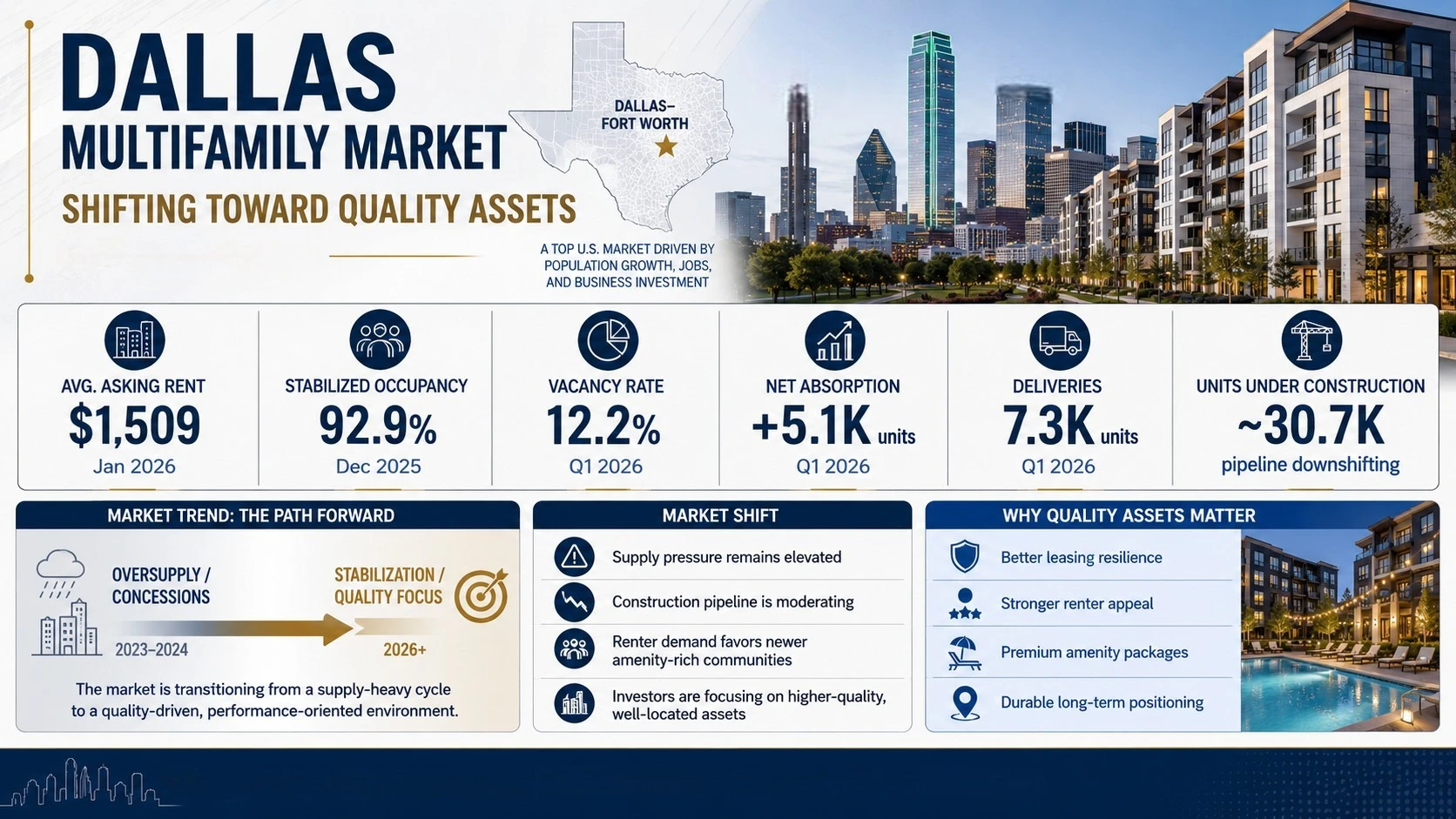
Not really. The era of cheap DFW real estate is mostly over, but 2026 data shows Dallas becoming a more mature market where location, asset quality, and tenant profile matter more than bargain pricing.
The DFW metroplex still benefits from strong renter demand, but the market is also working through a large supply wave. Developers are not just building units. They are competing harder to fill them. Data shows that cities with strong lifestyle metrics, including easy park access and James Beard-recognized dining, tend to have stronger renter appeal. That is where Dallas still has an edge.
With Harold Simmons Park moving forward and the continued draw of neighborhoods like Bishop Arts, these amenities can help support demand even as supply stays elevated. Dallas is no longer a simple value play. In 2026, it is better viewed as a quality-focused market for investors who want long-term appreciation and higher-income tenants.
The 2026 Supply Reset

One of the clearest takeaways from current market data is the supply reset. Pandemic-era construction created a heavy wave of deliveries in 2024 and 2025, but that pipeline is starting to thin.
Completions are dropping. The U.S. is expected to see fewer new multifamily deliveries in 2026 as construction starts slow and the under-construction pipeline shrinks.
Concessions are still in play. Austin and Dallas have seen heavy rent concessions, including six to eight weeks of free rent in many Texas submarkets. If demand keeps catching up and supply keeps cooling, those deals could become less common.
The window to buy into a softer market may not stay open forever. With fewer new units delivering, well-located Class B and C assets in San Antonio and El Paso could see stronger rent growth in 2027 and 2028, especially if investors buy at a disciplined basis today.
Portfolio Diversification for North Texas Investors
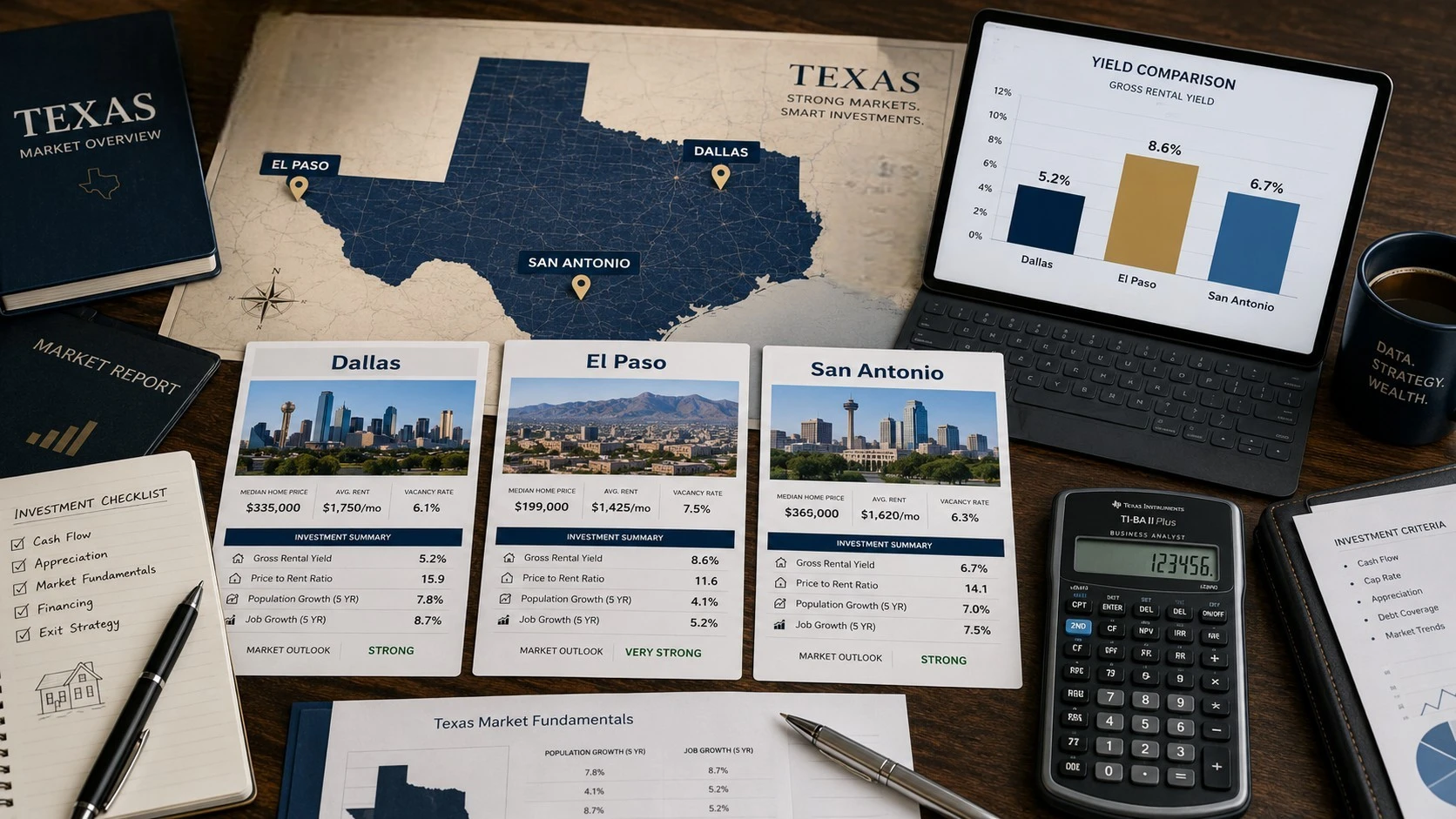
For North Texas investors, this data points to a practical diversification strategy.
Even if you are priced out of your local 8-plex market, San Antonio and El Paso offer a way to stay under familiar Texas regulations while chasing better yield-on-cost. In El Paso, cap rates can still run meaningfully higher than what most investors see in the Dallas urban core.
Property taxes remain a hot topic. They may be higher than Denver’s 0.44%, but the lack of state income tax and broad inventory still make Texas attractive for many investors compared with coastal markets like Boston or San Francisco.
In El Paso specifically, multifamily real estate is closely tied to the industrial and logistics story. Targeting assets near last-mile distribution centers and employment corridors is a smart place to start in 2026.
The Long View on Texas Real Estate
There is plenty of upside in Texas multifamily, but the best move depends on your strategy. If you want stability, strong tenant demand, and exposure to a major Sun Belt market, Dallas is the clear choice. If you want to scale your portfolio cost-effectively, it is worth looking closely at El Paso and San Antonio.
For investors, the story comes down to basis, cash flow, and demand.. Based on the 2026 data, the future of Texas multifamily still looks strong, but the better story is its range. Dallas, San Antonio, and El Paso give investors very different ways to play the same state.