- The Research Behind Traffic and Houston Home Value
- Why Houston Accident Data, Not Just Traffic Volume
- How This Shows Up in Houston Buying Decisions
- What This Means for Houston Sellers and Agents
- The Bigger Picture
- How Houston Appraisers Factor Location Risk Into Valuations
- What Long Term Houston Homeowners Often Notice Firsthand
- How This Connects to Broader Houston Neighborhood Planning
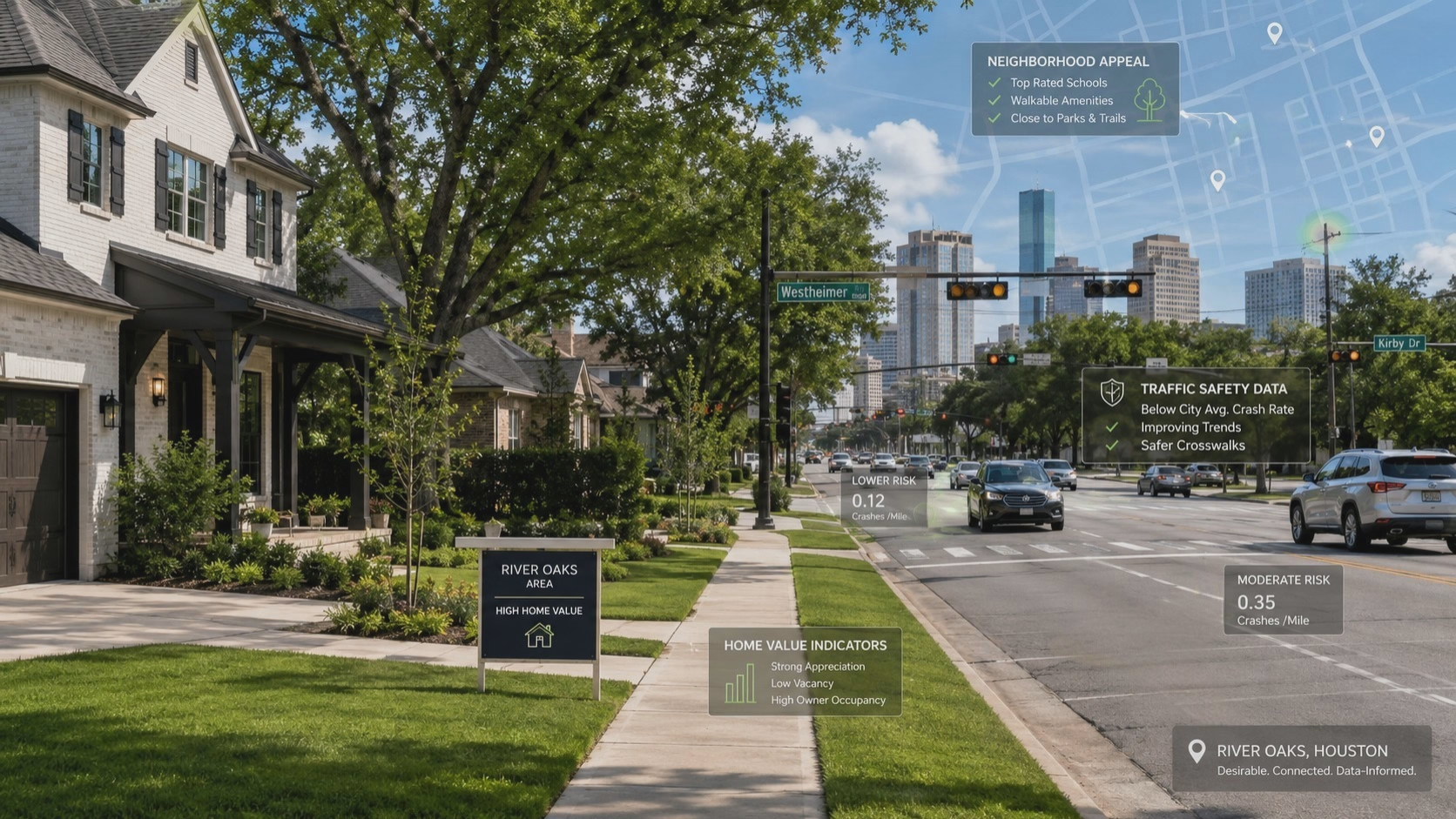
Buyers rarely ask about crash data when touring a Houston home, but the frequency of accidents on a street or at a nearby intersection can influence what that home is worth. The connection is not always obvious, yet research has consistently shown that traffic safety affects how buyers perceive a neighborhood.
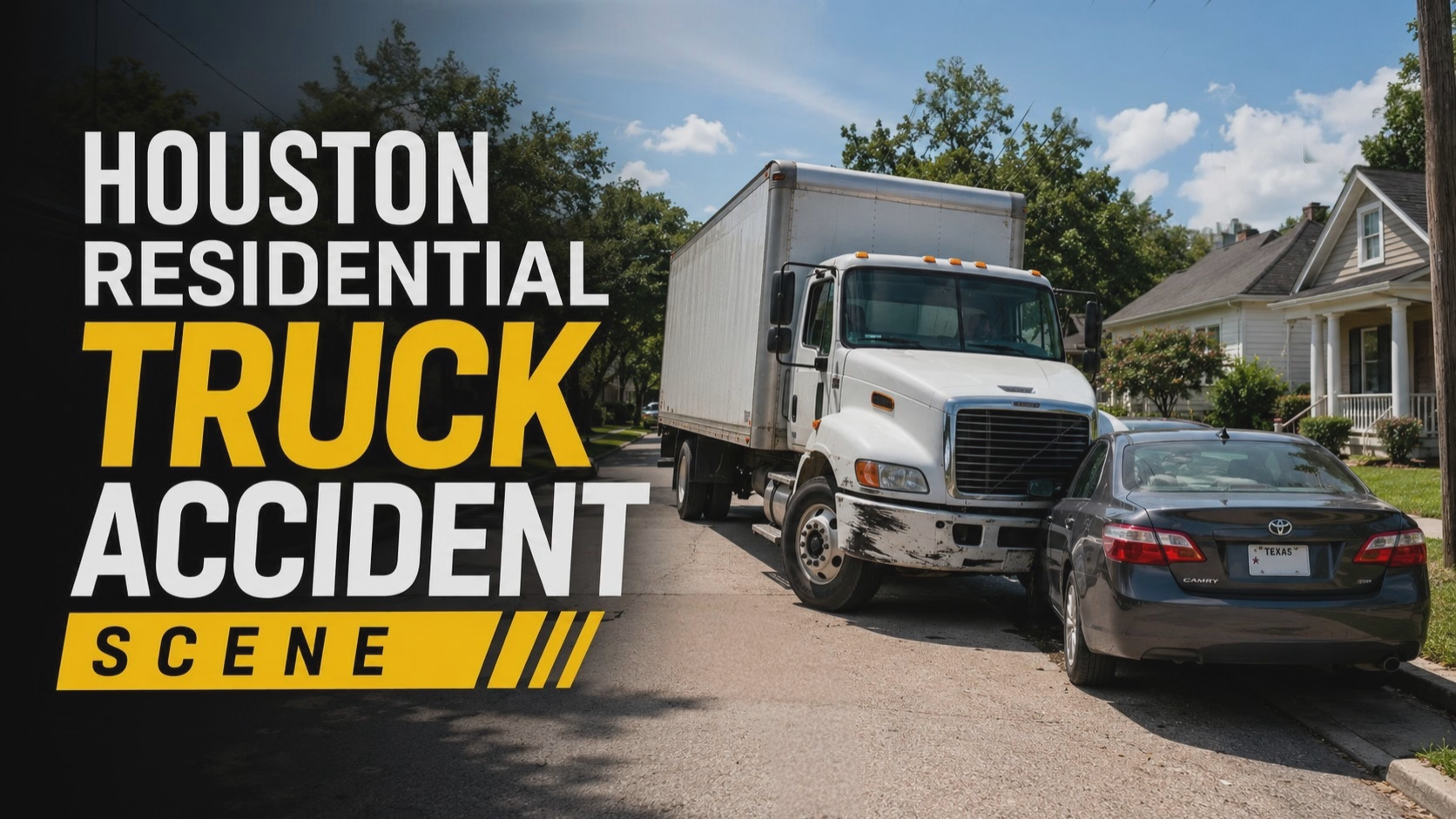
In Houston, certain highways, intersections, and commercial corridors recur in serious crash investigations because they account for a disproportionate share of severe collisions.
Attorneys who handle these cases, including pedestrian accident lawyers at Sutliff & Stout, often see the same high-risk Houston locations appear across multiple claims involving both pedestrians and motorists.
Founding partner Hank Stout, who has been recognized by H Magazine and Houstonia Magazine as one of Houston’s top personal injury lawyers and holds a 10.0 AVVO rating, has built a practice around investigating the evidence and roadway conditions that contribute to these serious crashes.
Those recurring crash patterns are the same conditions that buyers, sellers, and appraisers may indirectly factor into a property’s long-term desirability and value.
The Research Behind Traffic and Houston Home Value
A widely cited freeway truck-traffic study found that a one percent increase in truck traffic reduced nearby home prices by an estimated two thousand to twenty-seven hundred dollars on a four hundred twenty thousand dollar house near a freeway.
Separate research on traffic noise found that home prices dropped in direct relation to how many decibels above baseline a street carried, with each single decibel increase in traffic noise corresponding to a small but consistent price discount.
These are not isolated findings.
The broader body of hedonic pricing research, which studies how individual property features affect sale price once everything else is held constant, consistently finds that busier, higher accident roads carry a price penalty compared to quieter streets in the same general area.
Why Houston Accident Data, Not Just Traffic Volume
Traffic volume alone tells only part of the story. A Houston road can carry heavy traffic and still feel safe if speeds are controlled and intersections are well designed.
Accident frequency captures something traffic counts alone miss, actual documented risk, which is exactly why crash reports and speed study data appear alongside traffic counts in formal property value disputes.
Property tax appeal documentation regularly includes accident reports, rush hour video, and official traffic count data specifically because assessors and review boards recognize these records as legitimate evidence of a location factor that affects value, separate from the condition of the house itself.
How This Shows Up in Houston Buying Decisions
Buyers may not consciously research crash statistics before making an offer, but the underlying caution shows up anyway. A corner lot on a known cut-through street often sits longer on the market than a comparable interior lot on a quiet cul-de-sac.
Homes near a documented serious accident intersection frequently see lower offers, even when buyers cannot articulate exactly why the location feels less desirable.
From the evidence review perspective, attorneys who regularly gather official crash data for injury cases know firsthand how much documented accident history exists for specific stretches of road, information that rarely reaches the average home buyer but consistently shapes market behavior anyway.
What This Means for Houston Sellers and Agents
Sellers on a known problem corridor are not without options. Highlighting genuine mitigating factors, such as a fenced yard, mature trees providing a visual and sound buffer, or a setback from the road, can help offset some of the perceived risk.
Agents representing these listings benefit from being upfront about the location rather than hoping buyers overlook it, since transparency tends to produce smoother negotiations than a buyer discovering accident history independently after already making an offer.
The Bigger Picture
Car accident data is not just a legal or safety statistic. It is a quiet but real input into how homes get priced, marketed, and negotiated across Houston and every housing market with meaningful traffic variation between streets.
Understanding this connection helps both buyers and sellers make more informed decisions about a factor that shapes value long before anyone mentions square footage or finishes.
How Houston Appraisers Factor Location Risk Into Valuations
Professional appraisers rarely list crash statistics as a standalone line item on a valuation report, but the underlying influence shows up in the comparable sales they select and the adjustments they apply.
Two nearly identical homes a few streets apart can appraise differently once an appraiser accounts for a busier through street, a lack of buffer landscaping, or proximity to a documented high accident intersection.
This is part of why comparable sales analysis, rather than a simple square footage calculation, remains the standard approach to valuation.
Location factors, including road safety, get absorbed into the comparable selection process even when they are never explicitly named in the final report.
What Long Term Houston Homeowners Often Notice Firsthand
Residents living for years along a busier Houston corridor often develop a detailed, informal sense of exactly where and when crashes tend to happen nearby, a specific intersection that floods during heavy rain and causes rear end collisions, or a stretch where commuter traffic consistently runs a stale yellow light.
This lived experience frequently gets shared informally with prospective buyers during open houses, even when it never appears in any official listing disclosure.
Prospective buyers who take the time to ask current residents directly about traffic patterns and any accident history they are aware of often gain insight that no online data source captures quite as clearly, since long term residents accumulate a kind of practical, day to day knowledge that never makes it into any official report.
How This Connects to Broader Houston Neighborhood Planning
Cities increasingly use accident data to prioritize infrastructure improvements, adding turn lanes, adjusting signal timing, redesigning intersections, improving pedestrian crossings, or adding sidewalks and curb ramps at documented high risk locations.
A Houston neighborhood actively working through a traffic safety improvement plan may carry temporary uncertainty for buyers, but it can also signal future value improvement once the changes are complete and accident rates on that stretch begin to decline.
Checking whether the City of Houston, Harris County, or TxDOT has any planned traffic safety improvements for a specific corridor can add useful context beyond just the current accident history alone, since a street with a documented problem and an active improvement plan tells a very different story than one with the same problem and no plan in place at all, particularly for a buyer weighing a purchase decision over the next several years rather than just the current moment.