- How Texas Premises Liability Works
- The Specific Risks That Generate Claims
- Parking Lot Crashes
- Poor Lighting and Negligent Security
- Drainage Failures in Houston
- Mixed-Use Developments and 24 Hour Security Demands
- What the Numbers Show
- Practical Risk Management for Texas Commercial Property Owners
- Responding to Known Crime Patterns
- Reviewing Insurance Coverage
- Reviewing Lease Indemnification Provisions
- Final Takeaway
Texas commercial real estate professionals, like their counterparts across the country, think in terms of market metrics and lease structures, but they also need to be cognizant of premises liability to protect their investments.
Invitees include shoppers and may include retail tenants’ customers and other business visitors, and property owners owe them the highest legal duty of care, which requires active property inspections and immediate remediation of hazards.
Texas courts, however, often require temporal evidence in constructive notice cases to establish liability, that is, how long the danger existed. In sprawling, car dependent markets like Houston and Dallas Fort Worth, exterior spaces present acute risks.
Ignored crime data, or broken lighting, can quickly trigger massive negligent security suits. Ultimately, a proactive and well documented maintenance program is an investor’s best defense against catastrophic personal injury litigation.
How Texas Premises Liability Works
Texas premises liability law is very specific. The legal duty owed by a property owner or occupier to an injured party is determined in large part by the party’s status on entering the property.
The law divides visitors into three categories:
- An invitee enters the property for a purpose directly related to the owner’s business activities.
- A licensee is someone who has permission to be on the premises but is there for their own purposes, such as a social guest.
- Trespassers, of course, are there without any legal right or permission at all.
Invitees in Commercial Real Estate
When you look at commercial real estate bustling shopping centers, sprawling office parks, hotel parking garages, and retail strip centers the vast majority of people on site fall into that first category. Virtually every customer, tenant, delivery driver, and visitor may qualify as an invitee.
Consequently, the property owner owes them the highest duty of care recognized under Texas law. Owners are legally required to exercise reasonable care to protect these invitees from dangerous conditions that the owner either explicitly knew about or should have discovered through a reasonable, routine inspection.
It bears stating that this legal obligation does not mean perfection in the absolute sense. Property owners are not expected to be able to predict every conceivable mishap prior to it occurring; they are only expected to exercise reasonable care under the circumstances.
But reasonable care in the context of a huge 500 space surface parking lot in Houston or a dense, multi story parking structure in Uptown Dallas is not an easy standard to meet. It requires a meaningful, ongoing level of attention to infrastructure, specifically lighting, drainage, surface conditions, and security measures.
When management neglects these areas and someone is seriously injured as a result, the legal and financial consequences for the ownership group can be devastating.
Parking Lots and Exterior Spaces as Legal Blind Spots
Often, the biggest blind spots for commercial property owners are located right outside their front doors. Car accident lawyer at Schechter, Shaffer & Harris, LLP, a firm that routinely handles complex vehicle and premises liability cases across the Houston metropolitan area, has seen this play out time and time again. The firm handles a significant volume of cases involving violent assaults, pedestrian injuries, and vehicle crashes in commercial parking facilities.
“Property owners often assume that liability is limited to slips and falls inside the building,” a firm representative noted. “In reality, the parking structure and surface lot are extensions of the premises, and the duty of reasonable care applies to all of it.”
Whether a crash happens because of poorly designed traffic flow and missing stop signs, or an assault occurs because property managers ignored burned out security lights in a high crime area, the exterior of a building carries just as much risk as the interior. For commercial real estate investors, treating the parking lot with the same level of care as the main lobby is an absolute necessity.
The Specific Risks That Generate Claims
Managing a commercial property means dealing with a lot of moving parts, but certain types of accidents happen so frequently in Texas that owners and managers absolutely must plan for them. Ignoring these recurring hazards isn’t just a matter of deferred maintenance; it actively exposes ownership to serious legal and financial liability.
Parking Lot Crashes
Take parking lot crashes, for example. People often underestimate the danger of a crowded commercial lot. You are dealing with an unpredictable mix of pedestrians weaving between parked cars, drivers backing out with limited visibility, and frustrated commuters speeding through aisles to bypass traffic. This chaos produces a steady stream of serious injuries.
If an accident occurs because a property manager neglected to repaint faded lane markings, trim back landscaping that obstructed sightlines, or install necessary speed bumps, the property owner can easily share the blame for the crash.
Poor Lighting and Negligent Security
Lighting presents another massive vulnerability. A dark parking garage or an unlit surface lot is dangerous enough when it comes to accidental trips and falls, but it also creates a haven for criminal activity.
Texas courts have firmly established that if there is a foreseeable pattern of similar criminal activity, evaluated through factors such as proximity, recency, frequency, similarity, and publicity, a common reality in certain high crime corridors across Houston and the Dallas Fort Worth metroplex they must take reasonable steps to protect their visitors.
Leaving security lights burned out when you know assaults or break-ins are happening nearby is a direct invitation for a negligent security lawsuit.
Drainage Failures in Houston
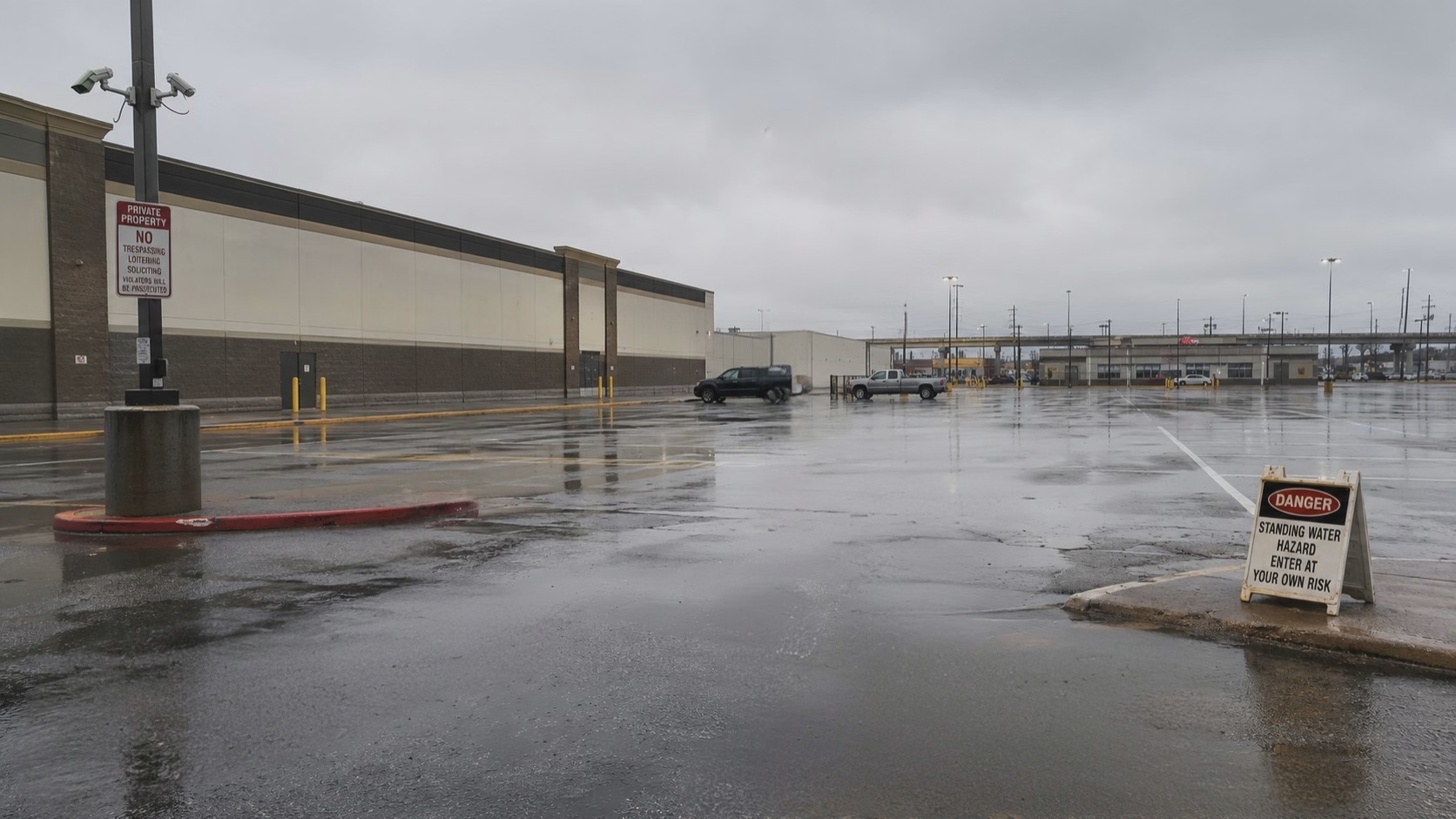
In Houston, property owners also face a highly specific risk you rarely see in other major real estate markets: severe drainage failures. A heavy storm can quickly turn a poorly graded parking lot into a hazard zone where cars are destroyed and people are physically endangered while trying to navigate deep standing water.
If an owner knows their lot routinely floods and does nothing to address the underlying drainage issue, they can be held legally responsible for the resulting damages.
Mixed-Use Developments and 24 Hour Security Demands
Finally, the explosion of mixed-use developments has completely rewritten the rules for property security. Thriving neighborhoods like Houston’s Montrose and Midtown, or DFW’s Uptown and Legacy districts, combine apartments, restaurants, retail, and parking into a single, high traffic footprint.
Because people are living, shopping, and dining in the same space around the clock, the security demands are exponentially higher than those of a standard, single use office building. Property managers must anticipate the special risks of these ever-changing 24 hour environments to keep everyone safe.
What the Numbers Show
According to the Insurance Information Institute, commercial general liability insurance protects businesses from financial loss when they are liable for bodily injury, property damage, or personal and advertising injury caused by services, business operations, or employees. For commercial real estate owners, that makes premises-related incidents, including parking lot injuries, vehicle damage, and security-related claims, a core risk rather than a side issue.
Because Texas is heavily dependent on personal vehicles and boasts a massive inventory of commercial real estate, the state naturally generates a high volume of these injury claims.
This isn’t just a legal headache; it’s a structural financial issue. For institutional investors and Real Estate Investment Trusts (REITs) holding properties in Texas, these liability losses hit the bottom line twice. They don’t just pay out on the claims themselves they also face skyrocketing insurance premiums and a shrinking pool of available coverage.
Insurers have become very cautious about underwriting commercial property risk in markets that have had a high frequency of claims. As a result, insurers are now applying a very high degree of underwriting scrutiny to commercial real estate assets in Texas as they try to minimize their exposure to loss.
Practical Risk Management for Texas Commercial Property Owners
A commercial real estate investment must be protected, particularly in Texas. Beyond collecting rent, you must be proactive in managing risk, and the first step is to conduct regular, fully documented inspections of all parking areas.
Detailed logs are absolutely critical for:
- lighting checks
- surface condition assessments
- drainage maintenance
These written records will be your tangible proof of reasonable care in the event of a liability claim. If you don’t have them, you won’t be able to prove that you were paying attention to the safety of the property and you’ll basically hand an injured plaintiff an easy win in a court of law.
Responding to Known Crime Patterns
Property managers not only have to maintain the physical but need to be proactive to known crime patterns rather than reactive. The legal system considers the owner to be on notice of the risk if the property or its immediate vicinity has been the scene of criminal incidents. The very basis of a devastating negligent security lawsuit is not taking responsive action after getting that notice.
Owners should take reasonable deterrents to combat this that might include:
- upgrading exterior lighting
- increasing camera coverage
- tightening perimeter access controls
- working directly with local law enforcement
Reviewing Insurance Coverage
Financial safeguards are just as important as physical ones, which means maintaining and regularly reviewing adequate insurance coverage is non negotiable. A commercial general liability policy that perfectly suits a small retail strip will be dangerously inadequate for a major mixed use development.
With recent insurance-market reports documenting continued pressure on liability and commercial real estate insurance costs, securing robust, appropriate initial coverage is ultimately far cheaper than paying out of pocket for an underinsured, catastrophic claim.
Reviewing Lease Indemnification Provisions
Furthermore, owners should carefully review the indemnification provisions embedded in their tenant leases. The legal allocation of liability between a landlord and a commercial tenant for parking area incidents varies wildly depending on the specific lease form used, and many standard boilerplate leases leave massive legal blind spots.
Having a real estate attorney review and tighten these provisions before an incident occurs is infinitely less expensive than fighting over the allocation of fault in a courtroom afterward.
Final Takeaway
Ultimately, Texas commercial real estate represents a highly lucrative asset class, but it carries serious, unavoidable legal obligations. Owners and managers who truly understand and prepare for these responsibilities are in a much stronger position to protect both the physical safety of their tenants and the long-term financial health of their investment.