When President Trump authorized a tariff on Canadian lumber, the act was hailed as a way to protect domestic industry in a time when cheaper imports were drawing more and more dollars across our borders and overseas.
However, with the coronavirus wreaking havoc on labor and staffing, and many sawmills going idle in anticipation of a slowdown due to COVID-19, U.S. sawmills struggled to keep up with quickly increasing housing demand.
Now that we’re approximately 20 months into the global pandemic, one would think that America’s sawmills would be well on their way toward balancing the demand for lumber with robust supply. However, that’s not the case. At all.
Compounding the labor shortage and domestic sawmills that are slow to catch up, the Biden administration went ahead and almost doubled the tariff on Canadian lumber imports last November. Combined, these two factors are causing a major squeeze on housing starts — a problem that could prolong America’s housing affordability concerns.
In a report detailing the problem, Eye on Housing, the National Association of Home Builders’ blog, provided numbers from several agencies that show just how dire the situation remains.
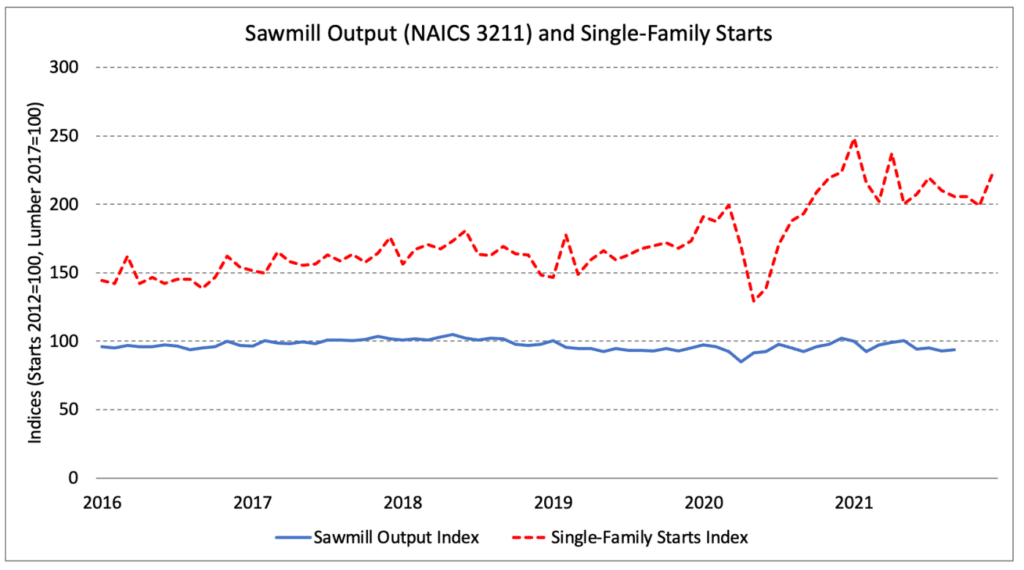
“These figures clearly indicate that domestic sawmills remain unable to answer the bell on housing demand,” said Phil Crone, Executive Officer at the Dallas Builders Association. “With crippling tariffs that they advocated for hurting the ability of Canadian lumber to help solve the problem, housing is less attainable for thousands of families.”
While lumber costs did drop precipitously in 2021, figures show that prices have made a drastic rebound since then, coming close to its 2020 peak. So if you didn’t stock up when lumber prices were down, your luck may have run out.
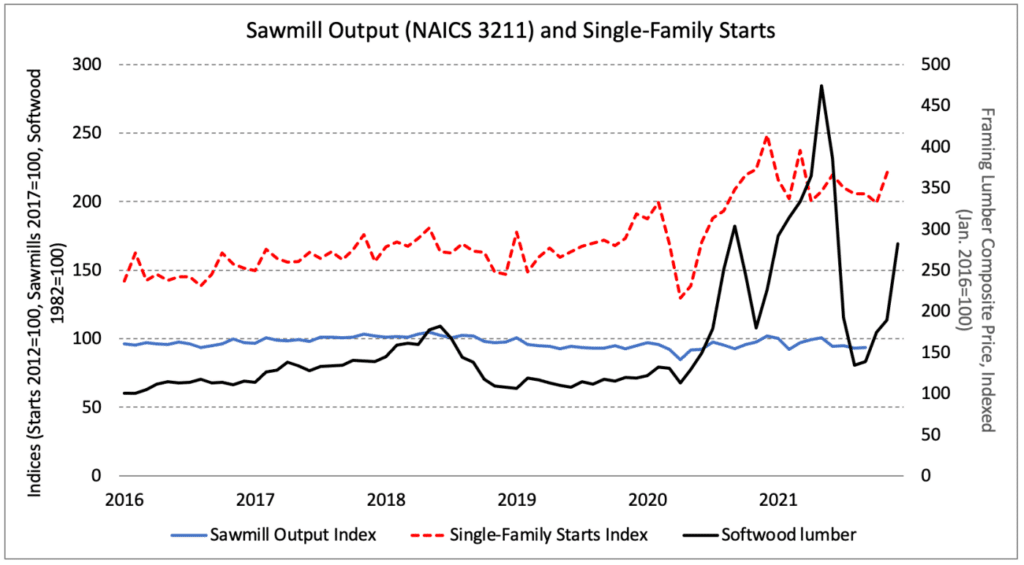
“Now that same house you could have bought maybe 18 months ago for 220 is now probably close to 280,” said Rino Soave, founder of Infinity Homes in a WXYZ report. “So it is a big spike. And the fear is the attainability of housing is going to be out of reach for some people.”
Wood Framing Alternatives
While a significant number of homes in several regions use materials such as concrete and steel to provide the framing for a residential structure, wood framing is still very much the dominant choice for American builders.
According to the NAHB, approximately 90 percent of new homes completed in 2019 were wood-framed. Another 10 percent were concrete-framed homes, and less than half a percent were steel-framed.
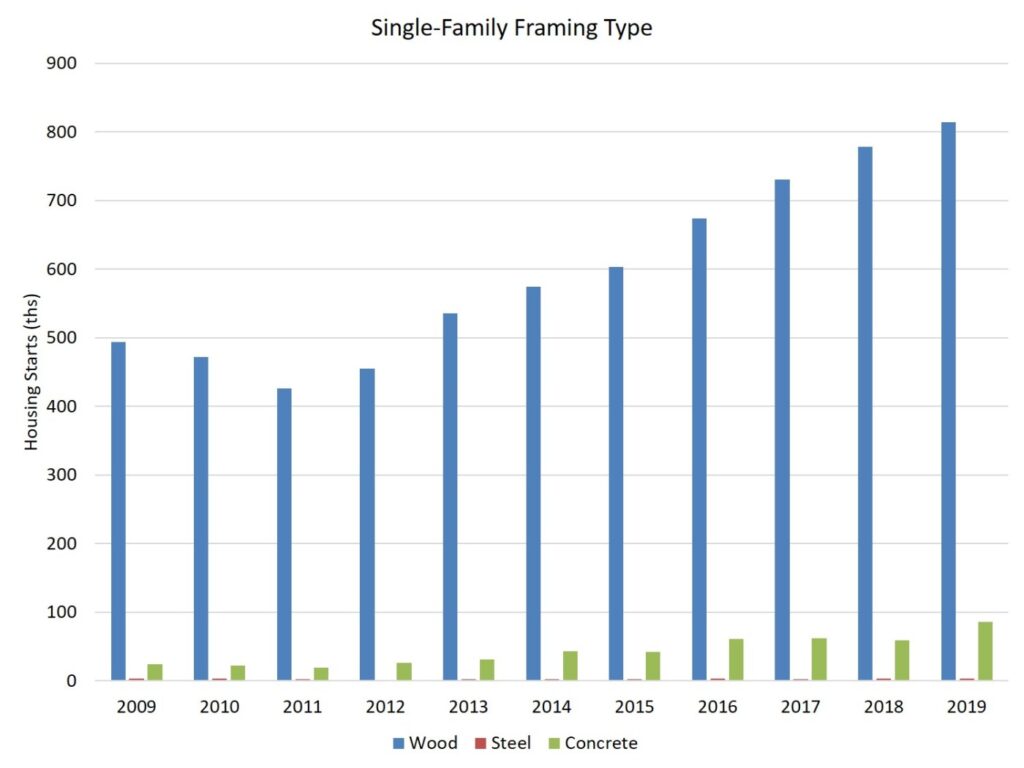
However, concrete-framed homes experienced accelerated growth. The total was up 46%, increasing from 59,000 completions in 2018 to 86,000 in 2019. The gains over the last 10 years are more striking. From 2009 to 2019, the concrete-framed total increased by 258% and the market share doubled from 5% to 10%.
Some of these gains came from a shift in geography. Concrete-framed homes are more common in the South. In fact, such homes made up 17% of all homes completed in the South. But the shift to home building in the South was not the only factor, as the share of all homes in the U.S. built in this region increased from 50% in 2009 to just 55% in 2019. The national gain for concrete-framed housing was also driven by share gains within the South itself, rising from 8% in 2009 to 17% mentioned above.
Hurricane-related building codes are thus part of the explanation, but the run-up in lumber prices in 2018 may have also moved the needle. And given the historic acceleration of lumber prices in 2020, more builders will be investigating alternative framing methods, including steel and concrete.
Robert Dietz, Eye on Housing