
- Warm Air Coming From the Vents
- Weak or Inconsistent Airflow
- Strange Noises During Operation
- Unpleasant or Musty Odors
- Frequent Cycling On and Off
- Rising Energy Bills Without Increased Usage
- Moisture or Leaking Around the Unit
- The Thermostat Doesn’t Match the Room Temperature
- The System Struggles to Keep Up on Hot Days
- Reduced Performance After Years of Reliable Use
- Final Analysis
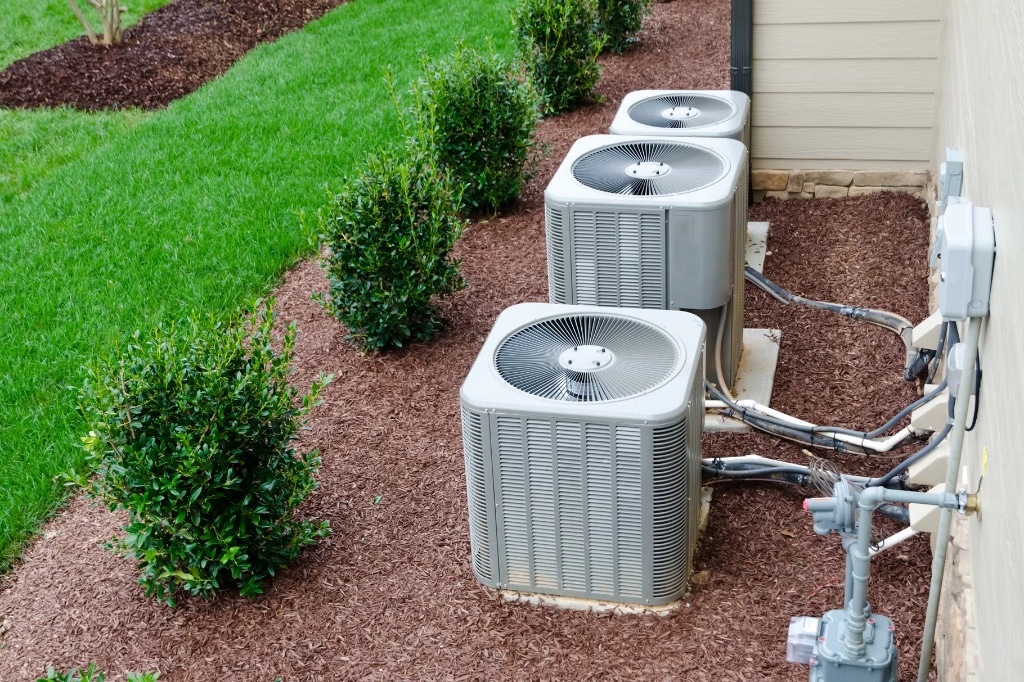
When an air conditioner starts acting up, many homeowners assume the worst: that it’s time to shop for a new unit. But full replacement isn’t always necessary, and often isn’t the most cost-effective choice. According to the U.S. Department of Energy, the typical lifespan of a central air conditioner is approximately 15 to 20 years, and many performance problems that arise well before that point can be resolved through targeted repairs rather than a complete system replacement. Learning to recognize the signs your AC needs professional repair can save you thousands of dollars and help you avoid an unnecessary replacement.
This article walks through ten common indicators that your system needs attention, what typically causes them, and how to tell the difference between a repairable issue and one that genuinely points toward replacement.
Warm Air Coming From the Vents
If your air conditioner is running but the air coming out feels lukewarm or barely cool, something in the cooling process is failing to complete its job. This is often one of the earliest signs your AC needs professional repair, and it’s rarely a reason to replace the whole unit. Common causes include a refrigerant leak, a failing compressor, or a blocked airflow path. A technician can usually diagnose the exact cause with a pressure test and a visual inspection within an hour.
Weak or Inconsistent Airflow
Airflow problems are different from temperature problems, though the two are often confused. If some rooms feel properly cooled while others stay warm, or if airflow from the vents feels noticeably weaker than it used to, the issue is frequently mechanical rather than systemic. Duct leaks, a clogged air filter, or a struggling blower motor are the usual suspects. The Environmental Protection Agency estimates that duct leakage alone can account for a 20 to 30 percent loss in system efficiency in a typical home, which makes this a repair worth addressing quickly rather than ignoring.
Strange Noises During Operation
Every AC unit makes some operational sound, but grinding, squealing, rattling, or banging noises are not normal. These sounds usually point to a specific mechanical issue: a loose or worn belt, a failing motor bearing, or a part that has come loose inside the housing. Because these problems are often isolated to a single component, they tend to be inexpensive to fix compared to the cost of a new system.
Unpleasant or Musty Odors
A musty smell when the AC runs often signals mold or mildew growth inside the ductwork or on the evaporator coil, typically caused by excess moisture that isn’t draining properly. A burning smell, on the other hand, can indicate an electrical issue and should be treated as urgent. Either way, odor issues are almost always addressed through cleaning, drainage repair, or electrical component replacement — not full system replacement.
Frequent Cycling On and Off
Short cycling, where the unit turns on and off more frequently than normal, places extra strain on the compressor and can shorten the system’s lifespan if left unresolved. It may be caused by a dirty air filter or malfunctioning thermostat, but refrigerant issues, electrical faults, or an improperly sized unit can also be responsible. When basic checks such as replacing the filter or reviewing the thermostat settings do not resolve the issue, short cycling is one of the signs your AC needs professional repair to identify and correct the underlying cause.
Rising Energy Bills Without Increased Usage
A sudden increase in your cooling costs, especially when your usage habits haven’t changed, is a strong indicator that your system is working harder than it should to maintain the same temperature. The U.S. Department of Energy notes that HVAC systems account for close to half of the average home’s energy use, so even a modest efficiency drop can show up clearly on a utility bill. In many cases, this points to dirty coils, low refrigerant, or a failing component — all repairable issues rather than signs of total system failure.
Moisture or Leaking Around the Unit
Some condensation around an outdoor AC unit is normal, particularly in humid climates. But pooling water, active leaks, or ice forming on the refrigerant lines are signs of a specific mechanical problem. Refrigerant leaks, a clogged condensate drain line, or low airflow across the evaporator coil are common causes, and each has a distinct, well-understood repair process.
The Thermostat Doesn’t Match the Room Temperature
If your thermostat reads 72 degrees but the room clearly feels warmer, the disconnect could stem from a miscalibrated thermostat, a sensor placement issue, or a broader airflow problem. This is worth investigating early, since a persistent mismatch often means the system is overworking to try to hit a target it can’t actually reach.
The System Struggles to Keep Up on Hot Days
It’s normal for any air conditioner to work harder during a heatwave, but if your unit consistently fails to bring the house to a comfortable temperature even after running for hours, that’s a signal worth taking seriously. This could relate to undersized ductwork, an aging capacitor, or reduced refrigerant charge — issues a technician can typically isolate and repair without replacing the entire system.
Reduced Performance After Years of Reliable Use
If a system that has run smoothly for years suddenly develops one or two of the issues above, it’s more likely experiencing a specific component failure than reaching the end of its usable life. Below is a quick reference for how to think about the ten signs discussed:
- Warm air from vents — often refrigerant or compressor related
- Weak or uneven airflow — usually ducts, filters, or blower motor
- Unusual noises — typically a loose or worn part
- Odd smells — moisture buildup or an electrical issue
- Frequent cycling — commonly a thermostat or filter problem
- Higher energy bills — often dirty coils or low refrigerant
- Leaks or ice buildup — usually drain line or refrigerant related
- Thermostat mismatch — calibration or sensor placement
- Struggling on hot days — capacitor, charge, or ductwork sizing
- Sudden decline after years of good performance — isolated component failure, not system-wide breakdown
In each case, the underlying issue is tied to a specific part or process, not the system as a whole, which is exactly what makes these problems repairable rather than replacement-worthy.
Final Analysis
Recognizing the signs your AC needs professional repair is less about diagnosing the exact mechanical fault yourself and more about knowing when a symptom warrants a closer look. Most of the issues outlined here — from odd noises to rising energy bills — stem from individual components that can be repaired without touching the rest of the system. Replacement generally becomes the more sensible option only when a unit is nearing or past its expected lifespan, or when repair costs begin to approach a significant portion of the price of a new system. Short of that, a proper inspection and diagnosis will usually tell you that the fix is smaller, and less costly, than you might expect