The first hard freeze of the season is the one that catches people off guard. One night your kitchen faucet runs fine, the next morning it sputters, then goes quiet. If you’ve lived in an older home for more than a year, you already know the pipes weren’t built for record cold snaps. So you shouldn’t wait for the weather to test them.
Here’s the good news. A weekend of prep work in late fall usually beats an emergency repair bill in January. Insulating exterior runs, mapping your shutoff valves, and knowing the early warning signs of a slow leak can carry you through even a rough winter. If you’re already hearing a faint hiss behind a wall or noticing soft spots under a cabinet, you want Leak detection in Central Arkansas professionals on the phone before that small sound becomes soaked drywall. This guide walks through what actually matters.
Get the prep done before the first hard freeze, not during it. Once temperatures stay below freezing overnight, you’re playing defense. The homeowners who sail through winter are the ones who did the boring stuff in October.
Why older homes are more vulnerable to cold snaps
New construction in most states has to meet energy codes that include pipe insulation in exterior walls. Older homes predate those codes. A 1960s ranch in Central Arkansas likely has supply lines running through exterior walls, unheated crawl spaces, and attics that stay cold all winter, with little to no insulation wrapped around them.
That’s the first vulnerability. The second is pipe material. Galvanized steel from the mid-20th century corrodes from the inside, which narrows the interior diameter and makes the pipe more prone to bursting when water freezes and expands. Copper fares better against corrosion, but it still splits under ice pressure. If you don’t know what’s behind your walls, a quick plumbing inspection is worth the diagnostic fee.
The third issue is airflow. Older homes often have unsealed gaps around foundation vents, dryer vents, and where pipes enter through rim joists. Cold air funnels straight up into the plumbing chase. Sealing those gaps with foam or caulk takes twenty minutes per gap and buys you real protection.
The warning signs that show up before a pipe bursts
Freezing pipes announce themselves in a predictable order. Catching them at step one or two saves you thousands.
- Reduced water flow at one fixture during a cold morning, which often means ice is building inside that specific line
- A faint banging or ticking when you turn on a tap, which points to a pressure change from a partial blockage
- Visible frost on exposed pipe under a sink or in a crawl space
- Damp patches on drywall, baseboards, or cabinet floors near a suspected line
- A musty smell that appeared out of nowhere, especially in a bathroom or laundry room
The window between “ice is forming” and “pipe has split” can be a few hours or a full day, depending on how cold it gets and how long the water sits stagnant. If you spot reduced flow at a single fixture, leave that faucet open to a slow drip. Moving water takes longer to freeze than still water.
The musty smell one is the one people ignore longest, and I get why. Kitchens and bathrooms smell weird sometimes. But if the odor shows up in winter and wasn’t there in fall, treat it as a plumbing signal, not a laundry problem. According to the National Weather Service, sustained freezing temperatures are more likely to happen in multi-day stretches than single overnight dips, which means any small drip behind a wall has real time to cause damage before the thaw.
A simple cold-weather checklist for your plumbing
Here’s the sequence I’d run through every October. Tight, doable, and cheap. Each item takes minutes, and together they cover most of what actually goes wrong.
- Locate the main shutoff. You want to know this in the dark, with wet hands. Show everyone in the household.
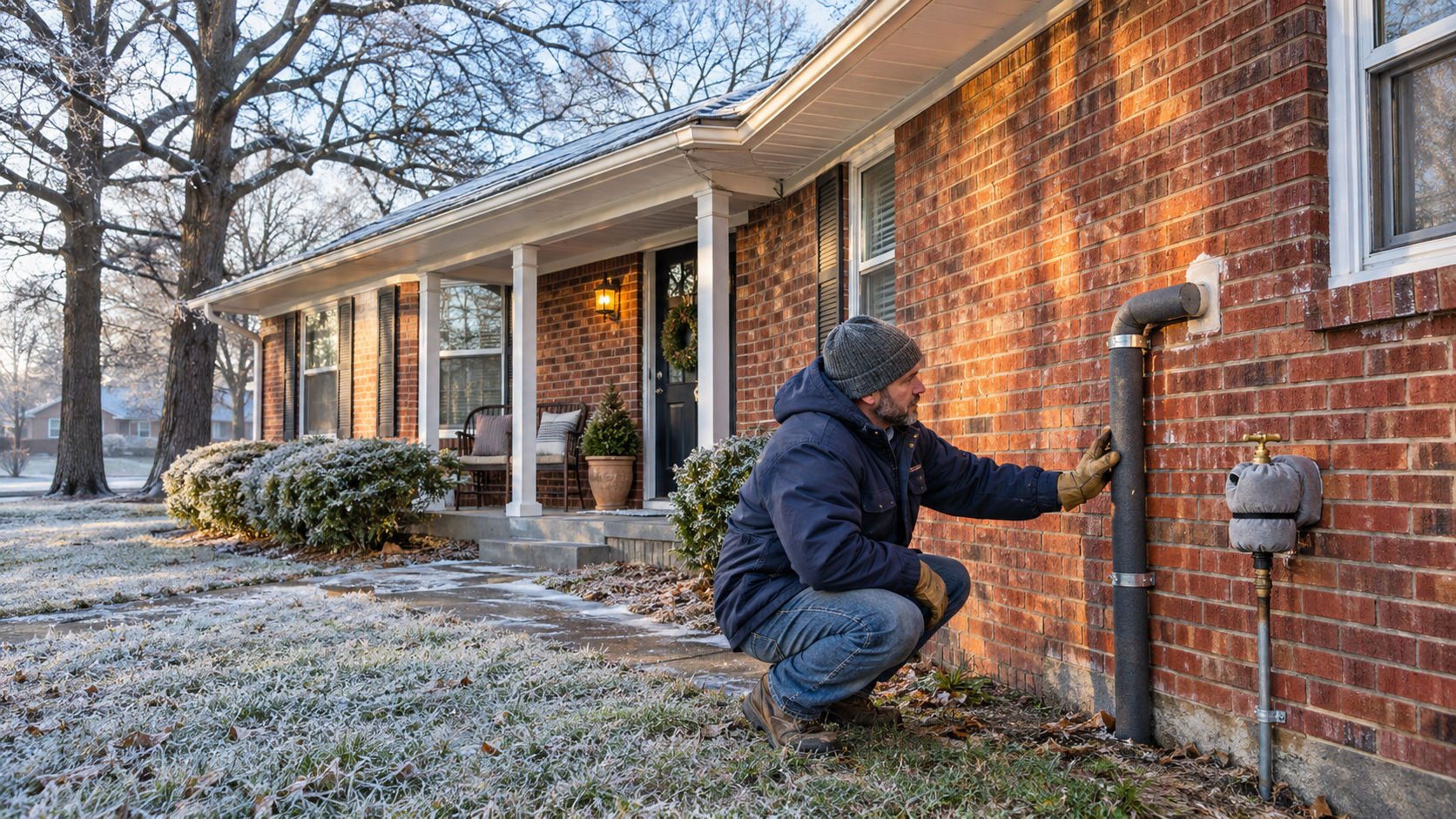
- Insulate exposed pipe. Foam sleeves for straight runs, fiberglass wrap for elbows and valves. Cover every inch of pipe in an unheated crawl space or along an exterior wall.
- Seal the gaps. Spray foam around pipe penetrations at foundation walls and rim joists. Caulk the cracks around exterior vents.
- Disconnect garden hoses. Drain and store them. Shut off outdoor spigots from the interior valve if your home has one.
- Open cabinet doors under sinks along exterior walls during cold snaps so warm house air circulates around the pipes.
- Keep the thermostat steady. Don’t drop it to save money on a freezing night. A few dollars of gas beats four figures of water damage.
- Leave one faucet dripping on the coldest nights. A pencil-thin stream relieves pressure and keeps water moving.
- Set a calendar reminder to repeat the checklist every fall. Pipes don’t ask again politely.
If you’re leaving town during a cold snap, keep the heat at 55 degrees or higher and ask a neighbor to check the house every couple of days. According to the Department of Energy, water damage from frozen pipes is one of the costliest categories of preventable home loss in colder regions, and most of it traces back to an unmonitored empty house.
When to call a pro instead of guessing
There’s a clear line. If water is actively pooling, you call immediately. If a pipe has already burst, shut off the main, drain the system by opening the lowest faucet, and get a pro on the phone before you start pulling up flooring. Water damage has a nasty habit of spreading under surfaces you can’t see.
For anything less dramatic, you have a little room. Slow drips, musty smells, soft drywall, or a water bill that’s crept up over two cycles all deserve a professional look, but they don’t require a weekend emergency call. A leak detection visit is usually cheaper than the exploratory demolition a general contractor would have to do to find the same leak. The pros have acoustic sensors and thermal cameras that see through a wall in minutes. You don’t.
Another line: if your home was built before 1975 and you’ve never had the plumbing inspected, get it done this fall. Older systems in Central Arkansas hide surprises. A plumber who checks the whole system once is worth more than five emergency calls later.
What to ask any plumber before you hire them
Not every plumbing company is set up for leak detection. Ask directly.
- Do you use acoustic or thermal leak detection equipment, or do you open walls to find the source?
- Is the diagnostic fee separate from the repair, or credited toward the work?
- Can you give me a written quote before work starts?
- Do you handle both the leak detection and the pipe repair, or do I need two contractors?
- Are you licensed for residential repair work in this state?
If they can’t answer the first question clearly, keep calling. Leak detection in an older home without the right tools means guessing, and guessing means cutting open the wrong wall. According to the Environmental Protection Agency, household water leaks can waste thousands of gallons a year even when they’re small, and the ones you can’t see are typically the ones wasting the most.
One more thing worth checking. Ask if the plumber carries insurance that covers accidental damage during the diagnostics. If a technician opens the wrong spot, you don’t want to be the one negotiating with your own homeowner’s policy.
Making it through winter without the drama
Older homes in Central Arkansas have character. They also have thinner pipe walls, more gaps in the envelope, and more surprises behind the drywall. The work that keeps them out of trouble is unglamorous, takes a weekend, and costs maybe a hundred dollars in insulation and foam. Compare that to a slab leak or a burst supply line, and the math makes itself.
Run the checklist in the fall, keep a slow drip going on the coldest nights, and pay attention when your house tells you something is off. The faint hiss, the musty corner, the sputtering faucet: those are warnings, not noise. Listen to them early and you’ll skip the emergency calls entirely.
When was the last time you actually walked your own crawl space and looked at your plumbing? If you can’t remember the answer, that’s your sign to do it this weekend.