
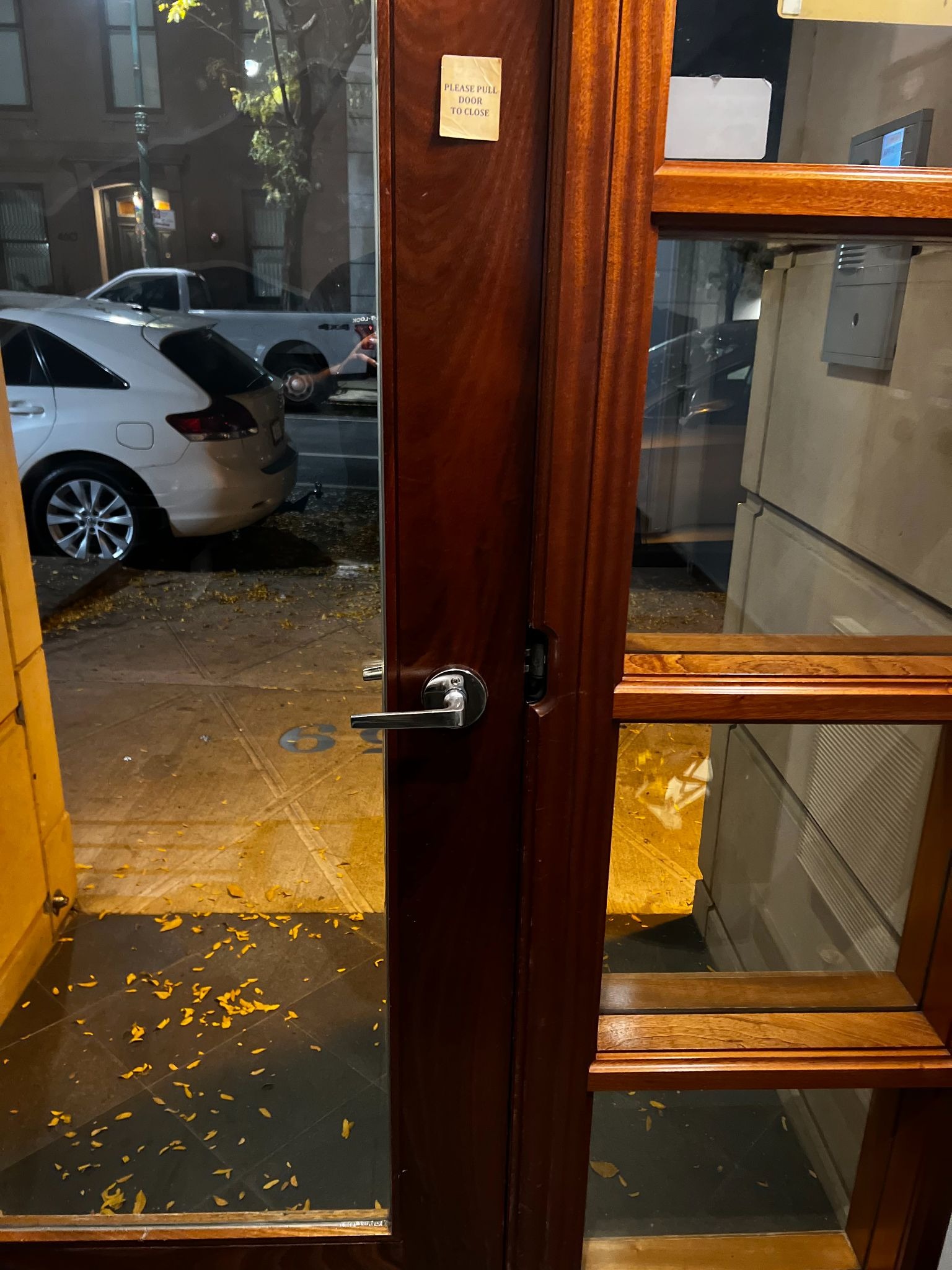
I am Meir, the owner of Rainbow Locksmith NY. For the past 15 years, I have been helping homeowners across New York City secure their homes as a licensed locksmith in New York City. If there is one piece of advice I give every single new homeowner who calls me, it is this: rekey your locks before unpacking a single box. Not after you have settled in. Not “when you get around to it.” Before, and if there is one piece of advice I give every single new homeowner who calls me, it is this: rekey your locks before you unpack a single box. Not after you have settled in. Not “when you get around to it.” Before.
I know how it goes. You have just closed on a place maybe a walk-up in Astoria, maybe a co-op on the Upper West Side, or maybe a house out in Staten Island that you have been dreaming about for years. You have movers coming, you are exhausted, you are signing more paperwork than you thought humanly possible, and rekeying the locks feels like something you can put off. I get it. However, let me explain why I push back on that every time.
You Have No Idea Who Has a Key
Here’s the thing people don’t think about: a house or apartment changes hands, but keys do not simply disappear. The previous owner may have handed a spare to a dog walker three years ago and forgotten all about it. Maybe there was a contractor who did a kitchen reno and kept a copy “just in case.” An ex-partner may still have one sitting in a junk drawer somewhere in Jersey. I once rekeyed a brownstone in Park Slope where the new owners found out almost by accident that the previous tenant’s cousin still had a key, because he showed up looking for his old apartment about two weeks after they moved in. Nobody meant any harm. He just hadn’t gotten the memo that the place had been sold. But imagine if that had gone differently.
You simply can not account for every key that has been floated around a property over the years. Real estate agents, house sitters, cleaning services, and old roommates the list adds up fast. You are not going to track all of them down and ask for the keys back. Rekeying solves this problem in one visit, permanently.
Rekeying Isn’t the Same as Replacing
Many people confuse rekeying with buying all new locks, and I want to clear that up because it matters for your wallet. Rekeying means I open up the existing lock cylinder and change the pin configuration inside so that only a new key will work the old keys become useless. The hardware on your door stays the same. You keep your locks, your finish, your style, whatever you already like about your doors. You just get a fresh set of keys that only you control.
Replacing the entire lock is a different job, and honestly, sometimes it is the right call I’ll get to that. But for most homeowners moving into an existing property, rekeying gets the job done for a fraction of the cost and in approximately 20 minutes per lock, depending on the hardware.
When I Actually Recommend Replacing Instead
I’m not going to sit here and tell you that rekeying is always the answer, because it’s not, and any locksmith who tells you that for every situation is just trying to make the job simple for himself. If your locks are old I’m talking the kind of worn brass cylinders you sometimes find in prewar buildings that have been painted over four or five times sometimes the pins are so corroded or the mechanism so tired that rekeying isn’t worth the trouble. I had a job in Washington Heights a couple of years back where the deadbolt was so old and gunked up with decades of paint that I told the homeowner straight up, “I could rekey this, but you’re going to be fighting with this lock every winter when the metal contracts.” We replaced it instead, and she thanked me for being honest instead of just taking the easy sale.
Moreover, if you want smart locks, keyless entry, or something with better security ratings such as a high-security cylinder that resists picking and bumping that is a conversation worth having when you move in, not something to bolt on two years later.
The Emotional Side Nobody Talks About
There’s something people don’t expect to feel when they move into a new home, and it’s this low hum of unease — not fear exactly, but a nagging sense of “is this really mine yet?” I’ve had clients tell me they didn’t sleep well their first few nights in a new house, and it wasn’t about the mortgage or the unfamiliar creaks. It was that they knew, somewhere in the back of their mind, that a stranger could technically walk in with a key. Once I rekey the locks, I’ve watched people visibly relax. One woman in Forest Hills actually said, “Okay, now it feels like my house.” That stuck with me. Security isn’t just about statistics and risk it’s about actually feeling at home in your own home.
It’s Cheap Insurance, Honestly
Compare the cost of rekeying usually somewhere in the range of a modest home improvement expense, far less than most people assume against the cost of dealing with a break-in, or worse, someone letting themselves in with a key they still happen to have. It is not a close comparison. I tell people all the time: you probably spent money on a home inspection, you’re probably getting insurance lined up, you might even be adding a security camera. Rekeying belongs on the same list. It is not an optional piece of mind. It is a basic piece of mind.
My Honest Advice
Call a licensed locksmith not a handyman who says he “knows locks,” an actual licensed professional within your first few days of getting keys to a new place. Ask questions. Ask why he is recommending rekeying versus replacing. A good locksmith will explain the tradeoffs instead of upselling you on everything in his van. I have been doing this for 15 years, and the homeowners who call me on day one are always the ones who sleep the best that first week. That’s not a coincidence.