- What “vacant” means on your policy
- Why empty buildings in Texas get stripped
- Copper is trading at a record price
- The metal is cheap, but the repair is not
- An empty building invites occupants
- What actually protects a building between tenants
- How to check a Texas security company in two minutes
- Frequently asked questions
- What to do next
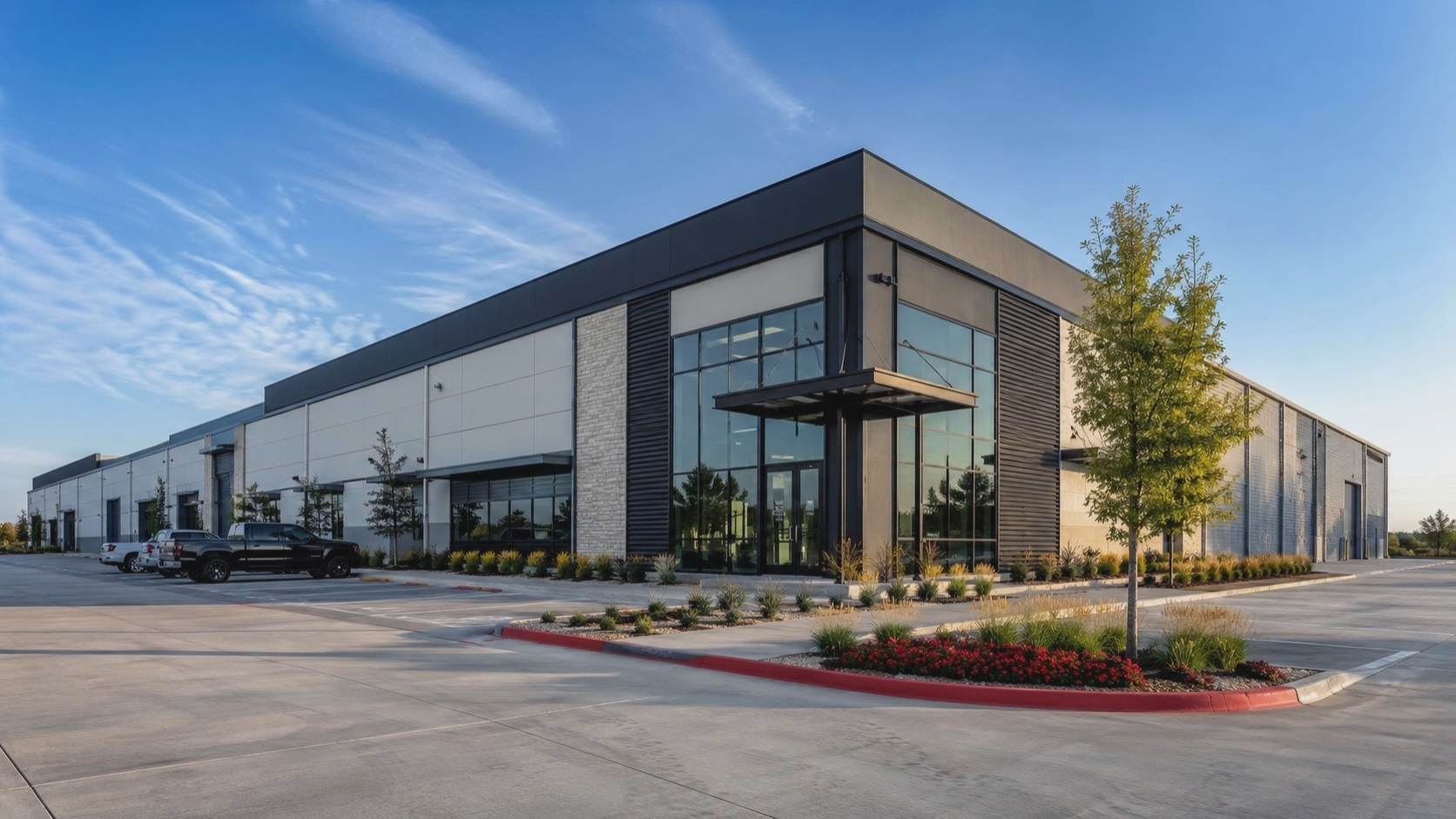
DFW office vacancy finished the second quarter of 2026 at 23.8% on Newmark’s tracked inventory, an improvement of 80 basis points over the prior quarter. Other brokerages count a different inventory base and land between 19.9% and 26.8%, so treat it as a range. Either way, a lot of Dallas-Fort Worth space is sitting empty, and owners read that as a leasing problem.
It is also an insurance problem, and the clock is shorter than people expect. The standard commercial property form stops paying for theft in a building that has sat vacant more than 60 consecutive days. It does not trim the payout. It removes the coverage.
What “vacant” means on your policy
Under the standard ISO commercial property form, a building you own is vacant unless at least 31% of its total square footage is rented to a lessee or sublessee and used by that lessee to conduct customary operations, and/or used by you to conduct yours.
The two uses can be added together. A signed lease on an empty suite cannot, and neither can stored furniture. The test is operational use, not paperwork. Once the building sits under that 31% line for more than 60 consecutive days, the policy drops coverage entirely for:
- Vandalism
- Theft
- Attempted theft
- Water damage
- Building glass breakage
- Sprinkler leakage, unless you have protected the system against freezing
Every other covered cause of loss still pays, reduced by 15%. The International Risk Management Institute’s breakdown covers both halves. The perils an empty building is most likely to suffer are the exact ones the form takes away.
One exception matters for anyone repositioning an asset: buildings under construction or renovation are not considered vacant, though courts have split on what qualifies as renovation rather than plain maintenance.
The dangerous window is the gap between the last tenant moving out and real work starting, and it runs longer than owners plan for. Dallas land development runs through seven distinct stages before construction begins, and the building is exposed through all of them.
Why empty buildings in Texas get stripped
Copper is trading at a record price
Copper closed August 31, 2026 at $6.58 a pound, per Trading Economics, after setting record highs above $6.70 earlier in the month. Scrap yards pay well under spot, but the incentive tracks the print. A rooftop condenser, an electrical panel, and the feeder wire behind it are worth real money to someone with a truck and 20 minutes of privacy.
The metal is cheap, but the repair is not
The loss is rarely the copper. It is the hole cut in the roof to reach the coil, the panel torn out of the wall, and the water that arrives with the next storm. Flat roofs get opened at the penetrations, which is where commercial roof leaks tend to start anyway. By the time a broker walks a prospect through, the building shows as a gut job instead of a lease-ready suite, and that shows up in the rent you can ask.
An empty building invites occupants
Texas SB 38 applies to eviction suits filed on or after January 1, 2026, and Chapter 24 covers commercial premises, not just residential. A landlord filing a sworn petition can now move for summary disposition, and the court can rule without a trial where no facts are genuinely disputed. The occupant has 4 days from service to answer that motion and 5 days from judgment to appeal. An appeal has to be sworn under penalty of perjury as a real defense rather than a stall. Email service counts only where the parties agreed to it in writing. Trials are still set 10 to 21 days after filing.
What actually protects a building between tenants
Order of operations beats product selection.
- Call your carrier before day 60: A vacancy permit endorsement or a dedicated vacant building policy restores what the standard form removes. Cheapest item on this list and the one owners skip.
- Hold the 31% line if you can: A single tenant genuinely operating in their space keeps the building occupied under the form. A short-term deal at under-market rent can be worth more than the rent it collects.
- Secure the roof, not just the lobby: Roof hatches, ladder cages, exterior electrical rooms, ground-floor glass. Thieves go up and around, rarely through the front door.
- Light it, alarm it, record it: A monitored system produces a response call and a paper trail for the claim.
- Put a person on it: This is the part owners argue about, so here it is plainly.
| Layer | Does | Does not |
|---|---|---|
| Fencing and locks | Slow casual entry | Stop a determined crew |
| Lighting | Remove cover | Trigger a response |
| Cameras | Create evidence | Prevent the loss |
| Monitored alarm | Start a police call | Control arrival time |
| On-site or patrol officer | Interrupt a theft in progress | Cover 24 hours cheaply |
Cameras tell you what you lost. A marked patrol is the only layer that changes the outcome while it is still happening.
How to check a Texas security company in two minutes
Texas licenses private security through the Department of Public Safety. Every legitimate guard company holds a Class B security contractor license, and DPS runs a free public lookup where you can confirm the number yourself. Ask for four things before you sign anything:
- The license number, then confirm it yourself with DPS
- A certificate of insurance naming you as additional insured
- GPS-logged patrol reports rather than a paper clipboard
- Month-to-month terms, so a vendor who underperforms is a 30-day problem
Rates move by metro; an owner pricing building security guard services in Houston will not see the same number as one shopping the same scope in Dallas, but the questions do not change.
Frequently asked questions
- Does my policy really drop theft coverage at day 60?
Under the unamended ISO form, yes, once the building has been under 31% occupied for more than 60 consecutive days. Carriers do write changes into this provision, so pull your own policy and read the vacancy section. - Is a camera system enough by itself?
It is enough to document a loss and support a claim. It does not stop the loss, and if the vacancy provision is already triggered, there may be no claim to support. - What if the building is being renovated?
Buildings under construction or renovation are not treated as vacant. The exposure lives in the months before work starts. - Does SB 38 fix squatters in a commercial building?
It shortens the timeline and closes some delay tactics, and it does reach commercial premises. It does not make removal same-day, and it does nothing about damage already done.
What to do next
Find the vacancy provision in your policy and count forward to day 60. Then decide what you are buying: an endorsement, a tenant you keep at a discount, or coverage on the ground. The building will sit empty either way. The only choice is whether it sits empty and watched.