
- Understanding the Texas Residential Purchase Agreement
- The Standard Contract Used in Many Texas Resale Home Sales
- When the Contract Becomes Binding
- Basic Legal Requirements for a Valid Contract
- Contract Terms That Directly Affect Home Sellers
- Protecting Yourself Throughout the Home Selling Process
- Seller Disclosure Requirements
- What Sellers Are and Are Not Required to Disclose
- What Happens If the Buyer Defaults
- Why the Option Fee Deadline Matters
- The Bottom Line
Selling a home in Texas starts with understanding the real estate contract.. This agreement includes the price, deadlines, contingencies, and closing details.. A residential real estate transaction in Texas often takes about 30 to 60 days after the contract is signed, but the timeline can vary based on financing, inspections, title work, and the terms both sides agree to. Real estate laws update frequently, so staying familiar with the current rules helps you avoid delays.
The Texas Real Estate Commission (TREC) issues several standard contract forms used in Texas real estate transactions. Real estate agents throughout the state commonly use these forms when the form fits the transaction. These standardized forms give buyers and sellers a clear framework for the home sale process in Texas.
This guide explains the Texas residential purchase agreement from a seller’s point of view, including the contract terms that affect you and the steps that can help protect you before closing.
Understanding the Texas Residential Purchase Agreement
The Standard Contract Used in Many Texas Resale Home Sales
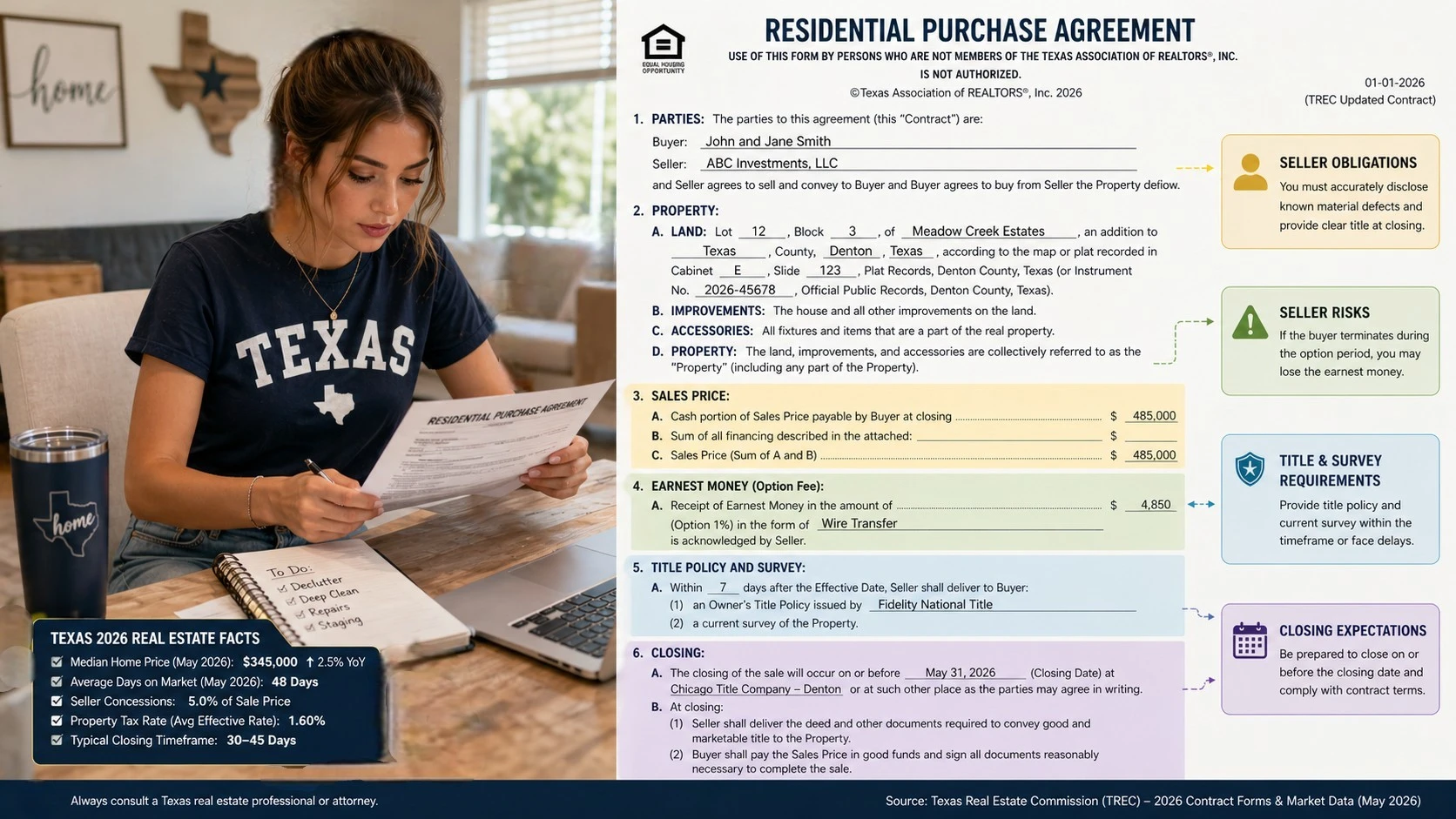
The One-to-Four Family Residential Contract is the foundation for many resale home sales in Texas. TREC describes it as its most frequently used contract form. It’s designed for resale transactions with single-family homes, duplexes, triplexes, or fourplexes. It is not used for condominium transactions, new homes sold by a builder, or farm and ranch properties.
TREC-licensed professionals generally use these standard forms when an approved form applies to the transaction. Using the wrong form can completely void the agreement or slow down your closing. These forms help keep the contract structure consistent across many Texas home sales.
When the Contract Becomes Binding
The contract becomes binding when both sides reach final acceptance and that acceptance is communicated. But the effective date is different from the signing date. In practice, final acceptance usually means the agreement is in writing, both buyer and seller have signed it, any handwritten changes are initialed, acceptance is clear, and the last party’s acceptance is delivered to the other party or their agent.
The effective date is the date that starts the clock for important contract deadlines, including option fee, earnest money, disclosure, title, financing, and closing deadlines.
Basic Legal Requirements for a Valid Contract
Texas law requires real estate contracts to be in writing and signed. This satisfies the Statute of Frauds. A valid contract also needs a few required elements to hold up legally. These elements include an offer and acceptance, consideration like something of value exchanged, a lawful purpose, and mutual consent between the parties.
By comparison, everyday transactions follow a much more straightforward legal process. When selling a vehicle in Texas, ownership is transferred by signing the title, completing an application for registration, and filing a vehicle transfer notification to avoid future liability. In addition, texas allows you to transfer, retain or destroy the plates, which reflects a much simpler framework compared to the layered contractual obligations in real estate.
Contract Terms That Directly Affect Home Sellers
Option Period and Earnest Money
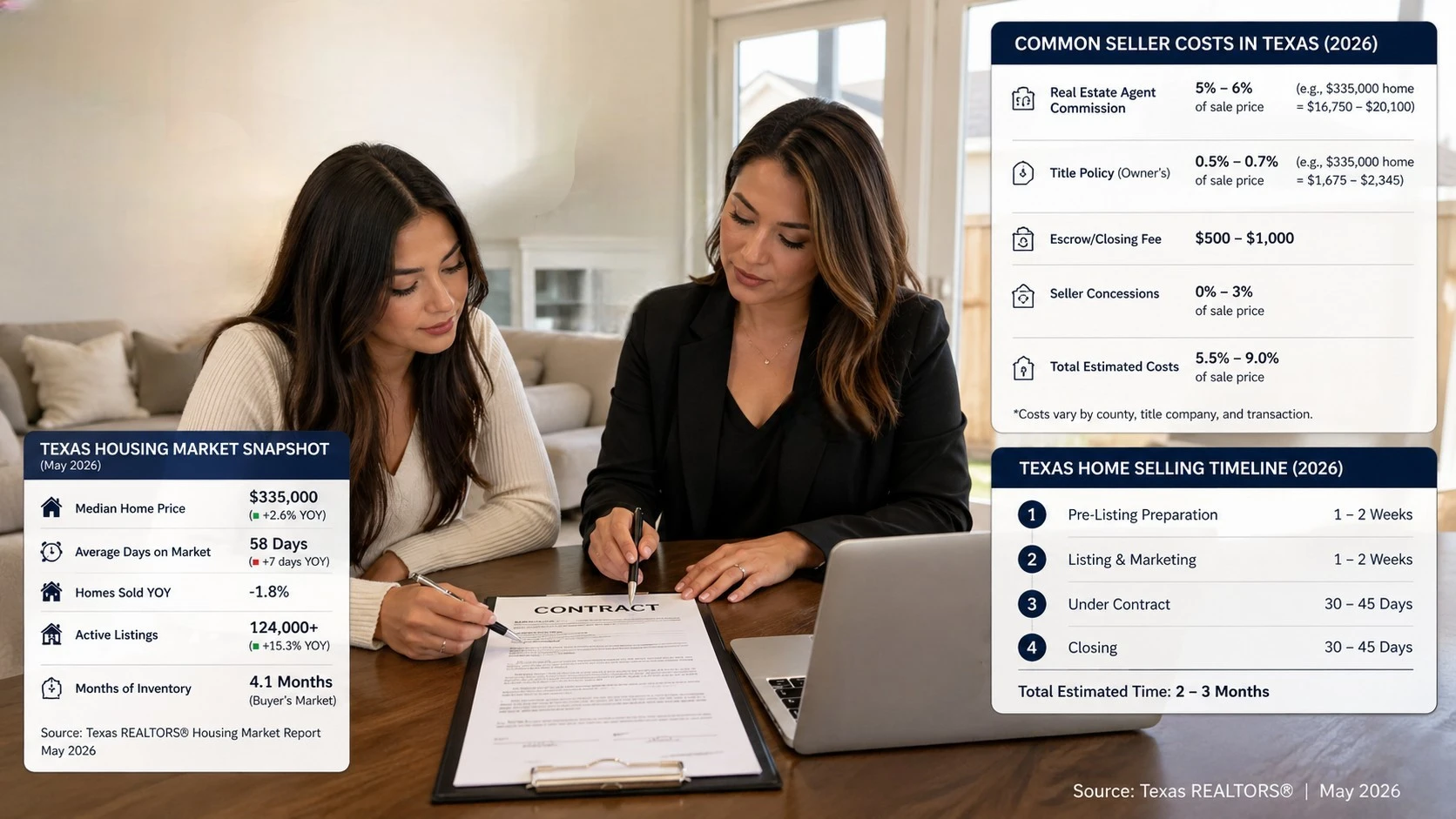
Several provisions in the Texas real estate contract create specific obligations and risks for sellers. The option period is one of the most important terms to understand. This negotiated window gives buyers the unrestricted right to terminate the contract for any reason as long as they deliver written notice before the deadline.
Buyers pay an option fee to secure this termination right. In the current TREC resale contract, the buyer delivers the option fee to the escrow agent, and the fee is credited to the sales price if the transaction closes.
Option periods are negotiated, so there is no single standard length. They often run 3 to 10 days, though competitive markets may see shorter timeframes. The option fee amount also depends on the offer, the market, and what both sides negotiate.
Earnest money deposits are also negotiated and often show how serious the buyer is about moving forward. In Texas, buyers typically put down 1% to 2% of the purchase price for earnest money. Buyers who terminate during the option period receive their earnest money back under the contract. The option fee is not refunded if the buyer properly terminates during the option period.
How Financing Can Affect the Deal
Financing contingencies create another layer of risk. The Third Party Financing Addendum applies when the buyer uses third-party financing for all or part of the purchase price.
Buyer approval focuses on the buyer’s assets, income, credit history, and loan terms. Property approval covers the appraisal, insurability, and any lender-required repairs. If the property appraises for less than the agreed sales price, the buyer might ask you to drop the price or they could back out of the deal entirely.
Deals can still run into trouble later, even after the buyer clears the first approval step.
Protecting Yourself Throughout the Home Selling Process

Seller Disclosure Requirements
Texas law requires many residential sellers to provide a written disclosure notice regarding property condition. This Seller Disclosure Notice must identify known defects affecting the property. The standard TREC form is a multi-page checklist covering everything from the roof age to previous flood damage.
Under the TREC resale contract, if the buyer has not received the notice and the seller does not deliver it by the agreed deadline, the buyer may terminate before closing and receive the earnest money back. If the seller delivers the notice later, the buyer may terminate for any reason within seven days after receiving it or before closing, whichever comes first.
What Sellers Are and Are Not Required to Disclose
Your disclosure obligation generally extends to property conditions within your actual knowledge. You’re not required to conduct independent inspections or hire professionals to uncover hidden issues.
The disclosure form must be completed based on the seller’s knowledge and belief. You have no duty to disclose deaths by natural causes, suicide, or accidents unrelated to property condition. The same applies to information about previous occupants having AIDS or HIV.
What Happens If the Buyer Defaults
Several remedies may be available if buyers default without valid contractual grounds. Under the TREC resale contract, if the buyer fails to comply, the seller may seek specific performance, pursue other relief allowed by law, or terminate the contract and receive the earnest money as liquidated damages.
Specific performance means asking the buyer to complete the purchase, but that route can be expensive and time-consuming.
Why the Option Fee Deadline Matters
Buyers must deliver the option fee to the escrow agent within three days of the effective date. Texas rules strictly state this delivery must happen by 5 PM on the third day.
They generally lose their unrestricted termination right under the option period if they fail to pay this fee on time. This deadline matters because the option period is one of the buyer’s main ways to walk away for any reason.
The Bottom Line
For sellers, the Texas real estate contract is not just a form to sign and file away. It sets the timeline, defines buyer rights, and determines what happens if something goes wrong before closing. Unde
standing how deadlines, disclosures, financing terms, and termination rights work can help you respond more effectively throughout the transaction. The more familiar you are with the contract language, the easier it becomes to spot risks early and avoid unnecessary surprises as the sale moves forward.
If a deadline, addendum, or disclosure issue is unclear, ask your real estate agent or a Texas real estate attorney before you sign.