
If the pandemic did one thing for the American economy, it showed just how many jobs can be accomplished from the comfortable confines of a home office.
According to a recent report from consulting firm Willis Towers Watson, employers expect nearly two in five employees will still be working remotely at the end of 2021, compared with 57 percent who work remotely now. Those numbers vary by industry, of course.
So, to see how many urban residents would take off for greener pastures should their job go full remote, home renovation site CraftJack asked just that: Would you move anywhere if you could work remote?
According to their survey results, 60 percent of Dallas-Fort Worth respondents would get the heck out of Dodge if they didn’t need to be in the Metroplex. Austin had the same proportion of residents that would pull up roots if they could, but only 53 percent of Houstonians would make for the highway should opportunities arise.
That falls in line with a recent story from CNBC :
Before the Covid-19 outbreak, only 7% of workers in the U.S. had access to a “flexible workplace” benefit, or telework, according to another report by the Pew based on data from the Bureau of Labor Statistics’ most recent National Compensation survey.
Those workers were mostly managers, white-collar professionals and highly paid.
Of course, not all workers have the ability to work from home, even now. There’s a clear class divide between workers who can and cannot telework, Pew also found.
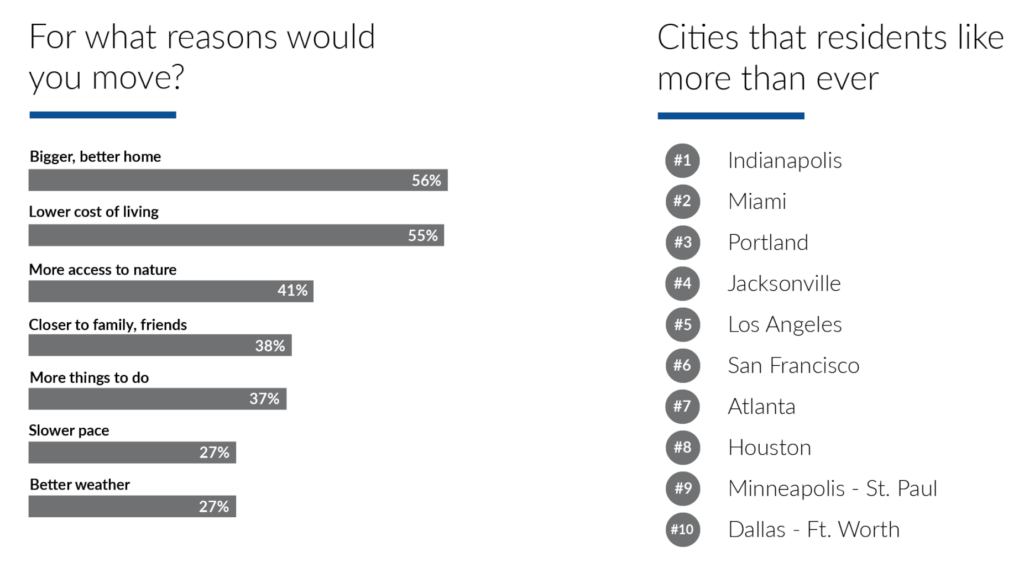
Likewise, the survey asked why a person would choose to move elsewhere. The top response was for a larger or better house, though many people wanted a lower cost of living and better access to nature and open space. Other reasons for moving include proximity to family and friends, more things to do, a slower pace of life, and better weather.
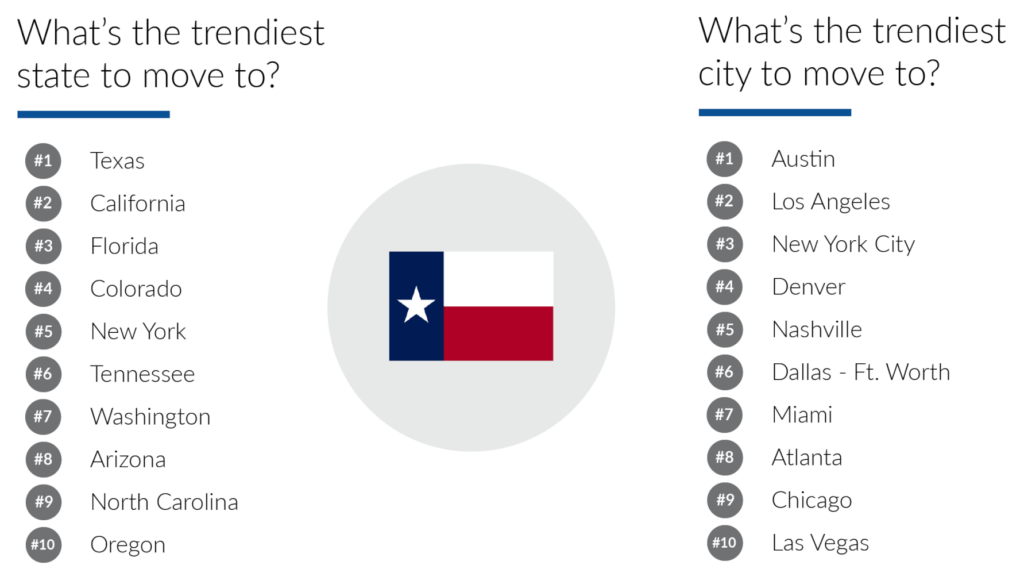
Interestingly enough, Texas was seen as the trendiest state to move to, with Austin being the trendiest city.
But, if 60 percent of Dallas-Fort Worth respondents were ready to find new views, where would they go? The top response really surprised me, to be honest. Most Metroplex residents who were ready to move away should their work go remote full-time would move to …
Seattle.

That begged an interesting question with the people at CraftJack: Would you agree to be paid less if you went remote full time? And would you agree to be paid more to move to an undesirable location?
One curious trend that has emerged during the pandemic involves cities and states offering incentives for people to relocate. Notable examples include Tulsa, OK and the state of Vermont, each offering up to $10,000. Given this, we decided to ask people what it would take to compel them to a new location, particularly one they’re not particularly fond of.
Of those we surveyed, 78 percent said they would need $100,000 to move to a city they don’t really like, and approximately one in four (23 percent) would need at least $250,000.
We also asked about the opposite scenario — what pay cut would people take to relocate to their most ideal spot? Most Americans (83 percent) would only take a 10-20 percent pay cut to make that move, with 60 percent saying 10 percent would be the maximum they would tolerate.
This brings up one of the most contentious debates around the future of remote work, relocation and distributed workforces: should companies adjust salaries down — making what’s called a locality adjustment — when an employee moves from a more expensive area to a less expensive one?
The answer from workers is a resounding no — 87 percent believe they should be paid the same amount they’re currently being paid, no matter where they move.
What about you?