Huntersville has quietly become one of the most popular places to land in the Charlotte region, and it is easy to see why. You get lake access, a genuine small-town feel, and a short drive into a major city, all in the same zip code.
If you are planning a move here, a little local knowledge goes a long way toward picking the right neighborhood and settling in without the usual first-month scramble. Here is what people who already live here wish newcomers knew.
Where Huntersville Sits
Huntersville is in northern Mecklenburg County, part of the Lake Norman region that stretches along the northern edge of the Charlotte metro. The town center sits about a twenty-minute drive south of the lake communities and roughly the same distance north of Uptown Charlotte along Interstate 77, traffic permitting. That location is the whole appeal.
You are close enough to commute into the city for work, professional sports, and the airport, but far enough out that evenings feel calmer and greener.
The town has grown fast over the past two decades, moving from a rural crossroads into a suburb with its own restaurants, shopping, and a steady stream of new residential development.
That growth is worth understanding before you choose an address, because the character changes noticeably from one part of town to the next.
Getting to Know the Neighborhoods
Huntersville is not one uniform suburb. It is a collection of distinct communities, and matching the right one to your daily life makes a real difference.
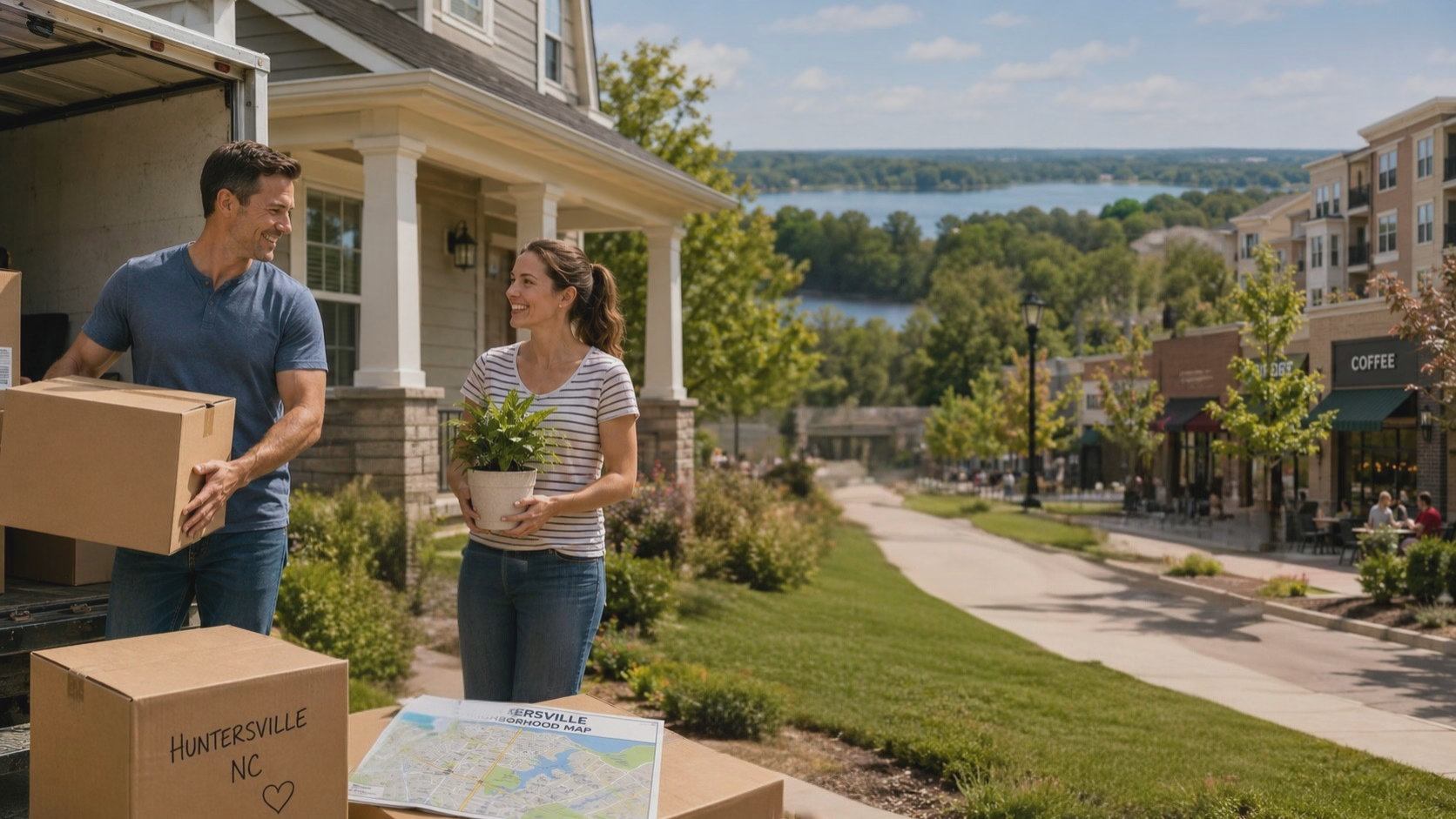
Birkdale Village is the social center of town. It is a walkable, mixed-use district with shops, restaurants, a movie theater, and townhomes and apartments layered above and around the retail. If you want to be able to walk to dinner and coffee, this is the area to look at first.
Vermillion is a well-known new-urbanist neighborhood, designed with front porches, sidewalks, and a tight street grid meant to encourage walking and neighborly contact. It draws people who want that connected, pedestrian feel without living on top of a shopping district.
For a more traditional suburban setup, communities like Skybrook and NorthStone are built around golf and offer larger lots, amenity centers, and pools. Gilead Ridge, Wynfield, and Macaulay round out the mix with a range of price points and styles.
Closer to the water, you will find established lakefront and near-lake homes that command a premium for obvious reasons.
Life on Lake Norman
Lake Norman is the largest man-made lake in North Carolina, and it shapes the culture of this whole area. Boating, paddleboarding, fishing, and lakeside dining are normal weekend activities here, not special occasions. Even if you do not buy directly on the water, you are never far from a public access point or a marina.
Beyond the lake, the town leans into its outdoor side. Latta Nature Preserve offers trails and equestrian facilities, and Rural Hill hosts seasonal events through the year, including the well-loved highland games in the fall.
Newcomers are often surprised by how much green space stays woven through a town that is otherwise growing quickly.
The Commute and Getting Around
Interstate 77 is the spine of the region, and understanding it early will save you frustration. The corridor includes express toll lanes alongside the general lanes, which means you can pay for a faster trip during rush hour or stay in the free lanes and plan around the traffic.
Commuters who drive into Charlotte for work develop strong opinions about this quickly, so it is worth doing a test drive at the actual times you would travel before you commit to a neighborhood.
Away from the interstate, most daily errands stay local. Birkdale and the surrounding retail cover the essentials, and the town is car-centric in the way most Charlotte suburbs are, so plan on driving for most trips outside the walkable pockets.
Schools and Family Life
Huntersville falls within Charlotte-Mecklenburg Schools, and the north Mecklenburg high schools serve much of the area. Families relocating for the schools should verify the specific attendance zone for any home they are considering, since boundaries can shift and do not always follow neighborhood lines. Charter and private options exist as well, so it is worth mapping those out early if they matter to you.
For everyday family life, the combination of parks, the lake, youth sports, and Birkdale as a gathering spot gives kids and parents plenty to do without a long drive.
Planning the Move Itself
Once you have chosen a neighborhood, the move becomes a logistics problem, and this is where local familiarity earns its keep. Many Huntersville neighborhoods have their own quirks, from gated entries and HOA move-in rules to narrow lake roads, apartment elevator reservations at Birkdale, and long driveways in the golf communities.
A crew that already knows the town can route around I-77 congestion, plan for these access issues, and avoid the delays that catch out-of-town movers off guard.
If you would rather not manage all of that yourself, working with professional movers who know Huntersville takes the guesswork out of the day. Local crews handle the neighborhood access, the timing around the interstate, and the heavy lifting, which frees you to focus on the parts of the move only you can do.
Settling In During Your First Weeks
Give yourself a simple plan for the first month and the transition gets much smoother. A few things worth doing early:
- Drive your work commute at real rush-hour times before or right after you move, so the daily reality matches your expectations.
- Confirm your school attendance zone directly with the district rather than relying on a listing.
- Set up a Lake Norman access routine, whether that is a favorite public park, a paddle launch, or a marina, so you actually use the amenity you moved here for.
- Explore Birkdale Village on foot in your first weekend to get oriented and find your regular spots.
- Meet a few neighbors early, especially in the porch-friendly communities where that is part of the culture.
Huntersville rewards people who lean into what it offers, which is lake life, green space, and easy access to a big city without living in the middle of it. Pick the neighborhood that fits how you actually spend your days, plan the move around the local realities, and you will feel at home faster than you expect.