- 1. The home with a 20+ year old roof
- 2. The home that’s flooded before (or could)
- 3. The century-old mill village house
- 4. The flip that’s “lipstick on a pig”
- 5. The manufactured/modular home on the county edge
- 6. The “cheapest house on the block”
- 7. The no-HOA home (freedom cuts both ways)
- The one nobody discloses: red clay soil
- The bottom line
Greenville, South Carolina, has had a genuine glow-up. One of the most walkable downtowns in the Southeast, the Swamp Rabbit Trail threading through town, Falls Park — buyers visit and fall for it on the spot. But underneath the charm sits a local risk profile that out-of-state buyers rarely see coming: red clay soil, century-old mill houses, a real flood legacy, and a tightening insurance market. Buying here is not the same as buying in suburban Charlotte.
We’ve relocated hundreds of families into the Upstate, which means we also see the after story — the homes that turn into money pits and moving-day headaches.
Heading into 202,6 inventory is climbing, ng and the broader market is steady in the mid-to-high $400Ks, so for the first time in years, buyers have real choices. That’s good news — but it’s also when the homes with hidden problems start sitting longer and looking like bargains. The low price usually tells you something. Here are seven to scrutinize.
1. The home with a 20+ year old roof
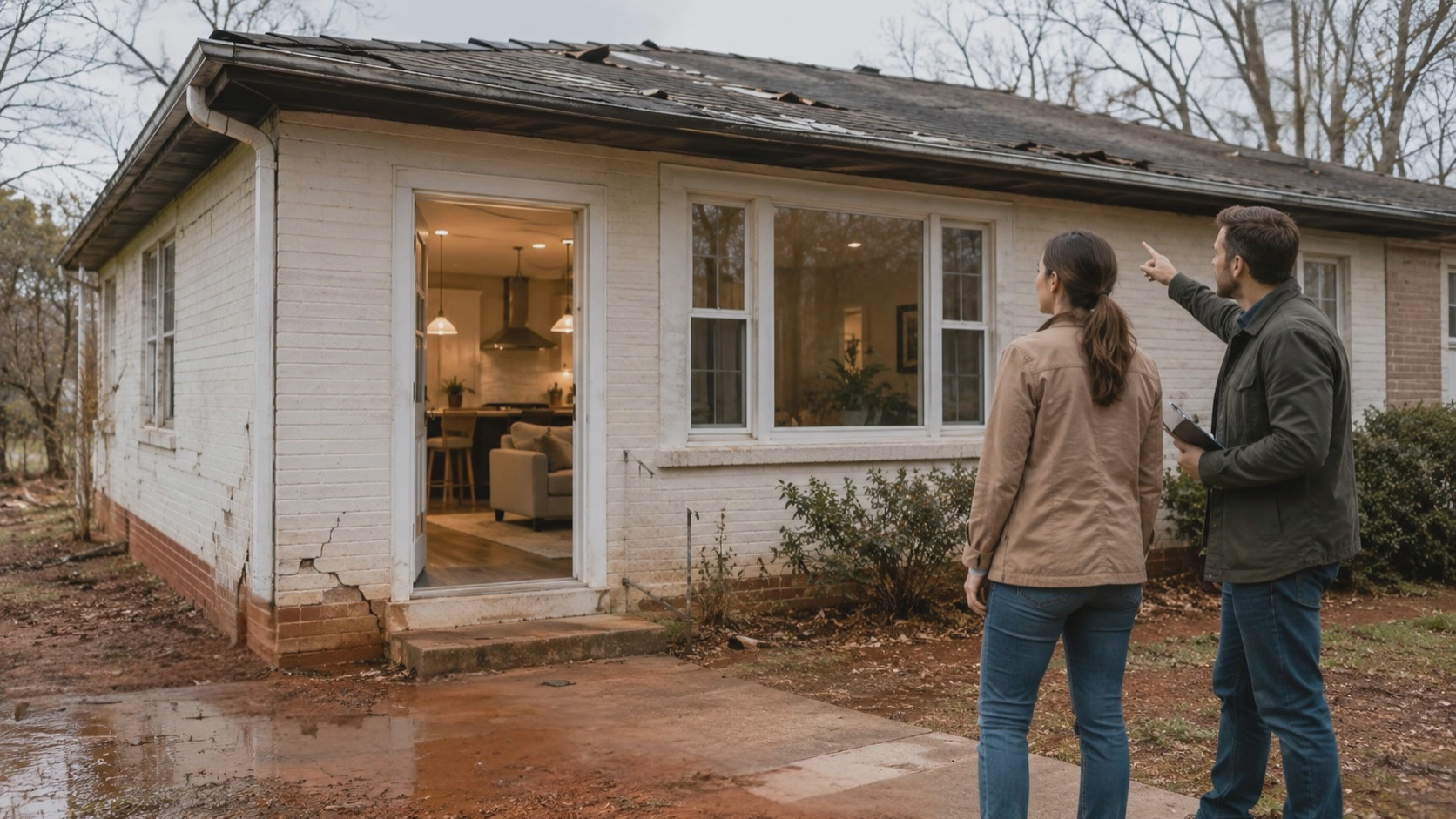
Insurance carriers across South Carolina have been overleveraged for years, and a roof pushing 20–25 years old can now be hard — sometimes impossible — to insure. Some carriers won’t write it at all; others only on restricted terms. A roof you can’t insure can kill a deal cold. Before you write an offer, ask about the roof’s age. If it’s near or past 20 years, get an insurance quote immediately after going under contract, not the week before closing.
2. The home that’s flooded before (or could)
If a house has flooded once, it’ll usually flood again — and in Greenville, that risk is hard to read, because the home that takes on water and the one that stays bone dry can sit on the same street. Hurricane Helene (late September 2024) rewrote the conversation here; the Saluda River crested over 20 feet, among the highest marks since 1949.
The upside: we now know which properties are vulnerable. Check the FEMA flood maps (recently updated — some homes are newly in a zone, some newly out of one), and watch for a flat lot with no slope between the water source and the house. Flood insurance roughly doubles your premium (Greenville-area policies run ~$1,200–$3,000/year), and there’s a 30-day waiting period — you can’t grab it three days before a storm.
3. The century-old mill village house
Greenville’s old mill villages — Judson, Brandon, Monaghan, Woodside — have a charm new suburbs can’t fake, and they’re seeing major revitalization. But many of these homes are 100+ years old, and what’s behind the walls doesn’t always match the listing photos: outdated or knob-and-tube wiring (which some insurers won’t cover), corroded galvanized pipes, asbestos, crawlspace moisture, and foundation movement. The biggest worry is unpermitted work — a fresh kitchen can hide a lot of sins. If a home looks renovated but the county shows no permits, follow up on that before the inspection. You can check the Greenville County building-safety portal yourself. Know which one you’re buying: an original mill home, an unpermitted rehab, or a clean new build on an old lot.
4. The flip that’s “lipstick on a pig”
A renovated home is not automatically a safe home. In a market where everyone wants move-in ready, flippers have every incentive to do just enough to photograph well. Quartz counters, shiplap, and stainless appliances are cheap next to the expensive stuff — foundation, electrical panel, plumbing, HVAC — which doesn’t photograph at all, so it gets skipped. Look past the finishes: find out what was actually repaired or replaced, who did it, and whether it was permitted and done right.
5. The manufactured/modular home on the county edge
Drive out toward Piedmont, Pelzer, or the far side of Greer,r and you’ll find bigger lots, lower prices, and more manufactured and modular homes. To be fair, these fill a real affordability gap — if your budget is under ~$250,000 and you’re happy being farther out, it’s a legitimate path to ownership. The catch is the long game: manufactured homes tend not to build equity like site-built homes (especially on leased land, where they’re a depreciating asset) and are more exposed in high winds. For long-term wealth-building, a smaller site-built home in a good location usually wins out over a larger home in a less desirable location.
6. The “cheapest house on the block”
What you pay at closing is just the down payment on what the previous owner left behind. On a cheap, old home, the insurance squeeze hits hardest — carriers can require you to replace the roof, update wiring, or fix plumbing before they’ll write a policy at all. Then there are termites, which thrive in our warm, humid climate, especially in older homes on crawl spaces.
Make the CL-100 (South Carolina’s official wood-infestation report) a non-negotiable: it confirms the home is free of active infestation and, on a crawl space, that the wood joists are below 20% moisture (above that, they can rot). If there’s a history of activity, demand an active termite bond or an invoice showing what was done and by whom.
7. The no-HOA home (freedom cuts both ways)
Relocators burned by HOA horror stories often assume skipping the HOA is the smart move. Not always. With no HOA, you handle your own upkeep — and so does the neighbor with the boat on blocks and the half-painted fence. Over time, that can drag on your appreciation and your ability to sell. Greenville-area HOA fees are usually lower than buyers expect (~$350–$800/year; pricier communities $1,000+), and they typically don’t touch your landscaping unless dues run north of ~$140/month. The real gotchas are the restrictions — campers, trailers, work vehicles, and livestock. If you’re dreaming of parking an RV in the driveway or keeping chickens, read the covenants before you’re under contract.
The one nobody discloses: red clay soil
Every red flag above meets the same final checkpoint. Greenville’s red clay soil is the biggest structural wild card in this market, and almost no listings mention it. It expands when wet and shrinks when dry, and that constant push-pull stresses foundations — older neighborhoods like North Main, Overbrook, and Dunean feel it most.
At showings, watch for cracks in brick or foundation, doors and windows that stick, and sloping floors. The rule of thumb: if you can fit your pinky in a crack, treat it as a problem worth investigating.
And the single most important thing we can tell you is that your home inspector is not a structural engineer. They’ll flag that a crack exists; they won’t tell you whether it’s harmless settling or a five-figure repair. When something structural turns up, bring in a structural engineer — that second opinion costs a fraction of being wrong.
The bottom line
A home you can’t insure or can’t trust is a home you can’t afford — no matter how good the price looks. Run the checklist before you make an offer: roof, flood, permits, foundation, termites, HOA. Catch the deal-breaker now, not after closing.
And once you’ve found the right one — the home that passes the gauntlet — that’s where we come in. As a locally owned Greenville moving company, we’d love to be the crew that gets you moved in.