
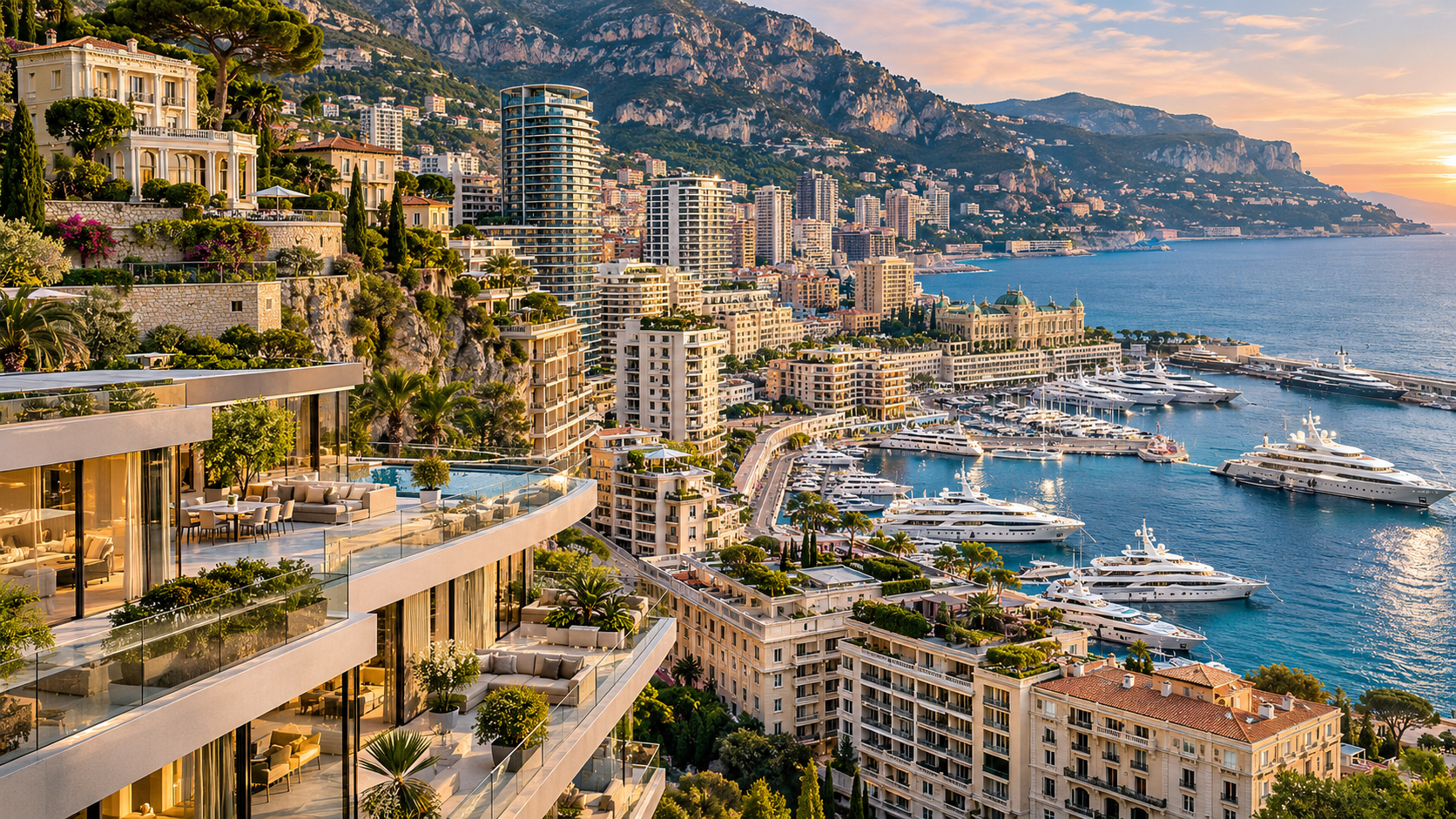
The most expensive housing markets in the world share more than high price tags. Cities like Monaco, Hong Kong, London and New York have held their place near the top for years, through rate cycles, currency swings and changes in tax policy. For buyers deciding where to place serious capital, that staying power is the useful part. Price alone says little about a market. What keeps a market at the top is scarcity, global demand and liquidity, and each of those can be checked before you buy.
Scarcity sets the ceiling
The top markets are expensive first because supply cannot grow. Monaco is one of the smallest countries on earth. Manhattan is an island. Hong Kong builds on a narrow strip of land between the harbor and steep hills. In each case, geography or planning rules limit how many homes can ever exist, and that limit protects values when demand rises.
The lesson travels well beyond these cities. Look for limits that are hard to undo, such as protected coastline, height restrictions, historic districts or a fixed number of waterfront lots. A neighborhood with real constraints tends to hold value better than one where a developer can add the next tower next door.
Global demand keeps prices resilient
Demand in the top cities does not depend on local incomes alone. Buyers arrive from many countries, often with several homes and a reason to hold assets in more than one currency. That broad base gives a market more than one source of demand, which matters most when local conditions soften. When one group of buyers pulls back, another often steps in.
A closer look at the most expensive housing markets in the world shows the same pattern in each. International buyers, limited supply and a strong reputation draw the next buyer before the current owner is ready to sell. Second-tier markets with a growing international profile, such as certain resort towns and smaller global cities, can show the same traits early. Buyers who spot them before prices fully adjust tend to have more room to grow.
Liquidity matters as much as price
A high price per square foot means little if you cannot sell when you need to. Luxury homes usually take longer to sell than typical homes because the pool of qualified buyers is small and every property is different. In thinner markets, a well-priced estate can sit for many months while carrying costs add up.
Before buying, ask three practical questions. How quickly have comparable homes sold over the past few years? How wide is the usual gap between the first asking price and the final sale price? How many qualified buyers are active at this price point today? The answers say more about future returns than last year’s appreciation figure.
Applying these lessons to luxury real estate investment
Treating a home as an investment means judging it the way you would judge any long-term asset. Entry price, holding cost and exit all count. Anyone weighing luxury real estate investment should start with supply. Is it constrained in a way that will last for decades, not just the next few years?
Next, look at who buys in the market and where they come from. A market that draws buyers from several countries is less exposed to a single economy. Then add up the full annual cost of ownership, including property taxes, insurance, maintenance and staff. These costs are easy to underestimate on a second or third home, and they come out of returns every year the property is held.
Finally, consider how personal use fits the plan. Many luxury homes serve two purposes at once, a place to live part of the year and a store of wealth. That is a sound reason to buy, as long as the investment case still holds without counting the lifestyle value.
Plan the exit before you buy
The exit is the question most buyers leave until last, yet it shapes the return more than almost anything else. A sale that drags on for a year can erase gains made over several. Experienced owners think about who the next buyer will be, how that buyer will find the property and how long the process is likely to take.
Many sellers of high-end homes now pair a traditional listing with a time-certain auction. Concierge Auctions, which sells luxury homes worldwide in partnership with Sotheby’s International Realty, works alongside the listing agent to bring the property to a global pool of qualified buyers. The auction acts as an accelerant to the traditional sale, with a defined close in as little as 60 days or less. For an investor, knowing that option exists makes the exit easier to plan from the day of purchase.
The most expensive markets stay on top because buyers trust they can enter and exit on reasonable terms. Apply the same test to any market you are considering, and the right purchase becomes much easier to spot.