A few months ago, I received a letter stating that radon testing was being done near my neighborhood, across Hillcrest in the JanMar streets. A home had been tested there and found to have an unusually high radon level. Yikes! The company,
Clear Environmental, was alerting neighbors and offering radon tests.
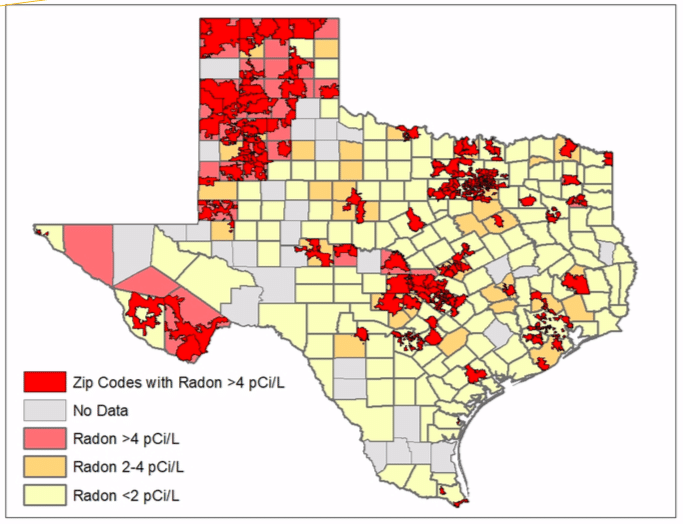
Radon in Dallas? Isn’t radon usually found in the mountain states?
Radon is an odorless, colorless, tasteless, radioactive gas that usually resides in your basement, which we don’t have a lot of in Dallas. It is said to kill 21,000 homeowners a year.
“There is more radon in North Dallas than previously thought,” says Zack Shipley, with CLEAR Environmental. ” The government-contracted flyover done in the early 90’s, a gamma ray test, was not a deep enough penetration. We were rated a Zone 3 by EPA.”
But that test may not be accurate in dense, North-Texas type compacted soil.
“Now we are finding that 40% of the homes we are testing are coming up with higher levels of radon.
The higher levels have been found in Plano, Arlington, North Dallas, and Farmers Branch.
“But I think we are only scratching the surface,” says Zack.
Of course, radon has always been here to some degree. Recently several multi -family and nursing home lenders began making radon testing mandatory for getting a mortgage.
Johns Hopkins Bloomberg School of Public Health researchers say that levels of radon in Pennsylvania homes – where 42 percent of readings surpass what the U.S. government considers safe – have been on the rise since 2004, around the time that the fracking industry began drilling natural gas wells in the state.
The researchers, publishing online April 9 in Environmental Health Perspectives, also found that buildings located in the counties where natural gas is most actively being extracted out of Marcellus shale have in the past decade seen significantly higher readings of radon compared with buildings in low-activity areas. There were no such county differences prior to 2004. Radon, an odorless radioactive gas, is considered the second-leading cause of lung cancer in the world after smoking.
It’s like stirring a hornet’s nest. The process that brings gas to the surface disrupts the earth and can also bring to surface heavy metals and organic and radioactive materials such as radium-226, which decays into radon. In fact, most indoor radon exposure has been linked to the diffusion of gas from soil. It is also found in well water, natural gas and ambient air.
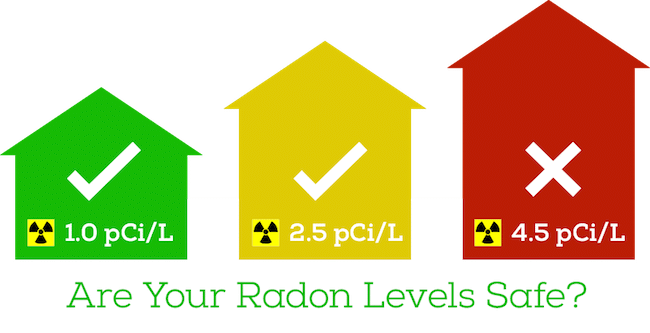
Radon occurs naturally in decaying rocks, water and soil. It enters your home through cracks or other openings in your foundation. While radon gas is found naturally both indoors and outdoors, its characteristics cause it to be found in higher concentration in the home’s lowest level or basement. (Glad you didn’t build one, right?) The EPA has determined that a high radon concentration, meaning 4 or more picocurries per liter of air, increases the risk of lung cancer even among homeowners who have never smoked.
According to the American Association of Radon Scientists and Professionals, the 21,000 annual death figure comes from radon-induced lung cancer.
Radon has been a known carcinogen for decades. In some states, you have to disclose elevated radon levels in homes to prospective buyers.
First, a simple test will read the levels in your home, if any. The quickest is an activated charcoal test. It is as simple as installing two test kits in your home for 48-96 hours that simply tape to the wall.
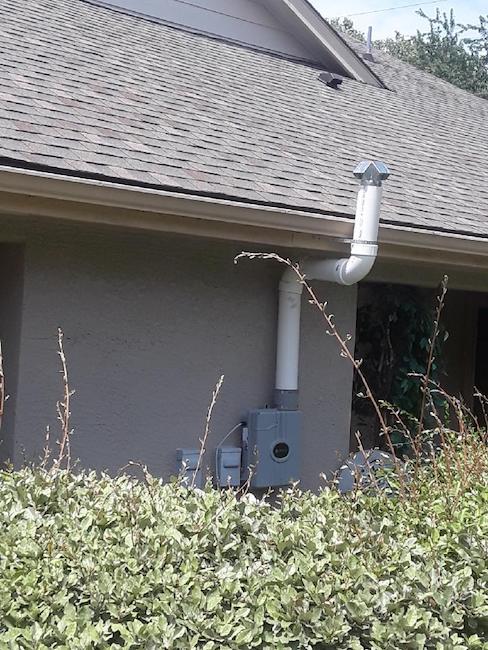
“We send them off to a licensed laboratory and have the results within a few days,” says Zach. “If there are high levels shown from those tests, there are multiple options: you can either mitigate immediately, do another set of short-term tests, or do long-term testing for a period of 90 days up to one year, then decide on mitigation from that point.”
Regardless, testing is the first step and it is the most important. Even if you do have low radon levels on your original test, you need to retest every 2 years. Since Radon is a gas, it is always moving and can show up in your home a year after you’ve had previously low test results.
Also, if you are buying a home, you might ask for a radon test.
If your home is clear, congratulations. You won’t need one of these! We tested our house and found it to be clear, despite that was happening nearby: gives me one less thing to worry about in this crazy world!