
Dallas Real Estate StoreDallas Real Estate StoreDallas Real Estate Store
  • Home
  • Guest Post
  • Agents
  • Design
  • Tools
  • Resources
  • Housing Market
  • Advertise With Us
  • About
  • Contact Us
Reading: Got Gas? Here’s What You Should Watch Out For With Natural Gas Appliances
Share
Font ResizerAa
Dallas Real Estate StoreDallas Real Estate Store
Font ResizerAa
  • Home
  • Guest Post
  • Agents
  • Design
  • Tools
  • Resources
  • Housing Market
  • Advertise With Us
  • About
  • Contact Us
  • Home
  • Guest Post
  • Agents
  • Design
  • Tools
  • Resources
  • Housing Market
  • Advertise With Us
  • About
  • Contact Us
Follow US
© DALTX. All Rights Reserved.
Dallas Real Estate Store > Upon Closer Inspection > Got Gas? Here’s What You Should Watch Out For With Natural Gas Appliances
Upon Closer Inspection

Got Gas? Here’s What You Should Watch Out For With Natural Gas Appliances

3 Min Read
SHARE
Contents
  • Locate Your Gas Meter And Familiarize Yourself With It
  • Improperly Installed Sediment Traps
  • PEX is Perfect if Installed Appropriately
  • Brass Connectors That Need Replacing
Gas-Appliance-Upon-Closer-Inspection-1024x768

Every week, the detail-oriented folks at Green Scene Home Inspections will give Daltxrealestate.com readers an education in inspection. Want to see what they see? Tune in for “Upon Closer Inspection.”

Gas-powered appliances are great, but they do come with some safety concerns.

It’s important to protect against carbon monoxide emissions and gas leaks, both of which can cause major problems. Here are some helpful tips about gas appliances:

Locate Your Gas Meter And Familiarize Yourself With It

Gas-Appliance-Upon-Closer-Inspection-1024x768

Every homeowner should know where their gas meter is and how to shut it off in case of an emergency. It’s usually the first fitting on the natural gas supply pipe coming out of the ground next to the meter. With a wrench, turn the lever in either direction until it is crosswise to the pipe. If you suspect you have a gas leak, you can check at the meter by turning off all gas appliances in the home, then watching to see if there is movement on the gauge.

Improperly Installed Sediment Traps
Gas-Appliance-Upon-Closer-Inspection-1024x768

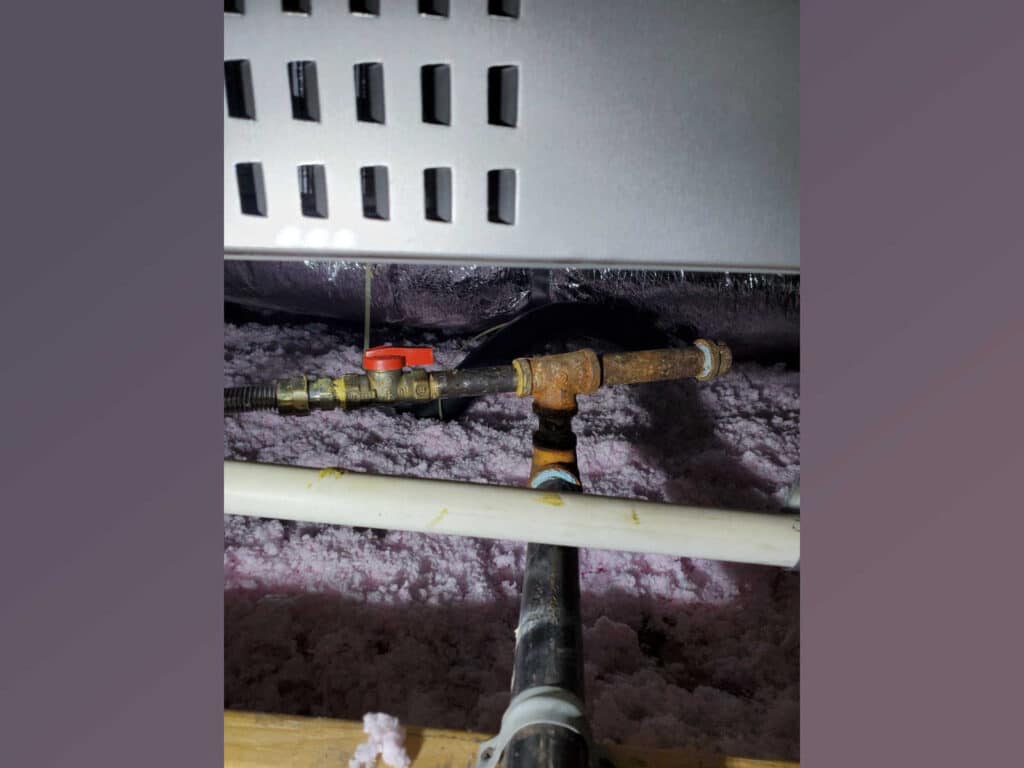
A sediment trap is installed on a gas line to trap any debris that could clog the line and cause a malfunction. These get installed improperly A LOT, like the one below. The line coming in from the right is the gas coming in from outside. The short end extending left is the trap – but this should be pointing down, allowing gravity to cause the sediment to fall into the trap, as gas flows into the pipe. Instead, this is causing the gas to take a couple of sharp turns while sediment will land in the main pipe.

PEX is Perfect if Installed Appropriately
Gas-Appliance-Upon-Closer-Inspection-1024x768

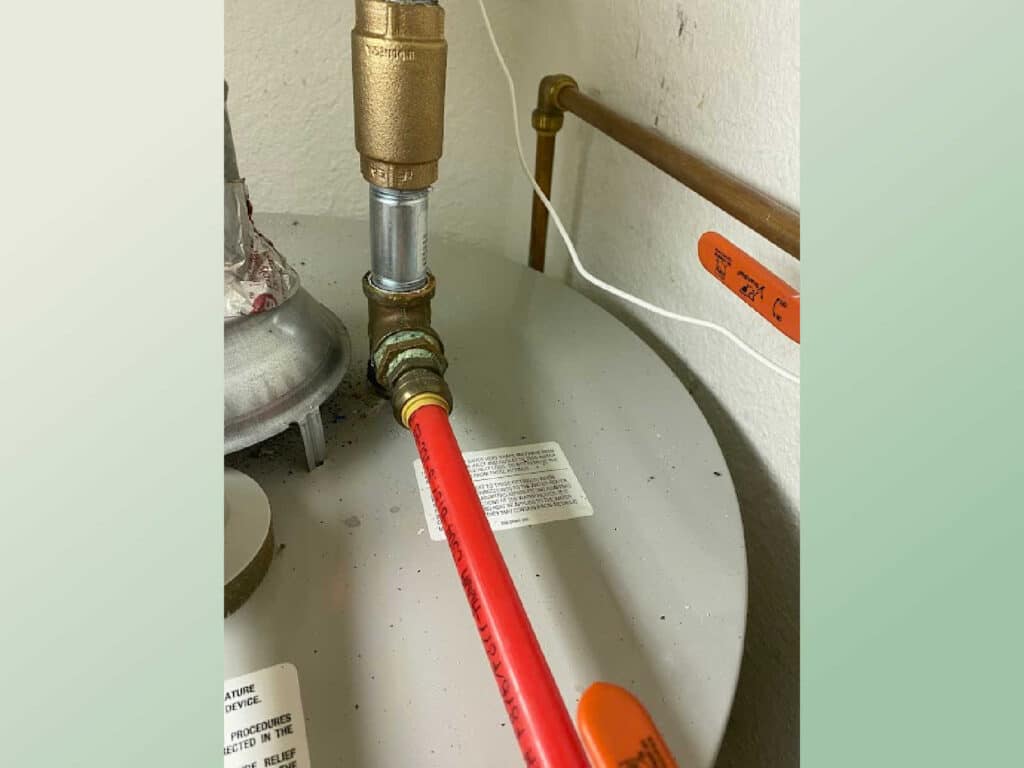
PEX is a newer material that has become hugely popular in recent years. Plumbers say it’s the greatest thing since toilets that flush. It costs less than half the price of copper and installs much faster. It’s extremely versatile, but it can’t be installed close to high heat sources, including being connected directly to a water heater, which we see ALL THE TIME. According to code, PEX line can’t be connected within 18 inches of the water heater. 

Brass Connectors That Need Replacing

If your home or appliances are more than 20 years old, you may have potentially dangerous uncoated brass gas connectors in need of replacement. These were commonly used in the 1950s to 1960s in residential construction. Some uncoated brass connectors have a flaw in the area where the tubing meets the end pieces. It can easily become cracked or torn, which could result in a natural gas leak, fire, or explosion. You can see here, the brass connector is setting off the gas sniffer, indicating a leak.


After South Dallas Gas Explosion, Let’s Talk About Natural Gas Safety
After a Tense Election Day, We Have Your Home Inspection LOLs Right Here
Scary Stories From The Home Inspector’s Notebook
Did You Know That Bugs Are Eating Your House?
Will My Home Insurance Cover That?
TAGGED:Gas Cooktopgas leaksGreen Scene Home Inspections
Share This Article
Facebook Email Copy Link Print
Previous Article Condo’s Cacophony of Construction Creates Chaos
Next Article After The Recent Cryptocurrency Crash, Should You Use it to Buy a Home?
Make us a preferred source on Google
Real Estate Guest Post
Real Estate Guest Post on Daltx

Popular News

Uncategorized

Looking For a Value on Black Friday? Peep This American Classic in West Highland Park

Filing a Lawsuit After an Aviation Disaster: What to Expect

Women’s Homeownership: We’ve Come a Long Way, But There’s Still Room For Improvement

How Much Does Tile and Grout Cleaning Cost?

Striking Alger Park Remodel Bats a Thousand Close to White Rock Lake

DALTX Real Estate

DALTXRealEstate.com is the largest real estate blog and the only one in North Texas.

Links

  • Contact Us
  • Real Estate Glossary
  • Buy our ebook

Categories

  • Home Buying Tips
  • Home Selling Tips
  • Commercial Real Estate
  • Residential Real Estate
  • Home Maintenance
  • Texas Real Estate

Get Involved

  • Advertise With Us
  • Write for Us: Submit Guest Post
  • Paid Guest Post Submission

Policies

  • Advertising & Sponsored Content Disclosure
  • Corrections Policy
  • Editorial Policy
  • Ethics Policy
  • Feedback Policy
  • Ownership & Funding
  • Privacy Policy
  • Terms of Service
© DALTX. All Rights Reserved.