
- How Garage Door Cables Work
- Signs You Need New Garage Door Cables
- How Much Does It Cost to Replace Garage Door Cables?
- How to Replace a Garage Door Cable Safely
- Why You Should Hire a Professional
- Types of Garage Door Cables
- Should You Replace Garage Door Cables Yourself?
- How to Prevent Cable Wear and Tear
- When to Call a Professional
- The Bottom Line
If your garage door isn’t opening properly or looks uneven, you might be dealing with a cable issue.
Understanding garage door cable replacement, how it works, and when it’s needed can help you avoid bigger problems and keep your door operating safely.
In this guide, we’ll cover replacing garage door cables, installation basics, costs, and whether it’s something you should handle yourself.
How Garage Door Cables Work
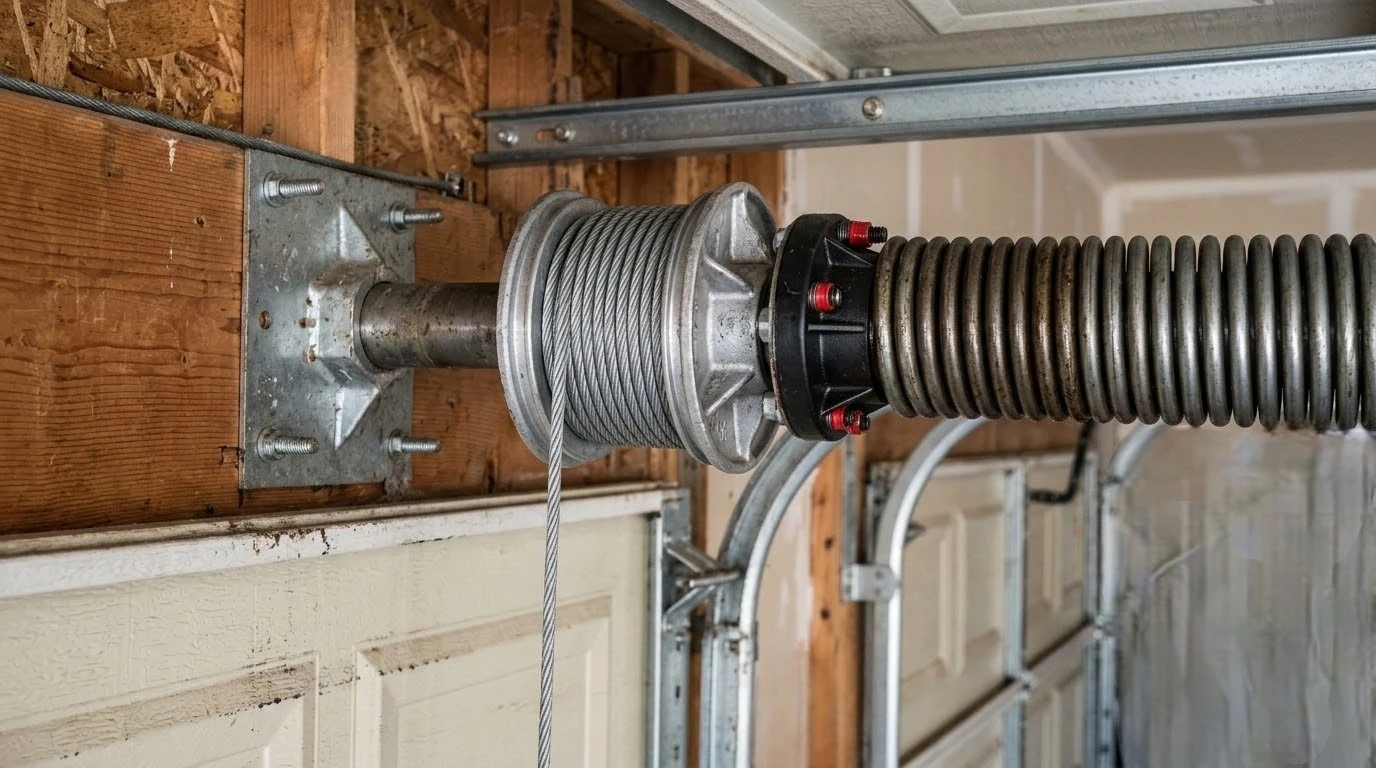
Garage door cables are essential for lifting and lowering your door. They work alongside the springs to support the heavy weight of the door, keep movement smooth and balanced, and prevent sudden drops or misalignment.
Considering a standard residential garage door weighs anywhere from 75 to well over 200 pounds, when cables wear out or snap, your garage door can become dangerous to operate.
Signs You Need New Garage Door Cables
Watch out for these common warning signs. The garage door is crooked or uneven. The door won’t open or close fully. Visible fraying or rust on the cables. Loud snapping or popping noises. The door suddenly drops or feels heavy.
In humid areas or regions with extreme weather changes like we see across Texas, rust can build up much faster on exposed metal parts. If you notice any of these red flags, it’s time to look into replacing your cables before the entire system fails.
How Much Does It Cost to Replace Garage Door Cables?

In 2026, the average cost for cable replacement typically ranges between $150 and $300 for a basic job. Expect to pay between $200 and $400 if you need cables along with minor hardware adjustments. If you require new cables plus a full spring repair, the price ranges from $300 to over $600.
Costs vary depending on door size, cable type, and labor rates in your area. Keep in mind that labor rates in major growing metros like Dallas or Austin might push these averages slightly higher compared to rural neighborhoods.
How to Replace a Garage Door Cable Safely
Garage door cables are under extreme tension and DIY repairs can be incredibly dangerous. This is a general overview and absolutely not a recommendation for beginners.
Here is a quick look at what a professional will do to fix the issue.
- Disconnect the opener by unplugging the system and releasing the door from the opener.
- Secure the door in place by clamping the door or using locking pliers to prevent movement.
- Release spring tension since this is the most dangerous step because the springs must be safely unwound.
- Remove the damaged cable and detach it from the drum and bottom bracket.
- Install the new cable by attaching it securely and winding it properly around the drum.
- Reapply tension and test to carefully reset the system and test the door balance.
Because of the high risk involved, most homeowners choose professional installation over a DIY approach.
Why You Should Hire a Professional
Replacing garage door cables isn’t just about swapping out broken parts. It also involves handling high-tension springs, ensuring proper alignment and balance, preventing damage to the opener and tracks, and maintaining safety for long-term operation.
Working with a professional, like trusted providers such as Cedar Park Garage Doors, ensures the job is done correctly and safely the first time while protecting your home warranty.
Types of Garage Door Cables
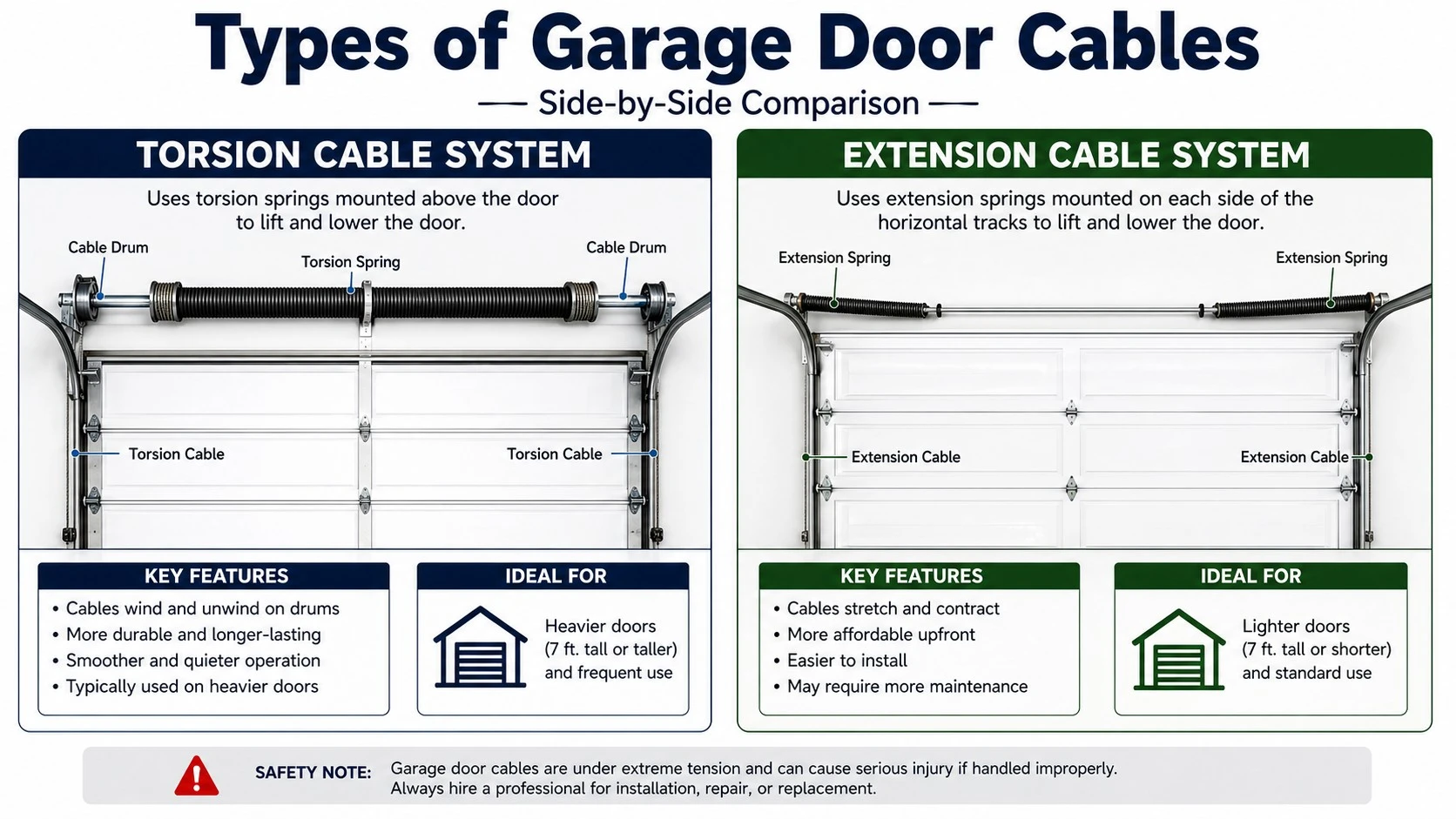
Your home will likely use one of two main cable systems.
Torsion spring cables are used with torsion spring systems and are much more common in modern garage doors because they are incredibly strong and durable. Extension spring cables are used in older systems. They work alongside side-mounted springs and require additional safety cables to prevent them from flying across the garage if they happen to break.
Knowing your system type helps determine the correct replacement method.
Should You Replace Garage Door Cables Yourself?
Technically yes, but we highly advise against it unless you have prior professional experience.
The risks of going the DIY route include serious injury from spring tension, improper installation leading to a total door failure, and expensive damage to your tracks, opener, or panels.
For safety and reliability, professional repair is usually the better choice.
How to Prevent Cable Wear and Tear
Regular maintenance can easily extend your cable life and prevent sudden failure. You should always inspect your cables for fraying or rust and keep the moving parts lubricated.
Avoid forcing the door open or closed by hand. It is also a smart move to schedule annual garage door inspections and replace worn springs before they actually break. Preventive care helps avoid emergency repairs and costly damage down the road.
When to Call a Professional
You should always call a technician immediately if a cable has already snapped or if the door gets stuck and off-track. The same rule applies if the door looks uneven, feels unstable, or if you hear loud snapping sounds coming from the hardware.
If you are ever unsure how to safely fix the issue, pick up the phone. Garage door cables are a safety-critical component so don’t wait if something seems wrong.
The Bottom Line
Garage door cable replacement is essential when cables become worn, damaged, or broken. While small issues may seem manageable, cable problems can quickly become dangerous if ignored.
Most homeowners should rely on professional installation to ensure proper function and safety.
Acting early can prevent bigger repairs, protect your door system, and keep your garage operating smoothly. Whether you are preparing to list your property or just maintaining your forever home, a fully functional garage door is a key part of your home’s value and curb appeal.