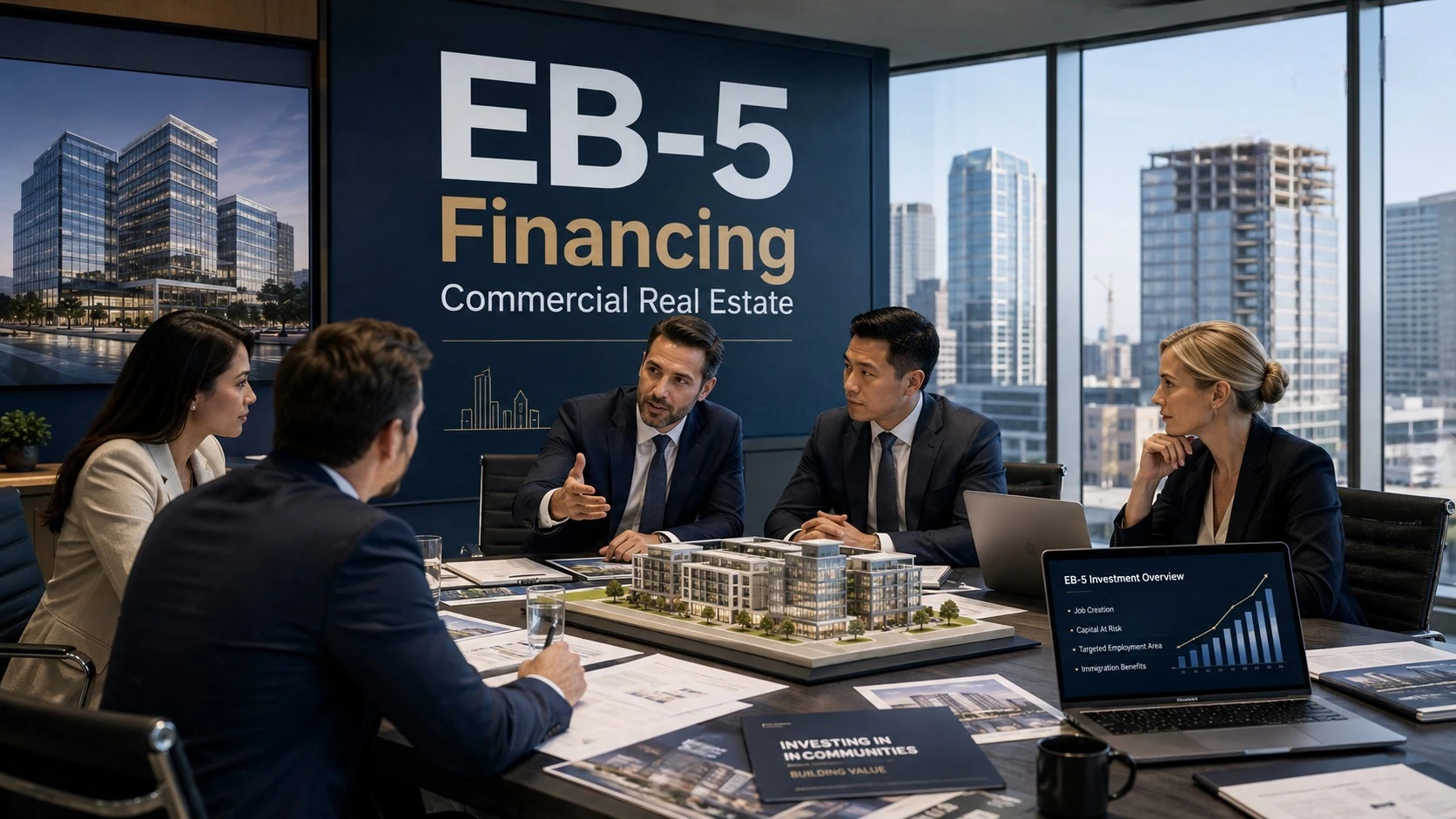
Commercial real estate development often depends on steady access to funding. Whether a developer is building multifamily housing, a hotel, a mixed-use property, or a senior living community, the project usually requires several layers of capital before construction can move forward.
Traditional financing does not always cover the full project cost. Banks may limit their exposure, interest rates may increase borrowing costs, and developers may need additional funding to complete the capital stack. This is where EB-5 financing can become a practical option.
EB-5 financing connects foreign investor capital with U.S. projects that create jobs. For developers, it can support large-scale real estate projects. For investors, it offers a potential pathway to U.S. permanent residency through a qualifying investment.
This makes EB-5 especially relevant in the real estate sector, where development activity often drives job creation.
What Is EB-5 Financing?
This capital comes from the EB-5 Immigrant Investor Program. Under this program, eligible foreign investors invest in a qualifying U.S. business or project. If the investment meets program requirements and creates the required jobs, the investor, along with their spouse and unmarried children under 21, may be eligible to apply for U.S. permanent residency.
In real estate, EB-5 capital is often used for projects such as multifamily developments, hotels, mixed-use communities, commercial buildings, and senior housing. These projects are usually capital-intensive and can generate jobs through construction, operations, and local supplier activity.
For this reason, real estate has become one of the most common sectors for EB-5 investment.
Why EB-5 Fits Commercial Real Estate
Commercial real estate projects often need more than one funding source. A project may include a senior loan, developer equity, bridge financing, mezzanine debt, and investor capital. EB-5 can work as one layer within this capital structure.
For developers, EB-5 capital can help fill funding gaps when traditional financing is limited or expensive. It also adds flexibility by bringing another funding source into the project.
For investors, real estate can be easier to evaluate than some other business models. They can review the land, project location, development plan, construction timeline, market demand, and job creation strategy before making a decision.
This combination makes EB-5 and real estate a natural match. The project receives capital, and the investor participates in a job-creating investment that supports their immigration goals.
Why Developers Use EB-5 Capital
For real estate developers, EB-5 financing serves as an alternative source of project funding. It is especially useful when bank financing does not cover the full project cost or when additional capital is needed to keep construction moving.
EB-5 capital also helps developers diversify their funding sources. Instead of relying only on senior debt or private equity, developers can include foreign investor capital as part of the broader financing plan.
That said, EB-5 is not ordinary project financing. It carries immigration compliance responsibilities. Developers and project sponsors must provide clear documentation, responsible fund use, job creation evidence, and reporting support. The project must be structured carefully so that it can support investor filings and future immigration milestones.
This is why EB-5 financing works best when the real estate project is supported by experienced professionals who understand both real estate finance and immigration requirements.
Why Investors Choose EB-5 Real Estate Projects
Foreign investors usually approach EB-5 with two priorities: immigration eligibility and capital preservation. Financial return may matter, but for many investors, the primary objective is securing a path to U.S. permanent residency for themselves and their families.
EB-5 Projects appeal to investors because they are tangible. Unlike a standard operating business, a real estate development has a physical site, a construction plan, a market, and a visible path toward completion. This makes the investment easier to evaluate.
Investors should still remember that EB-5 capital must remain at risk. A project cannot guarantee repayment, profit, or immigration approval. Therefore, due diligence is critical before investing.
A careful investor should review the developer’s track record, capital structure, project timeline, job creation projections, regional center history, use of funds, and exit strategy. These factors help determine whether the project is strong from both an immigration and financial perspective.
The Role of Regional Centers

Many EB-5 real estate projects are sponsored through regional centers. A regional center is a USCIS-designated entity that supports EB-5 investment projects and helps manage project-level documentation.
EB-5 regional center projects are often more passive for investors than direct EB-5 investments. They also allow indirect and induced jobs to count toward the EB-5 job creation requirement, subject to EB-5 rules and project structure. This is a major advantage in real estate projects where job creation is often tied to construction spending and broader economic activity.
For investors who do not want to manage a business directly, a regional center structure can offer a more practical route. It allows them to focus on project review, source-of-funds preparation, and immigration filings while experienced project teams handle development execution and compliance reporting.
Understanding the Risks
EB-5 financing has benefits, but investors should approach it carefully. Real estate projects can face delays, cost overruns, market shifts, entitlement issues, financing gaps, or construction challenges. These issues can affect project completion, repayment timing, and job creation.
Immigration risk is another major factor. If a project fails to create enough qualifying jobs or lacks proper documentation, investors may face problems later in the green card process.
As a result, investors should not choose a project only because it looks promising. They should understand how the investment fits EB-5 rules, how job creation is calculated, and how the sponsor plans to manage construction, compliance, and investor reporting.
Working with experienced EB-5 professionals can help investors ask the right questions before committing capital.
Moving Forward with EB-5 Real Estate Investment
EB-5 financing is a powerful tool in commercial real estate development when it is structured correctly. It supports funding needs for developers while giving foreign investors a potential pathway to U.S. green cards.
Still, success depends on the quality of the project and the strength of the documentation. Investors should review how the project creates jobs, how the capital stack is built, who is managing the development, and how the investment supports EB-5 compliance.
For investors considering this path, the right guidance matters. An experienced EB-5 service provider can guide them through the process, compare project options, and support them as they prepare for key filing steps.
When strong real estate fundamentals and EB-5 requirements align, the program can create long-term value for developers, investors, and the communities where projects are built.