
- Why Constructive Knowledge Determines the Outcome
- The Short Lifespan of Commercial Property Evidence
- The Medical Reality of Severe Fall Injuries
- How Specific Locations Limit Their Liability
- Why the Invitee Classification Changes Everything
- The Real Cost of Property Hazard Injuries
- Common Questions About Property Hazards
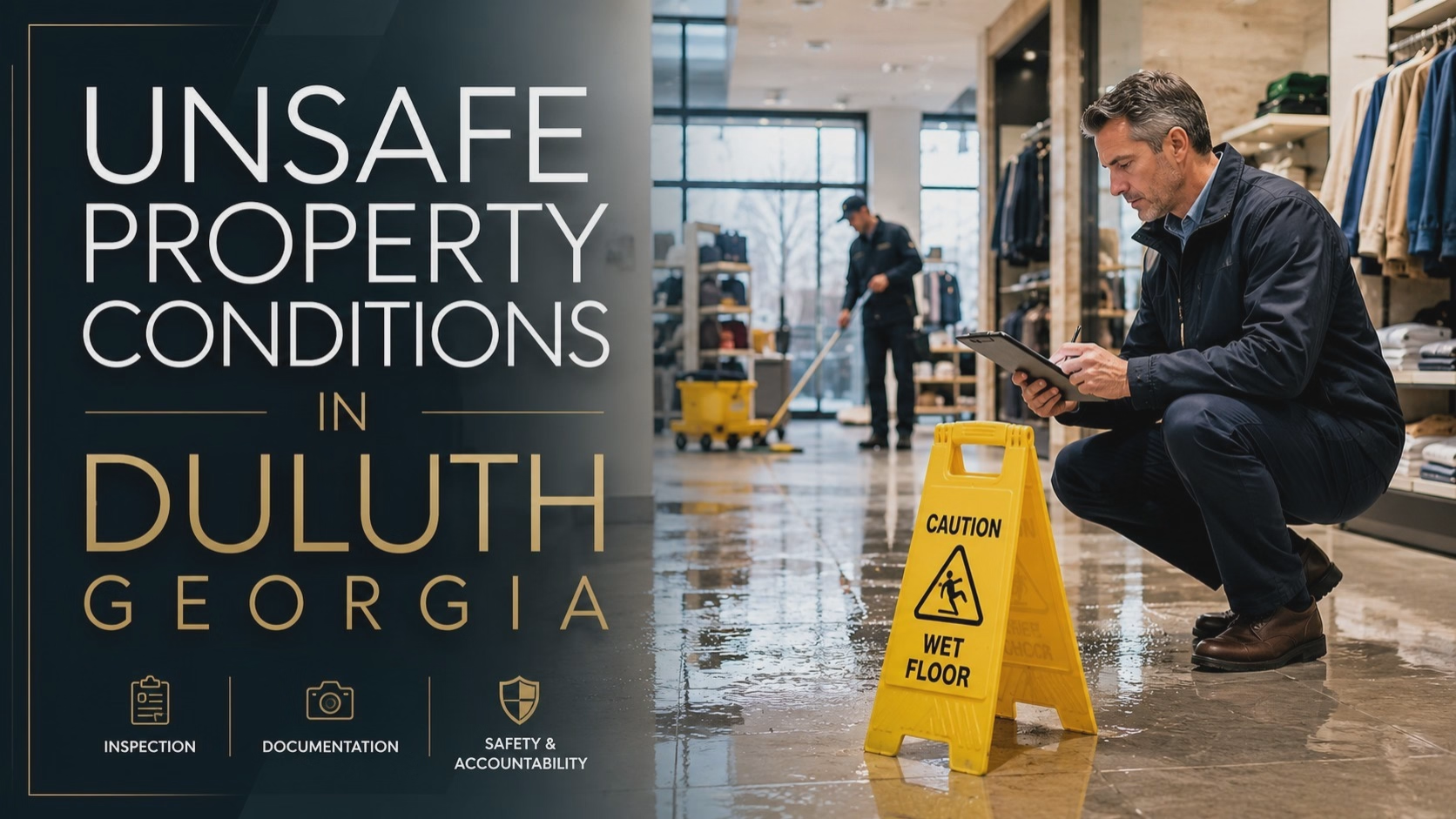
A spilled liquid on a grocery store floor rarely stays unattended by accident. Unsafe property conditions often happen because corporate maintenance budgets consistently shrink while daily foot traffic increases. When someone gets seriously injured inside a retail space, management instantly shifts to a defensive posture.
Incident reports can get lost, surveillance video continuously loops over itself, and witnesses often forget key details. Most hazard claims fail because the core evidence disappears within the first week, not due to a lack of genuine injury.
Why Constructive Knowledge Determines the Outcome
Georgia law does not automatically punish a property owner merely because an accident occurred on their property. Liability hinges entirely on the concept of constructive knowledge. This standard requires proving that the commercial operator either knew or reasonably should have known about the danger before the incident occurred.
Peter Jaraysi, a Duluth premises liability attorney, points out that commercial property managers frequently erase security footage within 72 hours under the guise of standard data overwriting. This effectively destroys the only objective proof of a hazard before a claim even gets filed.
Establishing this timeline requires careful investigation. A plaintiff must demonstrate that the hazardous condition existed long enough for an employee to discover and correct the threat. When a spill is left unattended for 40 minutes near a display, courts generally find that the staff failed their inspection duties. Ignorance isn’t a valid excuse.
The Short Lifespan of Commercial Property Evidence
Video footage and cleaning logs have a very short shelf life in the retail sector. Businesses operating along Pleasant Hill Road handle thousands of transactions every afternoon, and their security networks routinely overwrite old data. Allowing this footage to disappear empowers corporate defendants to deny that a hazard existed.
Securing a Duluth GA premises liability lawyer, like the team at Slam Dunk Attorney evaluating injury matters in Gwinnett County, forces the immediate preservation of this media. Legal professionals lock down this evidence through spoliation letters. Once a manager receives this formal notice, destroying the video constitutes a sanctionable offense. This action prevents companies from hiding the truth.
The Medical Reality of Severe Fall Injuries
Hitting a hard commercial surface often causes serious injuries rather than simple bruising. Emergency rooms process a massive volume of these patients, and the financial toll compounds rapidly during the initial recovery phase. Sudden impacts can easily break bones.
Orthopedic Damage and Hip Fractures
Severe bone injuries are some of the most devastating outcomes of a fall. According to the CDC, nearly 319,000 older people require hospitalization annually due to hip fractures caused directly by falls. These specific injuries often require immediate surgery and extensive physical rehabilitation.
Neurological and Traumatic Brain Injuries
Striking the head against a concrete floor frequently causes hidden neurological damage. Medical staff at Northside Hospital Gwinnett routinely order specialized imaging scans to detect microscopic brain bleeding following these violent impacts. A concussion often starts out feeling like a mild headache before escalating into serious cognitive issues.
Injured near the bustling traffic of Pleasant Hill Road? Connect with Slam Dunk Attorney for a free consultation about your case. You can visit them at 2250 Satellite Blvd, Ste 120, a 12-minute drive from Northside Hospital Duluth on 3620 Howell Ferry Rd NW, or call 678-329-9750 to talk with their team.
How Specific Locations Limit Their Liability
Industrial parks and recreational areas operate under very different liability standards depending on visitor classification. Facilities located near Peachtree Industrial Boulevard strictly control public access. Individuals who bypass security gates and enter private loading zones without permission lose almost all legal protection, as property owners owe minimal duties to trespassers.
Municipalities present completely different procedural hurdles. An injury occurring on county property, such as a damaged walking path at McDaniel Farm Park, requires overcoming strict sovereign immunity caps and tight filing deadlines. Claims against a government entity require a highly specific ante litem notice months before any lawsuit gets filed. Missing deadlines can completely ruin your claim.
Why the Invitee Classification Changes Everything
Property owners owe the highest legal duty of care to invitees. The law requires business operators to proactively inspect their aisles and parking lots to keep these individuals safe from hidden dangers. Regulatory agencies heavily penalize ignored hazards.
On the other hand, a licensee enters purely for their own convenience or as a social guest. If someone visits a friend’s apartment complex and falls on a broken staircase, the legal burden shifts heavily. The property owner is liable for a licensee only if they willfully exposed the guest to a known danger or acted with wanton recklessness. Your specific legal status determines the outcome.
The Real Cost of Property Hazard Injuries
The financial impact of a property hazard injury can drain a family’s savings well before the justice system resolves the dispute. Victims routinely underestimate the cost of specialized medical care and permanent wage loss resulting from new mobility impairments. The financial toll begins immediately.
National healthcare systems absorb a massive financial hit from these incidents. Federal data shows that medical costs for falls are about 50 billion dollars in a single year. Workplace hazards add to this economic drain. According to the Bureau of Labor Statistics, falls, slips, and trips accounted for 14 percent of all fatal occupational injuries in Georgia during 2024. These numbers highlight the harsh consequences of negligent property maintenance.
Common Questions About Property Hazards
What happens if an incident report is never filed at the scene
Failing to secure a report on the day of the event gives the defense immediate grounds to deny the claim. Without same-day documentation, corporate attorneys will argue the injury occurred elsewhere. Victims must demand a written report from the working manager and verify that it contains an accurate time stamp.
How does a prior injury impact a new property claim
Insurance carriers aggressively search medical histories to label new trauma as a prior condition. A plaintiff must rely on advanced MRI imaging and specialized orthopedic testimony to differentiate fresh structural damage from old wear and tear. Complete medical transparency prevents the defense from hurting the claimant’s credibility during depositions.
Where are lawsuits involving local retail hazards officially filed
Lawsuits about negligent property maintenance in this jurisdiction generally proceed through the Gwinnett County State Court. The specific venue depends on the corporate structure of the defendant and the total damages sought, as federal diversity of citizenship rules sometimes force a transfer directly to a higher district court.
This content is for informational purposes only and does not constitute legal advice. Readers should consult a licensed Duluth attorney, like the one mentioned in the article, for guidance specific to their situation.