- Why Traditional Tenant Portals Are Falling Behind
- What’s Driving the Shift in Dallas Multifamily Properties
- Mobile Apps vs. Tenant Portals: A Functional Comparison
- How Mobile Apps Are Changing the Tenant Experience in Dallas
- Operational Benefits for Property Managers
- Why Custom Apps Are Gaining Ground Over Standard Portals
- Real Estate UX as a Competitive Factor in Dallas
- What the Next Phase of Multifamily Digital Operations Looks Like
- Final Thoughts
Dallas-Fort Worth is still seeing strong multifamily growth, especially across fast-growing suburban corridors and job centers such as Frisco, Plano, McKinney, Celina, and Irving. But as new communities continue to open, they are entering a more competitive rental market where resident expectations have moved well beyond older property management software.
You can see a clear shift in how multifamily communities operate today. Traditional web portals still handle the basics, but they often fall short of the daily, mobile-first experience renters now expect. Residents are used to managing banking, shopping, travel, food delivery, and customer service from their phones. A clunky resident website that feels stuck in 2015 no longer matches how people actually live.
Because of that, many property managers are moving away from static portal systems and working with a mobile app development company in Dallas to support more responsive, app-based tenant experiences. For some communities, that means adding stronger app-based tools through existing property management platforms. For others, it means working with real estate app development teams to build a resident experience that fits their specific operations, building layout, amenities, and communication needs.
Why Traditional Tenant Portals Are Falling Behind
Tenant portals site were built for basic administrative functions like paying rent, signing a lease, or putting in a maintenance request. They were useful for that era, but many were not designed for daily resident engagement.
The biggest issue is usability. Many portals still depend on web-based interfaces that do not translate well to a phone screen. If a resident is trying to submit a maintenance request while heading out the door, pinching through a desktop-style page on a mobile browser creates unnecessary friction.
There is also the problem of fragmentation. Payments, maintenance, messages, documents, amenity reservations, and community updates may live in different tabs, tools, or systems. That makes the experience feel scattered. Residents log on only when necessary and that limits management’s ability to connect with them consistently.
Overall, older portals often lack the real-time, personalized feel residents now expect from digital services.
What’s Driving the Shift in Dallas Multifamily Properties
This transition is not happening in a vacuum. It is tied directly to the way the Dallas-Fort Worth rental market is operating right now.
DFW continues to benefit from population growth, job growth, and strong suburban expansion. At the same time, the region has worked through a large wave of apartment deliveries, which has made competition for residents more intense. In a market with more options, retention matters.
The renter demographic has changed, too. Millennials and Gen Z renters are comfortable managing daily tasks from their phones. They are less patient with delayed email responses, unclear maintenance updates, or software that forces them to jump between multiple systems.
On the management side, operators are being pushed to run communities more efficiently, and not to let operating costs climb too fast. That creates a real need for unified digital tools that cut down on manual work, organize requests and make communication easier.
Mobile Apps vs. Tenant Portals: A Functional Comparison
Here is how traditional tenant portals generally compare with dedicated mobile-first resident apps:
| Feature | Tenant Portals | Mobile Apps |
|---|---|---|
| User Experience | Web-based and often static | Mobile-first and easier to navigate |
| Maintenance Requests | Often manual or limited | Real-time updates with photos and status tracking |
| Communication | Usually email-based | Push notifications and in-app messaging |
| Engagement | Often low | Higher potential for daily use |
| Accessibility | Limited on mobile | Always available from a resident’s phone |
The main difference comes down to responsiveness. A mobile app can support an ongoing, two-way relationship between the property and the resident. A basic portal is more like a digital filing cabinet.
How Mobile Apps Are Changing the Tenant Experience in Dallas
A well-built resident app can make day-to-day apartment living feel much easier.
Maintenance is one of the clearest examples. A resident can take a picture of a dripping faucet, submit the request, add notes and get updates without having to call the office or send a separate email. The maintenance team has better context before entering the unit, which can reduce delays and unnecessary back-and-forth.
And communication becomes more immediate. Push notifications let property managers avoid mass emails that can be ignored or buried in an inbox. They also allow for alerts about parking changes, fire alarm testing, package updates, amenity closures, weather alerts or emergency notices.
Some communities use apps as digital bulletin boards for resident events, shared announcements, local perks and amenity updates. This can increase residents’ sense of connection to the property without requiring the management team to repeat the same information on multiple channels.
When residents can access account details, service history, building updates and community information from one convenient platform, the experience becomes more seamless.
Operational Benefits for Property Managers
This is not just a resident-facing upgrade. And it can also remove a lot of friction for the property management team.
When communication is centralized, teams spend less time sending repeated emails or answering the same questions one by one. When maintenance requests come in via structured forms, staff can see the issue, location, priority, photos and status in a cleaner workflow.
Faster response times matter, because maintenance and communication are so closely tied to resident satisfaction. Clean, prompt resolution of issues gives residents more confidence in the management team and consideration for renewal.
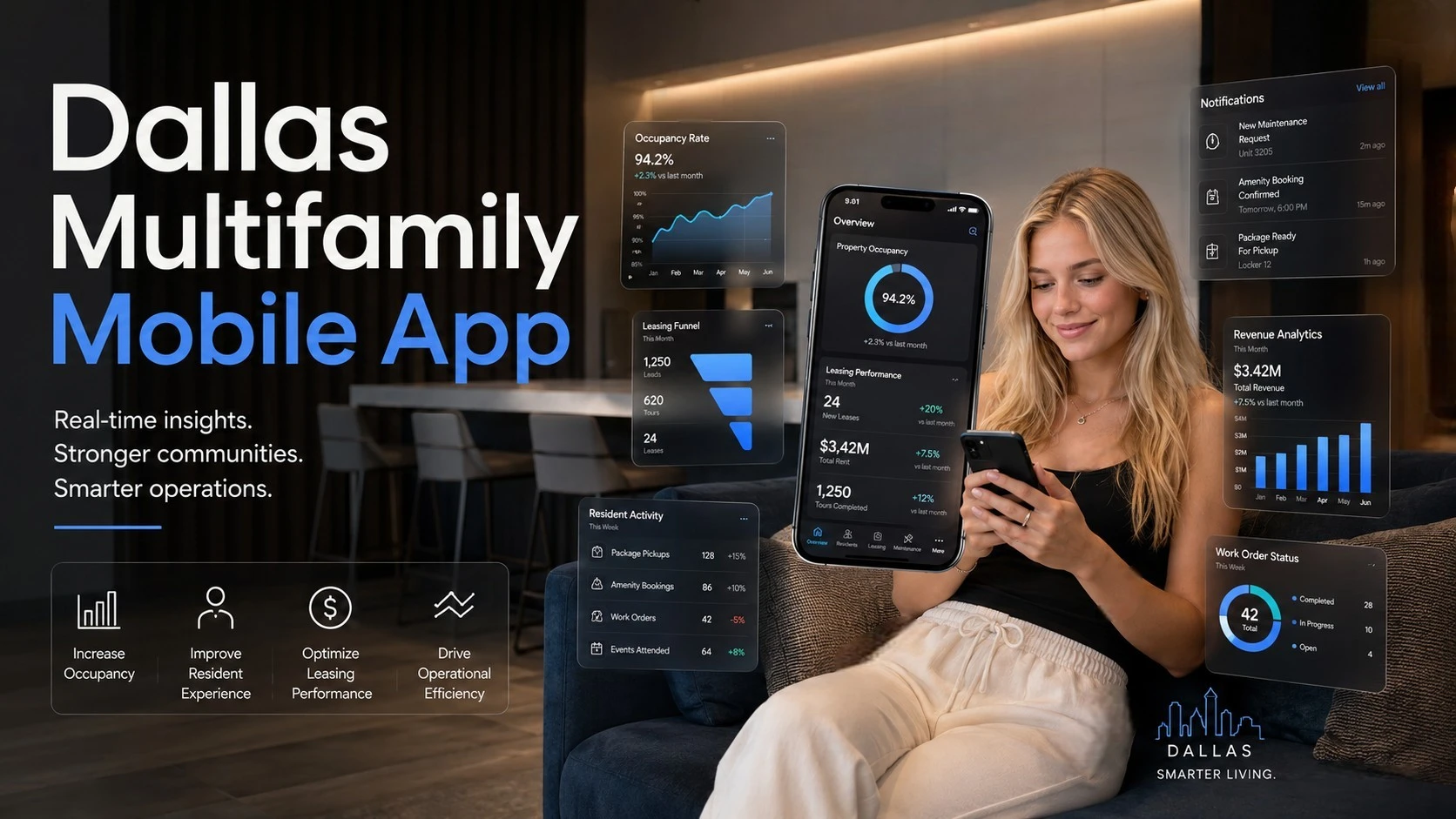
A mobile-first system can also provide managers with a better dashboard view into what’s happening across the property. Rather than having to dig through email threads, spreadsheets, and disparate platforms, they can see open requests, pending tasks, resident messages, and operational patterns all in one place.
Why Custom Apps Are Gaining Ground Over Standard Portals
Off-the-shelf software works for many properties, but it does not always fit the way every community operates.
Standard property management portals are usually built for broad, general use. That can create awkward workflows when a property has unique amenity rules, package procedures, maintenance routing, access control needs, or communication standards.
Integration is often the biggest challenge. A property may use one system for rent collection, another for maintenance, another for emails, and another for resident events or access control. When those systems do not talk to each other well, both staff and residents feel the friction.
That is why some operators are exploring custom real estate app development services. A custom or semi-custom solution can be built around the property’s actual workflow instead of forcing the team to adapt to software that was not designed for them.
Real Estate UX as a Competitive Factor in Dallas
User experience is becoming a real differentiator in the Dallas rental market.
From the resident’s perspective, many interactions with management now happen through a screen. Paying rent, asking for a repair, reserving an amenity, receiving an alert, or checking a policy all shape how the resident feels about the property.
Dallas communities are not just competing on location, square footage, amenities, or rent anymore. They are also competing on convenience. Even small improvements in how a digital experience looks and functions can make a property feel easier to live in.
That matters in a market where renters have choices.
What the Next Phase of Multifamily Digital Operations Looks Like
The next chapter for Dallas multifamily operations will be more connected, automated and mobile-first. Resident communication is becoming more automated, with updates triggered by events such as package scans, work order status changes, amenity closures, or scheduled inspections.
Behind the scenes, managers are trying to bring rent payments, maintenance, messaging, documents, amenities, and resident engagement into more unified dashboards. The goal is not just to add another app. The goal is to reduce fragmentation and make the property easier to operate.
Over time, clunky software stacks will continue giving way to more streamlined resident platforms that feel closer to the consumer apps renters already use every day.
Final Thoughts
It’s not just a tech trend to move beyond traditional web portals. It reflects a broader shift in how Dallas multifamily communities operate.
As renter expectations keep rising, a strong mobile resident experience is becoming part of the property’s core infrastructure. Older portals are losing ground because residents and managers both need faster communication, easier service requests, better visibility, and fewer disconnected systems.
Mobile apps are becoming the central hub for how modern rental communities communicate, operate, and retain residents. In a competitive Dallas-Fort Worth market shaped by growth, new supply, and changing renter expectations, it makes sense that more multifamily operators are moving in this direction.