- Start With Waterproofing
- Choosing the Right Wall and Floor Tiles
- Grout Selection Matters
- Shower Wall Panels vs Tiles
- Vanity and Cabinet Materials
- Ceiling and Paint Selection
- Flooring Beyond Tiles
- Hardware and Fixtures
- Ventilation Is Essential
- Budget vs Long-Term Durability
- Final Thoughts on Wet Area Materials in Bathrooms
Wet areas are the toughest spots in any home. Bathrooms are exposed to constant moisture, temperature changes, steam, and regular cleaning. Choosing the wrong materials can lead to swelling, mold growth, staining, or long-term structural damage.
When planning new bathrooms or upgrading an existing one, selecting materials suited to wet areas is critical for durability and meeting code requirements.
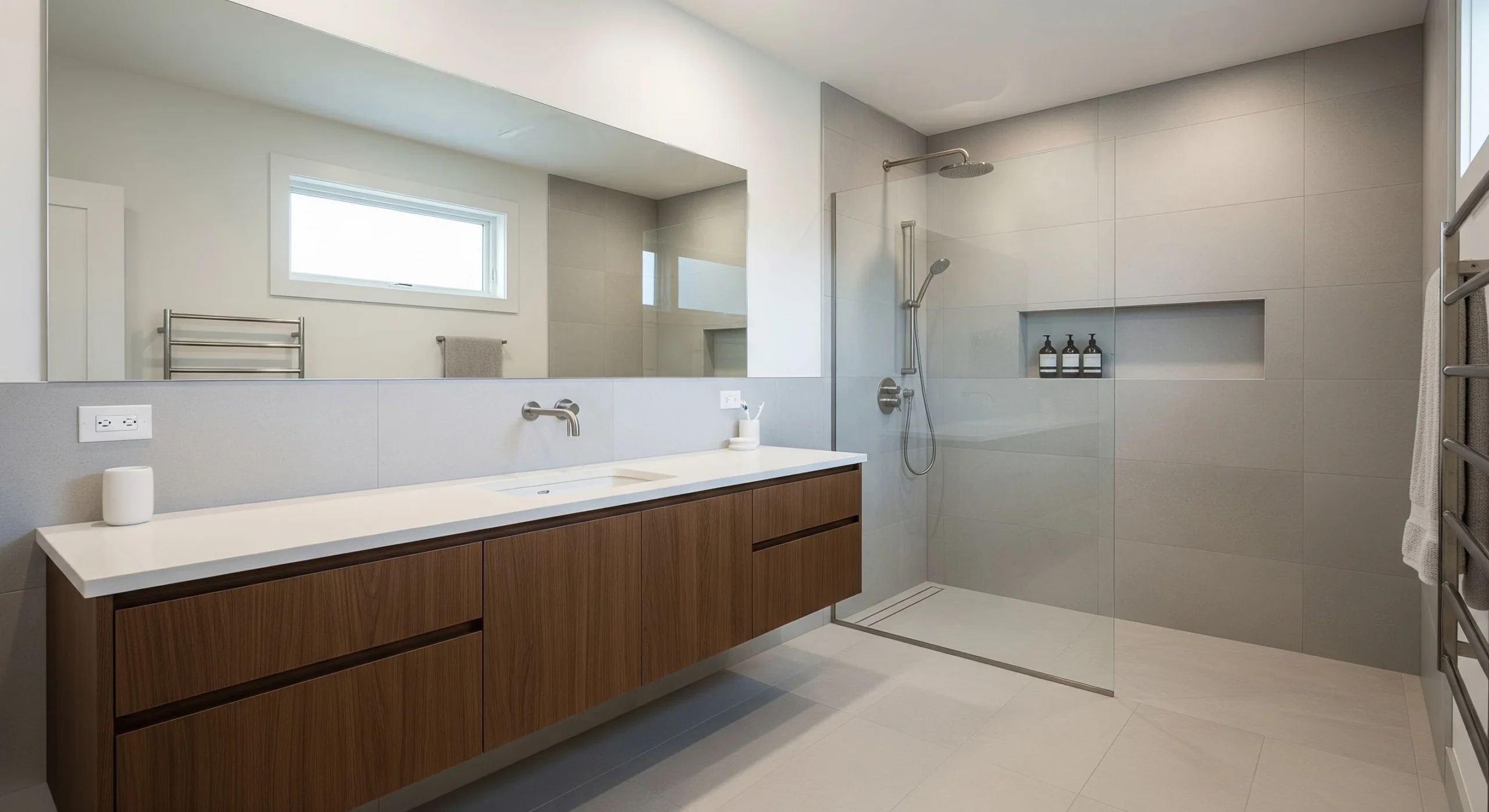
Here’s what to consider when choosing materials for showers, floors, walls, and vanities.
Start With Waterproofing
Before thinking about tiles or finishes, waterproofing is the foundation of any successful bathroom.
In many places, wet area waterproofing must comply with strict building codes. A properly installed waterproof membrane beneath tiles prevents water from penetrating into walls and floors.
Without effective waterproofing, even the best surface materials will eventually fail. Always prioritize professional installation of the membrane before selecting visible finishes.
Choosing the Right Wall and Floor Tiles
Tiles are the most common finish for wet areas due to their water resistance and durability.
Porcelain tiles are generally the best option for floors and showers. They are dense, non-porous, and resistant to water absorption. This makes them ideal for high-moisture environments.
Ceramic tiles can also be suitable for walls but may be slightly more porous than porcelain.
For flooring, slip resistance matters. Look for tiles with appropriate slip ratings to reduce the risk of falls, especially in shower areas.
Large-format tiles are popular in modern bathrooms because they reduce grout lines. Fewer grout lines mean less maintenance and lower risk of mold buildup.
Grout Selection Matters
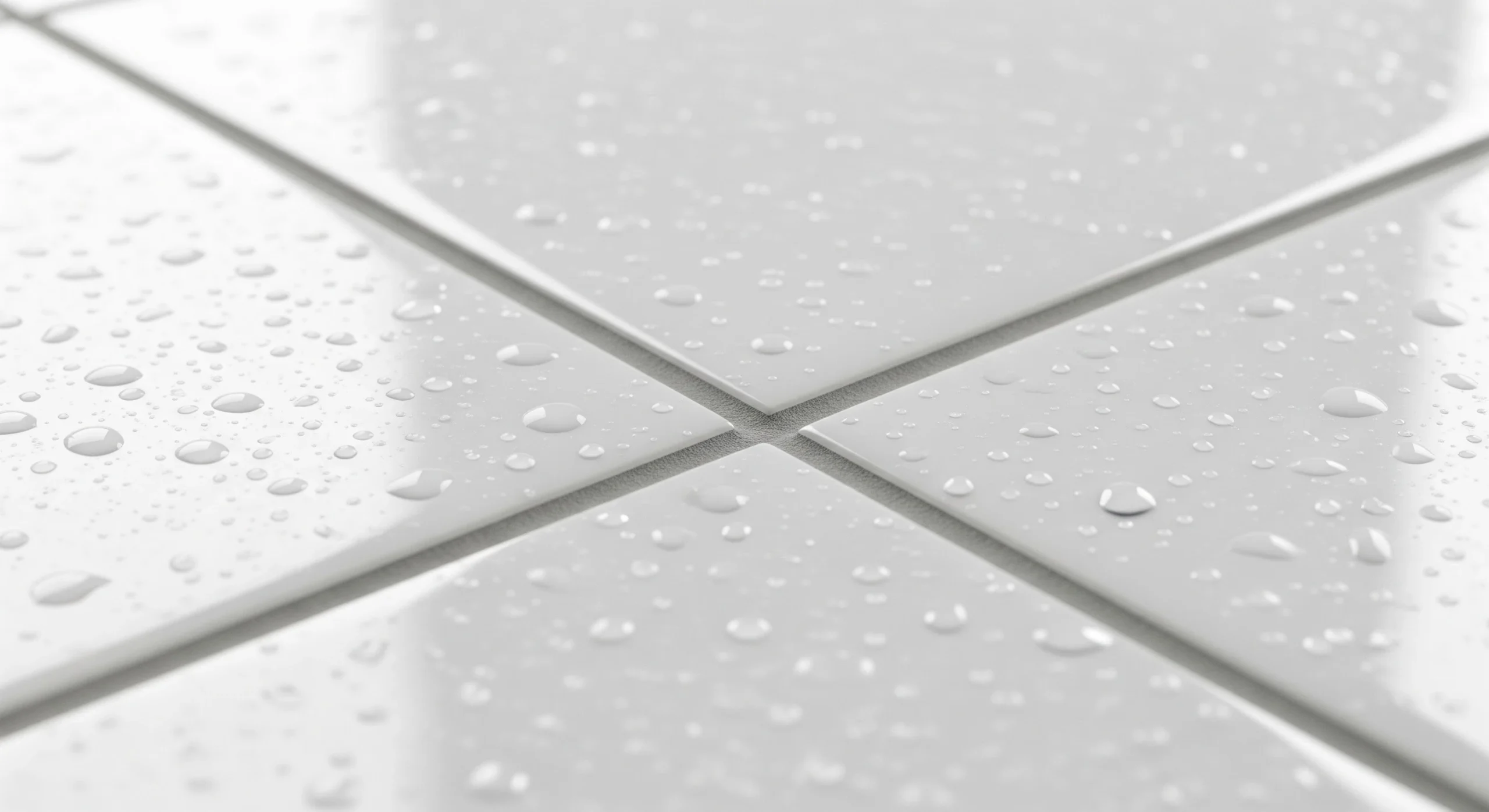
Grout is often overlooked, but it plays a key role in wet areas.
Standard cement-based grout can absorb moisture and discolor over time. Epoxy grout is more resistant to water, staining, and mold growth. While more expensive, it provides long-term durability in high-moisture areas.
Choosing mold-resistant grout reduces maintenance and extends the life of your bathroom finishes.
Shower Wall Panels vs Tiles
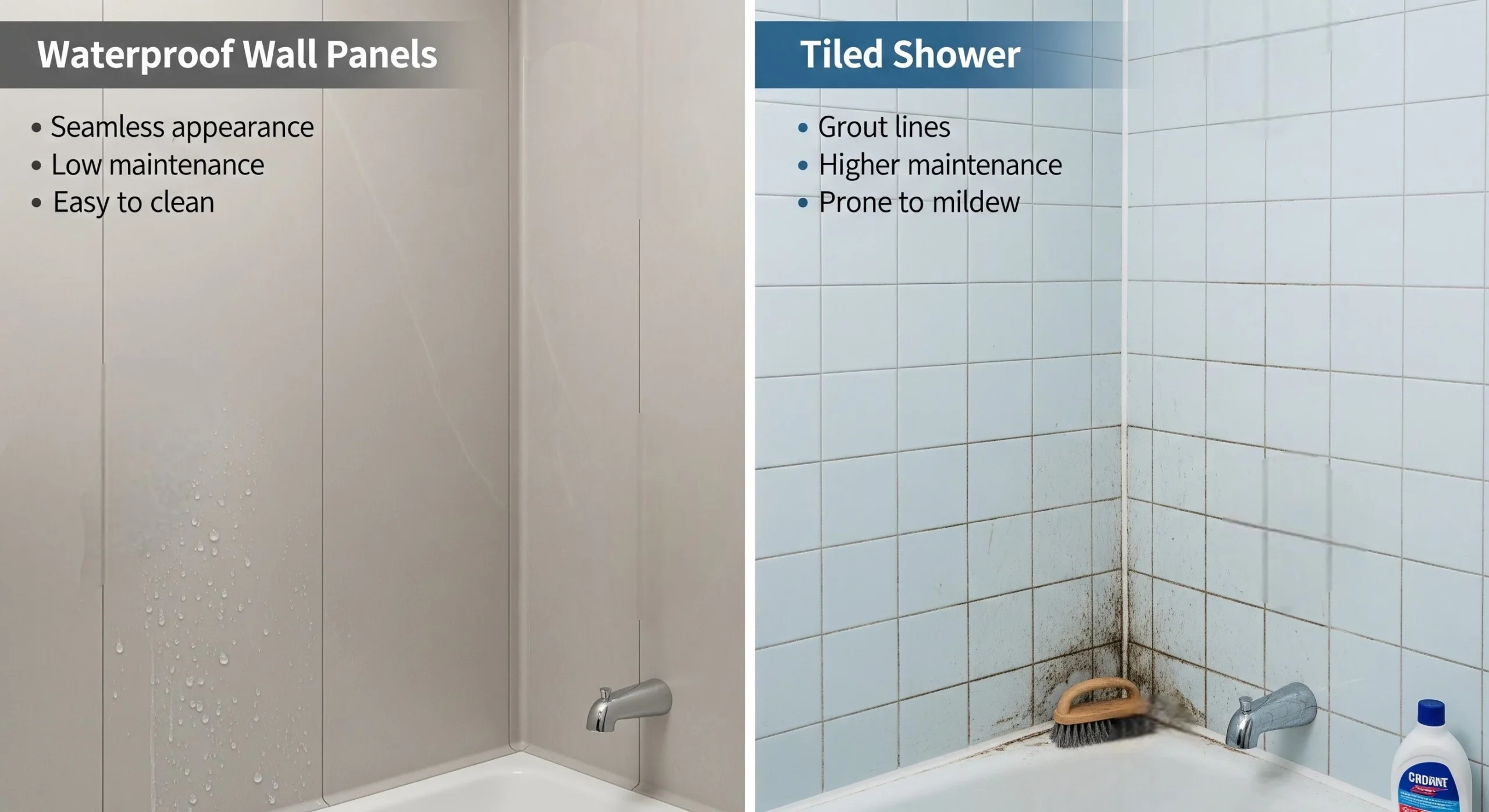
Some homeowners choose waterproof shower wall panels instead of tiles.
High-quality acrylic or composite panels provide seamless surfaces with minimal joints. This reduces cleaning effort and eliminates grout-related issues.
Panels are particularly suitable for renovations where speed and lower maintenance are priorities.
However, tiles still offer greater design flexibility and texture options.
Vanity and Cabinet Materials
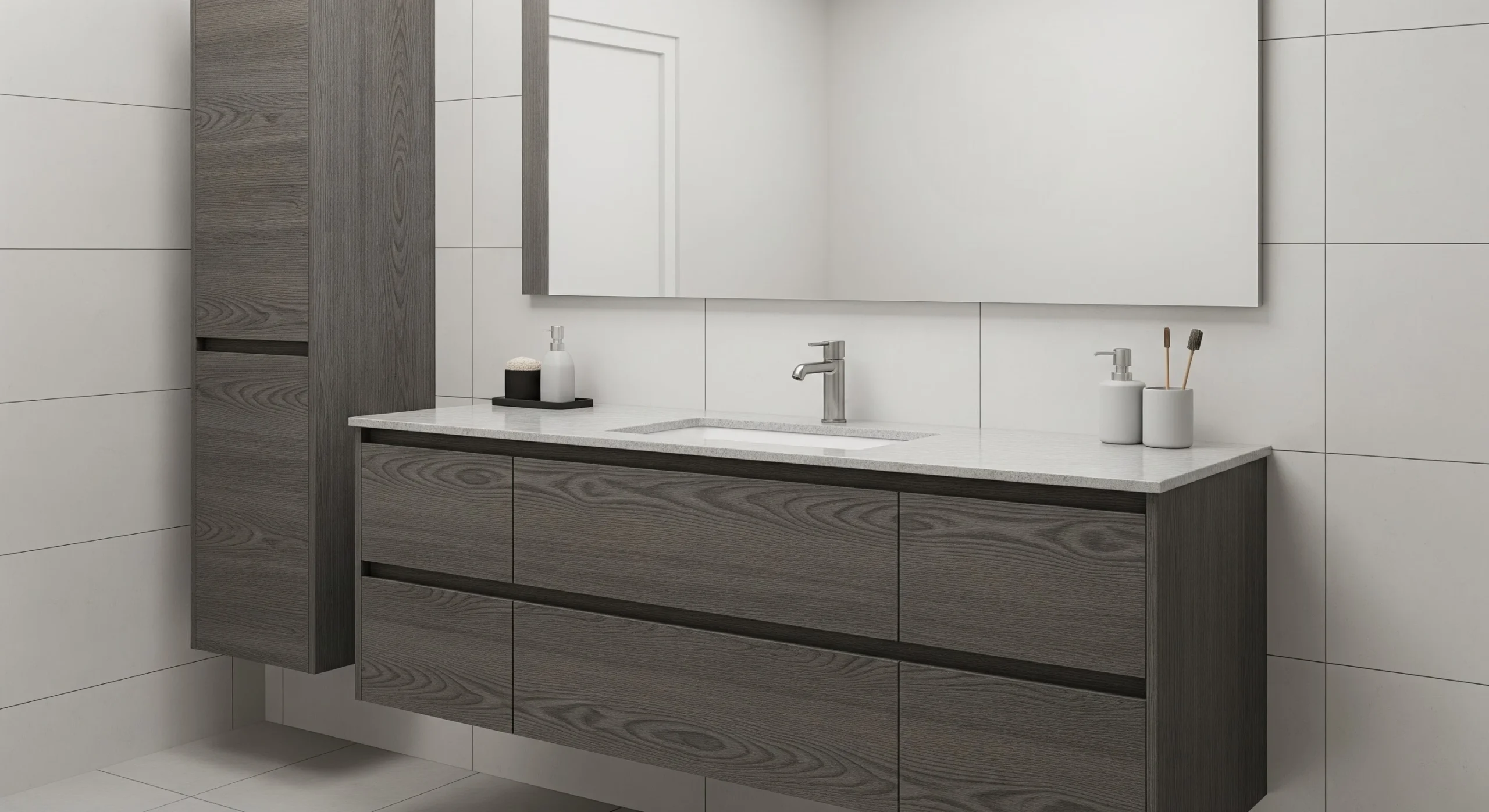
Bathroom vanities must withstand moisture and humidity.
Solid wood is generally not recommended in wet areas unless properly sealed. Even then, humidity can cause expansion and warping.
Moisture-resistant MDF or plywood with high-quality laminate finishes are common choices. These materials are designed to handle humid conditions without swelling.
Stone or engineered stone countertops are durable and water-resistant, making them ideal for vanity surfaces.
Ceiling and Paint Selection
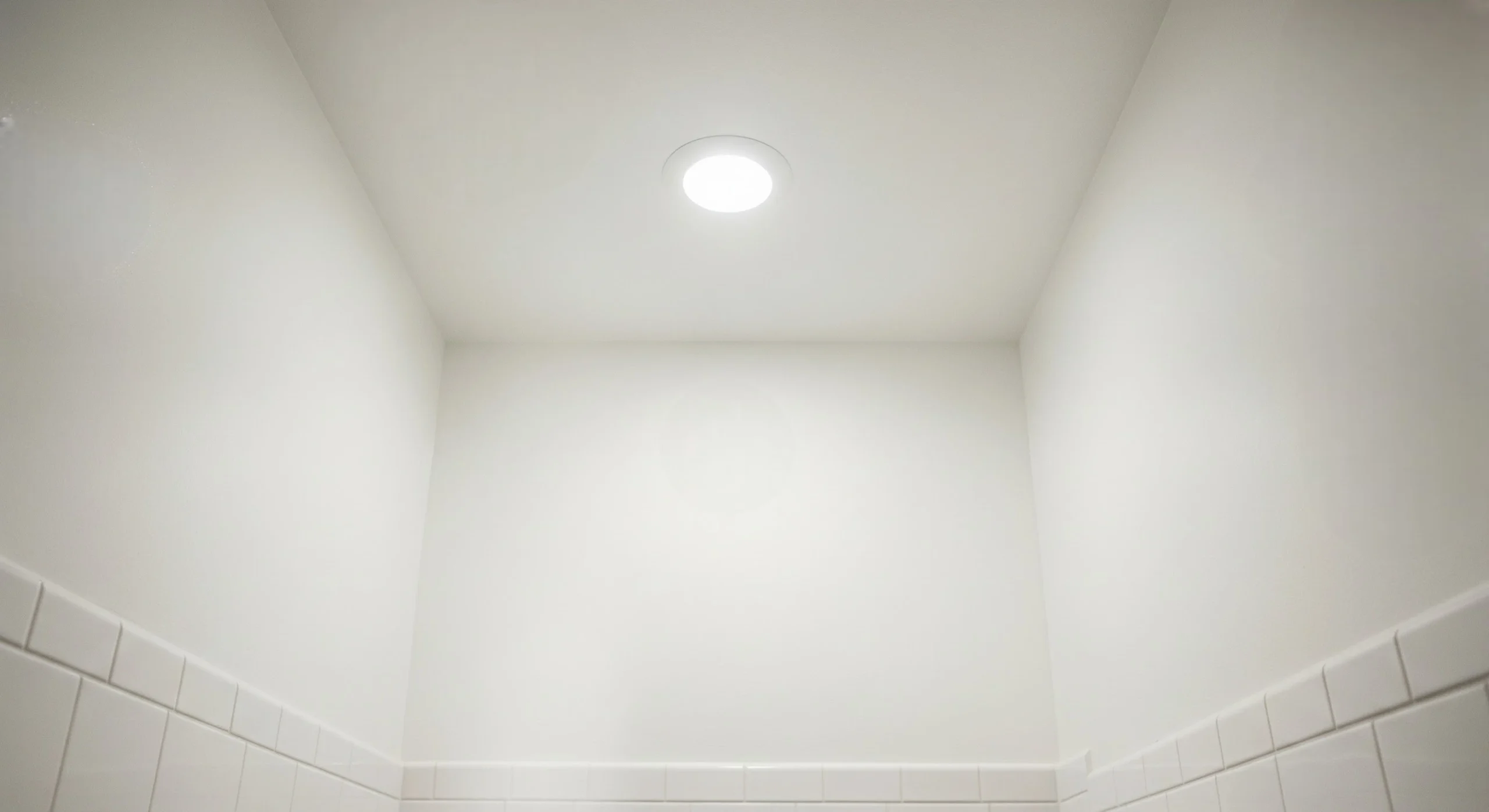
Bathroom ceilings and upper walls are exposed to steam.
Using mold-resistant, moisture-resistant paint reduces peeling and mold growth. Adequate ventilation through exhaust fans also protects painted surfaces from long-term damage.
Inadequate ventilation is one of the most common causes of bathroom deterioration.
Flooring Beyond Tiles
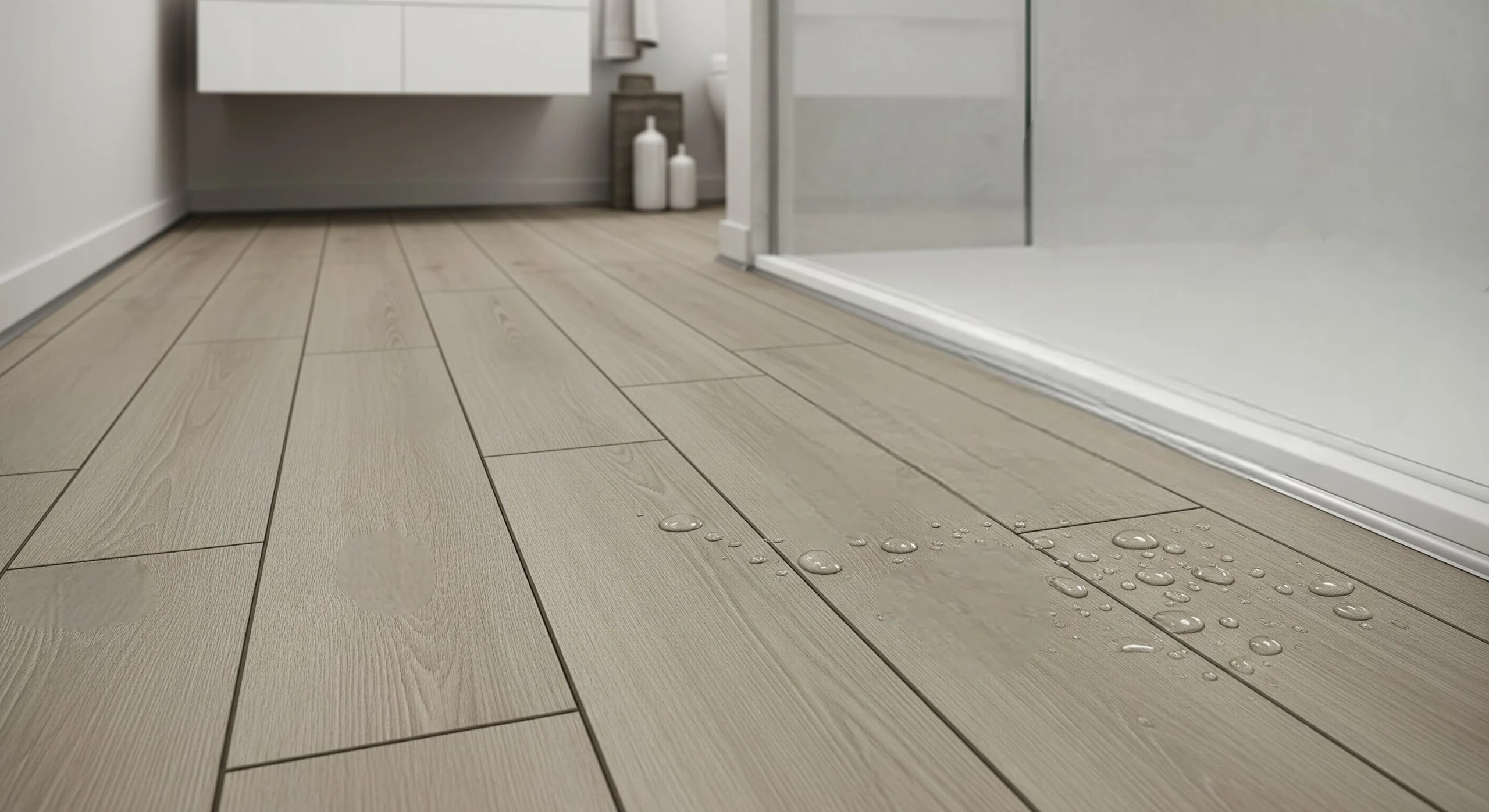
While tiles are the most common flooring choice, some homeowners consider alternative materials.
Vinyl flooring designed for wet areas can be water-resistant and softer underfoot. However, it must be installed correctly to prevent water from seeping underneath.
Wood flooring is generally unsuitable for bathroom wet areas due to moisture sensitivity.
Hardware and Fixtures
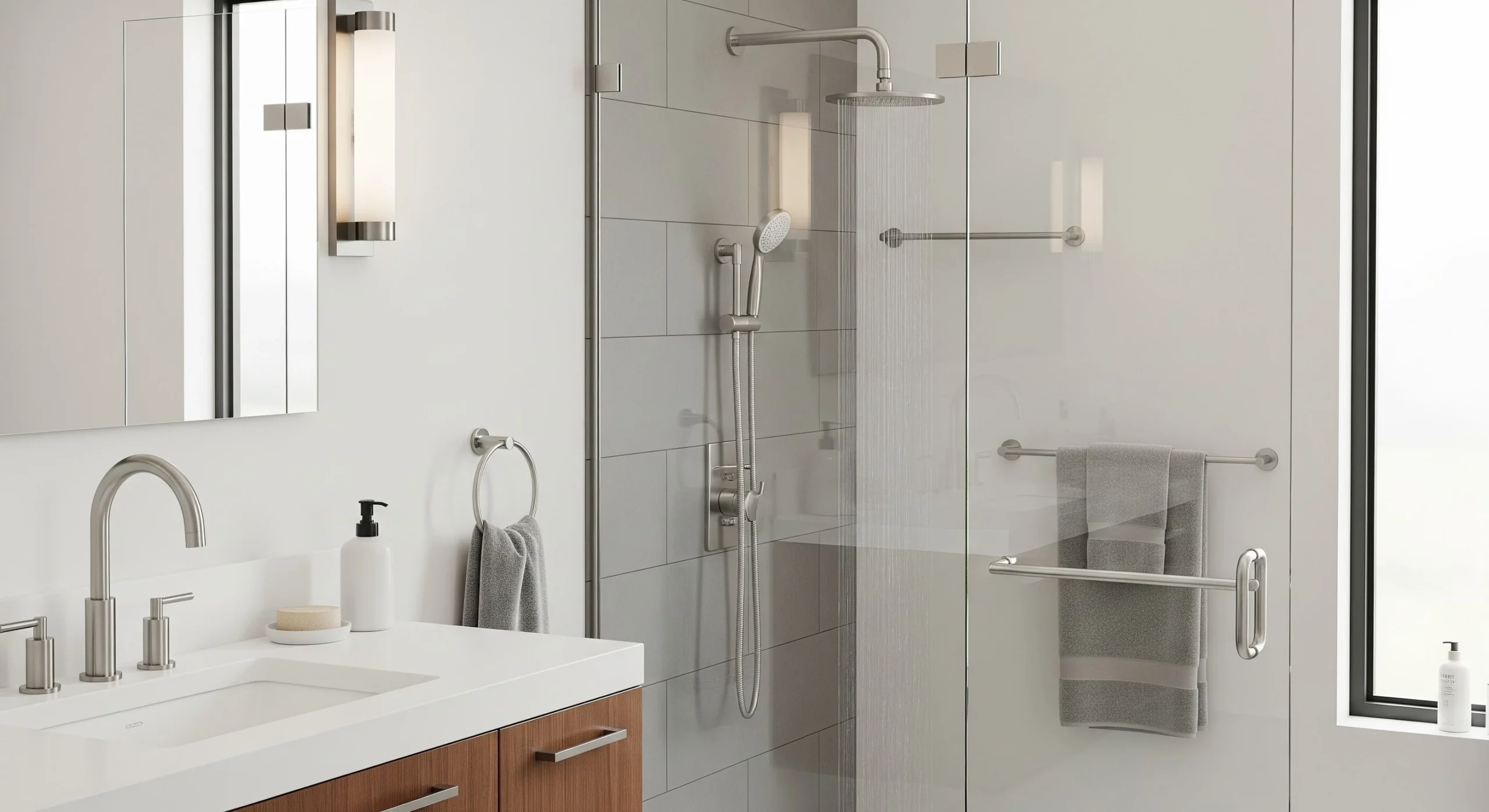
Fixtures such as faucets, shower doors, and fittings should be corrosion-resistant.
In many coastal regions, salt exposure increases the risk of corrosion. Stainless steel or high-quality chrome finishes are more durable than cheaper plated alternatives.
Investing in quality fixtures prevents premature rusting and surface damage.
Ventilation Is Essential

Even the best materials can fail without proper ventilation.
Exhaust fans remove moisture from the air, reducing condensation on walls and ceilings. This protects surfaces and improves overall longevity.
When designing bathrooms, ensure ventilation capacity matches the size of the space.
Budget vs Long-Term Durability
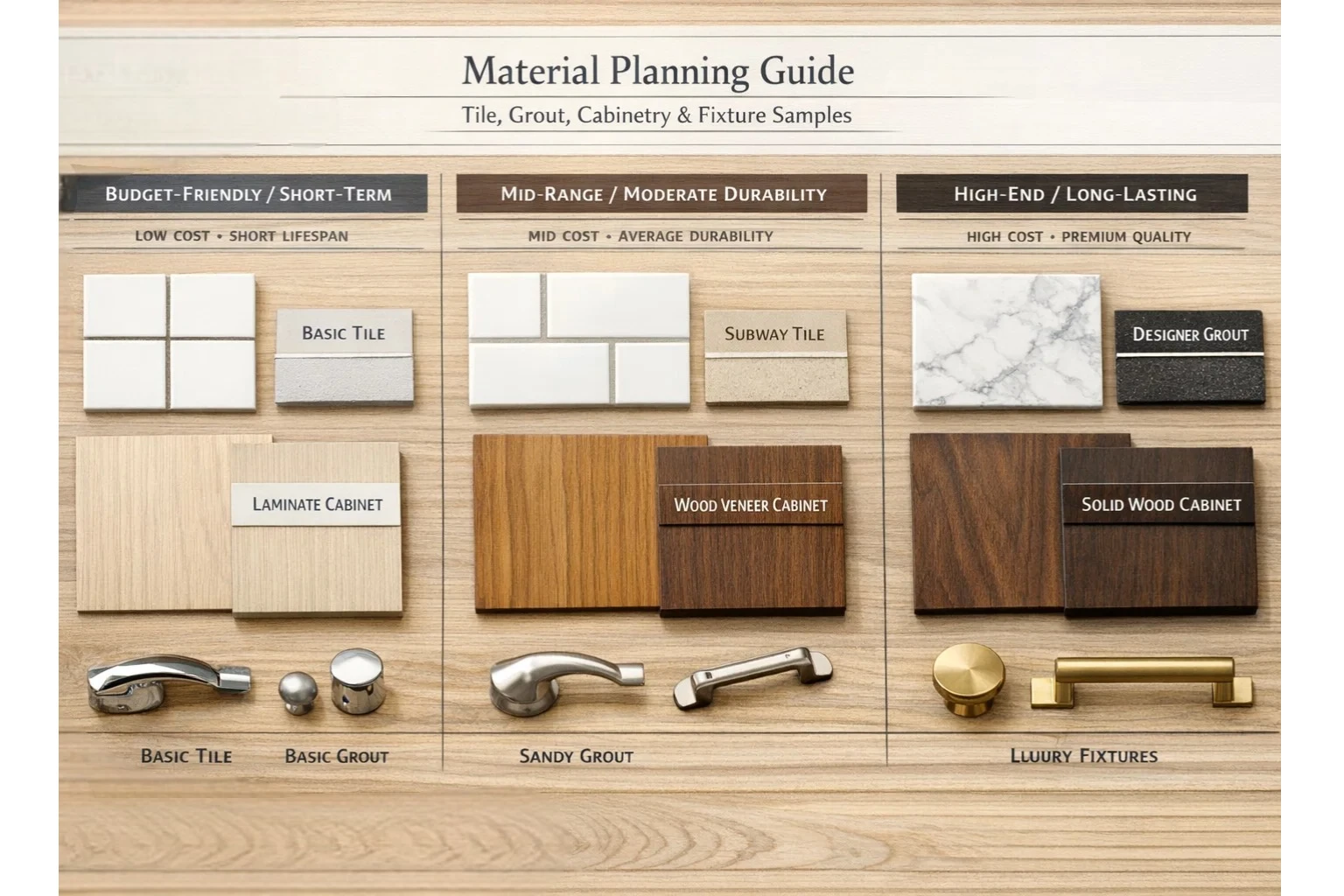
Choosing cheaper materials may reduce upfront cost but increase maintenance and repair expenses over time.
Bathrooms take a lot of wear and tear. Selecting durable, water-resistant materials reduces the likelihood of swelling, staining, or structural damage.
Balancing design preferences with performance requirements leads to better long-term results.
Final Thoughts on Wet Area Materials in Bathrooms
Bathrooms demand materials that can handle moisture, temperature changes, and frequent use. Waterproof membranes, porcelain tiles, mold-resistant grout, moisture-rated cabinetry, and corrosion-resistant fixtures all contribute to a durable space.
When selecting materials for wet areas, focus on performance first and style second. The right choices protect your home, reduce maintenance, and keep your bathroom looking good for years to come.